Help us get this right
Does this portrait look right for Mandaya?
Nobody has judged this one yet. You would be the first.
Mandaya Erotic
Southeastern Mindanao, Philippines: mainly Davao Oriental, also Davao de Oro, Davao del Norte, and parts of Surigao del Sur and Agusan del Sur.
Mandaya (Austronesian, Central Philippine, Mansakan group); most also speak Cebuano and Filipino.
Mostly Roman Catholic and Protestant, with indigenous spirit beliefs and balyan ritual specialists still active in many communities.
A Lumad people of Mindanao. Closely related to the Mansaka (often counted as a branch) and the Islamized Kalagan; older ethnographies also list the Mangguangan, Pagsupan, Managosan and Divavaoan as Mandaya branches.
About Mandaya People
The name says where to find them: man for people, daya for upstream. The Mandaya are the upriver people of southeastern Mindanao, among the larger of the non-Muslim indigenous groups that Filipinos collectively call Lumad. Their country is the Pacific side of the island: the mountains and river valleys of Davao Oriental, running into Davao de Oro, Davao del Norte and the southern reaches of Surigao del Sur and Agusan del Sur. Their language, also called Mandaya, belongs to the Mansakan cluster of Central Philippine languages. That makes it a near relative of Mansaka, Kalagan and the Davawenyo of the lowland towns, and a more distant cousin of Cebuano, which most Mandaya now speak as well. The Mansaka are often counted as a Mandaya branch. The Kalagan share much of the language but took up Islam, which the Mandaya did not.
What outsiders know best is the cloth. Dagmay is woven from abaca fiber on a backstrap loom, its patterns tied off and dyed into the threads before weaving, in earth reds, browns and black. The figures are specific: crocodiles, human forms, and tight geometric fields between them. Tradition credits the designs to a spirit, the tagamaling, and the craft still passes from mother to daughter. Dagmay skirts go with embroidered blouses, heavy beadwork, and the patina, a worked silver disc worn on the chest.
Older Mandaya society turned on two figures. The bagani was a war leader whose rank rested on proven kills and showed in how much red he was entitled to wear; he ruled with the advice of a council of elders. The balyan, usually a woman, handled the other side of things: healing, harvest rites, and dealings with the diwata and the lesser spirits of forest and river, sometimes through carved wooden figures called manaog. Houses stood high off the ground, in some accounts up in the trees, because raiding was a fact of life. Ethnographers in the early 1900s also recorded teeth filed and blackened at puberty.
Spanish missionaries reached this coast in the seventeenth century, but the uplands stayed largely outside colonial control until Jesuit resettlement campaigns late in the nineteenth, followed by American era abaca plantations and, after World War II, logging and waves of Visayan settlers. Most Mandaya today are Catholic or Protestant, farm rice, corn, coconut and abaca, and live in ordinary barangays. The balyan have not vanished, though, and neither has the politics of land. Ancestral domain claims under the 1997 Indigenous Peoples Rights Act are the current form of a very old argument about who the uplands belong to.
Related ethnic groups
Groups that share Mandaya's homeland, region, language, or religious tradition. These are likely candidates for comparative phenotype reference.
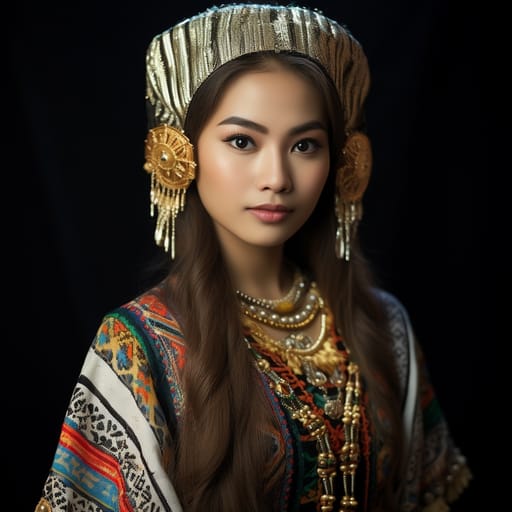
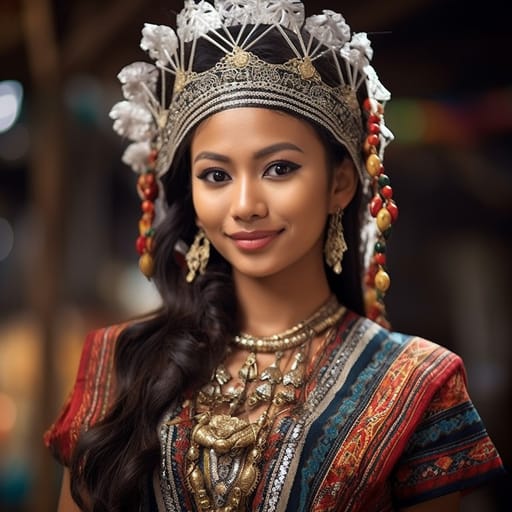
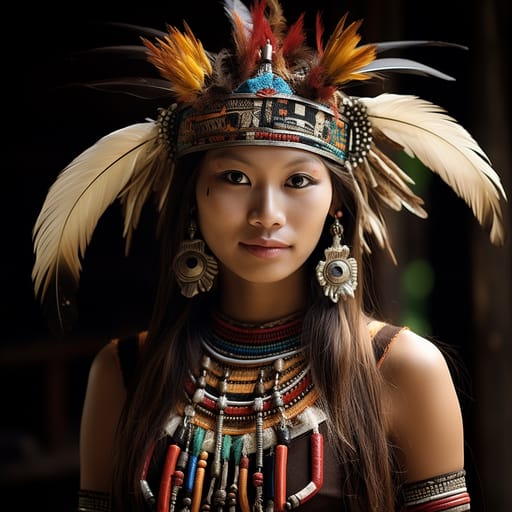
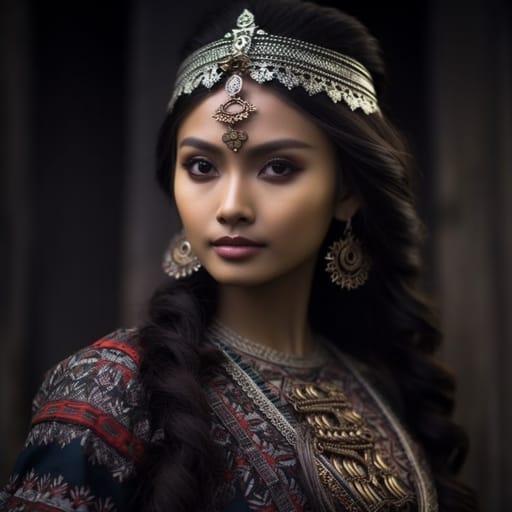
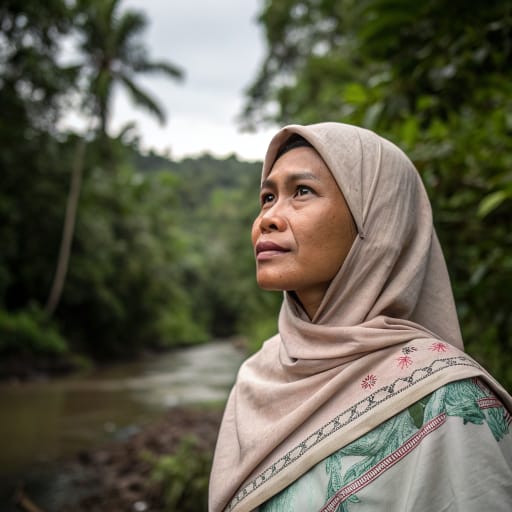
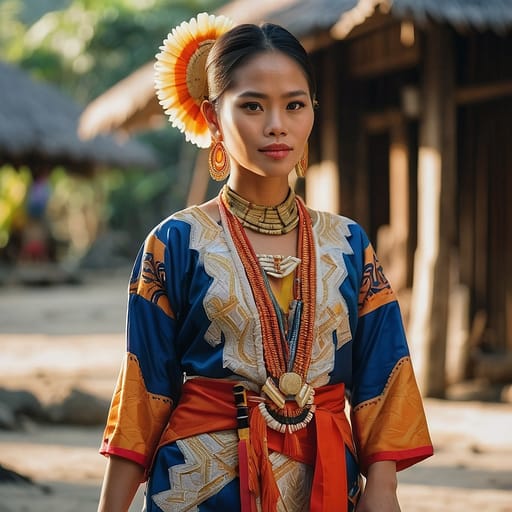
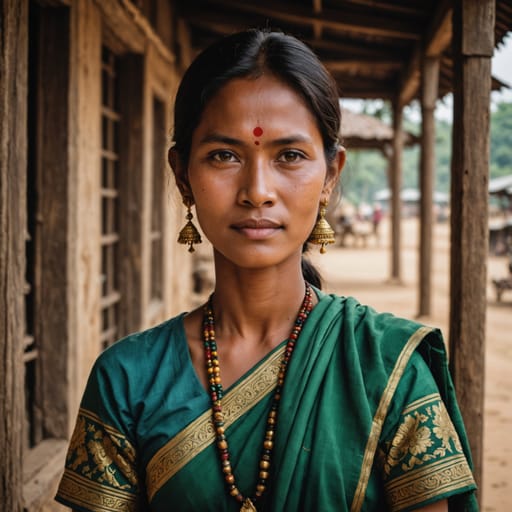
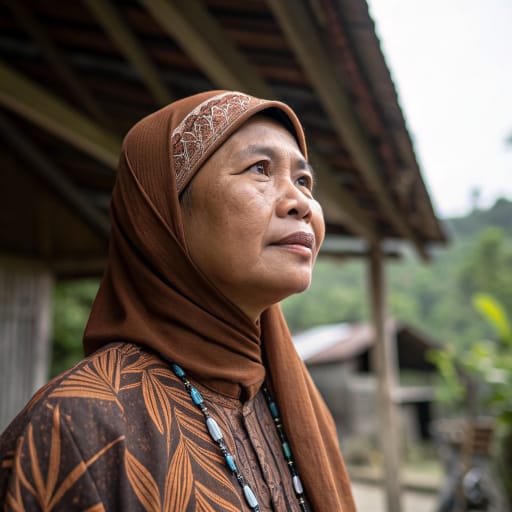
Typical Mandaya Phenotypes
Reference for AI generation: hair, eyes, skin, facial structure, build
Mandaya Body & Anatomy Reference
Southeast Asian Austronesian / Austroasiatic phenotype: anatomy reference for AI nude generation
Mandaya Boobs & Breasts
The typical Mandaya bust is small-to-medium cup, modest projection, in line with the wider Southeast Asian Austronesian / Austroasiatic pattern. Areolas usually fall in the 26-38mm range, with medium-brown to dark-brown areolar pigmentation against the tan-to-medium-brown skin tone. Compared with the fuller South Asian or Polynesian bust, Mandaya breasts sit forward and are generally firm, modest projection. A faithful AI render of Mandaya tits keeps that shape and areola size.
Mandaya Ass & Hips
Butt shape among Mandaya women: small-to-medium, modest projection, narrower hip profile, over narrow-to-medium iliac crests. This follows Southeast Asian Austronesian / Austroasiatic ancestry and looks quite unlike the fuller glutes of the Pacific Islander phenotype. An accurate Mandaya ass in adult AI imagery keeps both the silhouette and the overall build (ectomorph, petite frame) instead of a generic average.
Mandaya Vagina & Pussy
Vulvar anatomy among Mandaya women: medium-brown to dark-brown labial pigmentation. Pubic hair tends to be straight-to-wavy fine-to-medium texture, in the usual inverted-triangle pattern. Both follow Southeast Asian Austronesian / Austroasiatic pigmentation, which is why Mandaya pussy renders should not fall back on a pale, sparse Western template.
Mandaya Dicks & Penis
The Mandaya cock profile, from Southeast Asian Austronesian / Austroasiatic anthropometric data: regional mean ~11cm erect; moderate girth; medium-brown shaft pigmentation. Pubic hair has a straight-to-wavy fine-to-medium texture and forms the usual inverted-V pattern. Whether Mandaya men are circumcised follows religious and cultural practice rather than phenotype.
Mandaya Body, Curves & Build
Build and curves among Mandaya women follow the Southeast Asian Austronesian / Austroasiatic pattern: ectomorph, petite frame, mean adult female BMI 20-23. Proportions matter as much as skin tone, so Mandaya figures should keep their regional height and limb ratios.
Mandaya Skin Tone & Hair Texture
The Mandaya skin range is tan to medium-brown (Fitzpatrick III-V), and hair tends to be straight-to-wavy 1A-2A, dark-brown to black. That combination marks the Southeast Asian Austronesian / Austroasiatic phenotype, and skin tone is the trait AI generators most often get wrong for Mandaya women.
Explore phenotype categories
Structured taxonomy with peer-reviewed scales · 22 anatomical categories
Erotic Poses & Sex Positions
From the pose catalog: 219 named positions with reference skeletons
Frequently asked questions about Mandaya people
Where is the Mandaya homeland?
The Mandaya homeland is Southeastern Mindanao, Philippines: mainly Davao Oriental, also Davao de Oro, Davao del Norte, and parts of Surigao del Sur and Agusan del Sur. in Southeast Asia.
What language do Mandaya people speak?
Mandaya people primarily speak Mandaya (Austronesian, Central Philippine, Mansakan group); most also speak Cebuano and Filipino..
What religion do Mandaya people practice?
The predominant religion among Mandaya people is Mostly Roman Catholic and Protestant, with indigenous spirit beliefs and balyan ritual specialists still active in many communities..






Make your own Mandaya images
Five a day, free, no credits to buy. The studio starts from this group's phenotype data, so you can set body type, pose and style and keep the traits accurate.
Start with Mandaya