Help us get this right
Does this portrait look right for Mamanwa?
Nobody has judged this one yet. You would be the first.
Mamanwa Erotic
Northeastern Mindanao, Philippines: the uplands of Surigao del Norte, Surigao del Sur, Agusan del Norte and Agusan del Sur, around Lake Mainit and the Diwata Range
Mamanwa, also called Minamanwa (Austronesian, Philippine branch); Surigaonon and Cebuano widely spoken as second languages
Indigenous beliefs centered on forest and ancestral spirits, alongside growing Catholic and evangelical Christian adherence
One of the Philippine Negrito peoples, with the Aeta, Agta, Ati and Batak; also counted among the Lumad, the Indigenous peoples of Mindanao
About Mamanwa People
The Mamanwa are the Negrito people of northeastern Mindanao. That alone sets them apart on an island where nearly every other Indigenous group is Austronesian in both language and ancestry. They are usually short, dark-skinned and curly-haired, and they belong to the scattered family of Philippine Negrito peoples that also includes the Aeta of Luzon, the Ati of Panay and the Batak of Palawan. All of these peoples descend from the islands' earliest inhabitants. Their name is commonly glossed as "forest dwellers," and for most of their history it was a plain description. Small bands moved through the uplands of the Diwata Range and the country around Lake Mainit, in what are now the Surigao and Agusan provinces of the Caraga Region.
Like other Philippine Negritos, the Mamanwa speak an Austronesian language. Whatever their ancestors first spoke was replaced long ago. Their language, Minamanwa, belongs to the Philippine branch and is related to the Visayan languages of their neighbors, and most Mamanwa also speak Surigaonon or Cebuano for trade, school and church. The old economy rested on hunting with dogs and spears and on gathering wild tubers, honey and rattan. Forest goods were traded to lowland farmers for rice and other goods. That trade tied the Mamanwa to the Manobo and Visayan communities around them long before the Philippine state reached the interior.
Religious life has older and newer layers. In many communities, forest spirits, ancestral spirits and the healers who deal with them still matter. Catholic and evangelical missions have also made steady gains, and many families draw on both.
The last several decades have closed in fast. Logging stripped much of the forest they depended on, and the Surigao provinces became one of the country's main nickel mining districts, with mining claims on land the Mamanwa consider ancestral. Many now live in settled villages near towns and highways and work as farmhands and day laborers. Some communities have sought ancestral domain titles under the 1997 Indigenous Peoples' Rights Act. The Mamanwa also show up in scientific studies of early human migration. Genetic research found that they share deep ancestry with Aboriginal Australians and Papuans, and that their DNA carries traces of Denisovan ancestry. That makes this small forest people one of the key populations for understanding how modern humans first spread into Southeast Asia and Oceania.
Related ethnic groups
Groups that share Mamanwa's homeland, region, language, or religious tradition. These are likely candidates for comparative phenotype reference.
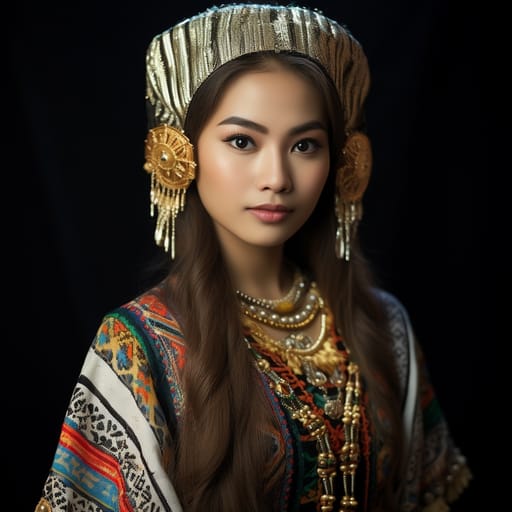
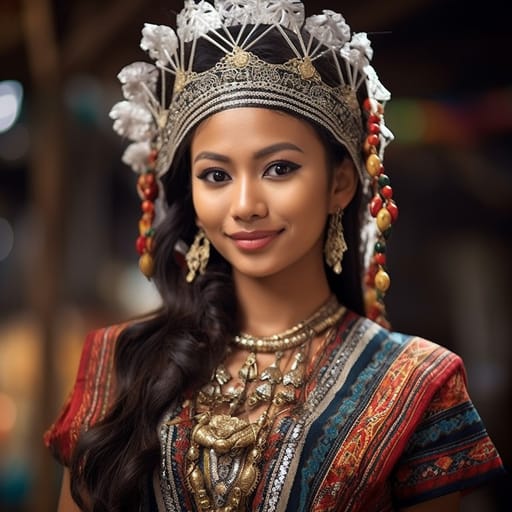
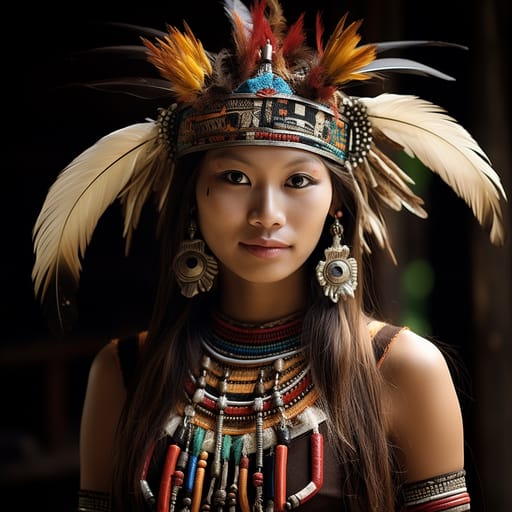
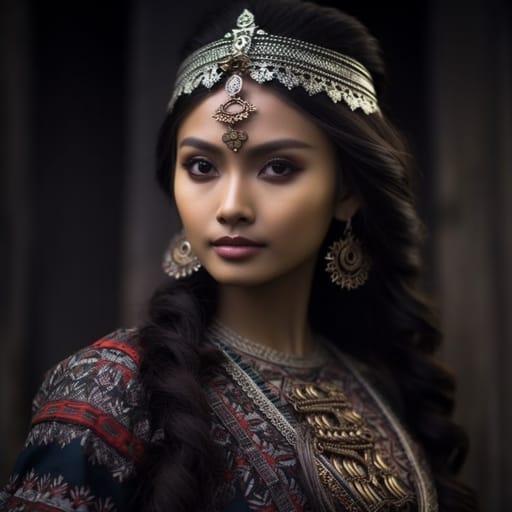
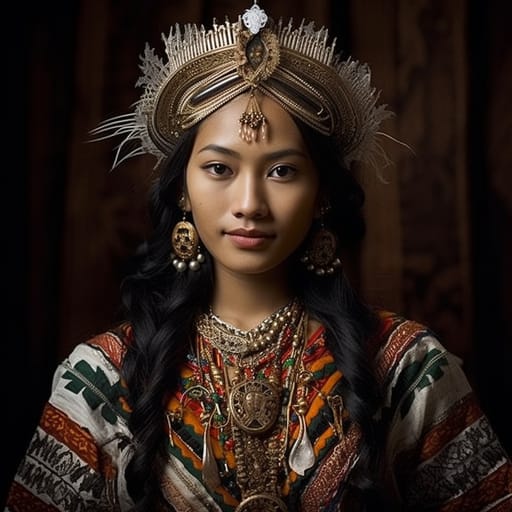
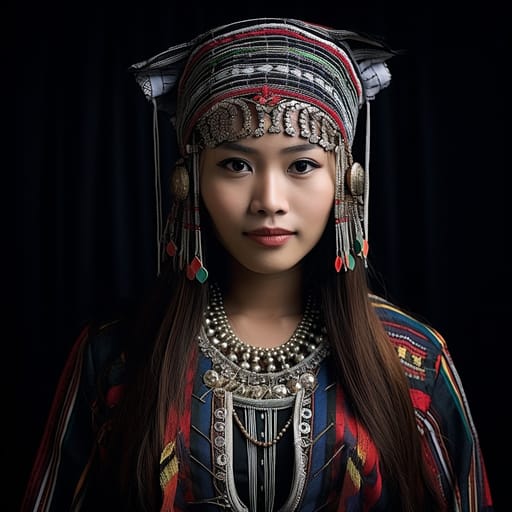
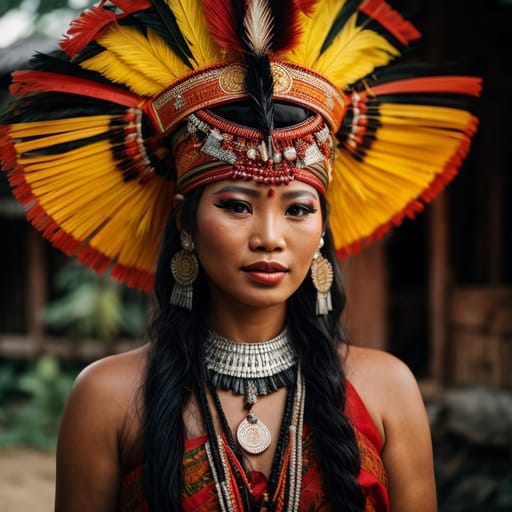
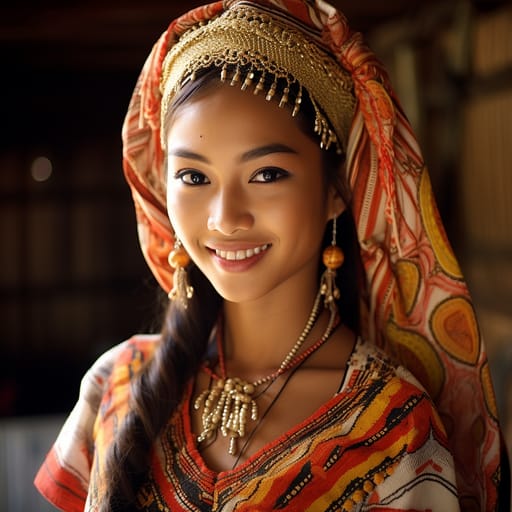
Typical Mamanwa Phenotypes
Reference for AI generation: hair, eyes, skin, facial structure, build
Mamanwa Body & Anatomy Reference
Per-feature anatomical profile for AI nude generation: Southeast Asian Austronesian / Austroasiatic phenotype
Mamanwa Boobs & Breasts
Mamanwa boobs follow the Southeast Asian Austronesian / Austroasiatic profile: small-to-medium cup, modest projection. Areolar diameter is usually 26-38mm, and the coloring is medium-brown to dark-brown areolar pigmentation against the tan-to-medium-brown skin tone. Breast shape tracks body composition (ectomorph, petite frame, mean adult female BMI 20-23), so Mamanwa breasts tend to be firm, modest projection. Expect a forward-set shape, not the fuller South Asian or Polynesian bust.
Mamanwa Ass & Hips
Mamanwa ass and hip morphology presents as small-to-medium, modest projection, narrower hip profile, distinctly different from the fuller glutes of the Pacific Islander phenotype. The Mamanwa pelvic profile shows narrow-to-medium iliac crests, anchored in the Southeast Asian Austronesian / Austroasiatic skeletal pattern. Mamanwa butt shots in adult AI imagery should render the small-to-medium, modest projection, narrower hip profile silhouette with the overall build (ectomorph, petite frame) and the fat distribution typical of the Southeast Asian Austronesian / Austroasiatic phenotype.
Mamanwa Vagina & Pussy
Mamanwa pussy anatomy typically shows medium-brown to dark-brown labial pigmentation. Pubic hair is usually straight-to-wavy fine-to-medium texture. In AI-generated Mamanwa nudes, labial color should blend into the tan to medium-brown skin with a gradual transition, and the hair should keep its straight-to-wavy fine-to-medium texture.
Mamanwa Dicks & Penis
Penis reference for Mamanwa men: regional mean ~11cm erect, moderate girth. Coloring: medium-brown shaft pigmentation. An accurate Mamanwa cock in AI imagery matches the surrounding tan to medium-brown skin rather than a generic porn default. Circumcision depends on religion and custom, not ancestry.
Mamanwa Body, Curves & Build
The Mamanwa figure is generally ectomorph, petite frame, with mean adult female BMI 20-23, characteristic of Southeast Asian Austronesian / Austroasiatic ancestry. AI image tools tend to flatten regional body types into a few stock shapes; here the Mamanwa build is kept as its own reference.
Mamanwa Skin Tone & Hair Texture
Skin: tan to medium-brown (Fitzpatrick III-V). Hair: straight-to-wavy 1A-2A, dark-brown to black. Both are typical of Southeast Asian Austronesian / Austroasiatic ancestry. The most common mistake in AI nudes of Mamanwa women is a body rendered lighter than the face.
Explore phenotype categories
Structured taxonomy with peer-reviewed scales · 22 anatomical categories
Erotic Poses & Sex Positions
From the pose catalog: 219 named positions with reference skeletons
Frequently asked questions about Mamanwa people
Where is the Mamanwa homeland?
The Mamanwa homeland is Northeastern Mindanao, Philippines: the uplands of Surigao del Norte, Surigao del Sur, Agusan del Norte and Agusan del Sur, around Lake Mainit and the Diwata Range in Southeast Asia.
What language do Mamanwa people speak?
Mamanwa people primarily speak Mamanwa, also called Minamanwa (Austronesian, Philippine branch); Surigaonon and Cebuano widely spoken as second languages.
What religion do Mamanwa people practice?
The predominant religion among Mamanwa people is Indigenous beliefs centered on forest and ancestral spirits, alongside growing Catholic and evangelical Christian adherence.






Make your own Mamanwa images
Five a day, free, no credits to buy. The studio starts from this group's phenotype data, so you can set body type, pose and style and keep the traits accurate.
Start with Mamanwa