Help us get this right
Does this portrait look right for Magahi?
One tap. It takes a second and it is recorded.
1 says it looks right, 0 say it looks off.
Magahi Erotic
Magadha (India)
Hinduism
About Magahi People
The Magahi are the people of Magadha — the old heartland of the Gangetic plain in what is now central and southern Bihar, with a substantial diaspora across the border in Jharkhand. The name carries weight that the modern administrative map does not. Magadha was the seat of the Mauryan and Gupta empires, the soil where the Buddha did most of his teaching and where Mahavira refined the Jain tradition. To say someone is Magahi is to locate them in a region that was, for a long stretch of antiquity, the political and intellectual center of the subcontinent — and which has since spent centuries living quietly with that inheritance rather than trading on it.
Their language, also called Magahi (or Magadhi), belongs to the eastern Indo-Aryan branch and descends, by name and lineage, from Magadhi Prakrit — the vernacular of the Mauryan court and the language in which much of the early Buddhist canon was first preserved before later Pali redactions. Today it sits between Bhojpuri to the west and Maithili to the north-east, sharing a great deal of vocabulary and grammatical instinct with both, and the boundaries between the three are softer in conversation than on a linguistic map. Hindi is the language of administration, schooling, and most written life; Magahi remains overwhelmingly an oral language of household, market, and field, which is part of why outside India it is often catalogued as a Hindi dialect rather than a tongue in its own right. Its speakers, who number in the tens of millions, generally see it differently.
Religiously the population is predominantly Hindu, with a long-standing Muslim minority and a quiet but real Buddhist and Jain presence anchored to the pilgrimage circuit — Bodh Gaya, Rajgir, Nalanda, Pawapuri all sit inside the Magahi-speaking belt and draw a steady international traffic that the surrounding villages largely ignore. Caste structure in the region is dense and historically rigid, and rural Magahi society still organizes much of marriage, occupation, and land tenure around it, though the cities have loosened considerably in a generation. The cultural texture is agricultural rather than mercantile: rice and wheat, the seasonal festivals tied to harvest — Chhath in particular is observed with an intensity that outsiders often find surprising — and a folk repertoire of songs, proverbs, and storytelling traditions that Hindi-language popular culture has only intermittently absorbed.
Related ethnic groups
Groups that share Magahi's homeland, region, language, or religious tradition. These are likely candidates for comparative phenotype reference.
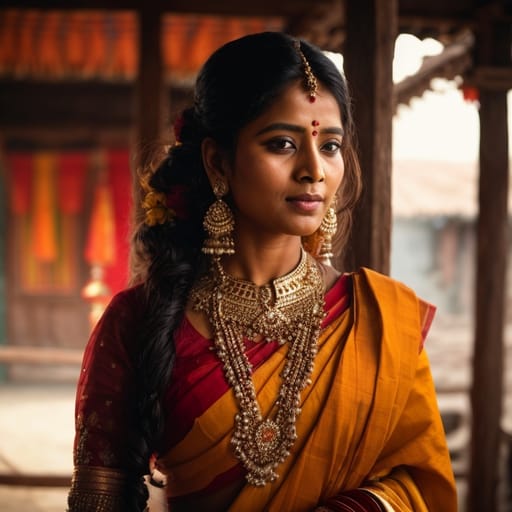
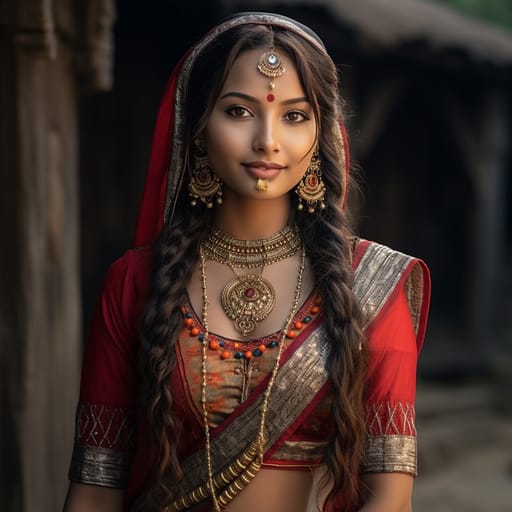
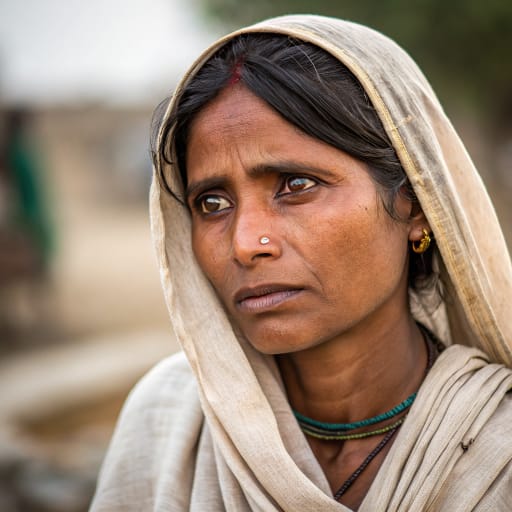
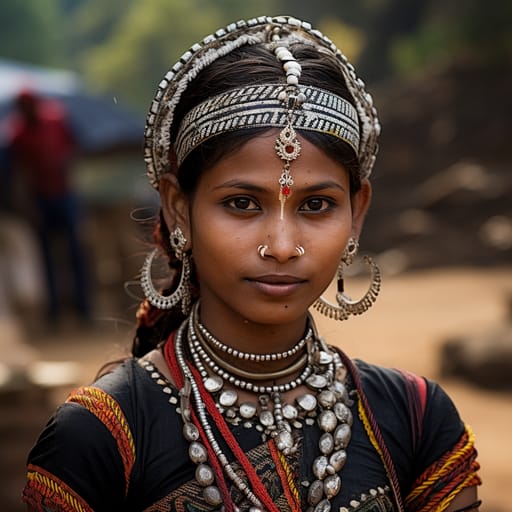
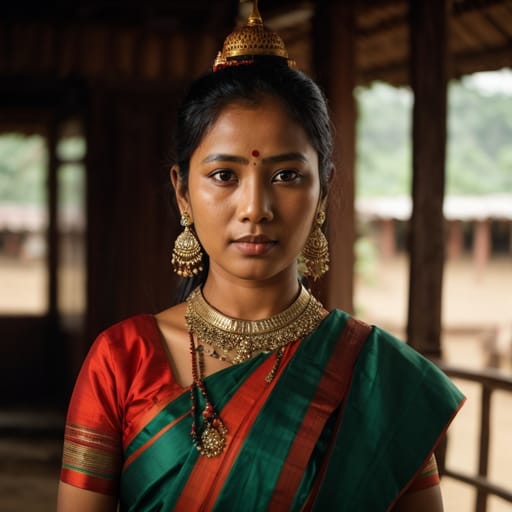
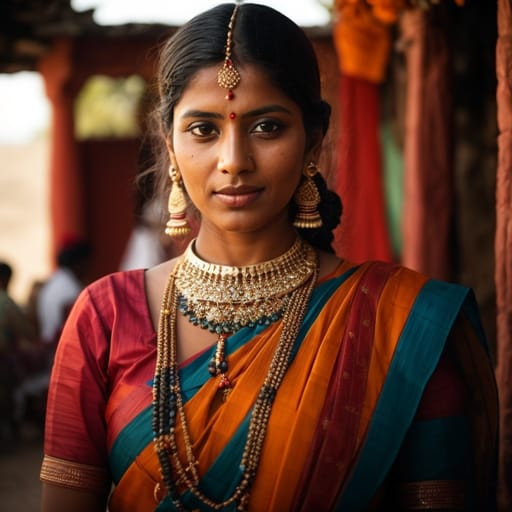
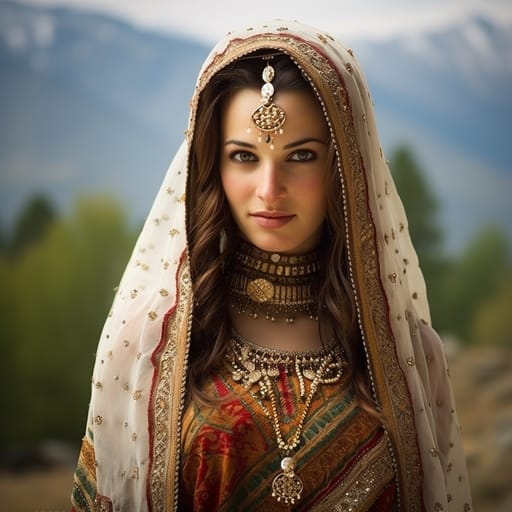
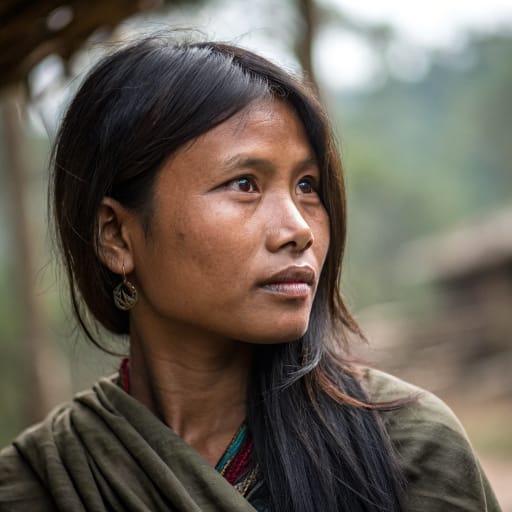
Typical Magahi Phenotypes
Reference for AI generation: hair, eyes, skin, facial structure, build
Magahi-speakers of central and southern Bihar — the old Magadha heartland around Patna, Gaya, Nalanda, and Nawada — sit phenotypically inside the broader Indo-Aryan/Bihari cluster but lean somewhat darker and shorter-statured than Punjabi or Haryanvi populations to the northwest, with a heavier admixture from older Munda and Dravidian-substrate groups in the surrounding hill country.
Hair is almost uniformly black, occasionally very dark brown, with a small fraction going prematurely silver-grey by the late thirties. Texture runs straight to loosely wavy; tight curls are uncommon. Body and facial hair are moderate in men — fuller than East Asian norms, lighter than typical Punjabi or West Asian density — with thick eyebrows that often run close together.
Eyes are dark brown to near-black; lighter hazel or honey shades exist but are rare enough to be remarked on. There is no epicanthic fold; the eye shape is almond, often deep-set under a defined brow ridge, with thick lashes and pronounced upper-lid creases.
Skin tone covers a wide stretch of Fitzpatrick IV–V, from medium wheatish through deep brown, with warm olive and bronze undertones. Rural agricultural populations and labouring castes in the Gangetic plain typically sit at the darker end; urban Patna and traditionally land-holding communities skew lighter. Sun exposure deepens the contrast considerably across a single growing season.
Facial structure tends toward a medium-width nose with a moderate, often slightly convex bridge and rounded tip; alar width is broader than North Indian Punjabi norms but narrower than Eastern tribal averages. Lips are medium-full, usually with a defined cupid's bow. Jawlines are softer and more rounded than the angular Jat/Rajput pattern further west, and cheekbones sit modestly rather than high and projecting — a face shape visible in figures like Nitish Kumar.
Build is compact. Men cluster around 5'4"–5'7", women 4'11"–5'2", with shorter limbs relative to torso, naturally slim-to-medium frames in youth, and a strong tendency toward central-abdominal weight gain in middle age. Shoulders are narrow-to-medium; hips on women are typically wider relative to shoulders than in northwestern Indo-Aryan groups.
Magahi Body & Anatomy Reference
Anatomy by feature, ancestral phenotype
Magahi Boobs & Breasts
Bust reference for Magahi women: medium cup, moderate projection, which is typical of ancestral ancestry. Areolas measure about 30-42mm across, with regional-typical pigmentation. Body type (mesomorph) shapes the bust as well, so Magahi tits are usually moderate fullness and projection. In AI imagery, keep the forward-set shape rather than drifting toward the regional comparison phenotypes.
Magahi Ass & Hips
The Magahi ass is typically medium, moderate projection, which sets it apart from the regional comparison phenotypes. Underneath, the pelvis shows medium iliac crests, part of the ancestral skeletal pattern. For Magahi butt pics and AI renders, match that silhouette and the overall build (mesomorph).
Magahi Vagina & Pussy
Magahi pussy and vulvar anatomy presents regional-typical labial pigmentation, consistent with the ancestral phenotype's pigmentation pattern. Magahi pubic hair is typically regional-typical texture and distribution, in the inverted-triangle pattern. For anatomically accurate Magahi pussy renders the labial coloration should match the surrounding regional-typical skin tone with a continuous gradient, and the hair should keep its regional-typical texture and distribution.
Magahi Dicks & Penis
Magahi dicks follow the ancestral reference data: regional mean ~13cm erect; moderate girth; regional-typical shaft pigmentation. Shaft color should track the regional-typical skin tone with a smooth change toward the glans, and Magahi pubic hair keeps its regional-typical texture and distribution.
Magahi Body, Curves & Build
Magahi body type and overall build presents as mesomorph, with regional adult female BMI band: the characteristic ancestral habitus. Magahi curves and proportions should keep the regional skeletal frame (height, shoulder-to-hip ratio, limb proportions) rather than a generic mesomorph default.
Magahi Skin Tone & Hair Texture
Magahi skin sits in the regional-typical (Fitzpatrick III-V) band. Hair is typically regional-typical, in keeping with the ancestral phenotype. In nude renders the skin should stay one even tone from face to body, and body, pubic and head hair should match.
Data depth
55/100Coverage of image-grounded phenotype observations · drives AI generation diversity
- Sample size
- 10/40· 3 images
- Image quality
- 30/30· 67% high
- Confidence
- 15/20· mean 0.79
- Source diversity
- 0/10· wikipedia
- ·Small sample (n<10)
- ·Wikipedia-only source, not population-representative
Observed Distribution: Image Sample
Empirical observations from analyzed photographs · supplementary signal, not population truth
Sample: 3 images analyzed (3 wikipedia). Quality: 2 high, 1 medium, 0 low, 0 very_low. Avg analyzer confidence: 0.79.
Skin tone (Fitzpatrick): IV (67%), V (33%)
Hair color: gray/white (100%)
Hair texture: straight (33%), wavy (33%), covered (33%)
Eye color: dark brown (100%)
Epicanthic fold: 0% present, 100% absent, 0% unclear
Caveats: Sample size 3 is small, so the observed distribution should be treated as suggestive, not definitive. Sample is 100% Wikipedia notable people, which skews toward male, public-life, and modern figures, not population-representative.
Last aggregated: May 7, 2026
Explore phenotype categories
Structured taxonomy with peer-reviewed scales · 22 anatomical categories
Notable Magahi People
3 reference figures, sourced from Wikipedia
- Ram Lakhan Singh Yadav, freedom fighter & educationist
- Satyendra Narayan Sinha, freedom fighter
- Nitish Kumar, chief minister of Bihar
Erotic Poses & Sex Positions
From the pose catalog: 219 named positions with reference skeletons
Frequently asked questions about Magahi people
Where is the Magahi homeland?
The Magahi homeland is Magadha (India) in Southern Asian.
What language do Magahi people speak?
Magahi people primarily speak Indo-European / Indo-Aryan / Bihari / Magahi.
What religion do Magahi people practice?
The predominant religion among Magahi people is Hinduism.






Make your own Magahi images
Five a day, free, no credits to buy. The studio starts from this group's phenotype data, so you can set body type, pose and style and keep the traits accurate.
Start with Magahi