Help us get this right
Does this portrait look right for Bishnupriya Manipuris?
One tap. It takes a second and it is recorded.
0 say it looks right, 2 say it looks off.
Bishnupriya Manipuris Erotic
About Bishnupriya Manipuris People
The Bishnupriya Manipuris are an Indo-Aryan-speaking community living in a corner of the world dominated by Tibeto-Burman tongues — and that tension is the first thing to know about them. Their homeland sits in and around the Manipur valley of northeast India, with substantial populations in Bangladesh's Sylhet division and in Assam and Tripura. They share a name and a centuries-old territory with the Meitei (also called Manipuris), but they are a separate people with a separate language, and conflating the two is one of the more reliable ways to get corrected by anyone from the community.
Their language, Bishnupriya Manipuri, descends from an older Indo-Aryan stock that arrived in the region long enough ago to have been thoroughly reshaped by its surroundings. It carries loanwords and grammatical fingerprints from Meitei and other neighboring languages, and it splits internally into two dialect branches usually called Rajar Gang and Madoi Gang — roughly, the king's village and the queen's village, names that point back to a courtly origin story the community still tells about itself. UNESCO has flagged the language as endangered, and its survival now depends heavily on community schools, literary societies, and a small but determined publishing tradition centered in Silchar and Sylhet.
Religion is Vaishnavite Hinduism — specifically the Gaudiya tradition associated with Chaitanya, which arrived in Manipur in the eighteenth century and took deep root. The community's devotional life leans heavily on kirtan and on the Rasleela cycle of dance dramas built around Krishna and the gopis; these are not festival decorations but a living performance form that families train children in. Manipuri classical dance, in its mainstream Indian classical form, draws on this same religious-aesthetic world, though the Bishnupriya version retains its own choreographic vocabulary and ritual context.
The nineteenth century was the inflection point that explains the present geography. The Burmese invasions of Manipur — the Seven Years' Devastation of 1819 to 1826 — scattered the community westward into Cachar, Sylhet, and Tripura, and many never returned. That diaspora is why a people whose name still ties them to a single Himalayan valley are today as likely to be found speaking their language in a Bangladeshi tea-garden town as in Imphal. The community's modern political life has been shaped by long-running campaigns for distinct linguistic and ethnic recognition, separate from the Meitei majority around them.
Related ethnic groups
Groups that share Bishnupriya Manipuris's homeland, region, language, or religious tradition. These are likely candidates for comparative phenotype reference.
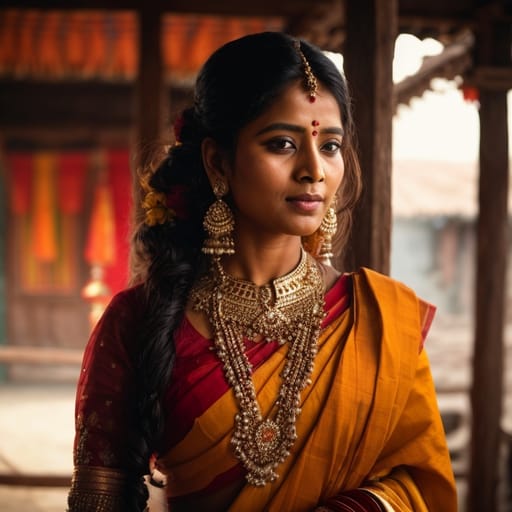
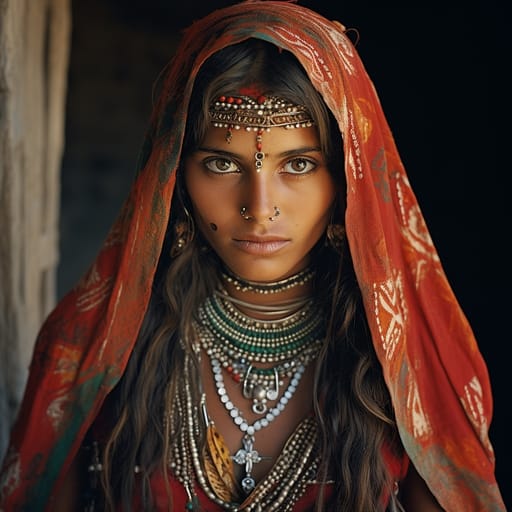
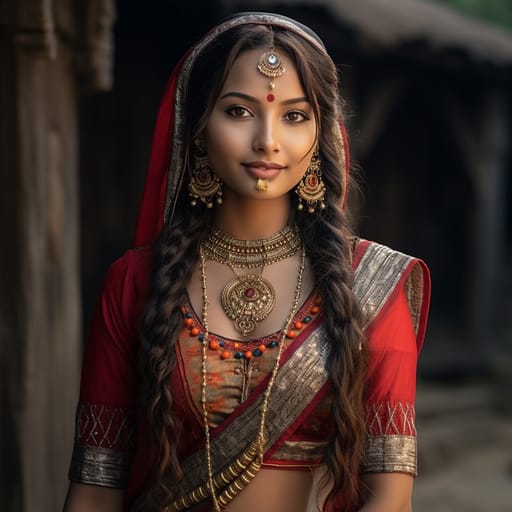
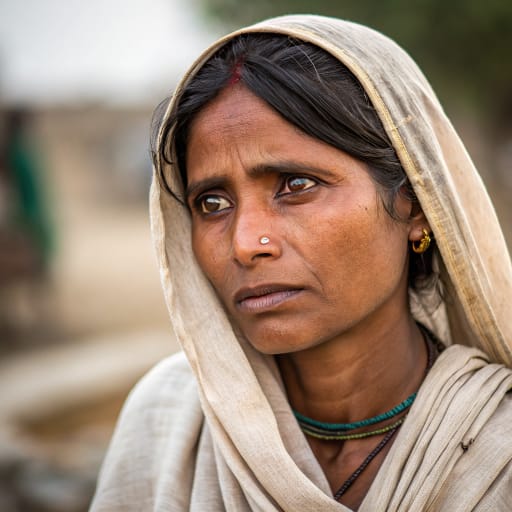
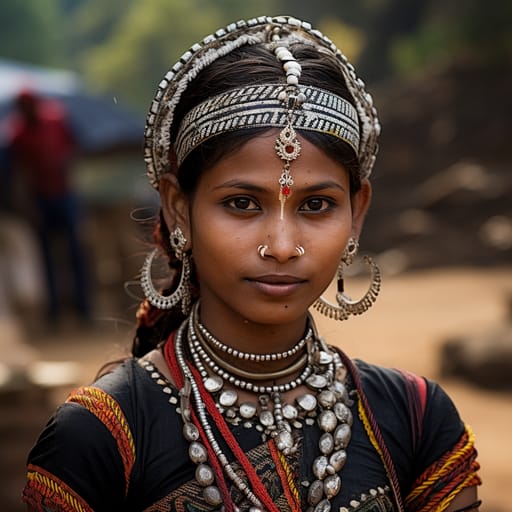
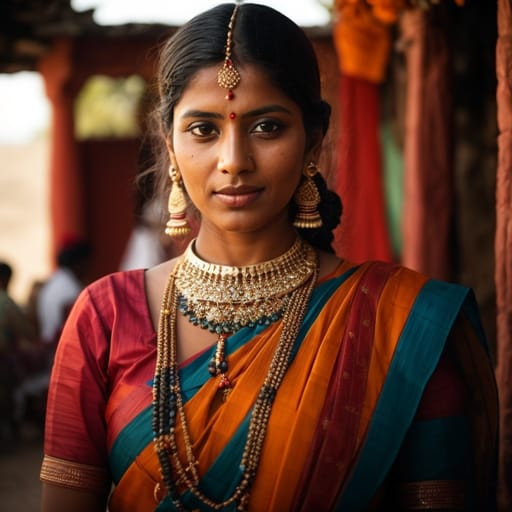
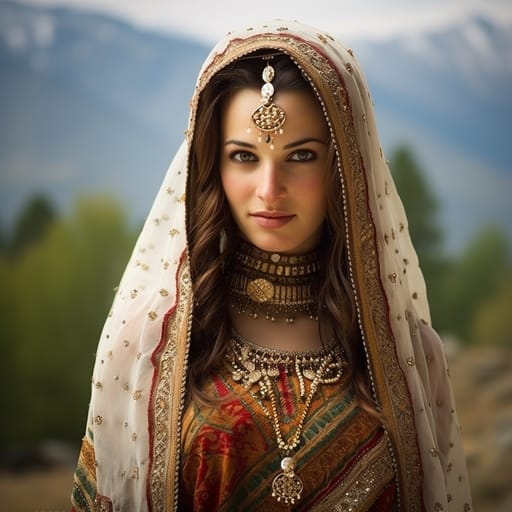
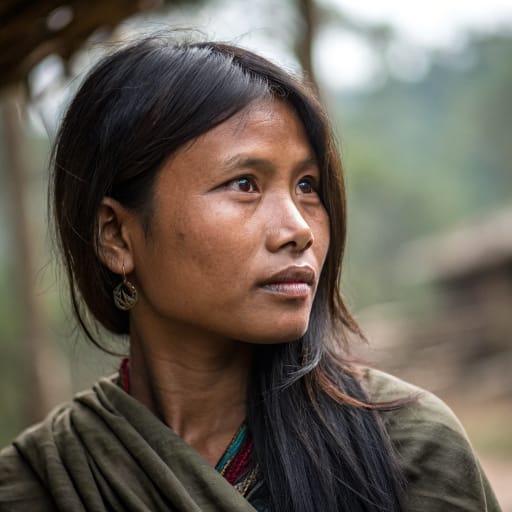
Typical Bishnupriya Manipuris Phenotypes
Reference for AI generation: hair, eyes, skin, facial structure, build
Bishnupriya Manipuris sit at a phenotypic intersection that's unusual in South Asia: an Indo-Aryan-speaking population that has lived for centuries in the Manipur valley and surrounding hill tracts of northeast India and Sylhet/Bangladesh, surrounded by Tibeto-Burman neighbors. The result is a face that often reads as part Bengali, part Northeast Asian — softer, rounder features than mainland Bengali populations, but with skin tone and hair texture that sit closer to the rest of the eastern Indo-Aryan world.
Hair is almost uniformly black to very dark brown, straight to gently wavy, fine to medium in diameter, and typically thick and glossy. Tight curls are rare. Eyes run dark brown to near-black; a partial epicanthic fold is common — not the full, smooth fold seen in Han or Khmer populations, but a soft inner-corner fold that gives the eye a slightly almond, slightly hooded set. Light eyes are essentially absent.
Skin tone clusters around Fitzpatrick III–IV, with warm olive to light-medium brown undertones; a noticeable subset run lighter (II–III) and a smaller subset darker (IV–V), with sun exposure rather than baseline pigment driving most of the variation you see. The complexion tends to be even, with relatively little freckling.
Facial structure is the giveaway: cheekbones are moderately high and broad, the midface is fuller than in Indo-Gangetic populations, the jaw is rounded rather than angular, and the nose is typically straight with a low-to-medium bridge and modest alar width — narrower than Bengali averages but broader than East Asian. Lips are medium-full and well-defined.
Build skews short to medium — adult men commonly 160–170 cm, women 150–160 cm — with slim-to-compact frames, narrow shoulders, and a tendency to carry weight evenly rather than centrally. Sub-group differences between the Manipur-valley Bishnupriyas and the Sylhet/Bangladesh diaspora are subtle: the Bangladesh branch often shows slightly more Bengali admixture in nose form and skin tone, while the Manipur-resident population retains stronger Northeast Asian eyelid and cheekbone signatures.
Bishnupriya Manipuris Body & Anatomy Reference
Anatomy by feature, ancestral phenotype
Bishnupriya Manipuris Boobs & Breasts
Bishnupriya Manipuris tits and boobs run medium cup, moderate projection, the classic ancestral bust profile. Bishnupriya Manipuris nipples and areolas show regional-typical areolar pigmentation against the regional skin tone, with areolar diameter typically in the 30-42mm range and forward-set positioning rather than the regional comparison phenotypes. Bishnupriya Manipuris breasts trend moderate fullness and projection, a function of the mesomorph body habitus and the regional adult female BMI band. For anatomically accurate AI-generated Bishnupriya Manipuris nudes the render preserves the medium cup, moderate projection shape, 30-42mm areolas with regional-typical pigmentation, and the torso proportions of the ancestral phenotype.
Bishnupriya Manipuris Ass & Hips
Bishnupriya Manipuris hips and butt usually read as medium, moderate projection. The skeletal base is medium iliac crests, the ancestral pattern. Set against the regional comparison phenotypes, the difference is easy to see, and the hip-to-waist ratio is often what identifies Bishnupriya Manipuris women in photos.
Bishnupriya Manipuris Vagina & Pussy
Expect regional-typical labial pigmentation on Bishnupriya Manipuris women, in keeping with ancestral ancestry. The pubic hair is regional-typical texture and distribution. Coloring should run evenly from the regional-typical skin of the thighs to the labia, and Bishnupriya Manipuris nude imagery should keep the hair's regional-typical texture and distribution.
Bishnupriya Manipuris Dicks & Penis
Bishnupriya Manipuris dick and penile anatomy in adult AI generation should anchor on the regional reference data: regional mean ~13cm erect, moderate girth, and regional-typical shaft pigmentation. The Bishnupriya Manipuris cock profile reflects the ancestral population's anthropometric measurements. The shaft pigmentation should track the surrounding regional-typical skin tone, and the pubic hair should keep its regional-typical texture and distribution in the typical inverted-V escutcheon.
Bishnupriya Manipuris Body, Curves & Build
Bishnupriya Manipuris body type: mesomorph, with regional adult female BMI band. This is the typical ancestral build. Height range, shoulder-to-hip ratio and fat distribution all follow from it, which is what an accurate Bishnupriya Manipuris nude body should show.
Bishnupriya Manipuris Skin Tone & Hair Texture
Bishnupriya Manipuris skin tone falls in the regional-typical (Fitzpatrick III-V) band, the surface signal most often miscalibrated by generic AI nude generators. Bishnupriya Manipuris hair texture is typically regional-typical, characteristic of the ancestral phenotype. In Bishnupriya Manipuris nude renders the skin should hold that band consistently across the body.
Data depth
0/100Coverage of image-grounded phenotype observations · drives AI generation diversity
- Sample size
- 0/40· 0 images
- Image quality
- 0/30· 0% high
- Confidence
- 0/20
- Source diversity
- 0/10
- ·No image observations yet
Explore phenotype categories
Structured taxonomy with peer-reviewed scales · 22 anatomical categories
Erotic Poses & Sex Positions
From the pose catalog: 219 named positions with reference skeletons
Frequently asked questions about Bishnupriya Manipuris people
Where is the Bishnupriya Manipuris homeland?
The Bishnupriya Manipuris homeland is Manipur (India), Bangladesh in Southern Asian.
What language do Bishnupriya Manipuris people speak?
Bishnupriya Manipuris people primarily speak Indo-European / Indo-Aryan / Bishnupriya Manipuri.
What religion do Bishnupriya Manipuris people practice?
The predominant religion among Bishnupriya Manipuris people is Hinduism.






Make your own Bishnupriya Manipuris images
Five a day, free, no credits to buy. The studio starts from this group's phenotype data, so you can set body type, pose and style and keep the traits accurate.
Start with Bishnupriya Manipuris