Help us get this right
Does this portrait look right for Kayasthas?
Nobody has judged this one yet. You would be the first.
Kayasthas Erotic
Northern and eastern India: Uttar Pradesh, Bihar, Madhya Pradesh, Jharkhand, West Bengal and Odisha, with the Chandraseniya Kayastha Prabhus in Maharashtra.
Regional Indo-Aryan languages: Hindi and its relatives Bhojpuri, Awadhi and Maithili, plus Bengali, Odia and Marathi. Persian was the historic language of professional work, written in the Kaithi script in Bihar and eastern Uttar Pradesh.
Overwhelmingly Hindu, with household veneration of Chitragupta the divine record-keeper; Vaishnava, Shakta and nineteenth century Brahmo currents strong in Bengal, and a small number of Muslim Kayastha families in Uttar Pradesh and Bihar.
A cluster rather than one community: Chitraguptavanshi Kayasthas of the Hindi belt (Srivastava, Saxena, Mathur, Bhatnagar, Nigam, Ambashtha and other clans), Chandraseniya Kayastha Prabhus of Maharashtra, Bengali Kayasthas, and the Karanas of Odisha.
About Kayasthas People
What holds the Kayasthas together is not a homeland or a language but a job. Across northern India, Bengal, Odisha and Maharashtra, these are the families who kept the books: scribes, revenue clerks, land registrars and ministers, the people every dynasty needed and none could run without. That makes them less a single people than a federation of regional communities that arrived at the same profession from different directions. A Bengali Kayastha in Kolkata and a Chandraseniya Kayastha Prabhu in Pune share a caste name and a professional inheritance, not a mother tongue.
The main branches are the Chitraguptavanshi Kayasthas of the Hindi belt, split into clans like Srivastava, Saxena, Mathur and Bhatnagar; the Chandraseniya Kayastha Prabhus of Maharashtra, who supplied generals and administrators to the Maratha state and fought long, bitter arguments with Brahmin authority over their right to Vedic rites; the Bengali Kayasthas, whose surnames read like a roll call of colonial Calcutta (Bose, Ghosh, Mitra, Guha, Datta); and the Karanas of Odisha. Each speaks the Indo-Aryan language of its own region. The professional language was something else: Persian, mastered thoroughly enough that Kayastha clerks became indispensable to Mughal and post-Mughal revenue administration, and Kaithi, a script named after the caste itself and used for legal and land records across Bihar and eastern Uttar Pradesh until Devanagari and Urdu crowded it out.
The origin story is unusually apt. Kayasthas trace descent from Chitragupta, the deity who sits beside Yama and keeps the ledger of every human deed, and on the second day after Diwali many households still clean their pens, inkpots and account books, set them before the god, and write nothing at all for the day. Rank was a sore point for centuries. Neither clearly Brahmin nor clearly Kshatriya, the Kayasthas argued their varna status in colonial courtrooms and census returns with a persistence that says something about how much the question mattered. The answer they got in practice came from elsewhere. Literate and already at home in bureaucratic work, they moved into English education early and then into law, medicine, journalism and the civil service, forming a large share of the Bengali bhadralok. India's first president and its second prime minister were both Kayasthas. Today the community is small, heavily urban, and visible far out of proportion to its numbers.
Related ethnic groups
Groups that share Kayasthas's homeland, region, language, or religious tradition. These are likely candidates for comparative phenotype reference.
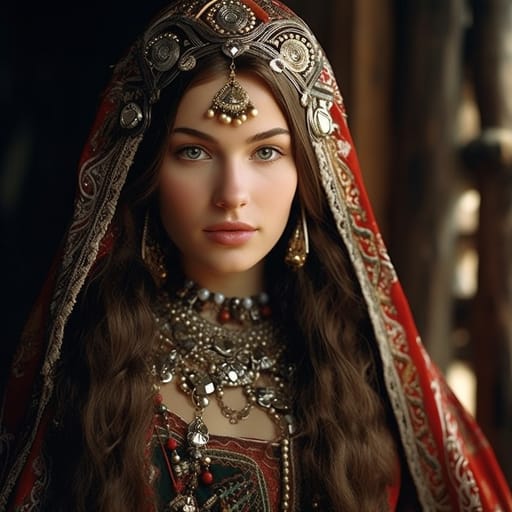
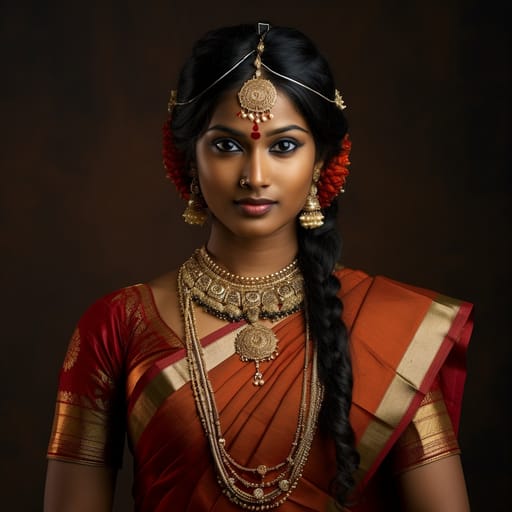
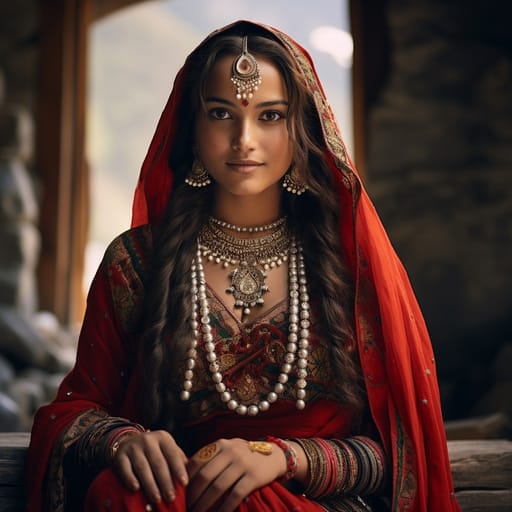
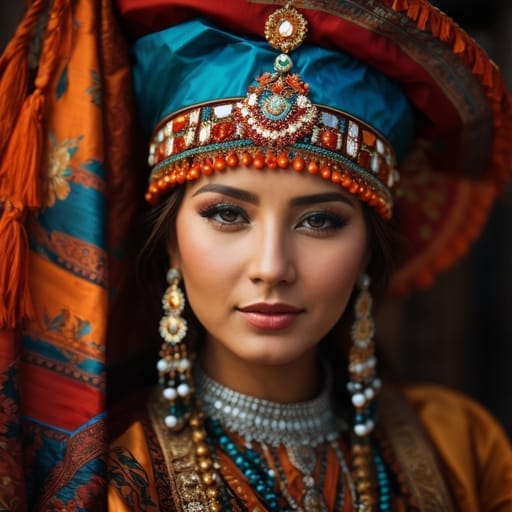
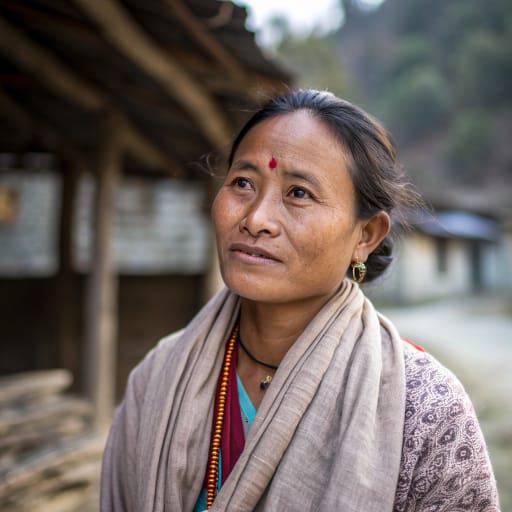
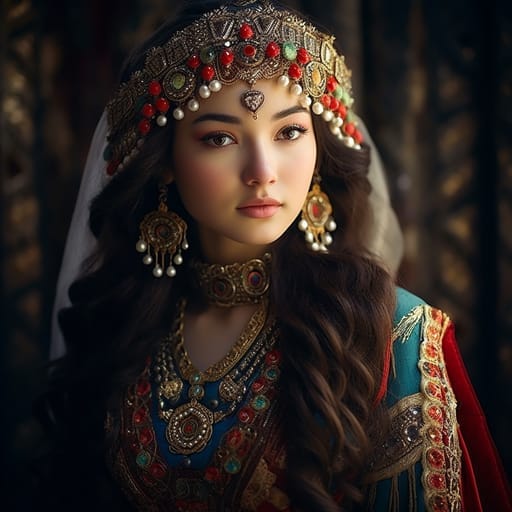
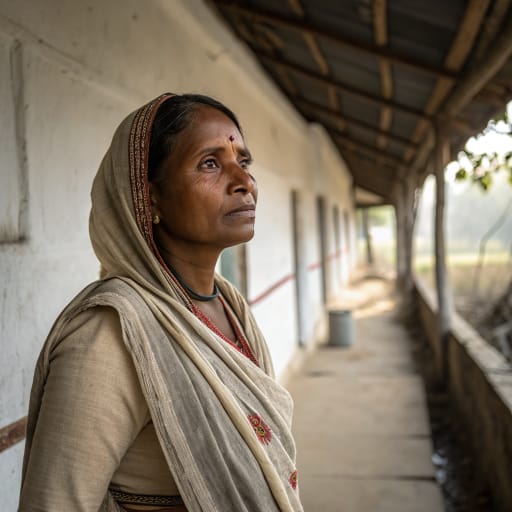
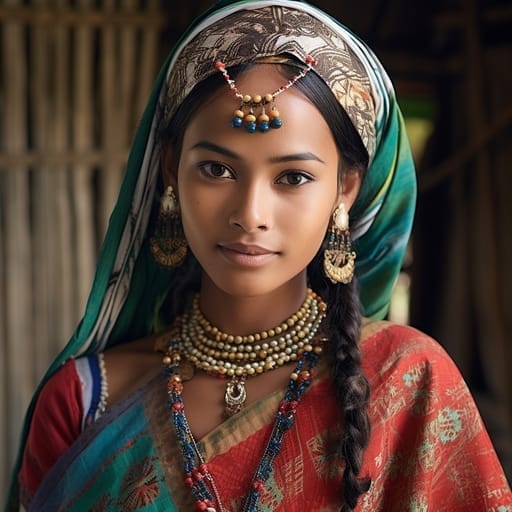
Typical Kayasthas Phenotypes
Reference for AI generation: hair, eyes, skin, facial structure, build
Kayasthas Body & Anatomy Reference
Indo-Aryan / Dravidian South Asian phenotype: anatomy reference for AI nude generation
Kayasthas Boobs & Breasts
Bust reference for Kayasthas women: medium-to-large cup, moderate-to-full projection, which is typical of Indo-Aryan / Dravidian South Asian ancestry. Areolas measure about 32-46mm across, with medium-brown to dark-brown pigmentation. Body type (endomorph-to-mesomorph with fuller hip deposition) shapes the bust as well, so Kayasthas tits are usually full and soft, generally fuller than the East Asian norm. In AI imagery, keep the forward-set shape rather than drifting toward the smaller East Asian bust profile.
Kayasthas Ass & Hips
The Kayasthas ass is typically medium-to-full, moderate-to-high projection, classic curvy hip profile, which sets it apart from the slim hip profile of East Asian women. Underneath, the pelvis shows medium-to-wide iliac crests, full gluteal-femoral fat distribution, part of the Indo-Aryan / Dravidian South Asian skeletal pattern. For Kayasthas butt pics and AI renders, match that silhouette and the overall build (endomorph-to-mesomorph with fuller hip deposition).
Kayasthas Vagina & Pussy
Kayasthas pussy and vulvar anatomy presents medium-brown to dark-brown labial pigmentation, fuller labia minora projection, consistent with the Indo-Aryan / Dravidian South Asian phenotype's pigmentation pattern. Kayasthas pubic hair is typically straight-to-wavy coarse texture, dense distribution, in the inverted-triangle pattern. For anatomically accurate Kayasthas pussy renders the labial coloration should match the surrounding wheatish to brown skin tone with a continuous gradient, and the hair should keep its straight-to-wavy coarse texture.
Kayasthas Dicks & Penis
Kayasthas dicks follow the Indo-Aryan / Dravidian South Asian reference data: regional mean ~13cm erect; moderate girth; medium-brown shaft pigmentation. Shaft color should track the wheatish to brown skin tone with a smooth change toward the glans, and Kayasthas pubic hair keeps its straight-to-wavy coarse texture.
Kayasthas Body, Curves & Build
Kayasthas body type and overall build presents as endomorph-to-mesomorph with fuller hip deposition, with mean adult female BMI 22-25: the characteristic Indo-Aryan / Dravidian South Asian habitus. Kayasthas curves and proportions should keep the regional skeletal frame (height, shoulder-to-hip ratio, limb proportions) rather than a generic mesomorph default.
Kayasthas Skin Tone & Hair Texture
Kayasthas skin sits in the wheatish to brown (Fitzpatrick III-V) band. Hair is typically straight-to-wavy 1A-2B, dense, dark-brown to black, in keeping with the Indo-Aryan / Dravidian South Asian phenotype. In nude renders the skin should stay one even tone from face to body, and body, pubic and head hair should match.
Explore phenotype categories
Structured taxonomy with peer-reviewed scales · 22 anatomical categories
Erotic Poses & Sex Positions
From the pose catalog: 219 named positions with reference skeletons
Frequently asked questions about Kayasthas people
Where is the Kayasthas homeland?
The Kayasthas homeland is Northern and eastern India: Uttar Pradesh, Bihar, Madhya Pradesh, Jharkhand, West Bengal and Odisha, with the Chandraseniya Kayastha Prabhus in Maharashtra. in Southern Asia.
What language do Kayasthas people speak?
Kayasthas people primarily speak Regional Indo-Aryan languages: Hindi and its relatives Bhojpuri, Awadhi and Maithili, plus Bengali, Odia and Marathi. Persian was the historic language of professional work, written in the Kaithi script in Bihar and eastern Uttar Pradesh..
What religion do Kayasthas people practice?
The predominant religion among Kayasthas people is Overwhelmingly Hindu, with household veneration of Chitragupta the divine record-keeper; Vaishnava, Shakta and nineteenth century Brahmo currents strong in Bengal, and a small number of Muslim Kayastha families in Uttar Pradesh and Bihar..






Make your own Kayasthas images
Five a day, free, no credits to buy. The studio starts from this group's phenotype data, so you can set body type, pose and style and keep the traits accurate.
Start with Kayasthas