Kali'na Erotic
Atlantic coast of northern South America: French Guiana, Suriname, Guyana, eastern Venezuela (Anzoátegui, Monagas, Bolívar) and a small community in Amapá, Brazil
Kali'na, also called Carib, Galibi or Kariña (Cariban); also Spanish, French, Dutch, English and local creoles
Christian, largely Roman Catholic, with older beliefs about spirits and shamanic healing by the piai persisting
Cariban-speaking; regional branches include the Galibi of French Guiana, the Kali'na of Suriname, the Caribs of Guyana, the Kariña of Venezuela and the Galibi do Oiapoque of Brazil. Distinct from the Kalinago of the Lesser Antilles.
About Kali'na People
The Kali'na are the coastal people Europeans called Caribs, and that name has spread far beyond them. It gave the Caribbean Sea its name. Through Columbus's Spanish it also gave us the word cannibal, a label that Spanish law soon used to permit the enslavement of anyone classed as Carib. The people themselves say Kali'na. Their villages run along the Atlantic shore of northern South America, from eastern Venezuela through Guyana and Suriname to French Guiana, and a small community lives across the border in Brazil. They are not the Kalinago of Dominica and the Lesser Antilles, though the two are often confused.
Their language gave its name to the Cariban family, which reaches across the Guianas and deep into the Amazon basin. On the coast it has shared ground for centuries with Lokono, an Arawakan language. Cariban relatives such as Wayana and Tiriyó are spoken farther upriver. Dutch, French, Spanish, English and the local creoles all push in from the towns. Kali'na is still spoken in many villages in French Guiana and Suriname. In eastern Venezuela, where the people are known as Kariña, Spanish has taken over much of daily speech.
The coast was fought over from the first European landings. Kali'na groups traded with the Dutch and also fought them, in a long war against the plantation colony of Suriname that ended with a peace in 1686. In Venezuela, Spanish missions gathered the Kariña into towns. In the 1880s and 1890s, Kali'na families from Suriname and French Guiana were taken to Amsterdam and Paris and put on show in so-called ethnographic exhibitions. A century later, Kali'na leaders in French Guiana were at the front of the Indigenous rights movement that took shape there in the 1980s.
Most Kali'na are Christian, largely Catholic, but the church did not wipe out the older world. Beliefs about spirits and the healing work of the piai, the shaman, persist alongside it. Death is handled with patience. The epekotono, a feast held long after a death, ends the mourning period with drumming, dancing and cassava beer, and returns the bereaved to ordinary life. Daily life still turns on cassava, which is grated, squeezed dry in long woven presses and baked into flatbread, and on fish from the rivers and sea. The beaches at Awala-Yalimapo and Galibi, near the mouth of the Maroni River, are among the Atlantic's most important nesting grounds for leatherback turtles. That has put Kali'na villages at the center of arguments over who gets to manage that shore.
Related ethnic groups
Groups that share Kali'na's homeland, region, language, or religious tradition. These are likely candidates for comparative phenotype reference.
Quechua
same region (South America)
Aymara
same region (South America)
Guaraní
same region (South America)
Emberá
same region (South America)
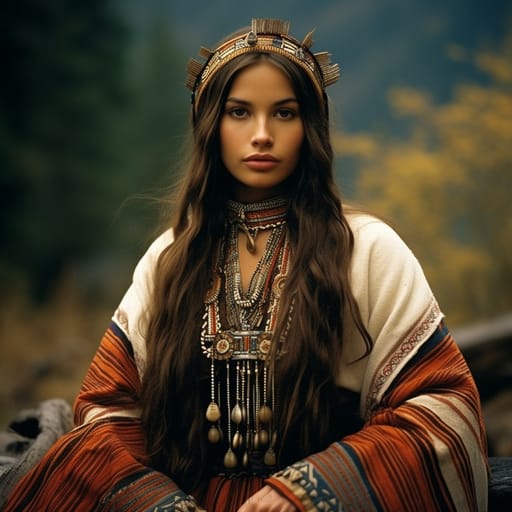
Mapuche
same region (South America)
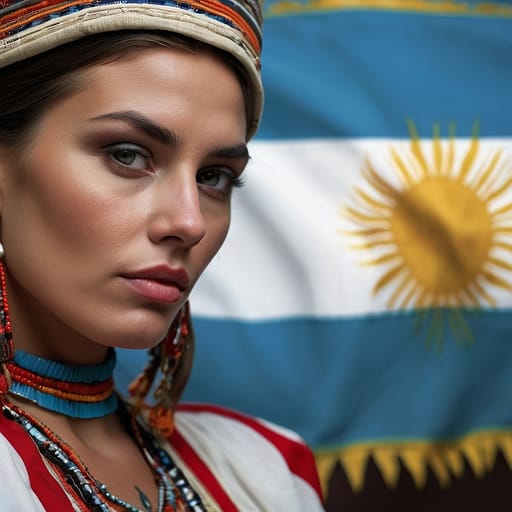
White Argentine
same region (South America)
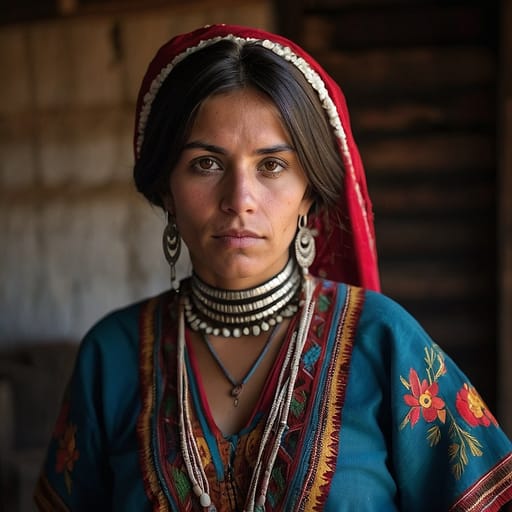
Mestizo Argentine
same region (South America)
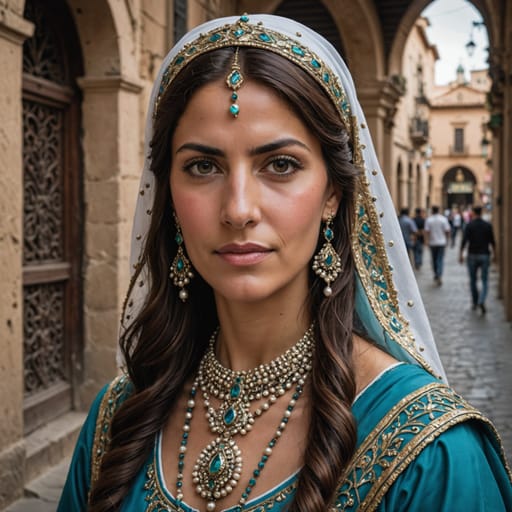
Middle Eastern Argentine
same region (South America)
Typical Kali'na Phenotypes
Reference for AI generation: hair, eyes, skin, facial structure, build
Kali'na Body & Anatomy Reference
Anatomy by feature, South American Indigenous / European-Mestizo / Afro-Latino mix phenotype
Kali'na Boobs & Breasts
The typical Kali'na bust is medium-to-large cup, full, high projection, in line with the wider South American Indigenous / European-Mestizo / Afro-Latino mix pattern. Areolas usually fall in the 32-46mm range, with medium-brown to dark-brown areolar pigmentation against the tan-to-deep-brown skin tone. Compared with the smaller bust profile of Andean Indigenous sub-populations, Kali'na breasts sit forward and are generally the classic Brazilian / Latina curvy bust profile in lowland populations; smaller and shorter-set in Andean Indigenous populations. A faithful AI render of Kali'na tits keeps that shape and areola size.
Kali'na Ass & Hips
Butt shape among Kali'na women: full, high projection, the famous Brazilian / Latina bunda profile, over wide iliac crests, very full gluteal-femoral fat deposition (the hallmark Brazilian / Latina hip-to-waist ratio). This follows South American Indigenous / European-Mestizo / Afro-Latino mix ancestry and looks quite unlike the slim narrow-hip East Asian profile. An accurate Kali'na ass in adult AI imagery keeps both the silhouette and the overall build (endomorph-to-mesomorph with high gluteal-femoral deposition) instead of a generic average.
Kali'na Vagina & Pussy
Vulvar anatomy among Kali'na women: medium-brown to dark-brown labial pigmentation, fuller labia minora. Pubic hair tends to be wavy-to-curly coarse dark texture, dense distribution, in the usual inverted-triangle pattern. Both follow South American Indigenous / European-Mestizo / Afro-Latino mix pigmentation, which is why Kali'na pussy renders should not fall back on a pale, sparse Western template.
Kali'na Dicks & Penis
The Kali'na cock profile, from South American Indigenous / European-Mestizo / Afro-Latino mix anthropometric data: regional mean ~13cm erect; moderate-to-above-average girth; medium-brown shaft pigmentation. Pubic hair has a wavy-to-curly coarse dark texture and forms the usual inverted-V pattern. Whether Kali'na men are circumcised follows religious and cultural practice rather than phenotype.
Kali'na Body, Curves & Build
Build and curves among Kali'na women follow the South American Indigenous / European-Mestizo / Afro-Latino mix pattern: endomorph-to-mesomorph with high gluteal-femoral deposition, mean adult female BMI 25-28. Proportions matter as much as skin tone, so Kali'na figures should keep their regional height and limb ratios.
Kali'na Skin Tone & Hair Texture
The Kali'na skin range is tan to deep-brown (Fitzpatrick III-VI), and hair tends to be straight-to-curly 1A-3C, varies widely by ancestral composition. That combination marks the South American Indigenous / European-Mestizo / Afro-Latino mix phenotype, and skin tone is the trait AI generators most often get wrong for Kali'na women.
Explore phenotype categories
Structured taxonomy with peer-reviewed scales · 22 anatomical categories
Erotic Poses & Sex Positions
From the pose catalog: 219 named positions with reference skeletons
Frequently asked questions about Kali'na people
Where is the Kali'na homeland?
The Kali'na homeland is Atlantic coast of northern South America: French Guiana, Suriname, Guyana, eastern Venezuela (Anzoátegui, Monagas, Bolívar) and a small community in Amapá, Brazil in South America.
What language do Kali'na people speak?
Kali'na people primarily speak Kali'na, also called Carib, Galibi or Kariña (Cariban); also Spanish, French, Dutch, English and local creoles.
What religion do Kali'na people practice?
The predominant religion among Kali'na people is Christian, largely Roman Catholic, with older beliefs about spirits and shamanic healing by the piai persisting.






Make your own Kali'na images
Five a day, free, no credits to buy. The studio starts from this group's phenotype data, so you can set body type, pose and style and keep the traits accurate.
Start with Kali'na