Help us get this right
Does this portrait look right for Jalali?
Nobody has judged this one yet. You would be the first.
Jalali Erotic
Around Mount Ararat: Maku County in West Azerbaijan Province, Iran, and the Doğubayazıt area of Ağrı Province, Turkey
Kurmanji Kurdish (Indo-European, Iranian); Azerbaijani, Persian or Turkish widely spoken as second languages
Sunni Islam
A tribe of the Kurmanji-speaking Kurds, part of the wider Kurdish people
About Jalali People
The Jalali are a Kurdish tribe whose identity is tied to a mountain. Their home ground is the country around Mount Ararat. Today that land is split between Ağrı Province in eastern Turkey and Maku County in Iran's West Azerbaijan Province, and Armenia and Azerbaijan's Nakhchivan exclave are close by. The border through this country has been redrawn several times in the last two centuries. The tribe's sense of itself rests on lineage and on shared grazing land, and it has lasted longer than any of those borders.
They speak Kurmanji, the northern branch of Kurdish, which is an Iranian language in the Indo-European family. Most people around them speak something else. Around Maku most people speak Azerbaijani, a Turkic language, while across the border Turkish is the language of school and government. Speaking two languages is ordinary. Religion draws a similar line. The Jalali are Sunni Muslims, while the Azerbaijanis of the Maku region are Shia. You can see the difference each Muharram, when Shia neighbors hold mourning rites that the Jalali do not.
For most of their history the Jalali were herders. They moved sheep between winter quarters on the lowlands and summer pasture high on Ararat. Because they knew the mountain and its passes, they kept causing trouble for the Russian, Ottoman and Persian authorities who shared the frontier in the nineteenth century.
Ararat
The episode that defined them came between 1927 and 1930. A Kurdish nationalist league called Xoybûn backed an uprising on the mountain and declared a Kurdish government there. Jalali fighters were a core part of the rebel force. Their chief, Bro Heski Tello, became one of its best known leaders, alongside the military commander Ihsan Nuri. Turkey answered with a large campaign that used aircraft as well as ground troops. Iran's side of the mountain had served as a rear base, and Iran came under pressure to close it. In 1932 the two countries redrew their border so that Turkey took the eastern slopes of Little Ararat, which removed that refuge for good. Deportations and resettlement followed, and the tribe's armed, largely self-governing life on the mountain never came back.
Most Jalali now live settled lives in villages and in towns such as Doğubayazıt and Maku, working the land and keeping livestock. Many have moved to larger cities in both countries. The tribal name still carries weight locally, and Ararat is still the landmark that means home.
Related ethnic groups
Groups that share Jalali's homeland, region, language, or religious tradition. These are likely candidates for comparative phenotype reference.
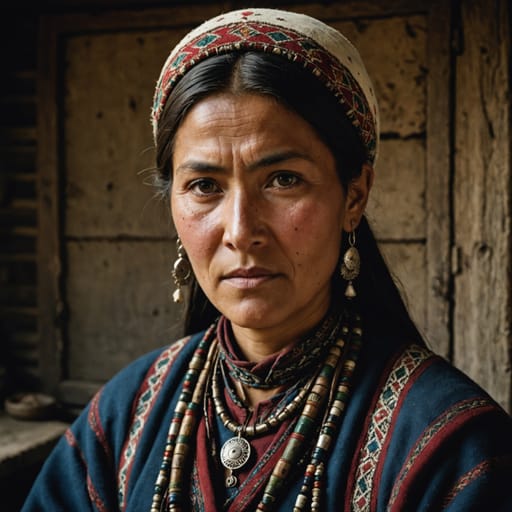
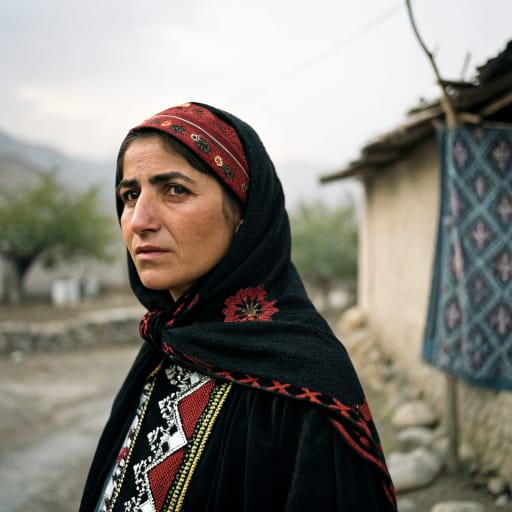
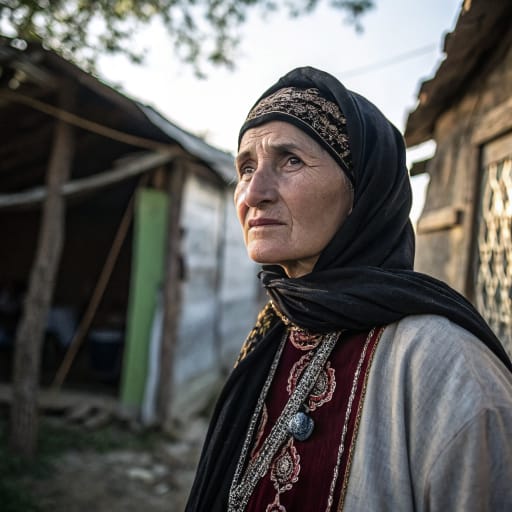
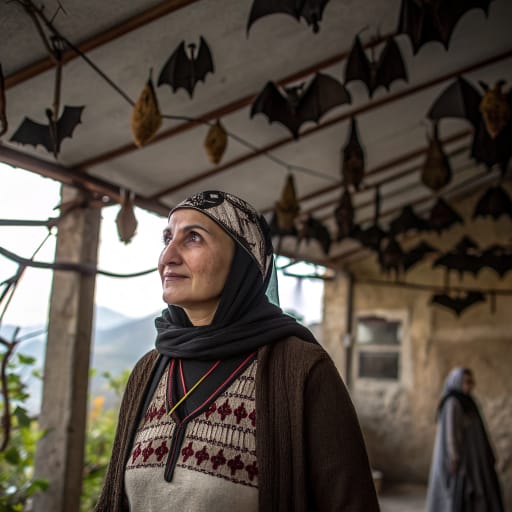
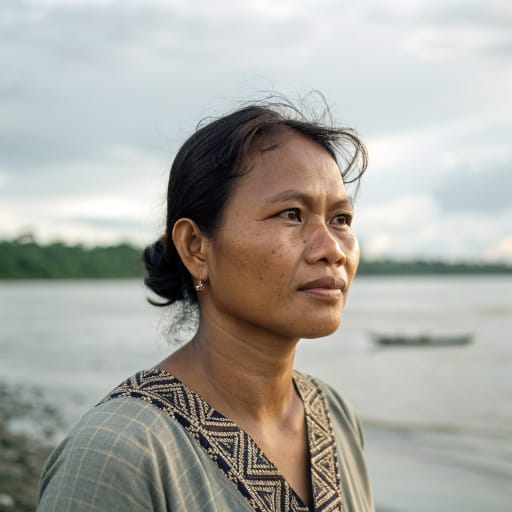
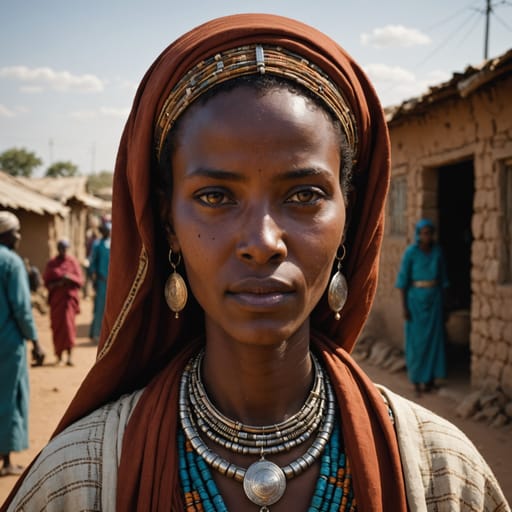
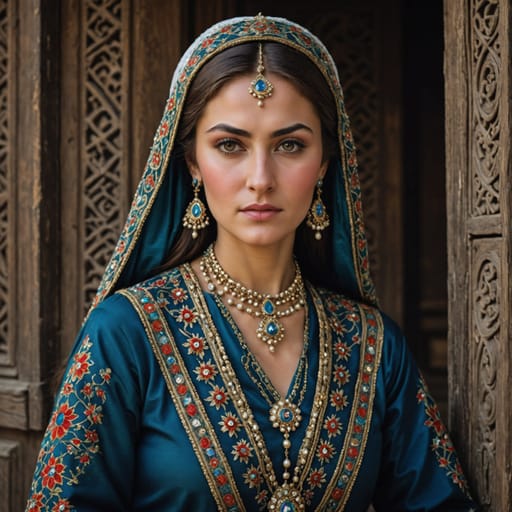
Typical Jalali Phenotypes
Reference for AI generation: hair, eyes, skin, facial structure, build
Jalali Body & Anatomy Reference
Levantine / Mediterranean Middle Eastern phenotype: anatomy reference for AI nude generation
Jalali Boobs & Breasts
Bust reference for Jalali women: medium-to-large cup, full, moderate-to-high projection, which is typical of Levantine / Mediterranean Middle Eastern ancestry. Areolas measure about 32-46mm across, with medium-brown to dark-brown pigmentation. Body type (mesomorph with fuller hip-and-bust deposition) shapes the bust as well, so Jalali tits are usually full and soft, fuller projection than the North-African Berber norm. In AI imagery, keep the forward-set shape rather than drifting toward the smaller East Asian bust profile.
Jalali Ass & Hips
The Jalali ass is typically medium-to-full, moderate projection, broader hip profile, which sets it apart from the slim East Asian narrow-hip profile. Underneath, the pelvis shows medium-to-wide iliac crests, fuller gluteal-femoral deposition, part of the Levantine / Mediterranean Middle Eastern skeletal pattern. For Jalali butt pics and AI renders, match that silhouette and the overall build (mesomorph with fuller hip-and-bust deposition).
Jalali Vagina & Pussy
Jalali pussy and vulvar anatomy presents medium-brown to dark-brown labial pigmentation, fuller labia minora, consistent with the Levantine / Mediterranean Middle Eastern phenotype's pigmentation pattern. Jalali pubic hair is typically wavy-to-coiled medium-coarse dark texture, dense distribution, in the inverted-triangle pattern. For anatomically accurate Jalali pussy renders the labial coloration should match the surrounding olive to medium-brown skin tone with a continuous gradient, and the hair should keep its wavy-to-coiled medium-coarse dark texture.
Jalali Dicks & Penis
Jalali dicks follow the Levantine / Mediterranean Middle Eastern reference data: regional mean ~14cm erect; moderate-to-above-average girth; medium-brown shaft pigmentation. Shaft color should track the olive to medium-brown skin tone with a smooth change toward the glans, and Jalali pubic hair keeps its wavy-to-coiled medium-coarse dark texture.
Jalali Body, Curves & Build
Jalali body type and overall build presents as mesomorph with fuller hip-and-bust deposition, with mean adult female BMI 25-28: the characteristic Levantine / Mediterranean Middle Eastern habitus. Jalali curves and proportions should keep the regional skeletal frame (height, shoulder-to-hip ratio, limb proportions) rather than a generic mesomorph default.
Jalali Skin Tone & Hair Texture
Jalali skin sits in the olive to medium-brown (Fitzpatrick III-V) band. Hair is typically wavy-to-curly 2B-3B, predominantly dark-brown to black, in keeping with the Levantine / Mediterranean Middle Eastern phenotype. In nude renders the skin should stay one even tone from face to body, and body, pubic and head hair should match.
Explore phenotype categories
Structured taxonomy with peer-reviewed scales · 22 anatomical categories
Erotic Poses & Sex Positions
From the pose catalog: 219 named positions with reference skeletons
Frequently asked questions about Jalali people
Where is the Jalali homeland?
The Jalali homeland is Around Mount Ararat: Maku County in West Azerbaijan Province, Iran, and the Doğubayazıt area of Ağrı Province, Turkey in Western Asia.
What language do Jalali people speak?
Jalali people primarily speak Kurmanji Kurdish (Indo-European, Iranian); Azerbaijani, Persian or Turkish widely spoken as second languages.
What religion do Jalali people practice?
The predominant religion among Jalali people is Sunni Islam.






Make your own Jalali images
Five a day, free, no credits to buy. The studio starts from this group's phenotype data, so you can set body type, pose and style and keep the traits accurate.
Start with Jalali