Help us get this right
Does this portrait look right for Huarpe?
Nobody has judged this one yet. You would be the first.
Huarpe Erotic
Cuyo region of west-central Argentina: Mendoza, San Juan and San Luis provinces, especially the Guanacache lagoons and the Lavalle department
Allentiac and Millcayac (Huarpean), both extinct; Spanish (Indo-European, Romance) today
Roman Catholic, with strong local saints' festivals such as the feast at Lagunas del Rosario
Allentiac (San Juan), Millcayac (Mendoza) and Puntano (San Luis) branches; the Guanacache lagoon communities are at the center of the modern revival
About Huarpe People
For much of the twentieth century, Argentine schoolbooks spoke of the Huarpe in the past tense. The people who once farmed the irrigated valleys of Cuyo, in today's Mendoza, San Juan and San Luis provinces, were said to have faded into colonial society centuries earlier. The families still herding goats and weaving reed baskets around the Guanacache lagoons disagreed, and since the 1990s they have made that disagreement public. Being Huarpe today means descent, and it also means holding on to a history others had written off.
The Huarpe homeland is the dry country at the foot of the Andes, where nothing grows without meltwater carried down from the mountains. In the valleys the Huarpe dug canals and raised maize, beans and squash, and later irrigation around Mendoza grew out of that work. Farther out, where the San Juan and Mendoza rivers spread into the Guanacache wetlands, people lived by fishing, hunting waterfowl and working the reeds. Inca influence reached northern Cuyo in the late 1400s. Spanish chroniclers later wrote with some awe about Huarpe hunters who ran their game down on foot.
Two Huarpe languages are known: Allentiac around San Juan and Millcayac around Mendoza. Most of what survives of them comes from the grammars and catechisms that the Jesuit Luis de Valdivia published in 1607. Both have long been silent. Spanish is the everyday language now, though Huarpe words live on in place names across the region.
The colonial break was brutal. Mendoza was founded from Chile in 1561 and San Juan a year later, and Cuyo stayed under Chilean rule until 1776. Encomienda holders in Santiago marched Huarpe laborers over the mountain passes to work west of the Andes, and many never came back. Disease and forced labor emptied the valleys, and survivors pulled back toward the lagoons. Then in the twentieth century, upstream irrigation cut off the rivers, most of Guanacache dried out and the fishing life went with it.
Huarpe communities today are mostly rural. They live in scattered puestos, or herding homesteads, in Mendoza's Lavalle department and nearby parts of San Juan. Catholicism is the shared faith, and the yearly feast at the chapel of Lagunas del Rosario is still a major gathering. In 2001 Mendoza formally recognized the Huarpe as a people who were there before the state. That started a long fight over land titles, still unsettled, in the desert their families never gave up.
Related ethnic groups
Groups that share Huarpe's homeland, region, language, or religious tradition. These are likely candidates for comparative phenotype reference.
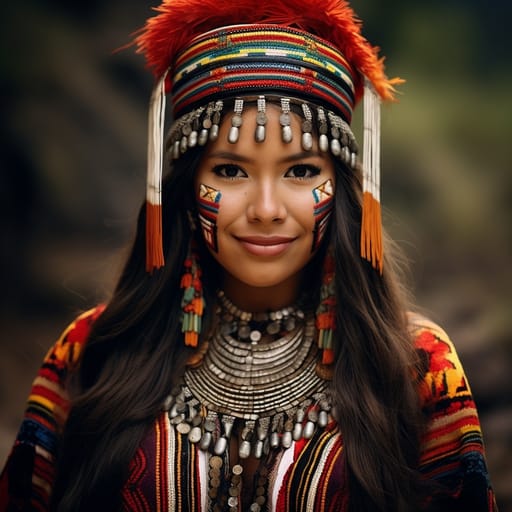
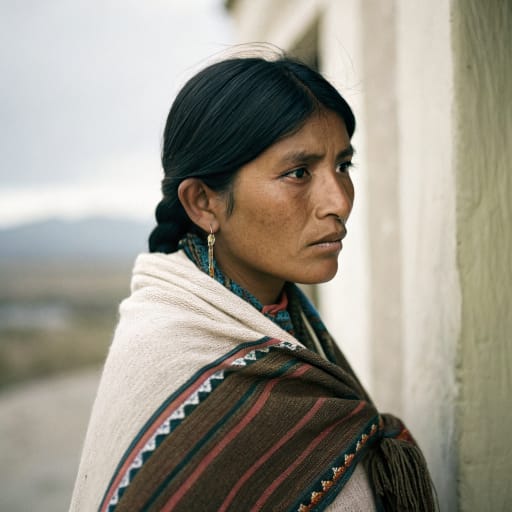
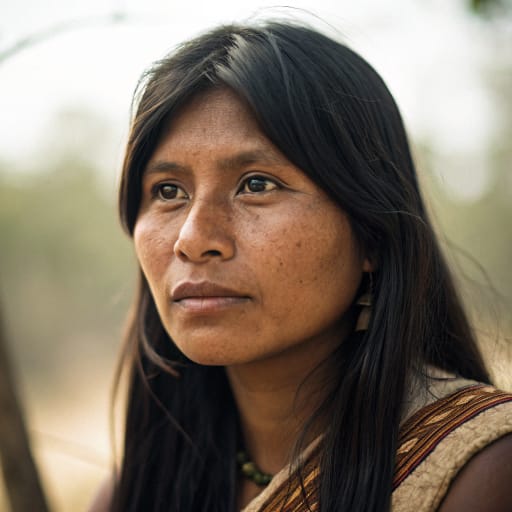
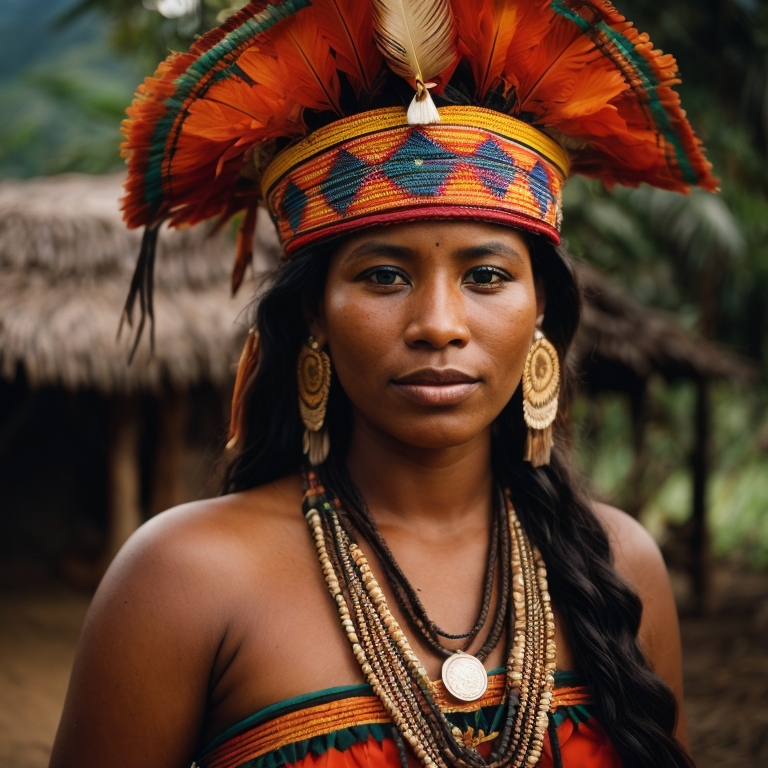
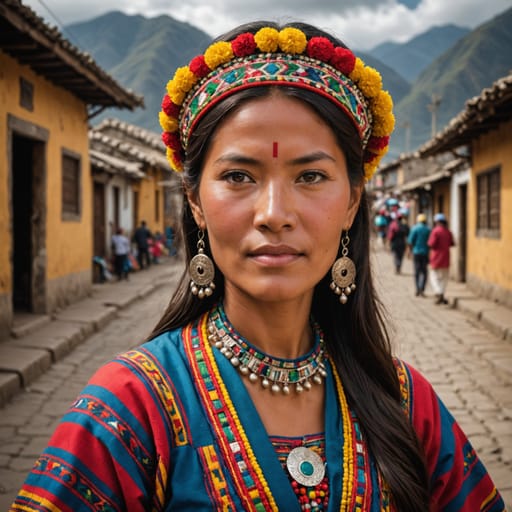
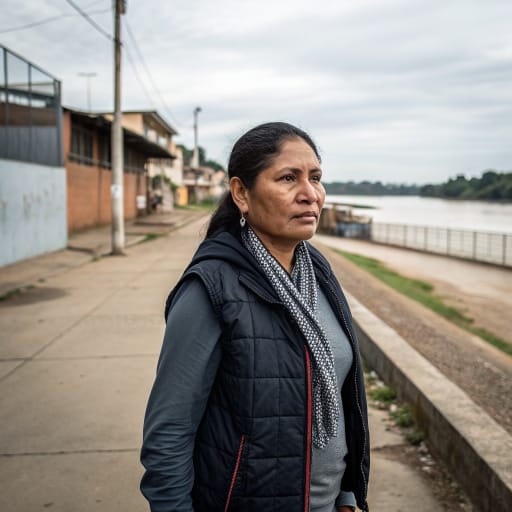
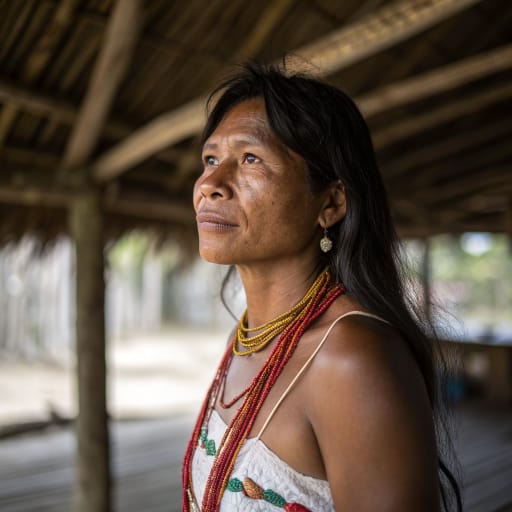
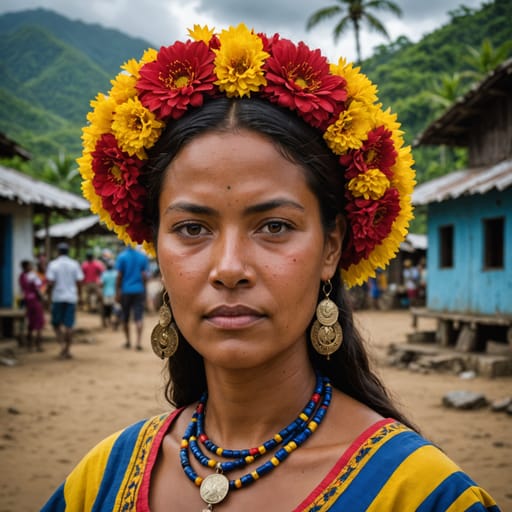
Typical Huarpe Phenotypes
Reference for AI generation: hair, eyes, skin, facial structure, build
Huarpe Body & Anatomy Reference
South American Indigenous / European-Mestizo / Afro-Latino mix phenotype: anatomy reference for AI nude generation
Huarpe Boobs & Breasts
The typical Huarpe bust is medium-to-large cup, full, high projection, in line with the wider South American Indigenous / European-Mestizo / Afro-Latino mix pattern. Areolas usually fall in the 32-46mm range, with medium-brown to dark-brown areolar pigmentation against the tan-to-deep-brown skin tone. Compared with the smaller bust profile of Andean Indigenous sub-populations, Huarpe breasts sit forward and are generally the classic Brazilian / Latina curvy bust profile in lowland populations; smaller and shorter-set in Andean Indigenous populations. A faithful AI render of Huarpe tits keeps that shape and areola size.
Huarpe Ass & Hips
Butt shape among Huarpe women: full, high projection, the famous Brazilian / Latina bunda profile, over wide iliac crests, very full gluteal-femoral fat deposition (the hallmark Brazilian / Latina hip-to-waist ratio). This follows South American Indigenous / European-Mestizo / Afro-Latino mix ancestry and looks quite unlike the slim narrow-hip East Asian profile. An accurate Huarpe ass in adult AI imagery keeps both the silhouette and the overall build (endomorph-to-mesomorph with high gluteal-femoral deposition) instead of a generic average.
Huarpe Vagina & Pussy
Vulvar anatomy among Huarpe women: medium-brown to dark-brown labial pigmentation, fuller labia minora. Pubic hair tends to be wavy-to-curly coarse dark texture, dense distribution, in the usual inverted-triangle pattern. Both follow South American Indigenous / European-Mestizo / Afro-Latino mix pigmentation, which is why Huarpe pussy renders should not fall back on a pale, sparse Western template.
Huarpe Dicks & Penis
The Huarpe cock profile, from South American Indigenous / European-Mestizo / Afro-Latino mix anthropometric data: regional mean ~13cm erect; moderate-to-above-average girth; medium-brown shaft pigmentation. Pubic hair has a wavy-to-curly coarse dark texture and forms the usual inverted-V pattern. Whether Huarpe men are circumcised follows religious and cultural practice rather than phenotype.
Huarpe Body, Curves & Build
Build and curves among Huarpe women follow the South American Indigenous / European-Mestizo / Afro-Latino mix pattern: endomorph-to-mesomorph with high gluteal-femoral deposition, mean adult female BMI 25-28. Proportions matter as much as skin tone, so Huarpe figures should keep their regional height and limb ratios.
Huarpe Skin Tone & Hair Texture
The Huarpe skin range is tan to deep-brown (Fitzpatrick III-VI), and hair tends to be straight-to-curly 1A-3C, varies widely by ancestral composition. That combination marks the South American Indigenous / European-Mestizo / Afro-Latino mix phenotype, and skin tone is the trait AI generators most often get wrong for Huarpe women.
Explore phenotype categories
Structured taxonomy with peer-reviewed scales · 22 anatomical categories
Erotic Poses & Sex Positions
From the pose catalog: 219 named positions with reference skeletons
Frequently asked questions about Huarpe people
Where is the Huarpe homeland?
The Huarpe homeland is Cuyo region of west-central Argentina: Mendoza, San Juan and San Luis provinces, especially the Guanacache lagoons and the Lavalle department in South America.
What language do Huarpe people speak?
Huarpe people primarily speak Allentiac and Millcayac (Huarpean), both extinct; Spanish (Indo-European, Romance) today.
What religion do Huarpe people practice?
The predominant religion among Huarpe people is Roman Catholic, with strong local saints' festivals such as the feast at Lagunas del Rosario.






Make your own Huarpe images
Five a day, free, no credits to buy. The studio starts from this group's phenotype data, so you can set body type, pose and style and keep the traits accurate.
Start with Huarpe