Help us get this right
Does this portrait look right for Cretan Muslims?
Nobody has judged this one yet. You would be the first.
Cretan Muslims Erotic
The island of Crete, Greece, with descendant communities on the Aegean and Mediterranean coasts of Turkey and at al-Hamidiyah in Syria
Cretan Greek (Hellenic, Indo-European), historically written in Arabic script; Ottoman Turkish for administration, Turkish among most descendants (Turkic)
Sunni Islam, Hanafi school, with Bektashi and other Sufi lodges influential in the towns
A Muslim branch of the Cretan Greek population; kin to other Ottoman-era Greek-speaking Muslim communities such as the Vallahades of Macedonia; known in Turkey as Giritli
About Cretan Muslims People
The Cretan Muslims were the Greek-speaking Muslim population of Crete, formed by conversion in the generations after the Ottoman conquest of the island in the seventeenth century and dispersed for good in 1923, when the last of them were deported to Turkey under the Greek-Turkish population exchange. Their descendants live today in Turkish coastal towns and in a village on the Syrian coast, where a few of the oldest speakers still use Cretan Greek. What made them distinctive was that they were not settlers. When Chania fell in 1645 and Candia surrendered in 1669 after a siege of more than twenty years, the Ottomans took an island whose villagers then converted in unusual numbers: the head tax on non-Muslims was heavy, the road to land and office ran through the mosque, and by the early nineteenth century Muslims may have been close to a third of the population. They kept their language. Cretan Greek stayed the mother tongue of the whole community, spoken at home, in the market and in the mosque courtyard, and some of them wrote it in Arabic script, producing a small body of verse and correspondence that looks Ottoman on the page and sounds like a village near Rethymno when read aloud. Turkish was for officials. Most were Sunni of the Hanafi school, with Sufi lodges, Bektashi among them, carrying real weight in the towns.
They ended up an urban people, and not by choice. The revolts that ran through the nineteenth century, 1821, 1841, 1858, 1866, 1878, 1889, 1897, pushed them out of the countryside and into the walled quarters of Chania, Rethymno and Heraklion, each round of fighting followed by another wave of departures for Anatolia, Ottoman Syria, Libya and Egypt. Sultan Abdulhamid II settled one such wave in a purpose-built village on the Syrian shore, al-Hamidiyah, in 1897. The autonomous Cretan State that followed the intervention of the Great Powers left them without political footing, and union with Greece in 1913 made the ending a matter of timing. The 1923 exchange sorted people by religion rather than language, so Greek-speaking families were shipped to a country whose language they did not know, and were called Giritli, Cretans, when they got there. In Turkey the name still carries, and it comes with olive oil, wild greens and snails, a way of cooking the neighbors found eccentric for a generation and then took up.
Related ethnic groups
Groups that share Cretan Muslims's homeland, region, language, or religious tradition. These are likely candidates for comparative phenotype reference.
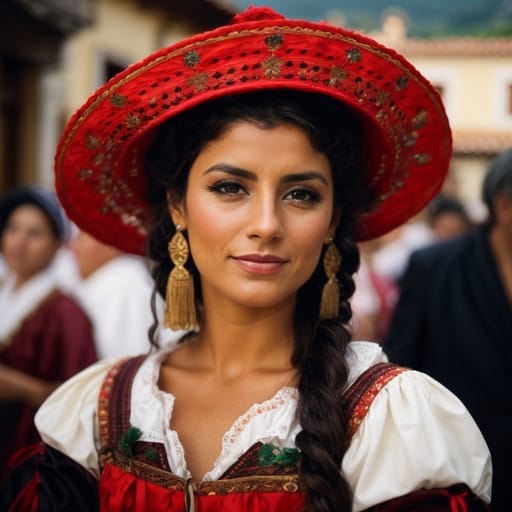
Basques
same region (Southern Europe)
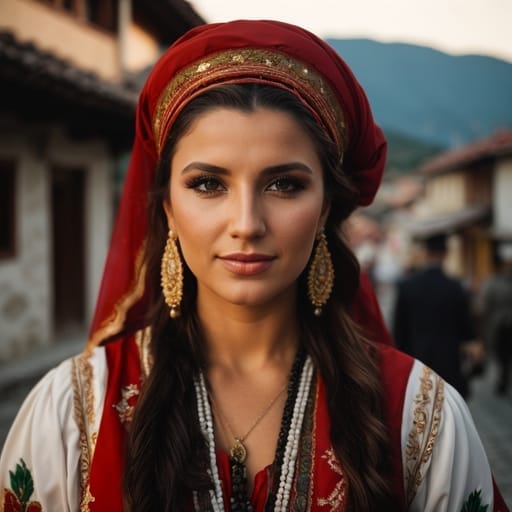
Bosniaks
same region (Southern Europe)
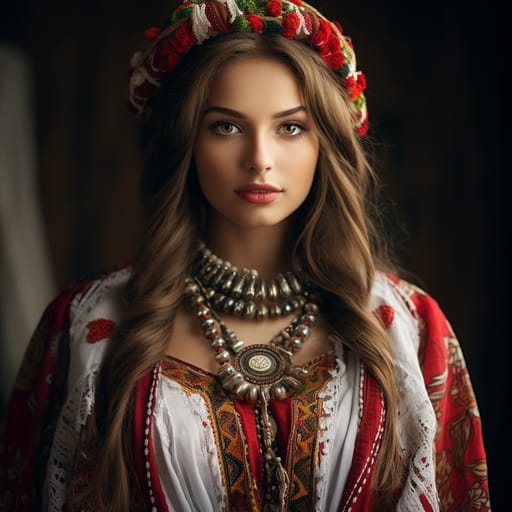
Moldovans
same region (Southern Europe)
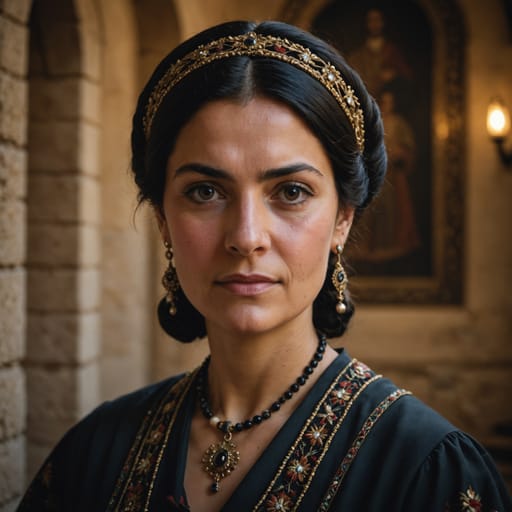
Maltese
same region (Southern Europe)
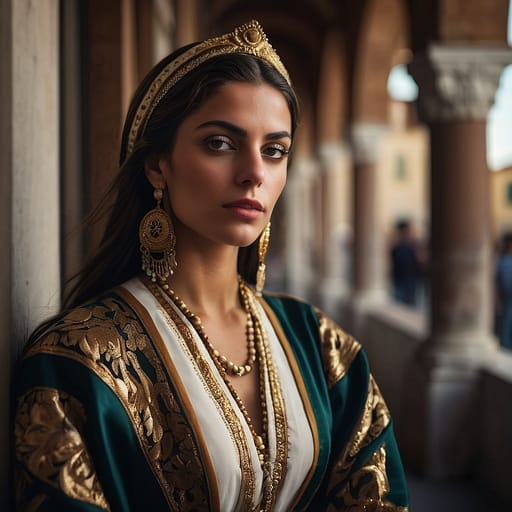
Italian
same region (Southern Europe)
Opici
same region (Southern Europe)
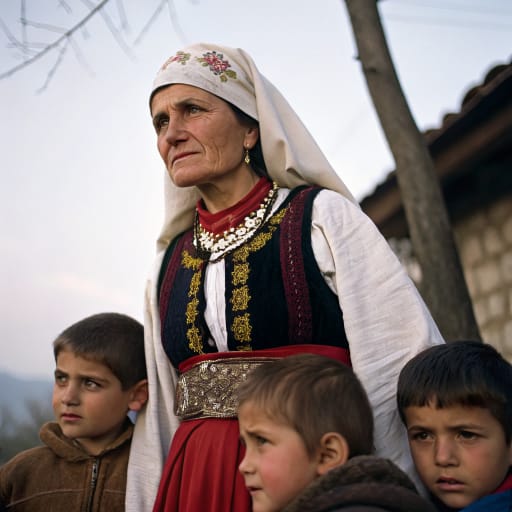
Albanians
same region (Southern Europe)
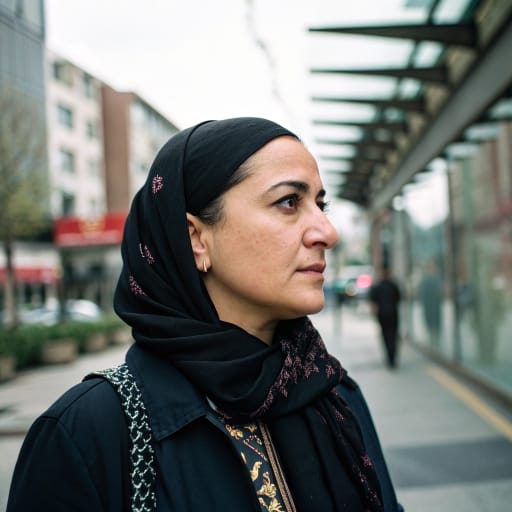
Ashkali and Balkan Egyptians
same region (Southern Europe)
Typical Cretan Muslims Phenotypes
Reference for AI generation: hair, eyes, skin, facial structure, build
Cretan Muslims Body & Anatomy Reference
Anatomy by feature, Southern European / Mediterranean phenotype
Cretan Muslims Boobs & Breasts
The typical Cretan Muslims bust is medium-to-large cup, full, moderate-to-high projection, in line with the wider Southern European / Mediterranean pattern. Areolas usually fall in the 32-46mm range, with medium-brown to dark-brown areolar pigmentation against the olive-to-light-brown skin tone. Compared with the lighter pigmentation of the Northern European bust, Cretan Muslims breasts sit forward and are generally full and projecting, generally the classic Mediterranean curvy bust profile. A faithful AI render of Cretan Muslims tits keeps that shape and areola size.
Cretan Muslims Ass & Hips
Butt shape among Cretan Muslims women: medium-to-full, moderate-to-high projection, broader hip profile, over medium-to-wide iliac crests, full gluteal-femoral fat distribution. This follows Southern European / Mediterranean ancestry and looks quite unlike the slim Northern European narrow-hip pattern. An accurate Cretan Muslims ass in adult AI imagery keeps both the silhouette and the overall build (mesomorph with full hip-and-bust deposition) instead of a generic average.
Cretan Muslims Vagina & Pussy
Vulvar anatomy among Cretan Muslims women: medium-brown to dark-brown labial pigmentation, fuller labia minora. Pubic hair tends to be wavy-to-curly medium-coarse dark texture, dense distribution, in the usual inverted-triangle pattern. Both follow Southern European / Mediterranean pigmentation, which is why Cretan Muslims pussy renders should not fall back on a pale, sparse Western template.
Cretan Muslims Dicks & Penis
The Cretan Muslims cock profile, from Southern European / Mediterranean anthropometric data: regional mean ~13-14cm erect; moderate girth; medium-brown shaft pigmentation. Pubic hair has a wavy-to-curly medium-coarse dark texture and forms the usual inverted-V pattern. Whether Cretan Muslims men are circumcised follows religious and cultural practice rather than phenotype.
Cretan Muslims Body, Curves & Build
Build and curves among Cretan Muslims women follow the Southern European / Mediterranean pattern: mesomorph with full hip-and-bust deposition, mean adult female BMI 24-28. Proportions matter as much as skin tone, so Cretan Muslims figures should keep their regional height and limb ratios.
Cretan Muslims Skin Tone & Hair Texture
The Cretan Muslims skin range is olive to medium (Fitzpatrick III-IV), and hair tends to be wavy-to-curly 2B-3B, dark-brown to black. That combination marks the Southern European / Mediterranean phenotype, and skin tone is the trait AI generators most often get wrong for Cretan Muslims women.
Explore phenotype categories
Structured taxonomy with peer-reviewed scales · 22 anatomical categories
Erotic Poses & Sex Positions
From the pose catalog: 219 named positions with reference skeletons
Frequently asked questions about Cretan Muslims people
Where is the Cretan Muslims homeland?
The Cretan Muslims homeland is The island of Crete, Greece, with descendant communities on the Aegean and Mediterranean coasts of Turkey and at al-Hamidiyah in Syria in Southern Europe.
What language do Cretan Muslims people speak?
Cretan Muslims people primarily speak Cretan Greek (Hellenic, Indo-European), historically written in Arabic script; Ottoman Turkish for administration, Turkish among most descendants (Turkic).
What religion do Cretan Muslims people practice?
The predominant religion among Cretan Muslims people is Sunni Islam, Hanafi school, with Bektashi and other Sufi lodges influential in the towns.






Make your own Cretan Muslims images
Five a day, free, no credits to buy. The studio starts from this group's phenotype data, so you can set body type, pose and style and keep the traits accurate.
Start with Cretan Muslims