No portrait yet
Coconuco Erotic
Andean highlands of Cauca Department, Colombia, around the Puracé volcano, the town of Coconuco and the Paletará plateau, southeast of Popayán
Spanish; the ancestral Coconuco language is extinct (Coconucan, related to Namtrik and Totoró, often grouped with Barbacoan)
Mostly Roman Catholic, alongside Indigenous beliefs that treat volcanoes, lagoons and springs as sacred
Communities with their own cabildos, including Coconuco, Puracé, Paletará, Poblazón and Quintana; related by language history to the Misak (Guambiano) and Totoró
About Coconuco People
The Coconuco, who increasingly write their name Kokonuko, are a highland people of Colombia's Cauca Department, living on the cold slopes and plateaus southeast of Popayán. Their country is volcanic. The range that carries their name, the Cordillera de los Coconucos, includes the Puracé volcano, and the ground around their communities steams with hot springs and sulfur vents. Above the farms sits the páramo, a wet, treeless moorland of frailejón plants and lagoons near the headwaters of the Cauca River. What holds the Coconuco together as a people today is less a language or a costume than a structure: the resguardo, a collectively held territory, and the cabildo, the elected council that governs it.
That structure has deep roots and a hard history. The Spanish reached the Popayán plateau in the 1530s, and over the following centuries much of the best land passed into haciendas, where Indigenous families often worked under terraje, owing unpaid labor to a landlord in exchange for a plot to farm. In the 1970s the Coconuco joined other Cauca peoples in the Regional Indigenous Council of Cauca (CRIC) and took part in the land recoveries that broke that arrangement, occupying and reclaiming hacienda land. The council's motto, unity, land and culture, still frames local politics.
The Coconuco are not one village but a set of communities, among them Coconuco, Puracé, Paletará, Poblazón and Quintana, each with its own cabildo. Their ancestral language, related to the Namtrik still spoken by their Misak neighbors and to Totoró, did not survive. Spanish is the everyday tongue, and that loss shapes how people talk about recovering their culture. Most Coconuco are Catholic, but the landscape carries its own weight: volcanoes, lagoons and thermal waters are regarded as sacred places, and traditional healers still work with plants and water.
Daily life is rural and practical. Families grow potatoes and other cold-climate crops, keep dairy cattle on the Paletará plateau, and call communal work parties, called mingas, for any job too big for one household. The hot springs also bring in money, with community-run bathing sites drawing visitors from Popayán. Around Puracé, a sulfur mine on the volcano's flank was a major employer for decades, a reminder that this ground has always been worked as much as revered.
Related ethnic groups
Groups that share Coconuco's homeland, region, language, or religious tradition. These are likely candidates for comparative phenotype reference.
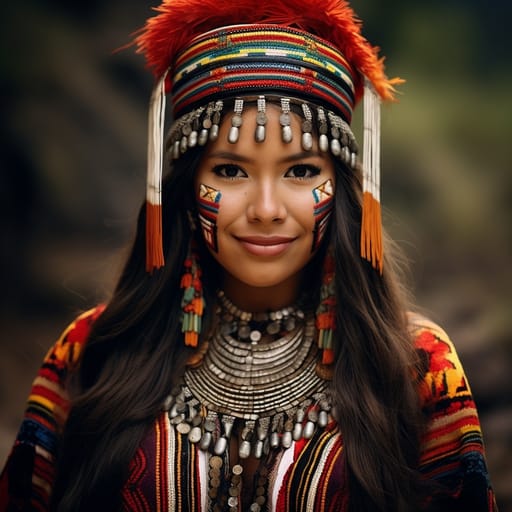
Quechua
same region (South America)
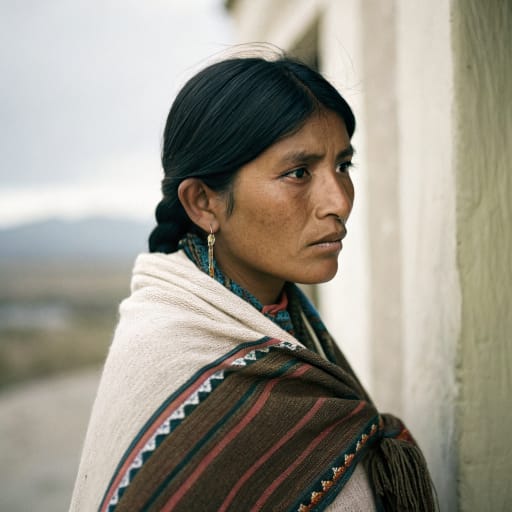
Aymara
same region (South America)
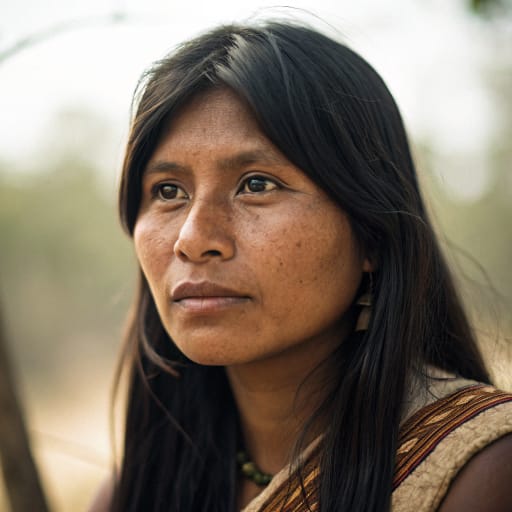
Guaraní
same region (South America)
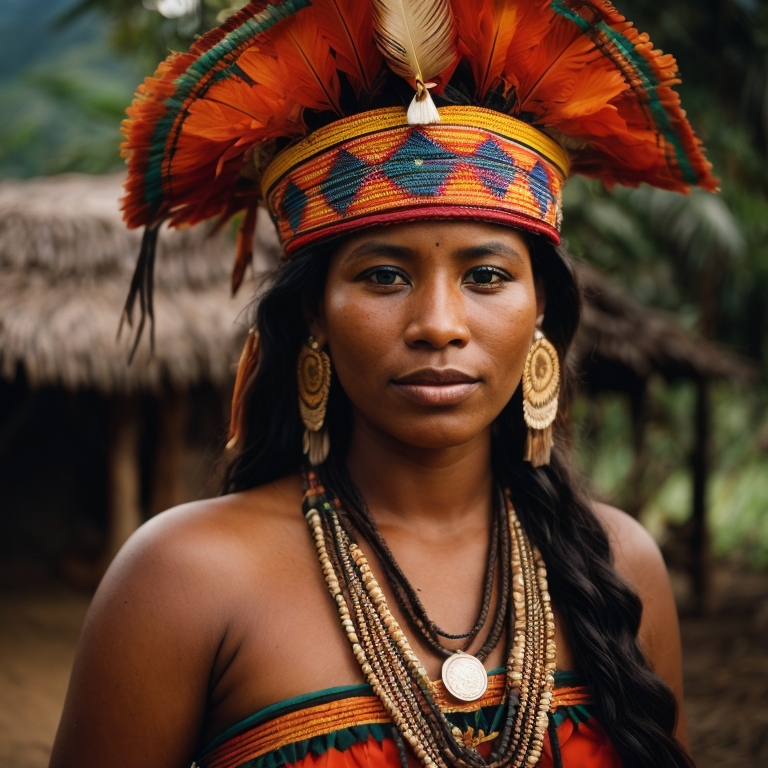
Emberá
same region (South America)
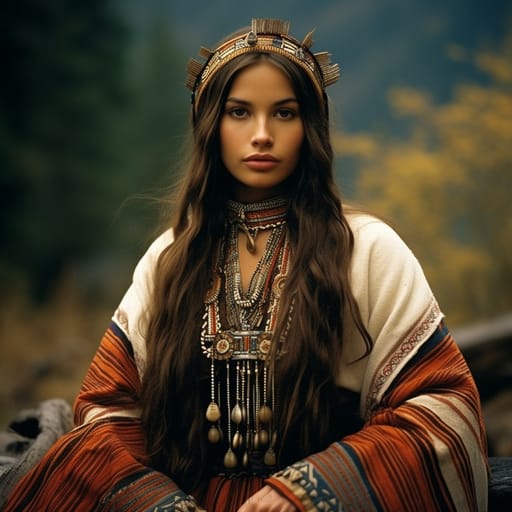
Mapuche
same region (South America)
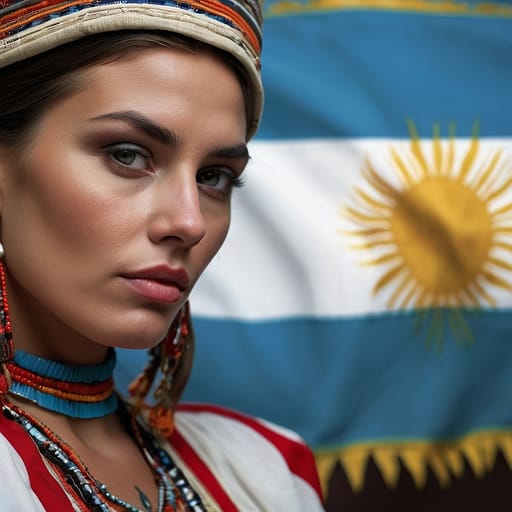
White Argentine
same region (South America)
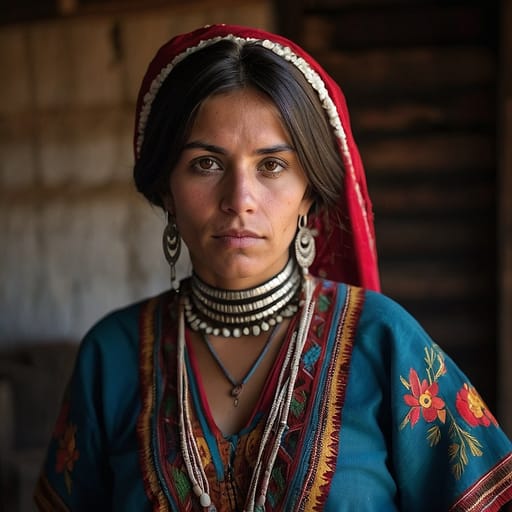
Mestizo Argentine
same region (South America)
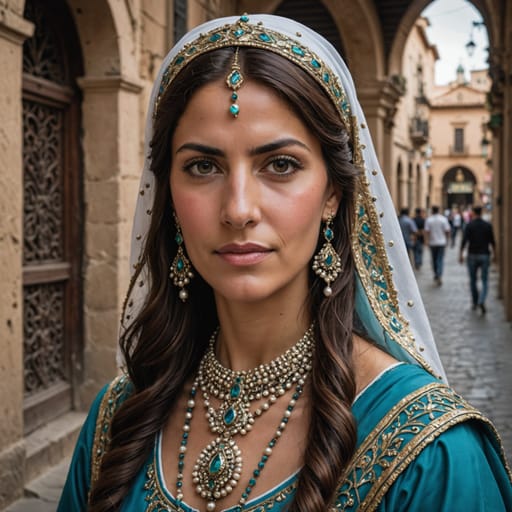
Middle Eastern Argentine
same region (South America)
Typical Coconuco Phenotypes
Reference for AI generation: hair, eyes, skin, facial structure, build
Coconuco Body & Anatomy Reference
Anatomy by feature, South American Indigenous / European-Mestizo / Afro-Latino mix phenotype
Coconuco Boobs & Breasts
The typical Coconuco bust is medium-to-large cup, full, high projection, in line with the wider South American Indigenous / European-Mestizo / Afro-Latino mix pattern. Areolas usually fall in the 32-46mm range, with medium-brown to dark-brown areolar pigmentation against the tan-to-deep-brown skin tone. Compared with the smaller bust profile of Andean Indigenous sub-populations, Coconuco breasts sit forward and are generally the classic Brazilian / Latina curvy bust profile in lowland populations; smaller and shorter-set in Andean Indigenous populations. A faithful AI render of Coconuco tits keeps that shape and areola size.
Coconuco Ass & Hips
Butt shape among Coconuco women: full, high projection, the famous Brazilian / Latina bunda profile, over wide iliac crests, very full gluteal-femoral fat deposition (the hallmark Brazilian / Latina hip-to-waist ratio). This follows South American Indigenous / European-Mestizo / Afro-Latino mix ancestry and looks quite unlike the slim narrow-hip East Asian profile. An accurate Coconuco ass in adult AI imagery keeps both the silhouette and the overall build (endomorph-to-mesomorph with high gluteal-femoral deposition) instead of a generic average.
Coconuco Vagina & Pussy
Vulvar anatomy among Coconuco women: medium-brown to dark-brown labial pigmentation, fuller labia minora. Pubic hair tends to be wavy-to-curly coarse dark texture, dense distribution, in the usual inverted-triangle pattern. Both follow South American Indigenous / European-Mestizo / Afro-Latino mix pigmentation, which is why Coconuco pussy renders should not fall back on a pale, sparse Western template.
Coconuco Dicks & Penis
The Coconuco cock profile, from South American Indigenous / European-Mestizo / Afro-Latino mix anthropometric data: regional mean ~13cm erect; moderate-to-above-average girth; medium-brown shaft pigmentation. Pubic hair has a wavy-to-curly coarse dark texture and forms the usual inverted-V pattern. Whether Coconuco men are circumcised follows religious and cultural practice rather than phenotype.
Coconuco Body, Curves & Build
Build and curves among Coconuco women follow the South American Indigenous / European-Mestizo / Afro-Latino mix pattern: endomorph-to-mesomorph with high gluteal-femoral deposition, mean adult female BMI 25-28. Proportions matter as much as skin tone, so Coconuco figures should keep their regional height and limb ratios.
Coconuco Skin Tone & Hair Texture
The Coconuco skin range is tan to deep-brown (Fitzpatrick III-VI), and hair tends to be straight-to-curly 1A-3C, varies widely by ancestral composition. That combination marks the South American Indigenous / European-Mestizo / Afro-Latino mix phenotype, and skin tone is the trait AI generators most often get wrong for Coconuco women.
Explore phenotype categories
Structured taxonomy with peer-reviewed scales · 22 anatomical categories
Erotic Poses & Sex Positions
From the pose catalog: 219 named positions with reference skeletons
Frequently asked questions about Coconuco people
Where is the Coconuco homeland?
The Coconuco homeland is Andean highlands of Cauca Department, Colombia, around the Puracé volcano, the town of Coconuco and the Paletará plateau, southeast of Popayán in South America.
What language do Coconuco people speak?
Coconuco people primarily speak Spanish; the ancestral Coconuco language is extinct (Coconucan, related to Namtrik and Totoró, often grouped with Barbacoan).
What religion do Coconuco people practice?
The predominant religion among Coconuco people is Mostly Roman Catholic, alongside Indigenous beliefs that treat volcanoes, lagoons and springs as sacred.






Make your own Coconuco images
Five a day, free, no credits to buy. The studio starts from this group's phenotype data, so you can set body type, pose and style and keep the traits accurate.
Start with Coconuco