Help us get this right
Does this portrait look right for Carenses?
Nobody has judged this one yet. You would be the first.
Carenses Erotic
Northern Sardinia (modern Italy), south of the Coracenses and north of the Salcitani and Lucuidonenses according to Ptolemy; exact territory uncertain.
Paleo-Sardinian, also called Nuragic (unclassified, no readable texts); Latin (Indo-European, Italic) spread under Roman rule and became Sardinian.
Indigenous Sardinian religion of Nuragic tradition: sacred wells, water and ancestor cults, with Punic and Roman deities added later. Nothing specific to the tribe is recorded.
One of the native tribes of Roman Sardinia listed by Ptolemy, with the Tibulati, Corsi, Coracenses, Cunusitani, Salcitani and Lucuidonenses; part of the wider Nuragic-descended Sardinian population.
About Carenses People
The Carenses were a native tribe of Roman-era Sardinia, recorded in the second century AD in the north of the island, and they vanished as a named people long ago, absorbed into the Latin-speaking population from which today's Sardinians descend. Nearly everything known about them comes from a single line. In his Geography, Ptolemy lists the peoples of Sardinia from north to south and places the Carenses below the Coracenses and above the Salcitani and Lucuidonenses. That fixes them roughly on the map and tells us nothing else. No ancient writer describes their villages, their leaders or a single event in their history, and any honest account has to start by admitting that.
What can be said comes from the island around them. The tribes Ptolemy names were the heirs of the Nuragic world, the Bronze Age society that covered Sardinia with thousands of stone towers, sacred wells and small bronze figures of warriors, archers and shepherds. By the time the Carenses entered the written record, that world had already absorbed centuries of Carthaginian presence on the coasts and then Roman rule, which began in 238 BC. Rome fought Sardinian hill peoples for generations, and the tribal names that survive in Ptolemy, on boundary stones and in military records show that native communities kept their identities well into the Empire, even as they paid Roman taxes and sent men into Roman auxiliary units. A bronze discharge diploma found at Dorgali, on the east coast, names a Sardinian soldier as Caresius, a label some scholars connect with the Carenses, though the link is not settled.
Their language was presumably the old speech of the island, usually called Paleo-Sardinian or Nuragic. It left no readable texts and cannot be placed in any known family with confidence. It survives mostly in place names and in a layer of words inside Sardinian, the Romance language that replaced it and that still stands closer to Latin than almost any of its relatives. Religion would have followed the wider Sardinian pattern: water sanctuaries and ancestor cults, with Punic and Roman gods layered on top over time.
The legacy of the Carenses is collective. They are one name in a short list, but that list is the best evidence that Roman Sardinia was a patchwork of distinct native peoples with their own territories. Genetic studies of modern Sardinians, who retain an unusually large share of ancestry from the island's prehistoric population, suggest that peoples like the Carenses did not die out. They lost their name and kept their descendants.
Related ethnic groups
Groups that share Carenses's homeland, region, language, or religious tradition. These are likely candidates for comparative phenotype reference.
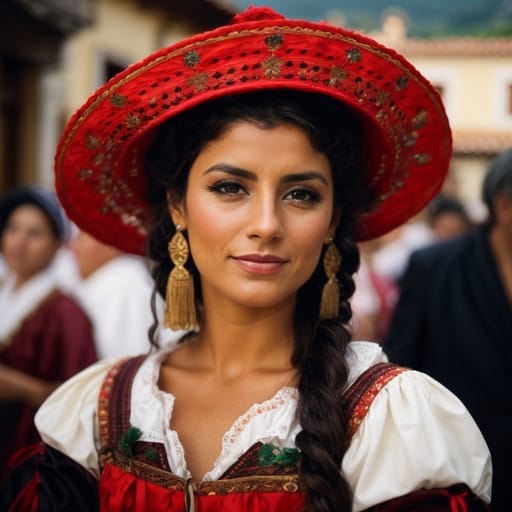
Basques
same region (Southern Europe)
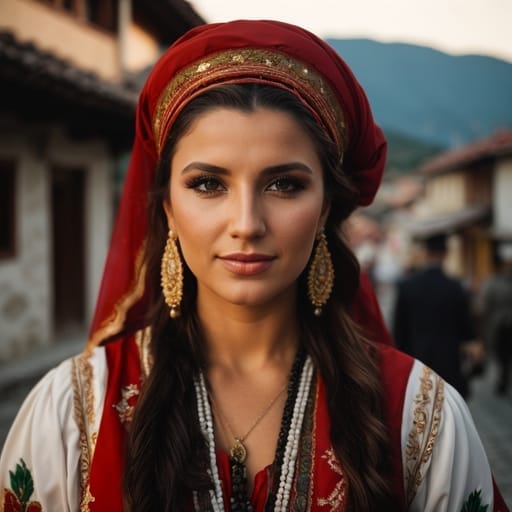
Bosniaks
same region (Southern Europe)
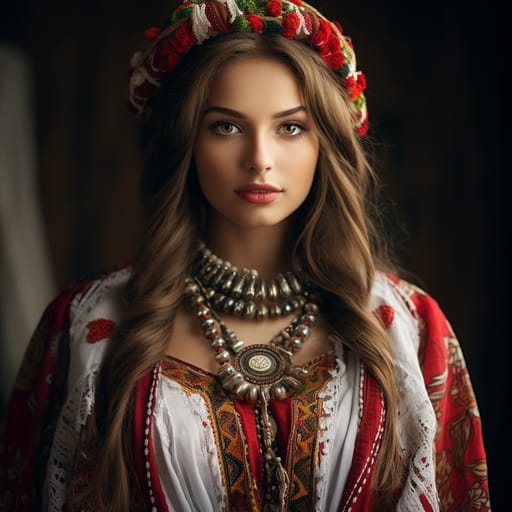
Moldovans
same region (Southern Europe)
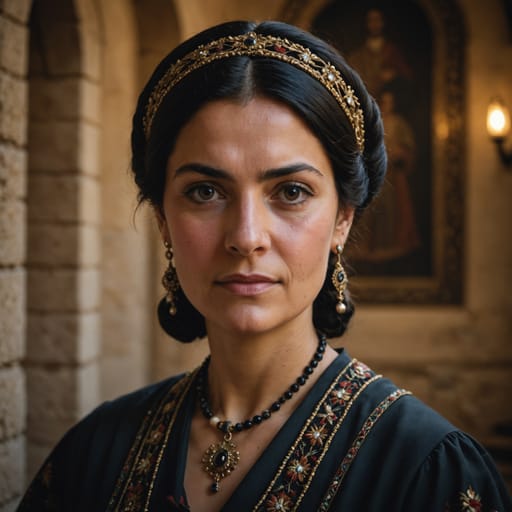
Maltese
same region (Southern Europe)
Rucensi
same region (Southern Europe)
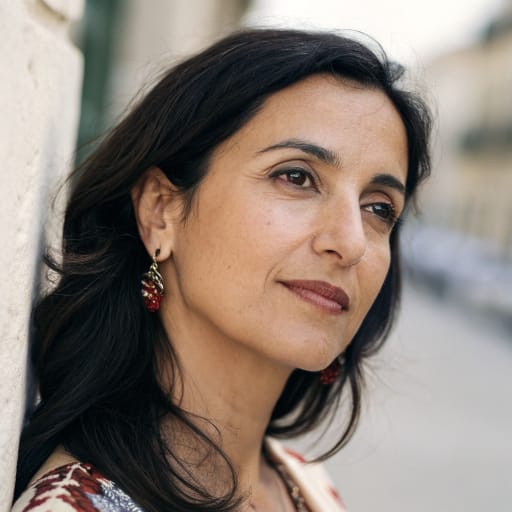
Andalusians
same region (Southern Europe)
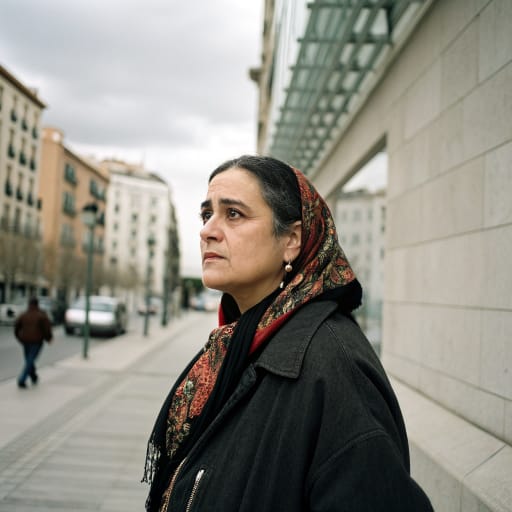
Mercheros
same region (Southern Europe)
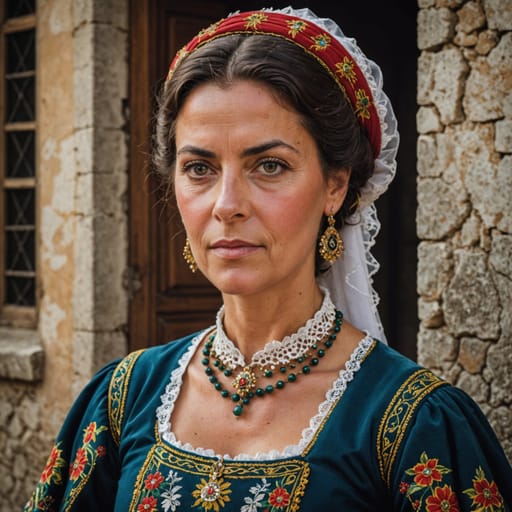
Portugal Other
same region (Southern Europe)
Typical Carenses Phenotypes
Reference for AI generation: hair, eyes, skin, facial structure, build
Carenses Body & Anatomy Reference
Per-feature anatomical profile for AI nude generation: Southern European / Mediterranean phenotype
Carenses Boobs & Breasts
Carenses tits and boobs run medium-to-large cup, full, moderate-to-high projection, the classic Southern European / Mediterranean bust profile. Carenses nipples and areolas show medium-brown to dark-brown areolar pigmentation against the olive-to-light-brown skin tone, with areolar diameter typically in the 32-46mm range and forward-set positioning rather than the lighter pigmentation of the Northern European bust. Carenses breasts trend full and projecting, generally the classic Mediterranean curvy bust profile, a function of the mesomorph with full hip-and-bust deposition body habitus and the mean adult female BMI 24-28. For anatomically accurate AI-generated Carenses nudes the render preserves the medium-to-large cup, full, moderate-to-high projection shape, 32-46mm areolas with medium-brown to dark-brown pigmentation, and the torso proportions of the Southern European / Mediterranean phenotype.
Carenses Ass & Hips
Carenses hips and butt usually read as medium-to-full, moderate-to-high projection, broader hip profile. The skeletal base is medium-to-wide iliac crests, full gluteal-femoral fat distribution, the Southern European / Mediterranean pattern. Set against the slim Northern European narrow-hip pattern, the difference is easy to see, and the hip-to-waist ratio is often what identifies Carenses women in photos.
Carenses Vagina & Pussy
Expect medium-brown to dark-brown labial pigmentation, fuller labia minora on Carenses women, in keeping with Southern European / Mediterranean ancestry. The pubic hair is wavy-to-curly medium-coarse dark texture, dense distribution. Coloring should run evenly from the olive to medium skin of the thighs to the labia, and Carenses nude imagery should keep the hair's wavy-to-curly medium-coarse dark texture.
Carenses Dicks & Penis
Carenses dick and penile anatomy in adult AI generation should anchor on the regional reference data: regional mean ~13-14cm erect, moderate girth, and medium-brown shaft pigmentation. The Carenses cock profile reflects the Southern European / Mediterranean population's anthropometric measurements. The shaft pigmentation should track the surrounding olive to medium skin tone, and the pubic hair should keep its wavy-to-curly medium-coarse dark texture in the typical inverted-V escutcheon.
Carenses Body, Curves & Build
Carenses body type: mesomorph with full hip-and-bust deposition, with mean adult female BMI 24-28. This is the typical Southern European / Mediterranean build. Height range, shoulder-to-hip ratio and fat distribution all follow from it, which is what an accurate Carenses nude body should show.
Carenses Skin Tone & Hair Texture
Carenses skin tone falls in the olive to medium (Fitzpatrick III-IV) band, the surface signal most often miscalibrated by generic AI nude generators. Carenses hair texture is typically wavy-to-curly 2B-3B, dark-brown to black, characteristic of the Southern European / Mediterranean phenotype. In Carenses nude renders the skin should hold that band consistently across the body.
Explore phenotype categories
Structured taxonomy with peer-reviewed scales · 22 anatomical categories
Erotic Poses & Sex Positions
From the pose catalog: 219 named positions with reference skeletons
Frequently asked questions about Carenses people
Where is the Carenses homeland?
The Carenses homeland is Northern Sardinia (modern Italy), south of the Coracenses and north of the Salcitani and Lucuidonenses according to Ptolemy; exact territory uncertain. in Southern Europe.
What language do Carenses people speak?
Carenses people primarily speak Paleo-Sardinian, also called Nuragic (unclassified, no readable texts); Latin (Indo-European, Italic) spread under Roman rule and became Sardinian..
What religion do Carenses people practice?
The predominant religion among Carenses people is Indigenous Sardinian religion of Nuragic tradition: sacred wells, water and ancestor cults, with Punic and Roman deities added later. Nothing specific to the tribe is recorded..






Make your own Carenses images
Five a day, free, no credits to buy. The studio starts from this group's phenotype data, so you can set body type, pose and style and keep the traits accurate.
Start with Carenses