Help us get this right
Does this portrait look right for Cacaopera?
Nobody has judged this one yet. You would be the first.
Cacaopera Erotic
Cacaopera municipality, Morazán department, northeastern El Salvador; historically also Lislique in La Unión department
Kakawira, also called Cacaopera (Misumalpan), extinct since the 20th century; Spanish (Indo-European, Romance) today
Roman Catholic with folk saint festivals and ceremonial dances; evangelical Protestant churches also present
Misumalpan-speaking people, related by language to the Matagalpa of Nicaragua; one of El Salvador's Indigenous peoples alongside the Pipil and Lenca
About Cacaopera People
The Cacaopera are the Indigenous people of Cacaopera, a hill town in the department of Morazán in northeastern El Salvador. What sets them apart is a language that looks out of place on the map. Their ancestral language, known as Kakawira, was neither Lenca nor Nahua like the speech of their neighbors. It was a Misumalpan language and a close relative of Matagalpa. Its other relatives, Miskito and the Sumu languages among them, are spoken far to the south and east in Honduras and Nicaragua. The usual explanation is that Misumalpan speakers moved into these dry, broken hills well before the Spanish arrived. They then held their ground among Lenca communities for centuries. Under colonial rule and the steady pressure of Spanish, Kakawira fell out of daily use. It went silent during the twentieth century, and what's left of it survives mainly in word lists written down by visiting researchers.
The people outlasted the language. The 1932 massacre fell hardest on the Pipil of western El Salvador, but Indigenous Salvadorans everywhere learned from it that looking or sounding native was dangerous. For decades afterward the state described the country as entirely mestizo. The Cacaopera kept their name and their town anyway. Daily life now is Spanish-speaking, mostly Catholic and built around small farms on steep ground, and evangelical churches have gained ground here as they have across rural El Salvador. Older forms live on inside the Catholic calendar: the Danza de los Emplumados, danced in tall feathered headdresses during town festivities, is the community's signature ceremonial performance. Morazán was one of the departments hit hardest by the civil war of the 1980s, which added fresh damage to a long history of pressure. Since then, local organizers have brought Cacaopera identity back into public view, including through Winakirika, a community museum in the town devoted to Cacaopera history and material culture. In 2014 El Salvador amended its constitution to recognize Indigenous peoples, and the Cacaopera are among the communities that recognition was meant to cover.
Related ethnic groups
Groups that share Cacaopera's homeland, region, language, or religious tradition. These are likely candidates for comparative phenotype reference.
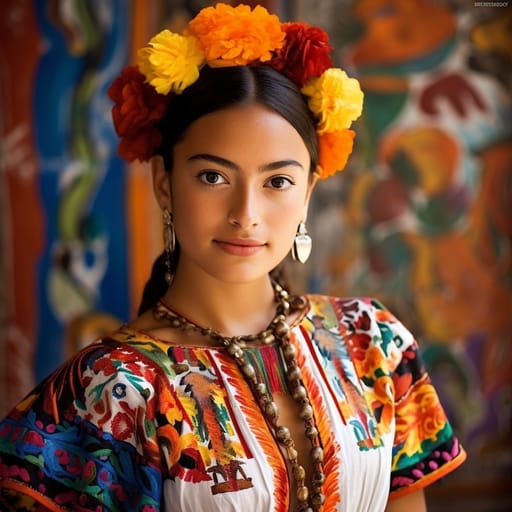
Otomi
same region (Central America)
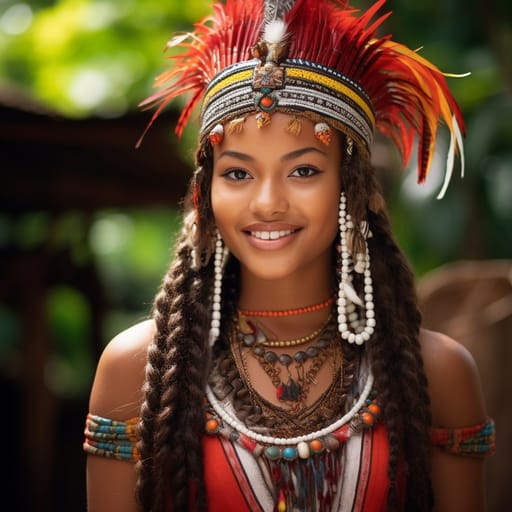
Kalinago
same region (Central America)
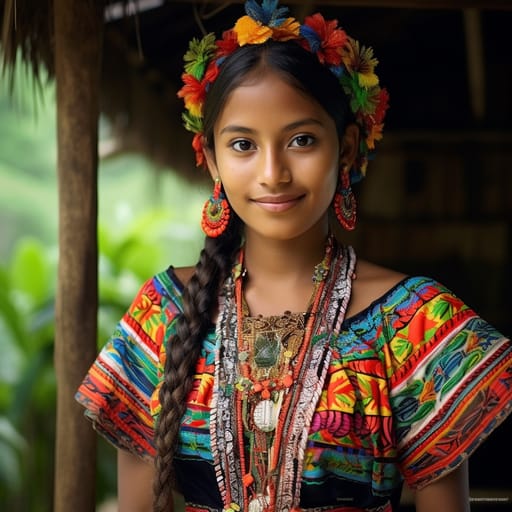
Miskito
same region (Central America)
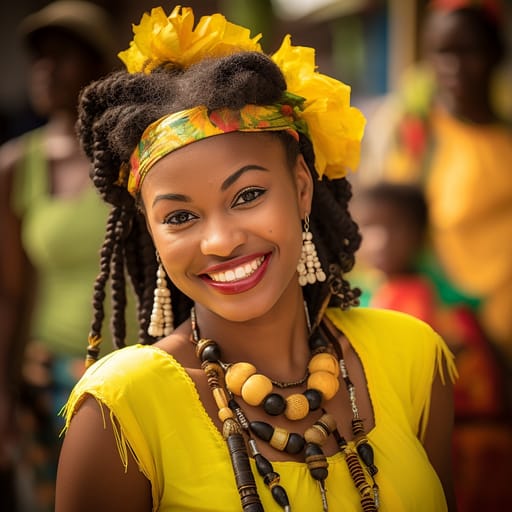
Garifuna
same region (Central America)
Mennonite Belizean
same region (Central America)
Chuj
same region (Central America)
Cabécar
same region (Central America)
Sumo-Mayangna
same region (Central America)
Typical Cacaopera Phenotypes
Reference for AI generation: hair, eyes, skin, facial structure, build
Cacaopera Body & Anatomy Reference
Mesoamerican Indigenous / Mestizo phenotype: anatomy reference for AI nude generation
Cacaopera Boobs & Breasts
Bust reference for Cacaopera women: medium-to-large cup, full, moderate-to-high projection, which is typical of Mesoamerican Indigenous / Mestizo ancestry. Areolas measure about 32-46mm across, with medium-brown to dark-brown pigmentation. Body type (endomorph-to-mesomorph with strong hip-and-bust deposition) shapes the bust as well, so Cacaopera tits are usually full and projecting, classic Latina curvy bust profile. In AI imagery, keep the forward-set shape rather than drifting toward the smaller East Asian bust.
Cacaopera Ass & Hips
The Cacaopera ass is typically medium-to-full, high projection, classic Latina curvy hip profile, which sets it apart from the slim narrow-hip East Asian profile. Underneath, the pelvis shows wide iliac crests, full gluteal-femoral fat deposition, part of the Mesoamerican Indigenous / Mestizo skeletal pattern. For Cacaopera butt pics and AI renders, match that silhouette and the overall build (endomorph-to-mesomorph with strong hip-and-bust deposition).
Cacaopera Vagina & Pussy
Cacaopera pussy and vulvar anatomy presents medium-brown to dark-brown labial pigmentation, fuller labia minora, consistent with the Mesoamerican Indigenous / Mestizo phenotype's pigmentation pattern. Cacaopera pubic hair is typically straight-to-wavy coarse dark texture, dense distribution, in the inverted-triangle pattern. For anatomically accurate Cacaopera pussy renders the labial coloration should match the surrounding tan to medium-brown skin tone with a continuous gradient, and the hair should keep its straight-to-wavy coarse dark texture.
Cacaopera Dicks & Penis
Cacaopera dicks follow the Mesoamerican Indigenous / Mestizo reference data: regional mean ~13cm erect; moderate girth; medium-brown shaft pigmentation. Shaft color should track the tan to medium-brown skin tone with a smooth change toward the glans, and Cacaopera pubic hair keeps its straight-to-wavy coarse dark texture.
Cacaopera Body, Curves & Build
Cacaopera body type and overall build presents as endomorph-to-mesomorph with strong hip-and-bust deposition, with mean adult female BMI 26-29: the characteristic Mesoamerican Indigenous / Mestizo habitus. Cacaopera curves and proportions should keep the regional skeletal frame (height, shoulder-to-hip ratio, limb proportions) rather than a generic mesomorph default.
Cacaopera Skin Tone & Hair Texture
Cacaopera skin sits in the tan to medium-brown (Fitzpatrick III-V) band. Hair is typically straight-to-wavy 1A-2B, dense dark-brown to black, in keeping with the Mesoamerican Indigenous / Mestizo phenotype. In nude renders the skin should stay one even tone from face to body, and body, pubic and head hair should match.
Explore phenotype categories
Structured taxonomy with peer-reviewed scales · 22 anatomical categories
Erotic Poses & Sex Positions
From the pose catalog: 219 named positions with reference skeletons
Frequently asked questions about Cacaopera people
Where is the Cacaopera homeland?
The Cacaopera homeland is Cacaopera municipality, Morazán department, northeastern El Salvador; historically also Lislique in La Unión department in Central America.
What language do Cacaopera people speak?
Cacaopera people primarily speak Kakawira, also called Cacaopera (Misumalpan), extinct since the 20th century; Spanish (Indo-European, Romance) today.
What religion do Cacaopera people practice?
The predominant religion among Cacaopera people is Roman Catholic with folk saint festivals and ceremonial dances; evangelical Protestant churches also present.






Make your own Cacaopera images
Five a day, free, no credits to buy. The studio starts from this group's phenotype data, so you can set body type, pose and style and keep the traits accurate.
Start with Cacaopera