Help us get this right
Does this portrait look right for Brigantii?
Nobody has judged this one yet. You would be the first.
Brigantii Erotic
The eastern end of Lake Constance and the lower Alpine Rhine valley, centered on Brigantium (modern Bregenz, Vorarlberg, Austria), near the present German and Swiss borders.
Unrecorded Celtic speech, probably close to Gaulish (Indo-European, Celtic); Latin spread after the Roman conquest (Indo-European, Italic).
Celtic polytheism, with no cults recorded specifically for the tribe; blended with Roman religion after 15 BC.
One of the tribes of the Vindelici, the Celtic peoples of the Alpine foreland; part of the wider La Tene Celtic world.
About Brigantii People
The Brigantii were a Celtic people of the Iron Age who held the eastern end of Lake Constance, where the Alpine Rhine flows into the lake. In 15 BC Rome conquered them and folded their land into the province of Raetia, and in time they merged into the Romanized and later Alemannic population of the region. No community descends from them as a distinct people. What they left is mostly a name: Bregenz, the Austrian city that grew out of their town of Brigantium, still carries it. Their location mattered more than anything else about them. They lived where the Alpine valleys open onto the lake and onto the rolling foreland that runs north toward the Danube, which made their corner a natural gateway between Italy and the lands beyond the mountains.
Greek and Roman writers counted them among the Vindelici, the Celtic tribes of the Alpine foreland in what is now southern Germany, western Austria and northeastern Switzerland. Strabo names them together with the Estiones and lists Brigantium among their towns. Nothing written in their own speech survives, but it was Celtic and probably close to Gaulish. That set them apart from their Raetian neighbors to the south, whose mountain language was not Indo-European at all and seems to have been related to Etruscan. The tribal name comes from a Celtic root meaning high or exalted, the same root behind the Brigantes of northern Britain and several other places across the Celtic world. No gods or rites are recorded for the Brigantii in particular. Like their neighbors, they would have worshipped Celtic deities until those cults blended into Roman religion after the conquest.
The turning point came when Augustus sent his stepsons Tiberius and Drusus to take the Alps and the approaches to them. Tiberius advanced from the Gaulish side, and Strabo records that he fought a naval battle against the Vindelici on the lake itself, using an island as his base. After the conquest Brigantium became a Roman town, with a harbor and a road north through Cambodunum to Augusta Vindelicum, the modern Kempten and Augsburg. In the late empire it was also a base for a unit of boatmen on the lake. The Romans named the lake after the town: Pliny the Elder calls it Lacus Brigantinus.
Over the next few centuries the Brigantii became provincial Romans. From the third century on, the Alemanni pushed across the frontier, and by the early Middle Ages the lakeshore was Alemannic country. When the Irish missionaries Columbanus and Gallus reached Bregenz around 610, they found pagan Alemannic settlers there. The town's Celtic name had outlasted both Rome and the people who first gave it, and it is still in use today.
Related ethnic groups
Groups that share Brigantii's homeland, region, language, or religious tradition. These are likely candidates for comparative phenotype reference.
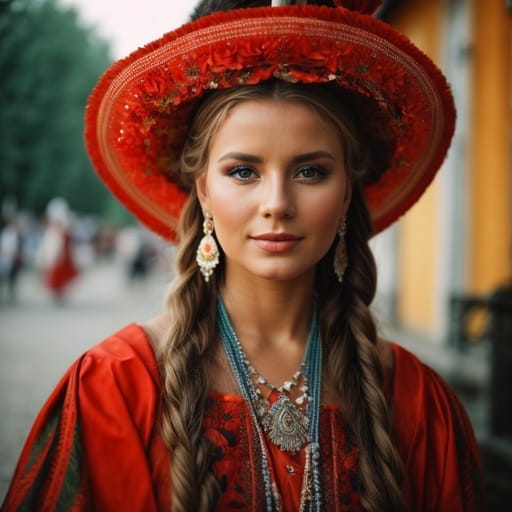
Estonians
same region (Western Europe)
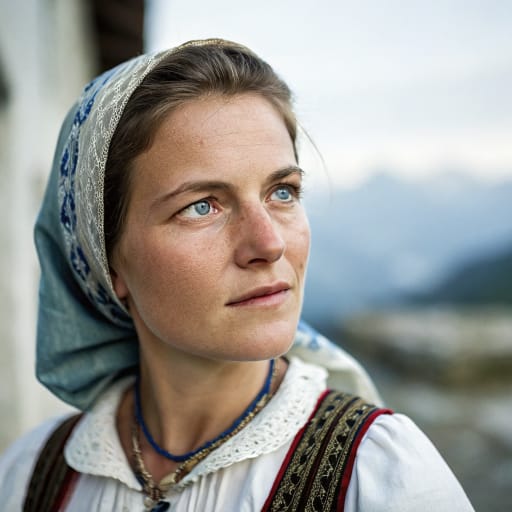
Austrians
same region (Western Europe)
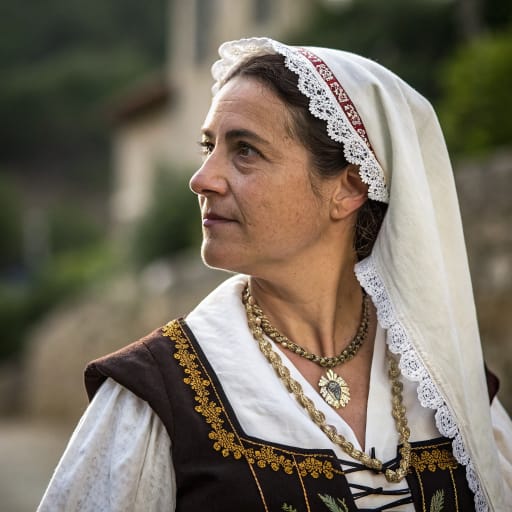
Corsicans
same region (Western Europe)
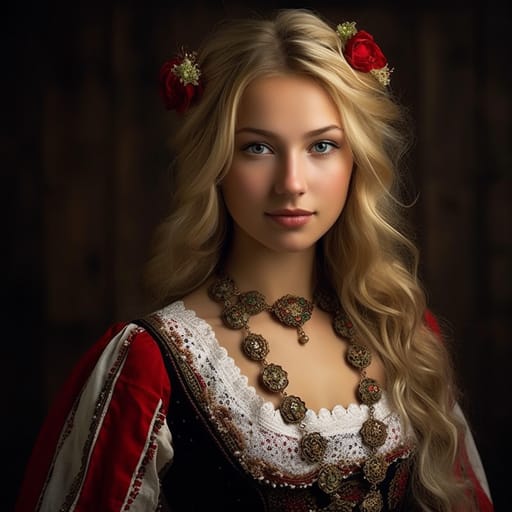
Frisians
same region (Western Europe)
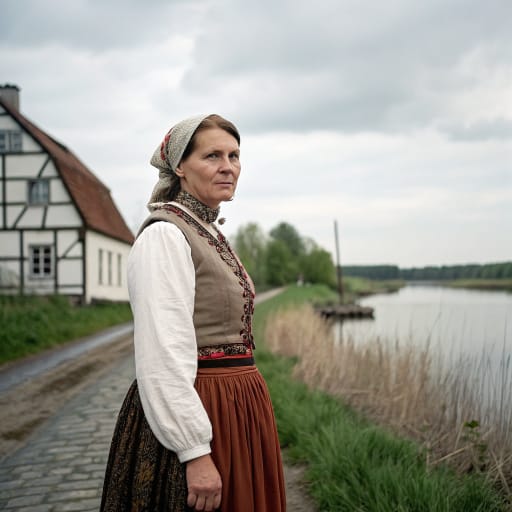
Lusici
same region (Western Europe)
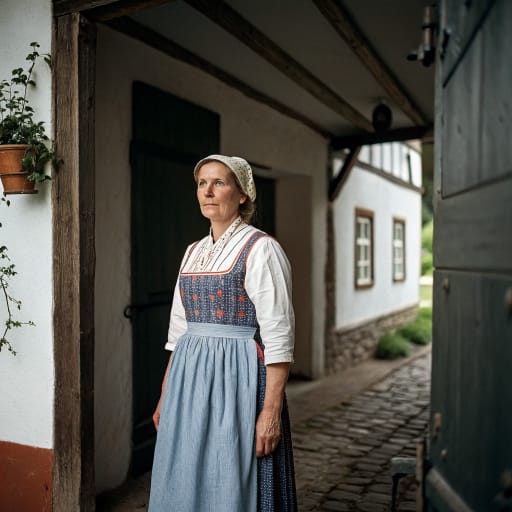
Drevani
same region (Western Europe)
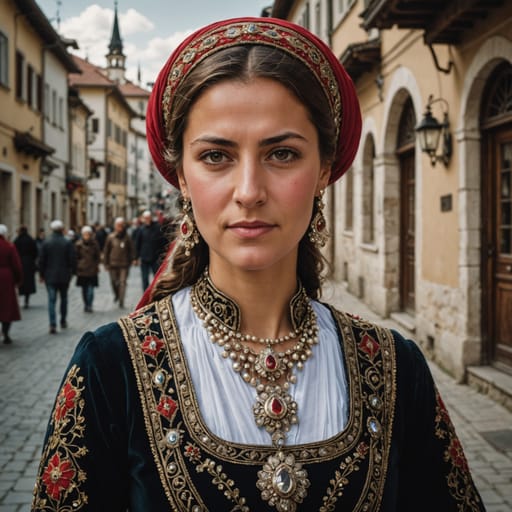
Austrian Turkish
same region (Western Europe)
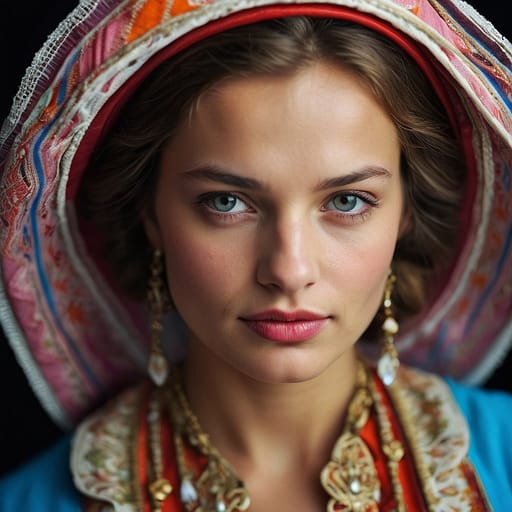
French Luxembourg
same region (Western Europe)
Typical Brigantii Phenotypes
Reference for AI generation: hair, eyes, skin, facial structure, build
Brigantii Body & Anatomy Reference
Anatomy by feature, Western European / Celtic-Germanic phenotype
Brigantii Boobs & Breasts
Bust reference for Brigantii women: medium-to-large cup, full, moderate-to-high projection, which is typical of Western European / Celtic-Germanic ancestry. Areolas measure about 30-46mm across, with light-pink to medium-pink pigmentation. Body type (ectomorph-to-mesomorph) shapes the bust as well, so Brigantii tits are usually full and projecting. In AI imagery, keep the forward-set shape rather than drifting toward the smaller East Asian bust.
Brigantii Ass & Hips
The Brigantii ass is typically medium, moderate projection, which sets it apart from the broader hip profile of Mediterranean phenotypes. Underneath, the pelvis shows medium iliac crests, part of the Western European / Celtic-Germanic skeletal pattern. For Brigantii butt pics and AI renders, match that silhouette and the overall build (ectomorph-to-mesomorph).
Brigantii Vagina & Pussy
Brigantii pussy and vulvar anatomy presents light-pink labial pigmentation, varied labia minora, consistent with the Western European / Celtic-Germanic phenotype's pigmentation pattern. Brigantii pubic hair is typically wavy fine-to-medium texture, blond to dark-brown, in the inverted-triangle pattern. For anatomically accurate Brigantii pussy renders the labial coloration should match the surrounding fair to light skin tone with a continuous gradient, and the hair should keep its wavy fine-to-medium texture.
Brigantii Dicks & Penis
Brigantii dicks follow the Western European / Celtic-Germanic reference data: regional mean ~13-14cm erect; moderate girth; light-pink to light-brown shaft pigmentation. Shaft color should track the fair to light skin tone with a smooth change toward the glans, and Brigantii pubic hair keeps its wavy fine-to-medium texture.
Brigantii Body, Curves & Build
Brigantii body type and overall build presents as ectomorph-to-mesomorph, with mean adult female BMI 24-27: the characteristic Western European / Celtic-Germanic habitus. Brigantii curves and proportions should keep the regional skeletal frame (height, shoulder-to-hip ratio, limb proportions) rather than a generic mesomorph default.
Brigantii Skin Tone & Hair Texture
Brigantii skin sits in the fair to light (Fitzpatrick I-III) band. Hair is typically straight-to-wavy 1A-2B, blond to dark-brown, in keeping with the Western European / Celtic-Germanic phenotype. In nude renders the skin should stay one even tone from face to body, and body, pubic and head hair should match.
Explore phenotype categories
Structured taxonomy with peer-reviewed scales · 22 anatomical categories
Erotic Poses & Sex Positions
From the pose catalog: 219 named positions with reference skeletons
Frequently asked questions about Brigantii people
Where is the Brigantii homeland?
The Brigantii homeland is The eastern end of Lake Constance and the lower Alpine Rhine valley, centered on Brigantium (modern Bregenz, Vorarlberg, Austria), near the present German and Swiss borders. in Western Europe.
What language do Brigantii people speak?
Brigantii people primarily speak Unrecorded Celtic speech, probably close to Gaulish (Indo-European, Celtic); Latin spread after the Roman conquest (Indo-European, Italic)..
What religion do Brigantii people practice?
The predominant religion among Brigantii people is Celtic polytheism, with no cults recorded specifically for the tribe; blended with Roman religion after 15 BC..






Make your own Brigantii images
Five a day, free, no credits to buy. The studio starts from this group's phenotype data, so you can set body type, pose and style and keep the traits accurate.
Start with Brigantii