Help us get this right
Does this portrait look right for Bezhta?
Nobody has judged this one yet. You would be the first.
Bezhta Erotic
Bezhta section of Tsuntinsky District, southwestern Dagestan, Russia, in the upper Avar Koysu basin near the Georgian border; smaller resettled communities in lowland Dagestan
Bezhta (Tsezic branch, Northeast Caucasian family); Avar and Russian widely spoken as second languages
Sunni Islam (Shafi'i school)
Tsezic (Dido) peoples within the wider Avar-Andi-Dido grouping; village-dialect divisions of Bezhta, Tlyadal and Khocharkhota
About Bezhta People
The Bezhta are a small mountain people of the high Caucasus who spent most of the twentieth century being counted as somebody else. Their home is a handful of villages in the Bezhta section of Tsuntinsky District, southwestern Dagestan, Russia, in the headwaters of the Avar Koysu just north of the main ridge and the Georgian border. Three settlements anchor the group, Bezhta itself, Tlyadal and Khocharkhota, each with its own dialect and each historically a self-governing village commune of the kind that ran highland Dagestan before Russian rule. Georgian sources knew the main village as Kapucha, which is why older ethnographies call the people Kapuchins. Their language sits in the Tsezic, or Dido, branch of the Northeast Caucasian family, a cluster of tongues spoken nowhere but this corner of Dagestan. Its closest relative is Hunzib, spoken in the next villages over. Bezhta has no standard written form. Avar has been the language of literacy and the market for generations, Russian arrived with the Soviets, and most adults switch among the three depending on who is in the room. That layering is also why the Bezhta are hard to count: Soviet nationality policy in the 1930s folded them, along with the other Andi and Dido peoples, into the Avar category, and they resurfaced as a separate line only in the 2002 census.
Islam came late to these valleys. Medieval Georgia reached over the ridge with priests and churches, and the Bezhta stayed within that Christian orbit for centuries before Sunni Islam, carried largely by Avar preachers, took hold in the seventeenth and eighteenth centuries. Today they are Sunni Muslims of the Shafi'i school, and religion runs through village life in the ordinary Dagestani way, with Ramadan fasting, the imam at weddings and burials, and the mosque as the settlement's anchor. Beneath it sits the older mountain code of adat: fierce hospitality, the honor of the extended family, and the obligations owed to a kunak, the guest-friend from another village who is treated as kin. The economy was and largely still is sheep. Herders traditionally walked their flocks down to winter pastures on the Caspian lowlands and back up to alpine meadows in summer, a cycle that shaped the calendar as firmly as any religious feast, while terraced fields on the slopes grew grain. Soviet resettlement moved some families to the plains, and Bezhta communities now exist there alongside the mountain villages, with Makhachkala pulling the young further still. The villages hold on, though, and the language with them, spoken by children who will grow up fluent in Avar and Russian as well.
Related ethnic groups
Groups that share Bezhta's homeland, region, language, or religious tradition. These are likely candidates for comparative phenotype reference.
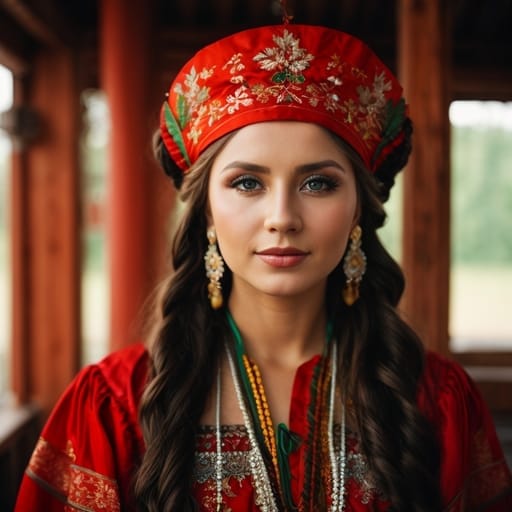
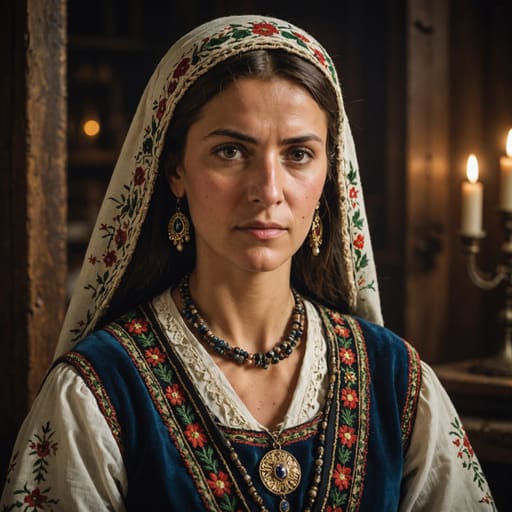
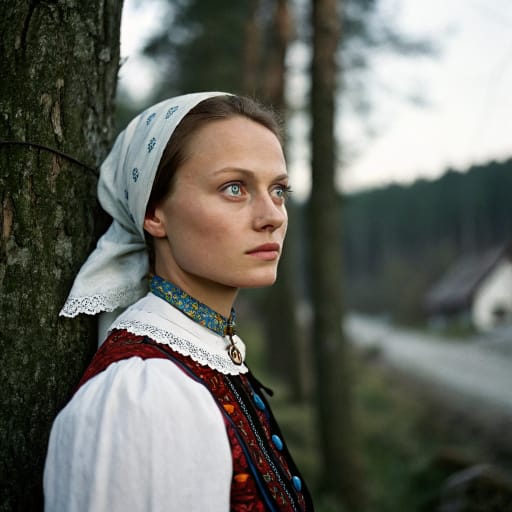
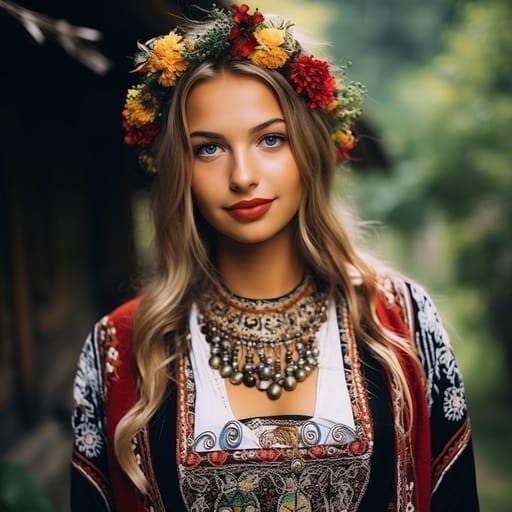
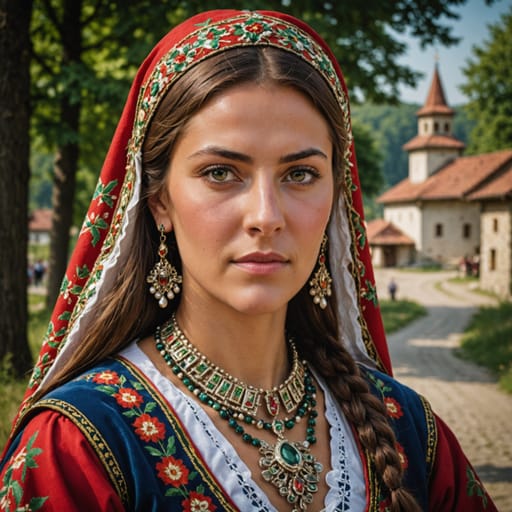
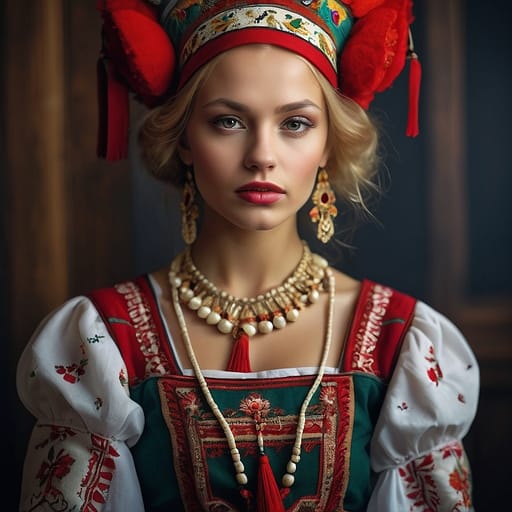
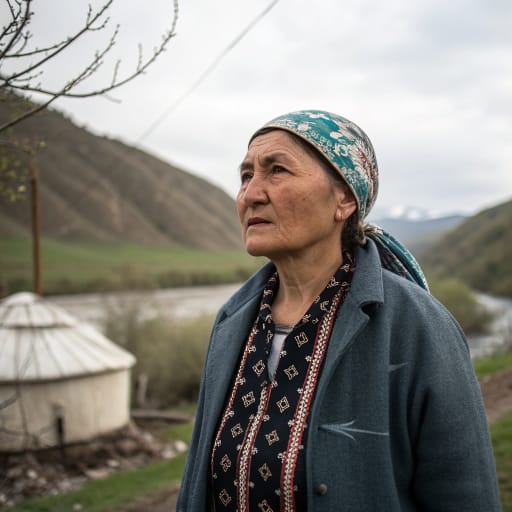
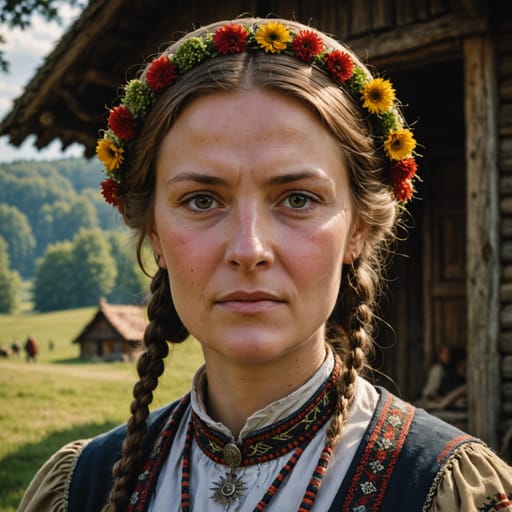
Typical Bezhta Phenotypes
Reference for AI generation: hair, eyes, skin, facial structure, build
Bezhta Body & Anatomy Reference
Anatomy by feature, Eastern European / Slavic phenotype
Bezhta Boobs & Breasts
Bezhta boobs follow the Eastern European / Slavic profile: medium-to-large cup, full, moderate-to-high projection. Areolar diameter is usually 30-44mm, and the coloring is light-pink to medium-brown areolar pigmentation against the fair-to-light-brown skin tone. Breast shape tracks body composition (mesomorph, full hip-and-bust deposition, mean adult female BMI 23-26), so Bezhta breasts tend to be full and projecting, classic Eastern European curvy bust. Expect a forward-set shape, not the smaller East Asian bust.
Bezhta Ass & Hips
Bezhta ass and hip morphology presents as medium-to-full, moderate-to-high projection, distinctly different from the slim narrow-hip East Asian profile. The Bezhta pelvic profile shows medium iliac crests, full gluteal-femoral fat deposition, anchored in the Eastern European / Slavic skeletal pattern. Bezhta butt shots in adult AI imagery should render the medium-to-full, moderate-to-high projection silhouette with the overall build (mesomorph, full hip-and-bust deposition) and the fat distribution typical of the Eastern European / Slavic phenotype.
Bezhta Vagina & Pussy
Bezhta pussy anatomy typically shows light-pink to medium-brown labial pigmentation, varied labia minora. Pubic hair is usually wavy medium texture, blond to dark-brown. In AI-generated Bezhta nudes, labial color should blend into the fair to light skin with a gradual transition, and the hair should keep its wavy medium texture.
Bezhta Dicks & Penis
Penis reference for Bezhta men: regional mean ~13-14cm erect, moderate girth. Coloring: light-pink to medium-brown shaft pigmentation. An accurate Bezhta cock in AI imagery matches the surrounding fair to light skin rather than a generic porn default. Circumcision depends on religion and custom, not ancestry.
Bezhta Body, Curves & Build
The Bezhta figure is generally mesomorph, full hip-and-bust deposition, with mean adult female BMI 23-26, characteristic of Eastern European / Slavic ancestry. AI image tools tend to flatten regional body types into a few stock shapes; here the Bezhta build is kept as its own reference.
Bezhta Skin Tone & Hair Texture
Skin: fair to light (Fitzpatrick II-III). Hair: straight-to-wavy 1A-2B, light-blond to dark-brown. Both are typical of Eastern European / Slavic ancestry. The most common mistake in AI nudes of Bezhta women is a body rendered lighter than the face.
Explore phenotype categories
Structured taxonomy with peer-reviewed scales · 22 anatomical categories
Erotic Poses & Sex Positions
From the pose catalog: 219 named positions with reference skeletons
Frequently asked questions about Bezhta people
Where is the Bezhta homeland?
The Bezhta homeland is Bezhta section of Tsuntinsky District, southwestern Dagestan, Russia, in the upper Avar Koysu basin near the Georgian border; smaller resettled communities in lowland Dagestan in Eastern Europe.
What language do Bezhta people speak?
Bezhta people primarily speak Bezhta (Tsezic branch, Northeast Caucasian family); Avar and Russian widely spoken as second languages.
What religion do Bezhta people practice?
The predominant religion among Bezhta people is Sunni Islam (Shafi'i school).






Make your own Bezhta images
Five a day, free, no credits to buy. The studio starts from this group's phenotype data, so you can set body type, pose and style and keep the traits accurate.
Start with Bezhta