Help us get this right
Does this portrait look right for Besleney?
Nobody has judged this one yet. You would be the first.
Besleney Erotic
The foothills between the Laba and Urup rivers in the northwest Caucasus, now divided between Karachay-Cherkessia, Krasnodar Krai and Adygea in Russia, with a larger diaspora in Turkey.
Besleney, usually classed as a dialect of Kabardian or East Circassian (Northwest Caucasian); Russian in the homeland, Turkish in the diaspora.
Sunni Islam of the Hanafi school, adopted from the eighteenth century, practiced alongside the Xabze code of conduct.
One of the twelve Circassian (Adyghe) tribes, grouped with the East Circassian branch alongside the Kabardians; historically ruled by the Kanoko princely house.
About Besleney People
The Besleney are one of the twelve historic Circassian tribes, and one of the ones that kept a prince. The name is traced to Beslan, a descendant of Inal, the figure Circassians credit with pulling the western principalities together in the fifteenth century, and the Kanoko princely house ruled them until the Russian conquest. That inheritance is not trivia. Circassian societies split into aristocratic tribes and so-called democratic ones run by assemblies of free farmers, and the Besleney sat firmly on the aristocratic side: princes, nobles, freemen and dependents, with rules about who married whom and who raised whose children. Their country was the foothills between the Laba and the Urup, north of the Greater Caucasus watershed, where steppe grass runs up into oak and beech forest. What is left of that country is now divided between Karachay-Cherkessia, Krasnodar Krai and Adygea. Their speech is argued over by linguists: usually counted as a dialect of Kabardian, meaning East Circassian, but holding onto older features that make it a bridge back to the western dialects. The family is Northwest Caucasian, related to nothing outside the region, and known for stacking consonants where other languages would reach for vowels.
Islam arrived late, Sunni and Hanafi, spreading through the eighteenth and early nineteenth centuries, and it settled on top of Xabze rather than replacing it. Xabze is the Circassian code of conduct: what you owe a guest, how you stand in front of elders, what is said and not said at a funeral, how much of yourself you show in public. It regulates more of daily life than doctrine does. Two customs are worth knowing. Under atalyk fosterage, a noble family sent an infant son to be raised in another household until he was grown, creating a bond counted stronger than blood and binding rival lineages together. And a guest, any guest, came under the host's protection for as long as he stayed. In the autumn of 1942 the village of Besleney in Karachay-Cherkessia took in a column of orphaned children evacuated from Leningrad, gave them Circassian names, entered them in the village household books as sons and daughters, and held the secret through the German occupation. Almost all of them lived. The group is small now: the defeat of 1864 and the mass expulsion to the Ottoman Empire moved most Circassians out, and the majority of Besleney descendants have been in Turkey since the 1860s, while those who stayed hold a handful of villages and a language under steady pressure from Russian.
Related ethnic groups
Groups that share Besleney's homeland, region, language, or religious tradition. These are likely candidates for comparative phenotype reference.
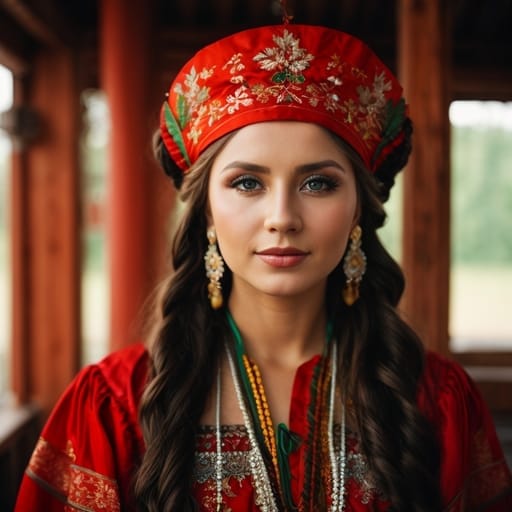
Belarusians
same region (Eastern Europe)
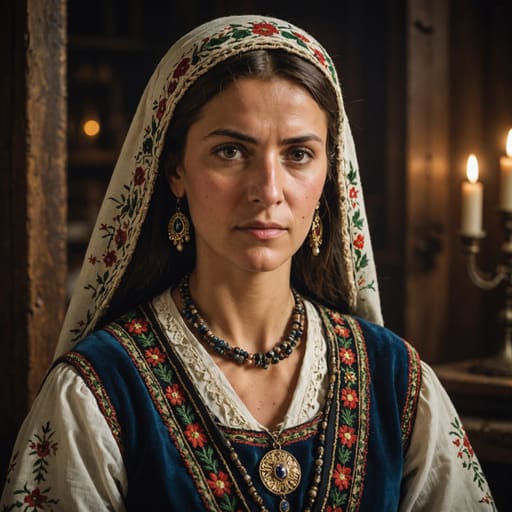
Bulgarians
same region (Eastern Europe)
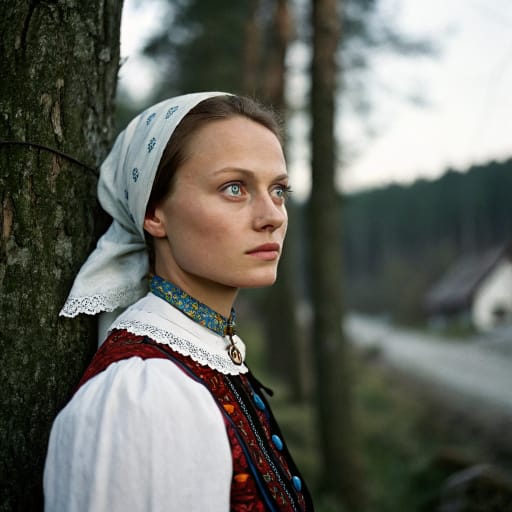
Czechs
same region (Eastern Europe)
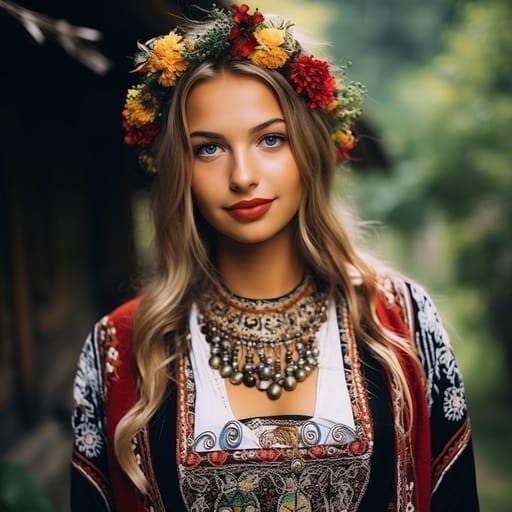
Slovaks
same region (Eastern Europe)
Vilamovians
same region (Eastern Europe)
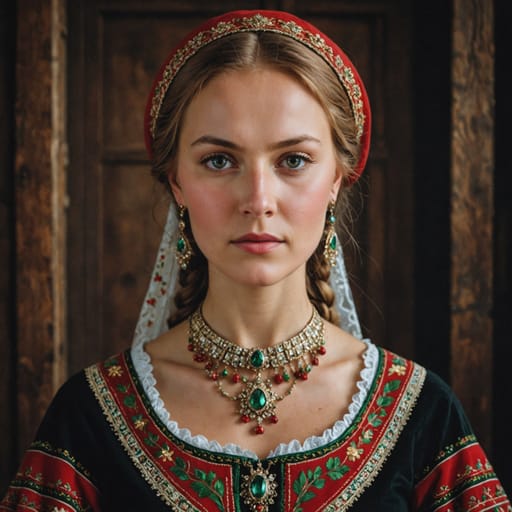
Belarus Other
same region (Eastern Europe)
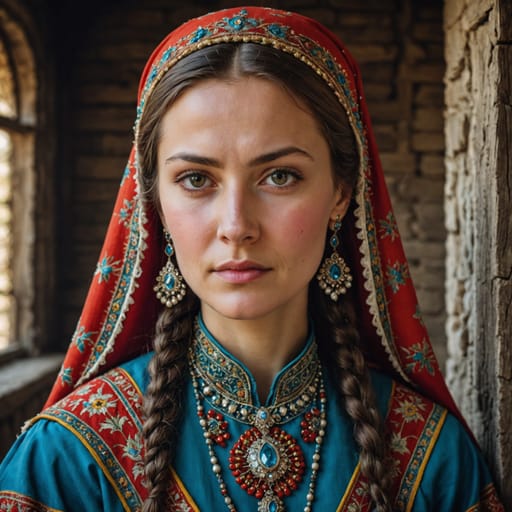
Crimean Tatar
same region (Eastern Europe)
Sigynnae
same region (Eastern Europe)
Typical Besleney Phenotypes
Reference for AI generation: hair, eyes, skin, facial structure, build
Besleney Body & Anatomy Reference
Anatomy by feature, Eastern European / Slavic phenotype
Besleney Boobs & Breasts
The typical Besleney bust is medium-to-large cup, full, moderate-to-high projection, in line with the wider Eastern European / Slavic pattern. Areolas usually fall in the 30-44mm range, with light-pink to medium-brown areolar pigmentation against the fair-to-light-brown skin tone. Compared with the smaller East Asian bust, Besleney breasts sit forward and are generally full and projecting, classic Eastern European curvy bust. A faithful AI render of Besleney tits keeps that shape and areola size.
Besleney Ass & Hips
Butt shape among Besleney women: medium-to-full, moderate-to-high projection, over medium iliac crests, full gluteal-femoral fat deposition. This follows Eastern European / Slavic ancestry and looks quite unlike the slim narrow-hip East Asian profile. An accurate Besleney ass in adult AI imagery keeps both the silhouette and the overall build (mesomorph, full hip-and-bust deposition) instead of a generic average.
Besleney Vagina & Pussy
Vulvar anatomy among Besleney women: light-pink to medium-brown labial pigmentation, varied labia minora. Pubic hair tends to be wavy medium texture, blond to dark-brown, in the usual inverted-triangle pattern. Both follow Eastern European / Slavic pigmentation, which is why Besleney pussy renders should not fall back on a pale, sparse Western template.
Besleney Dicks & Penis
The Besleney cock profile, from Eastern European / Slavic anthropometric data: regional mean ~13-14cm erect; moderate girth; light-pink to medium-brown shaft pigmentation. Pubic hair has a wavy medium texture and forms the usual inverted-V pattern. Whether Besleney men are circumcised follows religious and cultural practice rather than phenotype.
Besleney Body, Curves & Build
Build and curves among Besleney women follow the Eastern European / Slavic pattern: mesomorph, full hip-and-bust deposition, mean adult female BMI 23-26. Proportions matter as much as skin tone, so Besleney figures should keep their regional height and limb ratios.
Besleney Skin Tone & Hair Texture
The Besleney skin range is fair to light (Fitzpatrick II-III), and hair tends to be straight-to-wavy 1A-2B, light-blond to dark-brown. That combination marks the Eastern European / Slavic phenotype, and skin tone is the trait AI generators most often get wrong for Besleney women.
Explore phenotype categories
Structured taxonomy with peer-reviewed scales · 22 anatomical categories
Erotic Poses & Sex Positions
From the pose catalog: 219 named positions with reference skeletons
Frequently asked questions about Besleney people
Where is the Besleney homeland?
The Besleney homeland is The foothills between the Laba and Urup rivers in the northwest Caucasus, now divided between Karachay-Cherkessia, Krasnodar Krai and Adygea in Russia, with a larger diaspora in Turkey. in Eastern Europe.
What language do Besleney people speak?
Besleney people primarily speak Besleney, usually classed as a dialect of Kabardian or East Circassian (Northwest Caucasian); Russian in the homeland, Turkish in the diaspora..
What religion do Besleney people practice?
The predominant religion among Besleney people is Sunni Islam of the Hanafi school, adopted from the eighteenth century, practiced alongside the Xabze code of conduct..






Make your own Besleney images
Five a day, free, no credits to buy. The studio starts from this group's phenotype data, so you can set body type, pose and style and keep the traits accurate.
Start with Besleney