Help us get this right
Does this portrait look right for Walddeutsche?
One tap. It takes a second and it is recorded.
1 says it looks right, 0 say it looks off.
Walddeutsche Erotic
Carpathian foothills of southeastern Poland, around Łańcut, Rzeszów, Krosno and Sanok, in today's Subcarpathian Voivodeship
Medieval German dialects, many of Silesian origin (Indo-European, West Germanic); replaced over time by Polish (Indo-European, West Slavic)
Roman Catholic
Part of the medieval German eastward settlement (Ostsiedlung) in the Kingdom of Poland; descendants absorbed into the Polish population of Subcarpathia
About Walddeutsche People
The Walddeutsche, or Forest Germans, were German-speaking settlers who cleared and farmed the wooded Carpathian foothills of what is now southeastern Poland from the fourteenth century on. Over the following centuries they slowly became Polish, and their descendants today are Poles: the Catholic villagers and townspeople of the Subcarpathian region. They never had a kingdom or a name of their own. What held them together was how they came. The Polish crown and local lords invited them to turn forest into farmland under German law, and they built long villages strung out along a stream. Each farm was a narrow strip of field running from the house back toward the tree line. That village plan still shapes the countryside around Łańcut, Rzeszów, Krosno and Sanok.
Settlement picked up after Casimir the Great brought Red Ruthenia under Polish rule in the mid-1300s and needed people for a thinly settled frontier. Many of the colonists came from Silesia. Their German dialects set them apart from the Polish and Ruthenian spoken in the villages around them. The language did not survive. Settlers married into local families, shared markets and parishes with Polish neighbors, and answered to Polish lords and courts. Religion made the change easier. They were Roman Catholic from the start, so faith drew no line between them and the Poles, while it did separate both groups from the Orthodox Ruthenians farther east. German gradually died out in these villages. What it left behind were place names, some family names and the long strip fields.
Poles had a name for such people: Głuchoniemcy, deaf Germans. It is a play on the Slavic word for a German, which comes from the word for mute, meaning someone you could not talk to. German-language writers later called them Walddeutsche after the forests they cleared, and in the twentieth century the label turned political. During the German occupation in the Second World War, scholars working for the occupiers studied these villages as a supposed reserve of German blood, treating centuries-old ancestry as a claim on living Poles. That episode tells you more about Nazi racial policy than about the settlers, whose descendants had long been Polish in speech and in how they saw themselves.
Related ethnic groups
Groups that share Walddeutsche's homeland, region, language, or religious tradition. These are likely candidates for comparative phenotype reference.
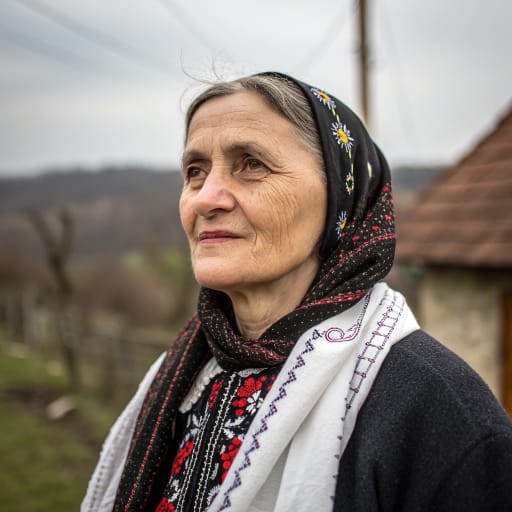
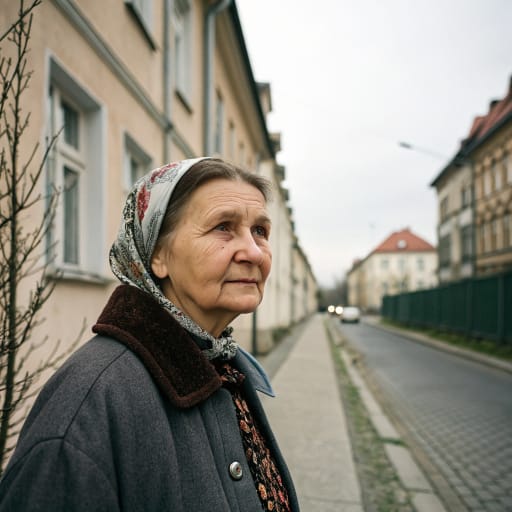
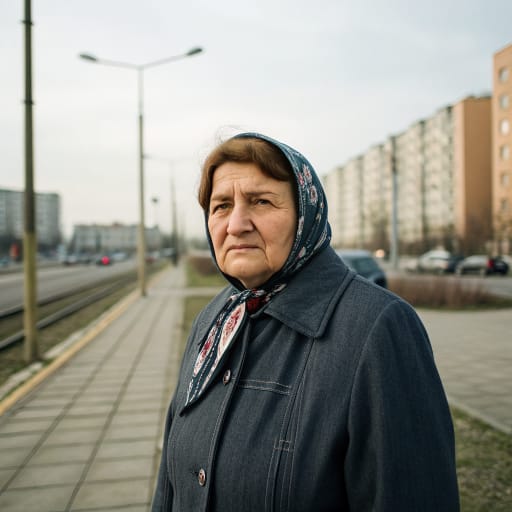
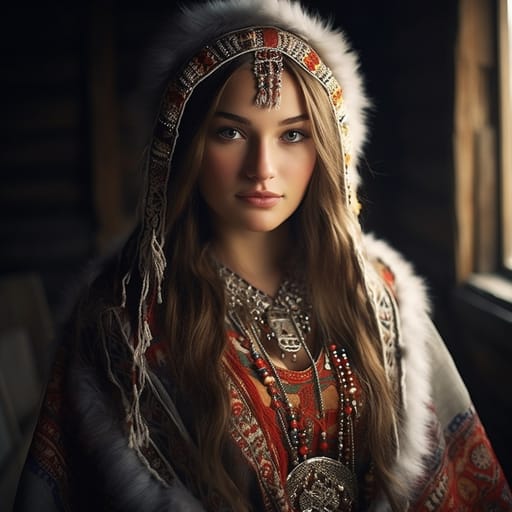
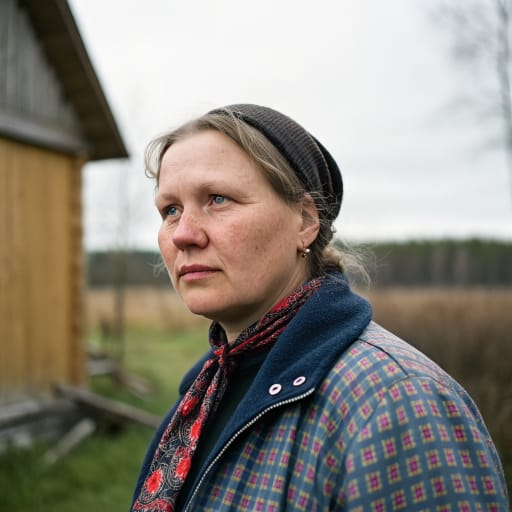
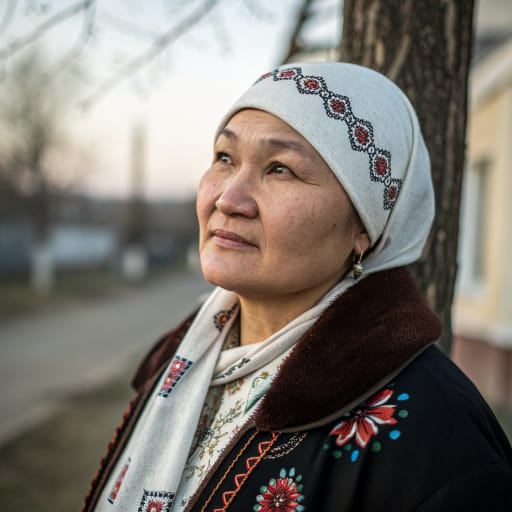
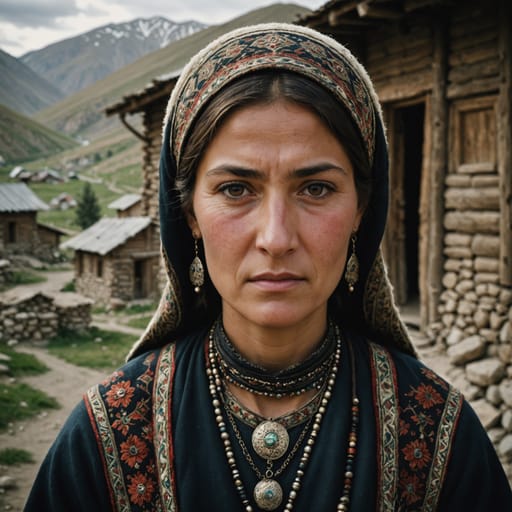
Typical Walddeutsche Phenotypes
Reference for AI generation: hair, eyes, skin, facial structure, build
Walddeutsche Body & Anatomy Reference
Per-feature anatomical profile for AI nude generation: Eastern European / Slavic phenotype
Walddeutsche Boobs & Breasts
The typical Walddeutsche bust is medium-to-large cup, full, moderate-to-high projection, in line with the wider Eastern European / Slavic pattern. Areolas usually fall in the 30-44mm range, with light-pink to medium-brown areolar pigmentation against the fair-to-light-brown skin tone. Compared with the smaller East Asian bust, Walddeutsche breasts sit forward and are generally full and projecting, classic Eastern European curvy bust. A faithful AI render of Walddeutsche tits keeps that shape and areola size.
Walddeutsche Ass & Hips
Butt shape among Walddeutsche women: medium-to-full, moderate-to-high projection, over medium iliac crests, full gluteal-femoral fat deposition. This follows Eastern European / Slavic ancestry and looks quite unlike the slim narrow-hip East Asian profile. An accurate Walddeutsche ass in adult AI imagery keeps both the silhouette and the overall build (mesomorph, full hip-and-bust deposition) instead of a generic average.
Walddeutsche Vagina & Pussy
Vulvar anatomy among Walddeutsche women: light-pink to medium-brown labial pigmentation, varied labia minora. Pubic hair tends to be wavy medium texture, blond to dark-brown, in the usual inverted-triangle pattern. Both follow Eastern European / Slavic pigmentation, which is why Walddeutsche pussy renders should not fall back on a pale, sparse Western template.
Walddeutsche Dicks & Penis
The Walddeutsche cock profile, from Eastern European / Slavic anthropometric data: regional mean ~13-14cm erect; moderate girth; light-pink to medium-brown shaft pigmentation. Pubic hair has a wavy medium texture and forms the usual inverted-V pattern. Whether Walddeutsche men are circumcised follows religious and cultural practice rather than phenotype.
Walddeutsche Body, Curves & Build
Build and curves among Walddeutsche women follow the Eastern European / Slavic pattern: mesomorph, full hip-and-bust deposition, mean adult female BMI 23-26. Proportions matter as much as skin tone, so Walddeutsche figures should keep their regional height and limb ratios.
Walddeutsche Skin Tone & Hair Texture
The Walddeutsche skin range is fair to light (Fitzpatrick II-III), and hair tends to be straight-to-wavy 1A-2B, light-blond to dark-brown. That combination marks the Eastern European / Slavic phenotype, and skin tone is the trait AI generators most often get wrong for Walddeutsche women.
Explore phenotype categories
Structured taxonomy with peer-reviewed scales · 22 anatomical categories
Erotic Poses & Sex Positions
From the pose catalog: 219 named positions with reference skeletons
Frequently asked questions about Walddeutsche people
Where is the Walddeutsche homeland?
The Walddeutsche homeland is Carpathian foothills of southeastern Poland, around Łańcut, Rzeszów, Krosno and Sanok, in today's Subcarpathian Voivodeship in Eastern Europe.
What language do Walddeutsche people speak?
Walddeutsche people primarily speak Medieval German dialects, many of Silesian origin (Indo-European, West Germanic); replaced over time by Polish (Indo-European, West Slavic).
What religion do Walddeutsche people practice?
The predominant religion among Walddeutsche people is Roman Catholic.






Make your own Walddeutsche images
Five a day, free, no credits to buy. The studio starts from this group's phenotype data, so you can set body type, pose and style and keep the traits accurate.
Start with Walddeutsche