No portrait yet
Kryashens Erotic
Tatarstan, with communities in Bashkortostan, Udmurtia and the Kirov, Samara and Chelyabinsk regions of Russia.
Kryashen dialect of Tatar (Turkic, Kipchak branch), written in Cyrillic since the 1860s; Russian in wide use.
Russian Orthodox Christianity, with pre-Christian Turkic folk observances kept alongside it.
A Christian branch of the Volga Tatars, divided into Old Baptized and New Baptized and into territorial groups including the Kazan, Elabuga, Chistopol and Molkeevo Kryashens; the Nagaybaks of Chelyabinsk Oblast are closely related and counted separately.
About Kryashens People
The Kryashens are Tatars who go to church, and in the Volga country that single fact has organized everything else about them. They speak Tatar, carry Tatar village histories, and are Orthodox Christians who baptize their children and hear the liturgy in their own language. The name is the Russian word for baptized, worn down into Tatar as keräşen: a label out of the conversion registers that hardened over generations into a people. Their villages lie in Tatarstan and spill into Bashkortostan, Udmurtia and the Kirov, Samara and Chelyabinsk regions, farmland along the Kama and the smaller rivers feeding it, though by now as many Kryashens live in Kazan and Naberezhnye Chelny as in the countryside. Their speech is a dialect of Tatar, Kipchak Turkic, understood without effort by any Tatar speaker but noticeably short on the Arabic and Persian vocabulary that came into the language with Islam; for religious words they built from Turkic roots or borrowed from Russian. The community draws its own internal line between the Old Baptized, converted in the generations after Kazan fell to Moscow in 1552, and the New Baptized, pressed into the church during the campaigns of the eighteenth century, most of whom went back to Islam as soon as the law of 1905 let them.
Their literacy arrived late and in an unexpected script. In the 1860s and 1870s the Kazan scholar Nikolai Ilminsky built a Cyrillic alphabet for Tatar, translated the Gospels and the liturgy into it, and trained Kryashen teachers and priests, Vasily Timofeyev the first among them. Kryashens were therefore reading and writing their language in Cyrillic some seventy years before Tatarstan adopted that script by decree, and the effort left them a school tradition and a clergy of their own. Counting has been the other long argument. The 1926 Soviet census recorded them separately, over a hundred thousand strong; every census afterward folded them into the Tatar total until 2002, when separate enumeration became a public fight in Kazan over whether they are a people or a confession. Recent counts run near thirty thousand, and Kryashen organizations say the true figure is several times that. Daily life is less contested: Pitrau, the Peter's Day festival in July that pulls thousands to the village of Zyuri for wrestling and horse racing; Nardugan mumming in the dead of winter, older in the region than either faith; married women's headdresses and breast ornaments armored in rows of silver coins; village cemeteries kept apart from the Muslim and the Russian ones; and choirs that have made a Tatar-language Orthodox service something worth traveling to hear.
Related ethnic groups
Groups that share Kryashens's homeland, region, language, or religious tradition. These are likely candidates for comparative phenotype reference.
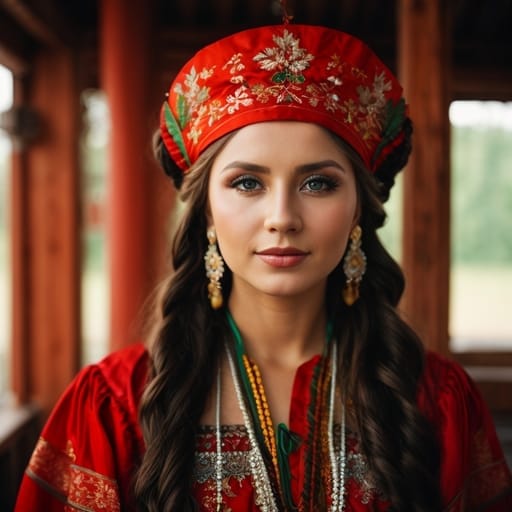
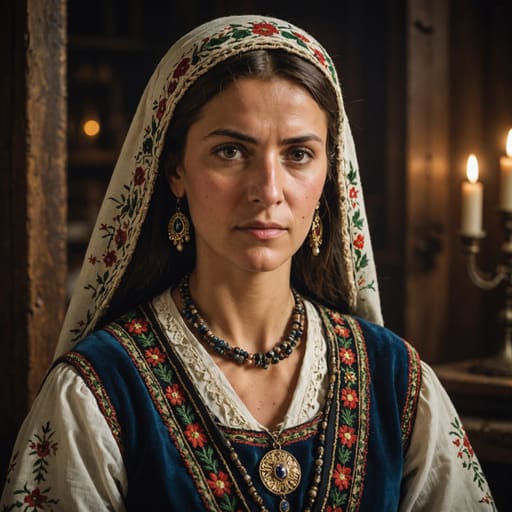
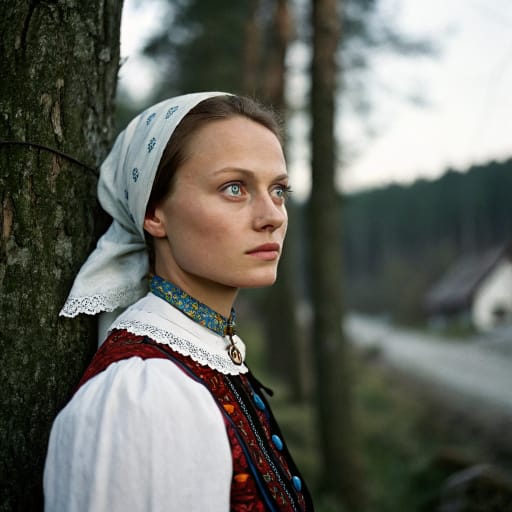
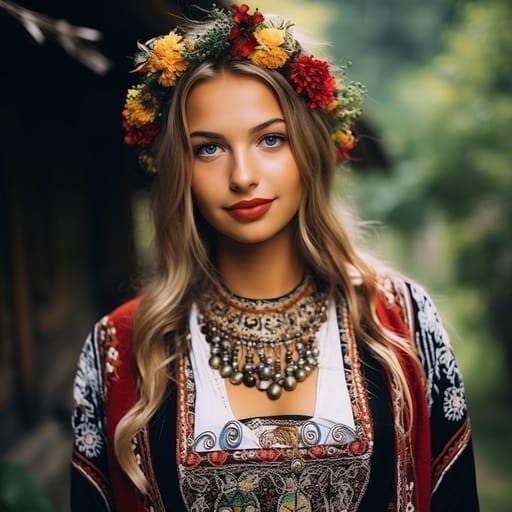
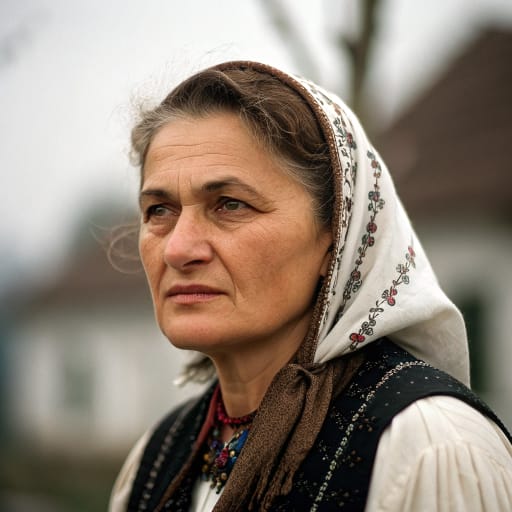
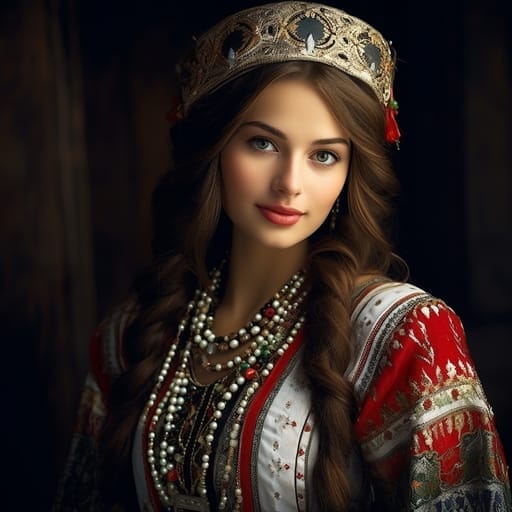
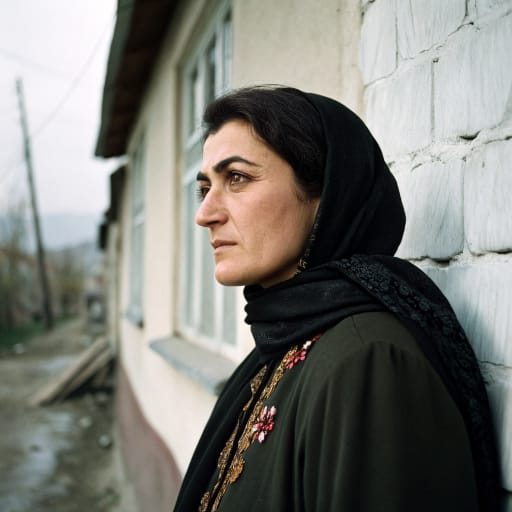
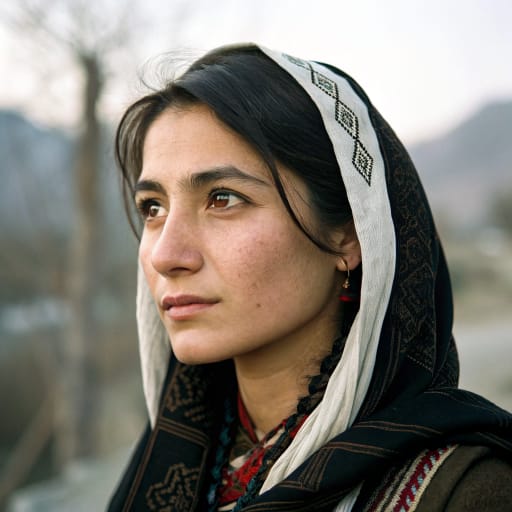
Typical Kryashens Phenotypes
Reference for AI generation: hair, eyes, skin, facial structure, build
Kryashens Body & Anatomy Reference
Anatomy by feature, Eastern European / Slavic phenotype
Kryashens Boobs & Breasts
Kryashens tits and boobs run medium-to-large cup, full, moderate-to-high projection, the classic Eastern European / Slavic bust profile. Kryashens nipples and areolas show light-pink to medium-brown areolar pigmentation against the fair-to-light-brown skin tone, with areolar diameter typically in the 30-44mm range and forward-set positioning rather than the smaller East Asian bust. Kryashens breasts trend full and projecting, classic Eastern European curvy bust, a function of the mesomorph, full hip-and-bust deposition body habitus and the mean adult female BMI 23-26. For anatomically accurate AI-generated Kryashens nudes the render preserves the medium-to-large cup, full, moderate-to-high projection shape, 30-44mm areolas with light-pink to medium-brown pigmentation, and the torso proportions of the Eastern European / Slavic phenotype.
Kryashens Ass & Hips
Kryashens hips and butt usually read as medium-to-full, moderate-to-high projection. The skeletal base is medium iliac crests, full gluteal-femoral fat deposition, the Eastern European / Slavic pattern. Set against the slim narrow-hip East Asian profile, the difference is easy to see, and the hip-to-waist ratio is often what identifies Kryashens women in photos.
Kryashens Vagina & Pussy
Expect light-pink to medium-brown labial pigmentation, varied labia minora on Kryashens women, in keeping with Eastern European / Slavic ancestry. The pubic hair is wavy medium texture, blond to dark-brown. Coloring should run evenly from the fair to light skin of the thighs to the labia, and Kryashens nude imagery should keep the hair's wavy medium texture.
Kryashens Dicks & Penis
Kryashens dick and penile anatomy in adult AI generation should anchor on the regional reference data: regional mean ~13-14cm erect, moderate girth, and light-pink to medium-brown shaft pigmentation. The Kryashens cock profile reflects the Eastern European / Slavic population's anthropometric measurements. The shaft pigmentation should track the surrounding fair to light skin tone, and the pubic hair should keep its wavy medium texture in the typical inverted-V escutcheon.
Kryashens Body, Curves & Build
Kryashens body type: mesomorph, full hip-and-bust deposition, with mean adult female BMI 23-26. This is the typical Eastern European / Slavic build. Height range, shoulder-to-hip ratio and fat distribution all follow from it, which is what an accurate Kryashens nude body should show.
Kryashens Skin Tone & Hair Texture
Kryashens skin tone falls in the fair to light (Fitzpatrick II-III) band, the surface signal most often miscalibrated by generic AI nude generators. Kryashens hair texture is typically straight-to-wavy 1A-2B, light-blond to dark-brown, characteristic of the Eastern European / Slavic phenotype. In Kryashens nude renders the skin should hold that band consistently across the body.
Explore phenotype categories
Structured taxonomy with peer-reviewed scales · 22 anatomical categories
Erotic Poses & Sex Positions
From the pose catalog: 219 named positions with reference skeletons
Frequently asked questions about Kryashens people
Where is the Kryashens homeland?
The Kryashens homeland is Tatarstan, with communities in Bashkortostan, Udmurtia and the Kirov, Samara and Chelyabinsk regions of Russia. in Eastern Europe.
What language do Kryashens people speak?
Kryashens people primarily speak Kryashen dialect of Tatar (Turkic, Kipchak branch), written in Cyrillic since the 1860s; Russian in wide use..
What religion do Kryashens people practice?
The predominant religion among Kryashens people is Russian Orthodox Christianity, with pre-Christian Turkic folk observances kept alongside it..






Make your own Kryashens images
Five a day, free, no credits to buy. The studio starts from this group's phenotype data, so you can set body type, pose and style and keep the traits accurate.
Start with Kryashens