Help us get this right
Does this portrait look right for Krashovani?
Nobody has judged this one yet. You would be the first.
Krashovani Erotic
Seven villages in the Caraș river valley, Caraș-Severin County, southwestern Romania, near Reșița
Krashovani, a Torlakian South Slavic dialect (Indo-European, Slavic), with Romanian and standard Croatian in wide use
Roman Catholic
South Slavs of the Banat; counted today within Romania's Croat minority, historically also identified as Serbs
About Krashovani People
The Krashovani are a small Slavic-speaking people who live in seven villages in the limestone country of southwestern Romania, in the valley of the Caraș river above Reșița. What sets them apart from their neighbors is not language first but church: they are Roman Catholics in a region that is otherwise Romanian Orthodox, and that one fact has organized their history for centuries. Catholic priests, Catholic feast days, Catholic marriage patterns, and a long reluctance to marry outside the seven villages kept a community of a few thousand people intact through Ottoman rule, Habsburg administration, the Hungarian Banat and forty years of Romanian communism. The villages are Carașova, Lupac, Clocotici, Nermed, Rafnic, Vodnic and Iabalcea, strung along a gorge cut through porous rock full of caves and sinkholes, and the group takes its name from Carașova, the largest of them.
Their speech is Torlakian, a transitional South Slavic dialect whose nearest relatives sit far to the south in eastern Serbia and western Bulgaria, and which is comfortably neither Serbian nor Bulgarian. Centuries in the mountains have layered Romanian, Hungarian and German vocabulary over it. That linguistic address is the main evidence in a long argument about where the Krashovani came from: the leading proposals are medieval settlers out of the Timok and Morava valleys, or Catholic refugees moving north from Ottoman Bosnia, with Bosnian Franciscan friars usually credited for keeping them Catholic. Nobody has settled it. The question matters because their national identity has stayed genuinely open. Depending on the decade, census takers, Serbian institutions, Croatian institutions and the Krashovani themselves have counted them as Serbs, as Croats, or as simply Krashovani. Since the 1990s most have declared Croatian ethnicity, and they now make up the bulk of Romania's recognized Croat minority, with Croatian taught in local schools and used in the town halls of Carașova and Lupac. Plenty of people will still give you the older answer first: we are Krashovani, and that is the whole of it. The pressure on the community today is economic rather than political. Work in the Reșița mines and steelworks held the villages together through the twentieth century, and when that industry came apart the young left for Austria, Germany and Croatia. They come back in summer and for the kirvaj, the village patronal feast, when the costumes come out of the wardrobe and most of the diaspora is briefly in one place again.
Related ethnic groups
Groups that share Krashovani's homeland, region, language, or religious tradition. These are likely candidates for comparative phenotype reference.
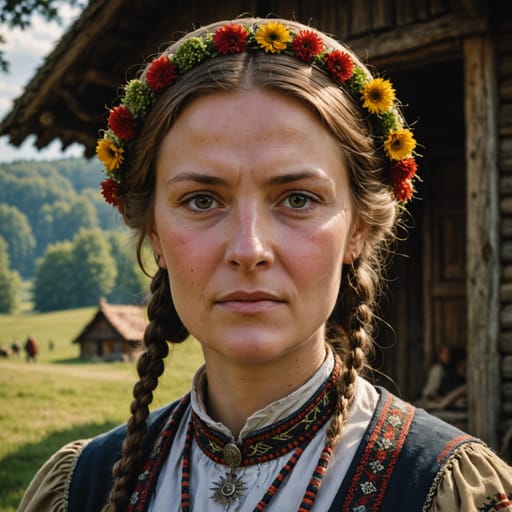
Walddeutsche
same region (Eastern Europe)
Székelys of Bukovina
same region (Eastern Europe)
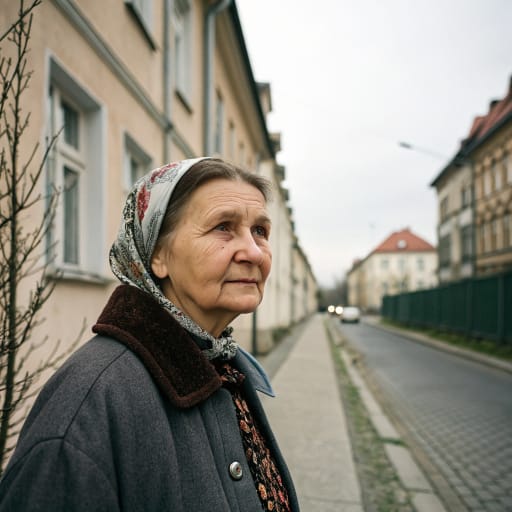
Bambers
same region (Eastern Europe)
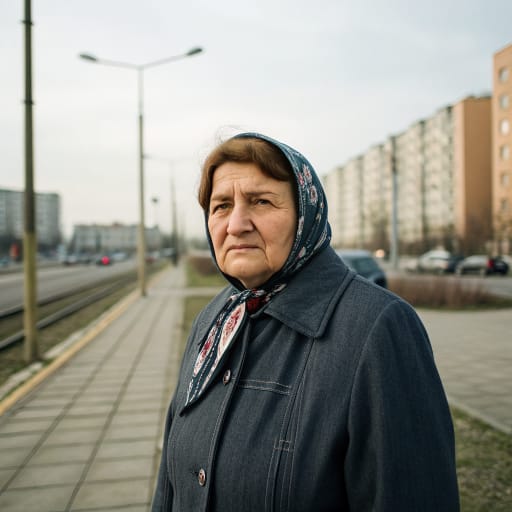
Kuyavians
same region (Eastern Europe)
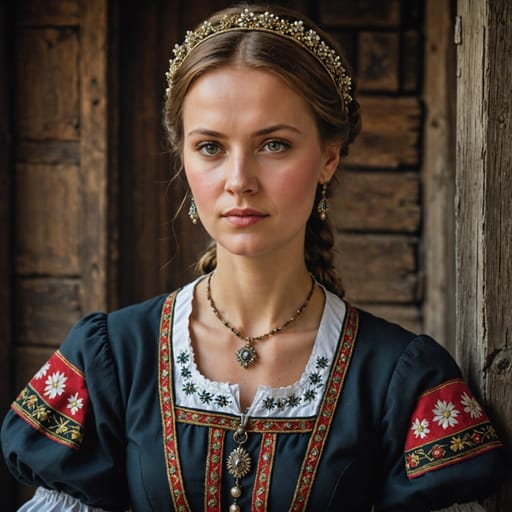
Poland Other
same region (Eastern Europe)
Zlicans
same region (Eastern Europe)
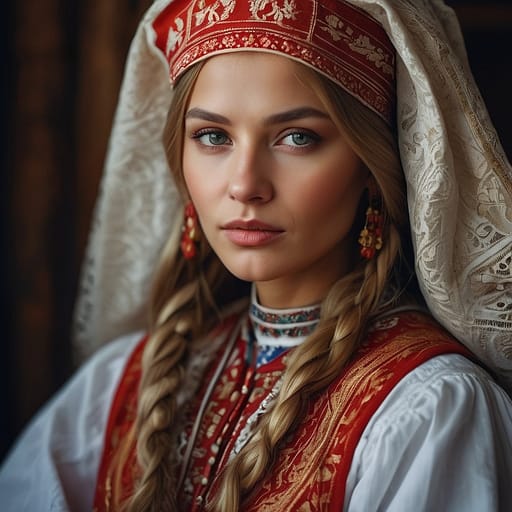
Russian Belarus
same region (Eastern Europe)
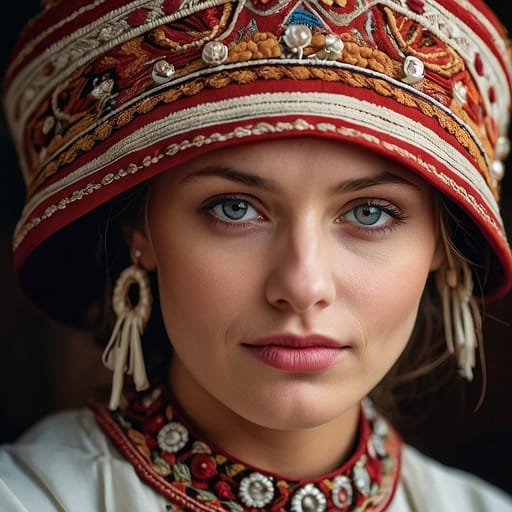
Czechia Other
same region (Eastern Europe)
Typical Krashovani Phenotypes
Reference for AI generation: hair, eyes, skin, facial structure, build
Krashovani Body & Anatomy Reference
Anatomy by feature, Eastern European / Slavic phenotype
Krashovani Boobs & Breasts
Krashovani boobs follow the Eastern European / Slavic profile: medium-to-large cup, full, moderate-to-high projection. Areolar diameter is usually 30-44mm, and the coloring is light-pink to medium-brown areolar pigmentation against the fair-to-light-brown skin tone. Breast shape tracks body composition (mesomorph, full hip-and-bust deposition, mean adult female BMI 23-26), so Krashovani breasts tend to be full and projecting, classic Eastern European curvy bust. Expect a forward-set shape, not the smaller East Asian bust.
Krashovani Ass & Hips
Krashovani ass and hip morphology presents as medium-to-full, moderate-to-high projection, distinctly different from the slim narrow-hip East Asian profile. The Krashovani pelvic profile shows medium iliac crests, full gluteal-femoral fat deposition, anchored in the Eastern European / Slavic skeletal pattern. Krashovani butt shots in adult AI imagery should render the medium-to-full, moderate-to-high projection silhouette with the overall build (mesomorph, full hip-and-bust deposition) and the fat distribution typical of the Eastern European / Slavic phenotype.
Krashovani Vagina & Pussy
Krashovani pussy anatomy typically shows light-pink to medium-brown labial pigmentation, varied labia minora. Pubic hair is usually wavy medium texture, blond to dark-brown. In AI-generated Krashovani nudes, labial color should blend into the fair to light skin with a gradual transition, and the hair should keep its wavy medium texture.
Krashovani Dicks & Penis
Penis reference for Krashovani men: regional mean ~13-14cm erect, moderate girth. Coloring: light-pink to medium-brown shaft pigmentation. An accurate Krashovani cock in AI imagery matches the surrounding fair to light skin rather than a generic porn default. Circumcision depends on religion and custom, not ancestry.
Krashovani Body, Curves & Build
The Krashovani figure is generally mesomorph, full hip-and-bust deposition, with mean adult female BMI 23-26, characteristic of Eastern European / Slavic ancestry. AI image tools tend to flatten regional body types into a few stock shapes; here the Krashovani build is kept as its own reference.
Krashovani Skin Tone & Hair Texture
Skin: fair to light (Fitzpatrick II-III). Hair: straight-to-wavy 1A-2B, light-blond to dark-brown. Both are typical of Eastern European / Slavic ancestry. The most common mistake in AI nudes of Krashovani women is a body rendered lighter than the face.
Explore phenotype categories
Structured taxonomy with peer-reviewed scales · 22 anatomical categories
Erotic Poses & Sex Positions
From the pose catalog: 219 named positions with reference skeletons
Frequently asked questions about Krashovani people
Where is the Krashovani homeland?
The Krashovani homeland is Seven villages in the Caraș river valley, Caraș-Severin County, southwestern Romania, near Reșița in Eastern Europe.
What language do Krashovani people speak?
Krashovani people primarily speak Krashovani, a Torlakian South Slavic dialect (Indo-European, Slavic), with Romanian and standard Croatian in wide use.
What religion do Krashovani people practice?
The predominant religion among Krashovani people is Roman Catholic.






Make your own Krashovani images
Five a day, free, no credits to buy. The studio starts from this group's phenotype data, so you can set body type, pose and style and keep the traits accurate.
Start with Krashovani