Æsaronenses Erotic
North-central Sardinia (Italy), between the territory of Luguido near Oschiri and that of Cornus on the west coast, as placed by Ptolemy; exact location unknown.
Presumably Paleo-Sardinian (unclassified pre-Latin language of Sardinia); later Latin (Indo-European, Italic), the ancestor of modern Sardinian.
Indigenous Sardinian religion of Nuragic descent, centered on water cults, well temples and the father god Sardus Pater, with Punic and Roman influences; Christianity reached the island in late antiquity.
Native tribe of Roman Sardinia listed by Ptolemy, neighbor of the Salcitani, Lucuidonenses and Cornenses; part of the wider Paleo-Sardinian (Nuragic) population that Roman writers grouped as Ilienses, Balari and Corsi.
About Æsaronenses People
The Æsaronenses were a native tribe of Sardinia in the Roman period, known almost entirely from one line in the Geography of Ptolemy, compiled in Alexandria around 150 CE. Nothing dramatic became of them. They were folded into the Roman province and then into the general population of the island, and the people who descend from them are today's Sardinians. The spelling Aesaronenses is the same name without the ligature.
Ptolemy lists the island's peoples from north to south, placing the Æsaronenses below the Salcitani and Lucuidonenses and above the Cornenses. That gives a rough fix. The Lucuidonenses belong to Luguido, a Roman station usually identified with a site near present-day Oschiri, and the Cornenses to Cornus, the west coast town that headed Hampsicora's revolt against Rome in 215 BCE. The Æsaronenses sat somewhere between, in the hill country of the island's northern center. Past that the record goes quiet, and any tighter location is guesswork.
What can be said about them is what can be said about inland Sardinians of their day. They were heirs of the Nuragic culture, whose stone towers, the nuraghi, were already more than a thousand years old when Ptolemy wrote and still stand by the thousands. Their language was presumably Paleo-Sardinian, a pre-Latin tongue that survives only in place names and in a layer of words inside modern Sardinian, and that no one has managed to classify. Their own name has been set beside the Etruscan word aesar, meaning gods, which Suetonius records, though a resemblance proves nothing. Latin won in the end, slowly, and Sardinian remains one of the most conservative of the Romance languages.
Roman writers had little patience for the interior. Cicero sneered at Sardinians as bandits in the mastruca, a rough cloak of animal skin, and earlier sources lump the highlanders under three big names: Ilienses, Balari and Corsi. Ptolemy's longer list suggests those labels covered many smaller communities, each with its own territory, flocks and sacred places. The old religion centered on water, with finely built well temples, and on a father god the Romans called Sardus Pater. The Æsaronenses are one of the few such communities whose name was written down at all. That is the whole of their fame, and it is more than most of their neighbors got.
Related ethnic groups
Groups that share Æsaronenses's homeland, region, language, or religious tradition. These are likely candidates for comparative phenotype reference.
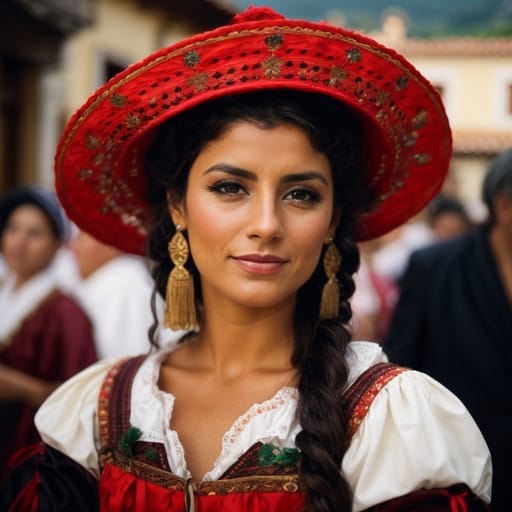
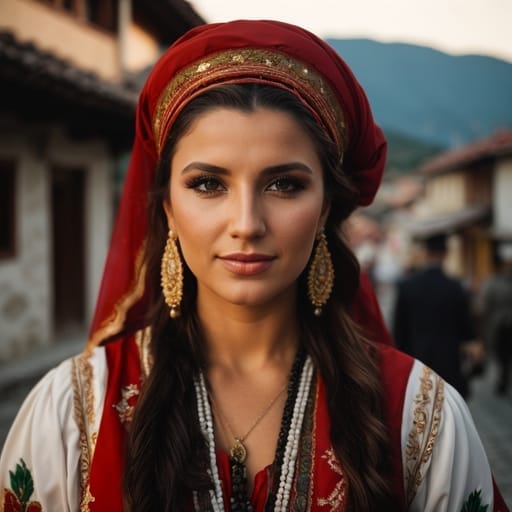
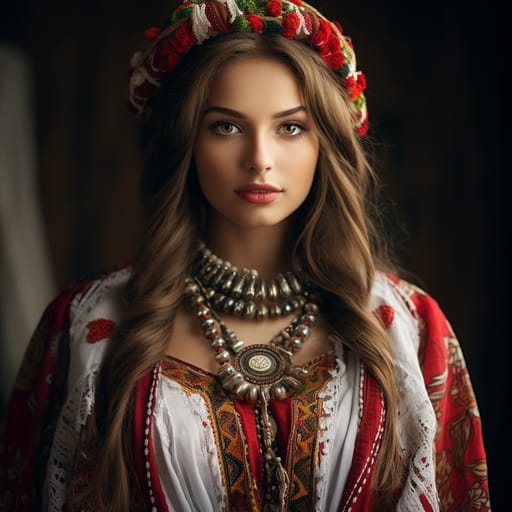
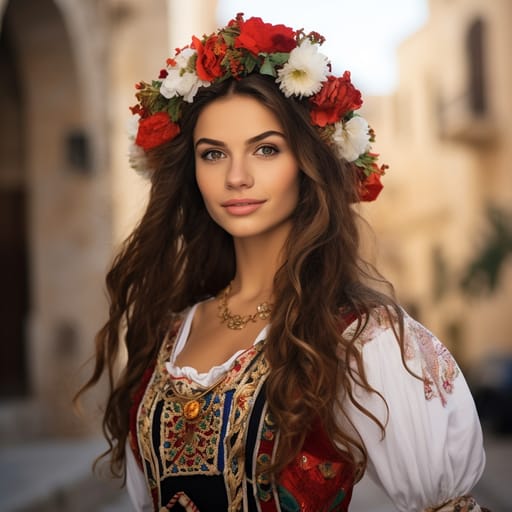
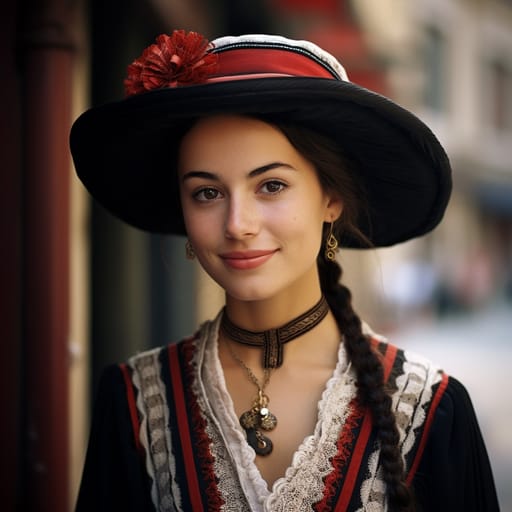
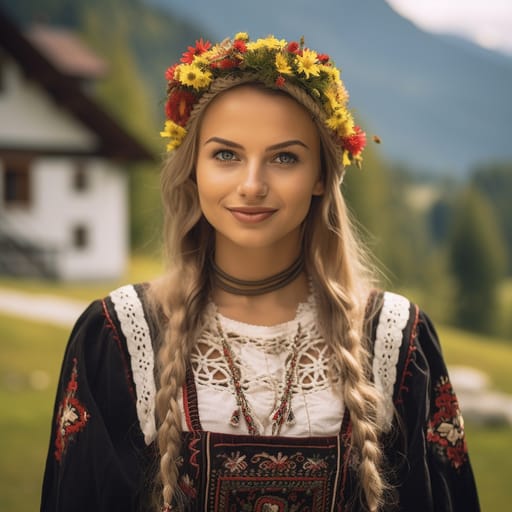
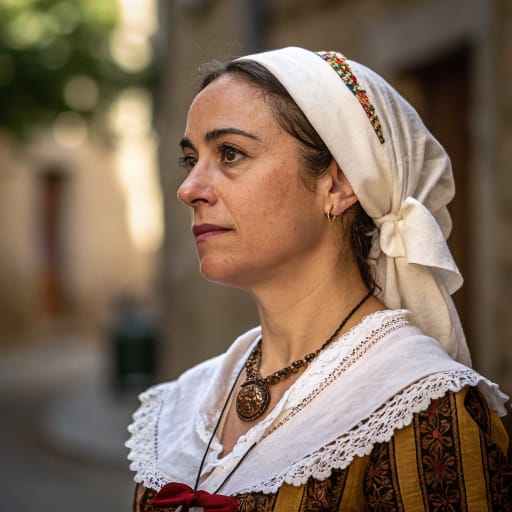
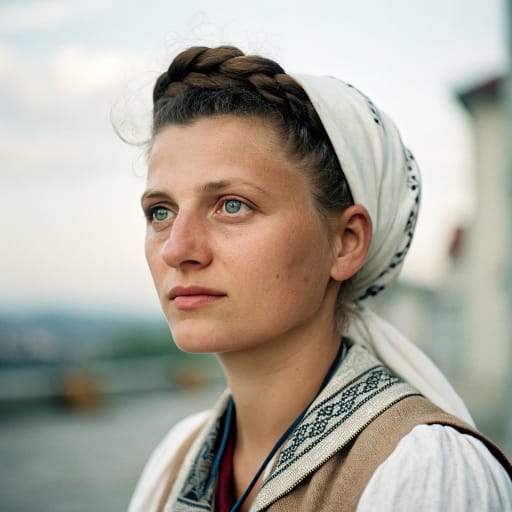
Typical Æsaronenses Phenotypes
Reference for AI generation: hair, eyes, skin, facial structure, build
Æsaronenses Body & Anatomy Reference
Southern European / Mediterranean phenotype: anatomy reference for AI nude generation
Æsaronenses Boobs & Breasts
Bust reference for Æsaronenses women: medium-to-large cup, full, moderate-to-high projection, which is typical of Southern European / Mediterranean ancestry. Areolas measure about 32-46mm across, with medium-brown to dark-brown pigmentation. Body type (mesomorph with full hip-and-bust deposition) shapes the bust as well, so Æsaronenses tits are usually full and projecting, generally the classic Mediterranean curvy bust profile. In AI imagery, keep the forward-set shape rather than drifting toward the lighter pigmentation of the Northern European bust.
Æsaronenses Ass & Hips
The Æsaronenses ass is typically medium-to-full, moderate-to-high projection, broader hip profile, which sets it apart from the slim Northern European narrow-hip pattern. Underneath, the pelvis shows medium-to-wide iliac crests, full gluteal-femoral fat distribution, part of the Southern European / Mediterranean skeletal pattern. For Æsaronenses butt pics and AI renders, match that silhouette and the overall build (mesomorph with full hip-and-bust deposition).
Æsaronenses Vagina & Pussy
Æsaronenses pussy and vulvar anatomy presents medium-brown to dark-brown labial pigmentation, fuller labia minora, consistent with the Southern European / Mediterranean phenotype's pigmentation pattern. Æsaronenses pubic hair is typically wavy-to-curly medium-coarse dark texture, dense distribution, in the inverted-triangle pattern. For anatomically accurate Æsaronenses pussy renders the labial coloration should match the surrounding olive to medium skin tone with a continuous gradient, and the hair should keep its wavy-to-curly medium-coarse dark texture.
Æsaronenses Dicks & Penis
Æsaronenses dicks follow the Southern European / Mediterranean reference data: regional mean ~13-14cm erect; moderate girth; medium-brown shaft pigmentation. Shaft color should track the olive to medium skin tone with a smooth change toward the glans, and Æsaronenses pubic hair keeps its wavy-to-curly medium-coarse dark texture.
Æsaronenses Body, Curves & Build
Æsaronenses body type and overall build presents as mesomorph with full hip-and-bust deposition, with mean adult female BMI 24-28: the characteristic Southern European / Mediterranean habitus. Æsaronenses curves and proportions should keep the regional skeletal frame (height, shoulder-to-hip ratio, limb proportions) rather than a generic mesomorph default.
Æsaronenses Skin Tone & Hair Texture
Æsaronenses skin sits in the olive to medium (Fitzpatrick III-IV) band. Hair is typically wavy-to-curly 2B-3B, dark-brown to black, in keeping with the Southern European / Mediterranean phenotype. In nude renders the skin should stay one even tone from face to body, and body, pubic and head hair should match.
Explore phenotype categories
Structured taxonomy with peer-reviewed scales · 22 anatomical categories
Erotic Poses & Sex Positions
From the pose catalog: 219 named positions with reference skeletons
Frequently asked questions about Æsaronenses people
Where is the Æsaronenses homeland?
The Æsaronenses homeland is North-central Sardinia (Italy), between the territory of Luguido near Oschiri and that of Cornus on the west coast, as placed by Ptolemy; exact location unknown. in Southern Europe.
What language do Æsaronenses people speak?
Æsaronenses people primarily speak Presumably Paleo-Sardinian (unclassified pre-Latin language of Sardinia); later Latin (Indo-European, Italic), the ancestor of modern Sardinian..
What religion do Æsaronenses people practice?
The predominant religion among Æsaronenses people is Indigenous Sardinian religion of Nuragic descent, centered on water cults, well temples and the father god Sardus Pater, with Punic and Roman influences; Christianity reached the island in late antiquity..






Make your own Æsaronenses images
Five a day, free, no credits to buy. The studio starts from this group's phenotype data, so you can set body type, pose and style and keep the traits accurate.
Start with Æsaronenses