No image yet

Yörüks Erotic

Homeland

Taurus Mountains and Mediterranean coast of southern and southwestern Turkey, with Yürük villages in North Macedonia, Bulgaria and Greek Thrace

Language

Turkish, in conservative Yörük dialects (Turkic, Oghuz branch); Balkan Yürük dialects show Kipchak influence

Part of the Turkic language family

Religion

Sunni Islam, Hanafi school, with rural Anatolian folk practice; some Alevi groups

Subgroups

Subgroup of Anatolian Turks of Oghuz descent; tribes include Sarıkeçili, Karakeçili, Honamlı, Karakoyunlu and Bahşiş; Balkan branch known as Yürüks; overlaps with Türkmen nomads

About Yörüks People

The Yörüks are the Turks who kept walking. Their name comes from the Old Turkic verb for walking, and they earned it: while most of the Oghuz Turks who entered Anatolia after the eleventh century settled into towns and farming villages, the Yörüks stayed with their flocks, moving each year between winter camps on the Mediterranean plains and summer pastures high in the Taurus Mountains. That seasonal round, plain to mountain and back, is the spine of Yörük identity. It shaped their black goat-hair tents, their diet of yogurt, cheese and flatbread, their weaving, their marriage networks and their long, wary relationship with the state.

The heartland is the Taurus range of southern Turkey, from Adana and Mersin west through Antalya, Karaman, Isparta and Muğla, with older pockets across the Aegean interior. A second, separate Yörük world exists in the Balkans, where Ottoman rulers resettled Anatolian nomads from the fourteenth century onward to garrison newly taken land. Their descendants still live in villages around Radoviš and Štip in North Macedonia and in scattered communities in Bulgaria and Greek Thrace, where the name shifts to Yürük. Yörüks speak Turkish, an Oghuz language of the Turkic family, but their dialects are conservative enough to mark them off from town Turkish, and the Balkan dialects carry Kipchak features that Anatolian speech lacks.

Religiously the Yörüks are Sunni Muslims of the Hanafi school, with the folk layer common to rural Anatolia: evil eye beads, vows at saints' tombs, a sacrifice when the flocks reach the summer pasture. Some groups counted as Yörük are Alevi, and the line between Yörük and Türkmen has never been fixed. In the west and south the nomads are called Yörük. Farther east the same kind of people are called Türkmen.

Internally the Yörüks are a federation of tribes and camping groups: Sarıkeçili, Karakeçili, Honamlı, Karakoyunlu, Bahşiş and dozens more, each with its own pastures and its own kilim patterns. The Ottoman state used them as auxiliaries and road guards, then spent the seventeenth through nineteenth centuries trying to pin them to the land. The forced settlement campaign in the Çukurova plain in the 1860s produced the line every Yörük knows, credited to the Turkmen poet Dadaloğlu: the decree is the sultan's, but the mountains are ours. Sedentarization mostly won. Most Yörüks now live in villages and towns and mark their heritage at annual Yörük festivals, but a few hundred Sarıkeçili families still migrate with camels between the Mersin coast and the Konya highlands, negotiating each spring with forestry officials for the right to pass.

Typical Yörüks Phenotypes

Reference for AI generation — hair, eyes, skin, facial structure, build

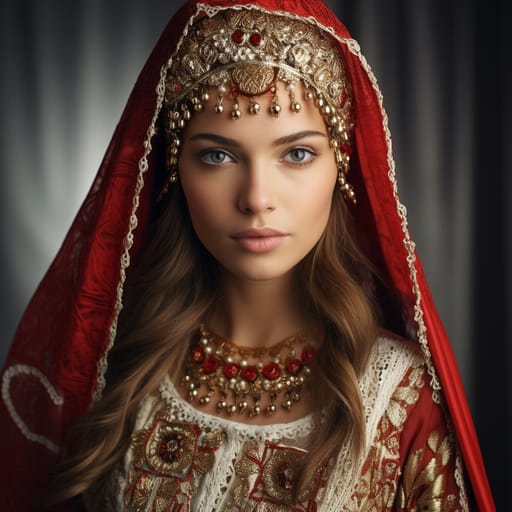
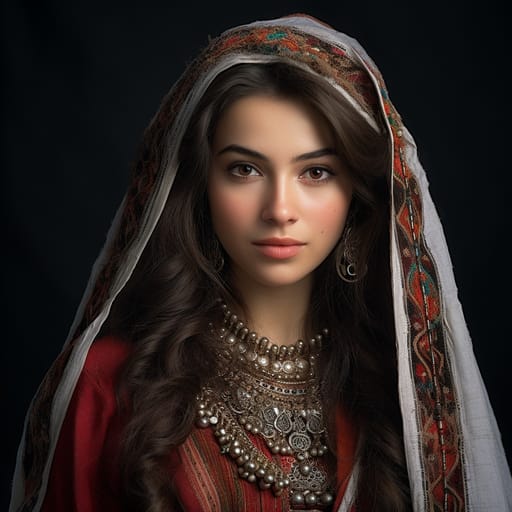
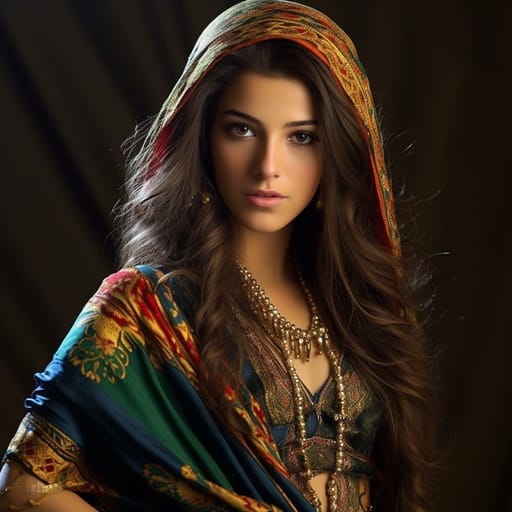
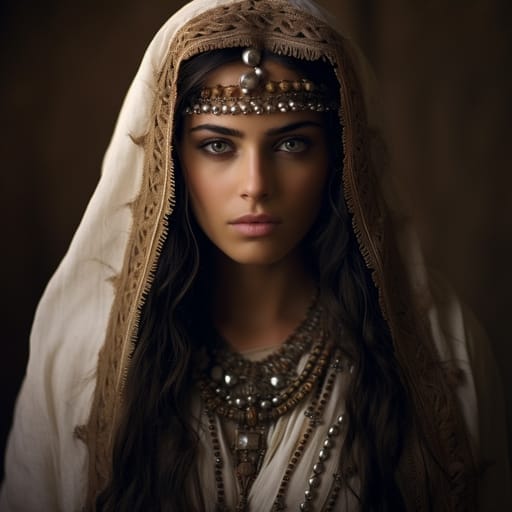
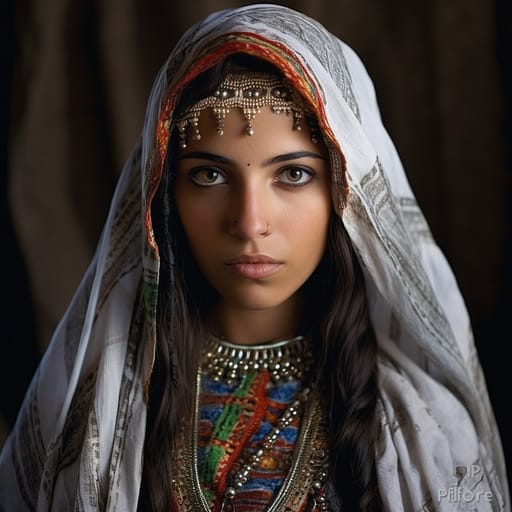
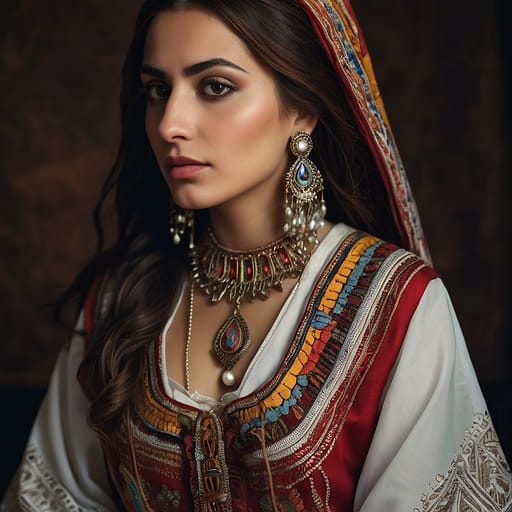
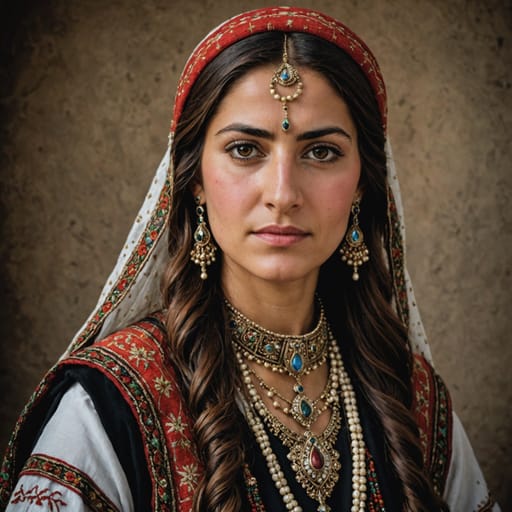
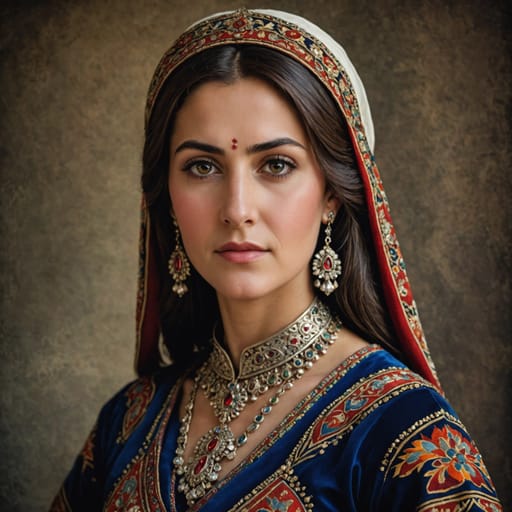
Yörüks fall within the broad Anatolian Turkish range: light to medium olive skin, often weathered by outdoor life, dark brown to black hair, predominantly dark eyes, medium stature. Traditional women's dress is layered, with baggy şalvar trousers, printed or embroidered headscarves and, for festive wear, headdresses trimmed with coins and beads; Balkan Yürük women's costumes are brightly colored and heavily embroidered. Men historically wore şalvar with a broad woven sash and a felt or wool cap, now mostly reserved for festivals.

Yörüks Body & Anatomy Reference

Per-feature anatomical profile for AI nude generation — Levantine / Mediterranean Middle Eastern phenotype

Yörüks Boobs & Breasts

Yörüks tits and boobs run medium-to-large cup, full, moderate-to-high projection — the classic Levantine / Mediterranean Middle Eastern bust profile. Yörüks nipples and areolas show medium-brown to dark-brown areolar pigmentation against the olive-to-light-brown skin tone, with areolar diameter typically in the 32-46mm range and forward-set positioning rather than the the smaller East Asian bust profile. Yörüks breasts trend full and soft, fuller projection than the North-African Berber norm, a function of the mesomorph with fuller hip-and-bust deposition body habitus and the mean adult female BMI 25-28. For anatomically-accurate AI-generated Yörüks nudes the render preserves: medium-to-large cup, full, moderate-to-high projection shape, 32-46mm areolas with medium-brown to dark-brown pigmentation, and the torso proportions of the Levantine / Mediterranean Middle Eastern phenotype.

Yörüks Ass & Hips

Yörüks ass and hip morphology presents as medium-to-full, moderate projection, broader hip profile — distinctly different from the slim East Asian narrow-hip profile. The Yörüks pelvic profile shows medium-to-wide iliac crests, fuller gluteal-femoral deposition, anchored in the Levantine / Mediterranean Middle Eastern skeletal pattern. Yörüks butt shots in adult AI imagery should render the medium-to-full, moderate projection, broader hip profile silhouette with the mesomorph with fuller hip-and-bust deposition build and the gluteal-femoral fat distribution typical of the Levantine / Mediterranean Middle Eastern phenotype rather than defaulting to a globally-averaged "ethnic" butt that generic AI generators produce. The hip-to-waist ratio characteristic of Yörüks women is one of the identifying features of the Levantine / Mediterranean Middle Eastern regional phenotype.

Yörüks Vagina & Pussy

Yörüks pussy and vulvar anatomy presents medium-brown to dark-brown labial pigmentation, fuller labia minora — consistent with the Levantine / Mediterranean Middle Eastern phenotype's pigmentation pattern. Yörüks pubic hair is typically wavy-to-coiled medium-coarse dark texture, dense distribution, distributed in the inverted-triangle pattern with regional-typical density. AI-generated Yörüks nude imagery should preserve the medium-brown to dark-brown labial pigmentation and the wavy-to-coiled medium-coarse dark texture hair texture rather than defaulting to a Western-European pink-and-sparse template. For anatomically-accurate Yörüks pussy renders the labial pigmentation and coloration should match the surrounding olive to medium-brown skin tone of the Levantine / Mediterranean Middle Eastern phenotype, with continuous gradient rather than an abrupt color transition.

Yörüks Dicks & Penis

Yörüks dick and penile anatomy in adult AI generation should anchor on the regional reference data: regional mean ~14cm erect, moderate-to-above-average girth, and medium-brown shaft pigmentation. The Yörüks cock profile reflects the Levantine / Mediterranean Middle Eastern ancestral population's anthropometric measurements rather than a globally-averaged Western-pornography default. For anatomically-accurate Yörüks nude male imagery the shaft pigmentation should track the surrounding olive to medium-brown skin tone, the glans-to-shaft pigmentation transition should be continuous, and the pubic hair pattern should match wavy-to-coiled medium-coarse dark texture texture distributed in the typical inverted-V escutcheon. Circumcision status in Yörüks populations varies by religious-cultural tradition rather than ancestral phenotype.

Yörüks Body, Curves & Build

Yörüks body type and overall build presents as mesomorph with fuller hip-and-bust deposition, with mean adult female BMI 25-28 — the characteristic Levantine / Mediterranean Middle Eastern habitus. Yörüks curves and proportions in adult AI imagery should preserve the regional skeletal frame (height, shoulder-to-hip ratio, limb proportions) rather than scaling to a Western-European mesomorph default. The Yörüks nude female form, when rendered with anatomical fidelity, shows the height range, frame width, and adipose distribution pattern typical of the Levantine / Mediterranean Middle Eastern phenotype. Generic AI image generators tend to collapse regional body types into a few default shapes; the EthnicErotic phenotype-anchored approach preserves the Yörüks build as its own reference category.

Yörüks Skin Tone & Hair Texture

Yörüks skin tone falls in the olive to medium-brown (Fitzpatrick III-V) band — the surface signal most often miscalibrated by generic AI nude generators trained on Western-photographic datasets. Yörüks hair texture is typically wavy-to-curly 2B-3B, predominantly dark-brown to black, characteristic of the Levantine / Mediterranean Middle Eastern phenotype. For anatomically-accurate Yörüks nude renders the skin should hold the Fitzpatrick band consistently across body surface rather than showing the lighter-than-face body shading that AI generators default to. Yörüks hair pigmentation and texture on body, pubic, and head should match across the figure rather than mixing textures (a common AI artefact).

Get notified when there’s a new post about Yörüks.

Discussion Board

Have a view on this? Sign in to post — your first one earns 2 generation credits.

No posts on this board yet

Log in to start the conversation.

See what’s active across the community →

Erotic Poses & Sex Positions

From the pose catalog — 219 named positions with reference skeletons

Frequently asked questions about Yörüks people

Where is the Yörüks homeland?

The Yörüks homeland is Taurus Mountains and Mediterranean coast of southern and southwestern Turkey, with Yürük villages in North Macedonia, Bulgaria and Greek Thrace in Western Asia.

What language do Yörüks people speak?

Yörüks people primarily speak Turkish, in conservative Yörük dialects (Turkic, Oghuz branch); Balkan Yürük dialects show Kipchak influence.

What religion do Yörüks people practice?

The predominant religion among Yörüks people is Sunni Islam, Hanafi school, with rural Anatolian folk practice; some Alevi groups.


What does a typical Yörüks woman look like?

Yörüks fall within the broad Anatolian Turkish range: light to medium olive skin, often weathered by outdoor life, dark brown to black hair, predominantly dark eyes, medium stature. Traditional women's dress is layered, with baggy şalvar trousers, printed or embroidered headscarves and, for festive wear, headdresses trimmed with coins and beads; Balkan Yürük women's costumes are brightly colored and heavily embroidered.