No portrait yet
Yenisei Kyrgyz Erotic
Minusinsk Basin on the upper Yenisei in southern Siberia (today's Khakassia, southern Krasnoyarsk Krai and northern Tuva, Russia); briefly Mongolia after 840
Old Turkic, written in the Yenisei runiform script (Turkic); descendant languages are Khakas and Fuyu Kyrgyz (Siberian Turkic) and modern Kyrgyz (Kipchak Turkic)
Tengrist shamanism with ancestor veneration and cremation burial; descendants later adopted Islam (Tian Shan Kyrgyz) or Orthodox Christianity (Khakas)
Turkic peoples; archaeological phases Tashtyk and Chaatas cultures; ancestors of the Khakas, the Fuyu Kyrgyz and, in name and partly in lineage, the Kyrgyz of Kyrgyzstan
About Yenisei Kyrgyz People
The Yenisei Kyrgyz were a Turkic people of southern Siberia, first noticed by Chinese chroniclers around 200 BCE and finished as an independent force in the early 1700s, when the Dzungars deported most of them and Russian forts closed over their valleys. Their name passed to the Kyrgyz of the Tian Shan; their most direct descendants are the Khakas of the upper Yenisei. Their country was the Minusinsk Basin, a wide steppe pocket walled by the Sayan mountains where the Yenisei runs north out of Tuva, and one of the best-favored corners of Siberia: good grass, arable bottomland, gold and iron in the hills, sable and musk deer in the taiga. They farmed millet and barley, kept horses and cattle, hunted the forest, and traded furs, musk and an iron that Tang informants said fell with the rain and made exceptionally sharp blades.
For most of their history they answered to someone else, first the Xiongnu, then the Türk and Uyghur khaganates, under a ruler the Chinese transcribed as the Ajo. Their moment came in 840, when a Kyrgyz army came down onto the Orkhon, burned the Uyghur capital of Ordu-Baliq and scattered the khaganate, pushing Uyghur refugees toward the Tarim oases. They held Mongolia only briefly and loosely, pulling back to the Yenisei within a few generations, but 840 is why the modern Kyrgyz Republic dates its statehood to them. They submitted to Genghis Khan's son Jochi in 1207, rebelled a decade later and were crushed, and were shifted around the Mongol empire. The Fuyu Kyrgyz of Heilongjiang, descended from families the Dzungars deported, kept a Siberian Turkic tongue into the twentieth century.
What they left behind is unusually intimate for a steppe people. They wrote, cutting epitaphs in the Yenisei form of the Old Turkic runiform script onto standing stones, more than a hundred of which survive and speak in the first person about wives, sons and herds left behind. They cremated their dead and raised fenced stone kurgans over the ashes, the chaatas that still stud the Khakas steppe. Earlier, in the Tashtyk period, they had covered the faces of the dead with painted plaster masks, some of the most arresting faces from ancient Siberia. Tang writers, who accepted the Kyrgyz elite as kin through the exiled Han general Li Ling, recorded that men tattooed their hands after distinguishing themselves in battle and women their necks at marriage, that years were counted by the twelve-animal cycle, and that shamans called kam spoke for the sky and the spirits of the land. That shamanism outlasted every empire that passed over them.
Related ethnic groups
Groups that share Yenisei Kyrgyz's homeland, region, language, or religious tradition. These are likely candidates for comparative phenotype reference.
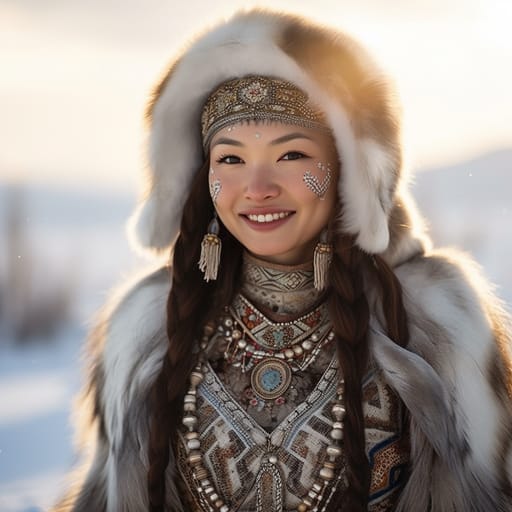
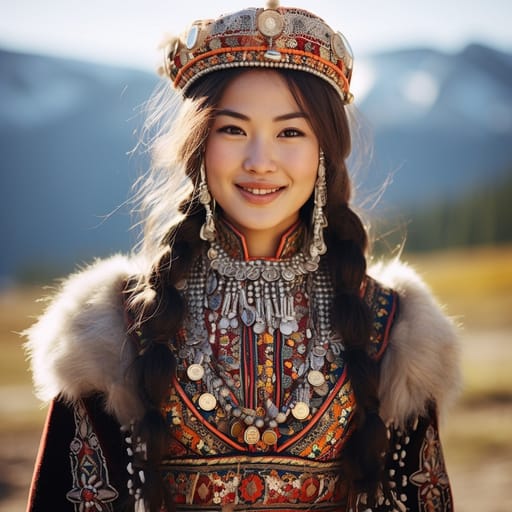
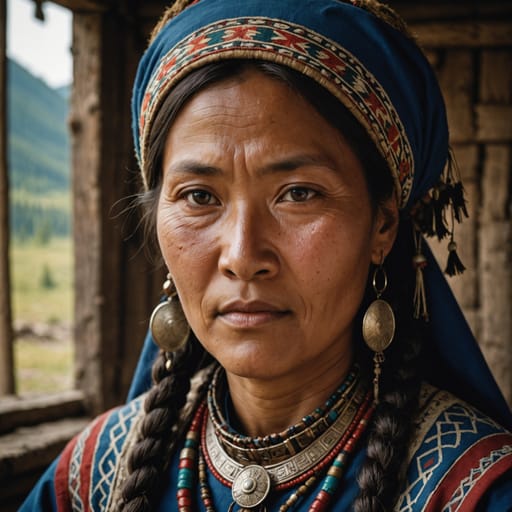
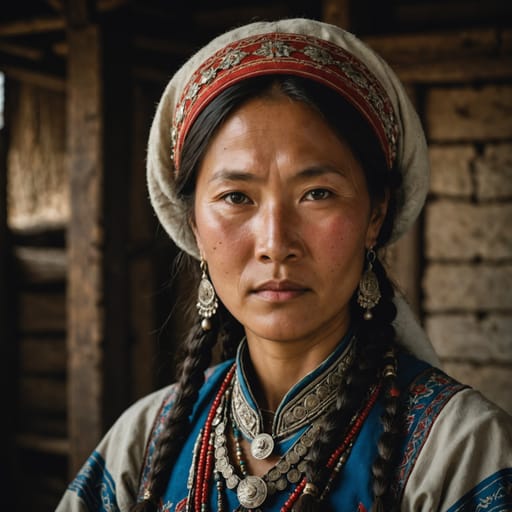
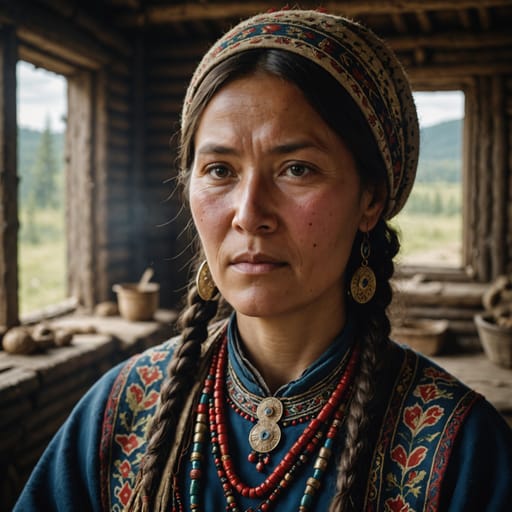
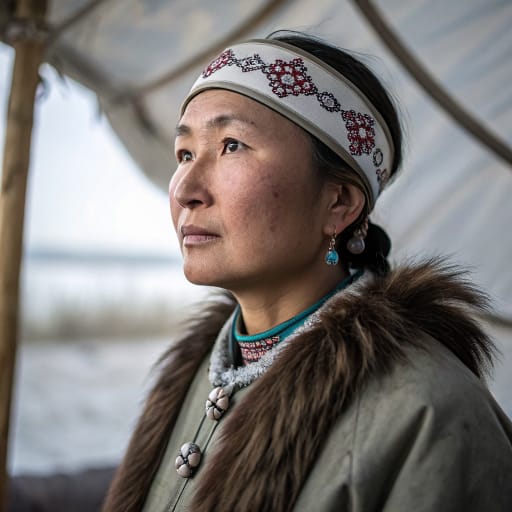
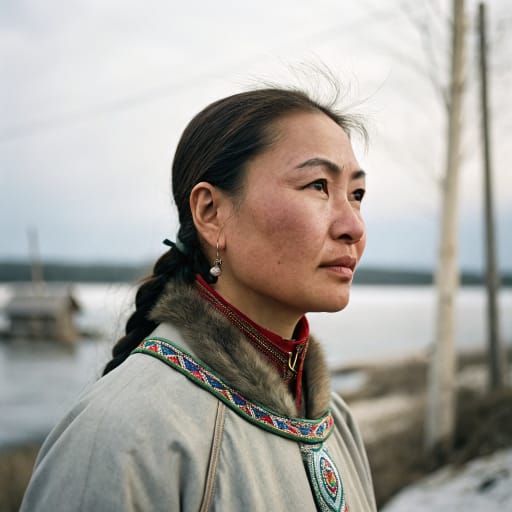
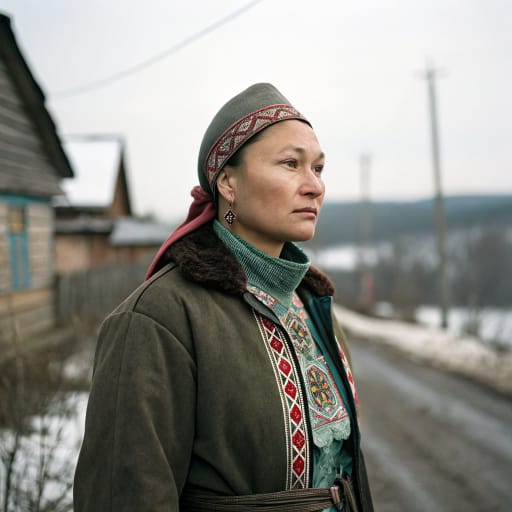
Typical Yenisei Kyrgyz Phenotypes
Reference for AI generation: hair, eyes, skin, facial structure, build
Explore phenotype categories
Structured taxonomy with peer-reviewed scales · 22 anatomical categories
Erotic Poses & Sex Positions
From the pose catalog: 219 named positions with reference skeletons
Frequently asked questions about Yenisei Kyrgyz people
Where is the Yenisei Kyrgyz homeland?
The Yenisei Kyrgyz homeland is Minusinsk Basin on the upper Yenisei in southern Siberia (today's Khakassia, southern Krasnoyarsk Krai and northern Tuva, Russia); briefly Mongolia after 840 in Northern Asia.
What language do Yenisei Kyrgyz people speak?
Yenisei Kyrgyz people primarily speak Old Turkic, written in the Yenisei runiform script (Turkic); descendant languages are Khakas and Fuyu Kyrgyz (Siberian Turkic) and modern Kyrgyz (Kipchak Turkic).
What religion do Yenisei Kyrgyz people practice?
The predominant religion among Yenisei Kyrgyz people is Tengrist shamanism with ancestor veneration and cremation burial; descendants later adopted Islam (Tian Shan Kyrgyz) or Orthodox Christianity (Khakas).






Make your own Yenisei Kyrgyz images
Five a day, free, no credits to buy. The studio starts from this group's phenotype data, so you can set body type, pose and style and keep the traits accurate.
Start with Yenisei Kyrgyz