No portrait yet
Yanesha Erotic
Cloud forest and river valleys of the central Peruvian Amazon, in the Pasco, Junín and Huánuco regions of Peru
Yanesha', also called Amuesha (Arawakan), with an old stratum of Quechua loanwords; Spanish is now dominant
Traditional solar and lunar cosmology centered on Yompor Ror and Yachor Arrorr, now largely overlaid by Catholicism and by Adventist and evangelical Protestantism
A divergent branch of the Arawakan (Maipurean) family; neighbors and long-standing allies of the Asháninka and other Campa peoples of the central selva
About Yanesha People
The Yanesha live where the Andes stop being mountains and start being jungle, in the cloud forest and river valleys of central Peru: the Palcazú, the Pichis, the Pozuzo, the upper Perené, spread across parts of Pasco, Junín and Huánuco. That position, halfway between highland and lowland, is the thing to understand about them. Their language, Yanesha' (older sources call the people Amuesha), belongs to the Arawakan family that stretches across half of South America, but it is a strange member of it, phonologically remade and carrying a layer of Quechua borrowings old enough that linguists read them as evidence of sustained contact with Andean societies long before the Inca arrived. The Yanesha were not an isolated forest people who met the highlands late. They were a hinge. The clearest proof is the Cerro de la Sal, the salt mountain above the Chanchamayo, which supplied salt across a wide regional network and made Yanesha territory somewhere other peoples came to.
Religious life traditionally centered on Yompor Ror, Our Father the Sun, and Yachor Arrorr, Our Mother the Moon, and on the cornesha', a priest who kept a sacred fire in a temple house and whose authority was ritual rather than political. Franciscans arrived in the seventeenth century and were driven out in 1742, when the Yanesha joined the Asháninka behind Juan Santos Atahualpa in a rebellion that closed the central selva to outsiders for close to a hundred years. Reconquest then came slowly and all at once: Austrian and German colonists at Pozuzo from 1859 and later Oxapampa, the rubber trade, the Peruvian Corporation's coffee concession on the Perené in the 1890s, Adventist missions in the twentieth century that pushed hard against the old ritual order, and finally the Carretera Marginal highway in the 1960s, which brought highland settlers into the valleys in numbers. Peru's 1974 native communities law gave the Yanesha legal title to land, and their federations have spent the decades since defending those titles against logging, coca and cattle. Today they number somewhere near ten thousand across several dozen titled communities, and the language is the fragile part: most Yanesha speak Spanish first, and the ritual song repertoire that carried the old cosmology has few singers left. Community schools now teach Yanesha', a late effort but a real one.
Related ethnic groups
Groups that share Yanesha's homeland, region, language, or religious tradition. These are likely candidates for comparative phenotype reference.
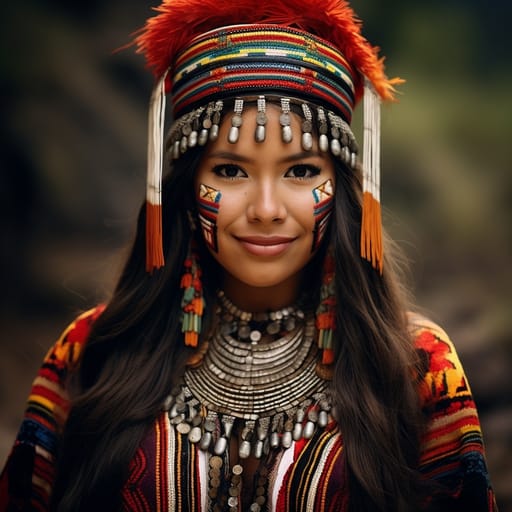
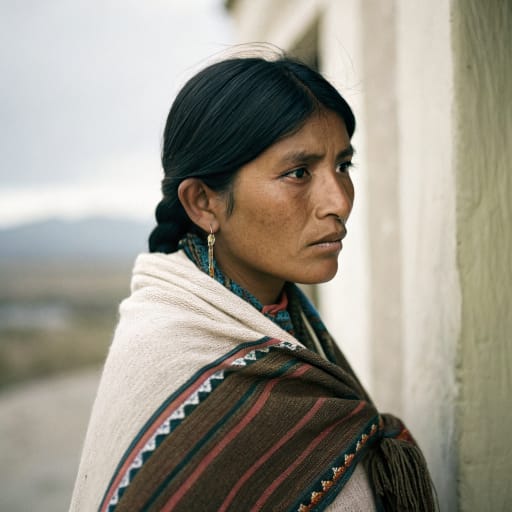
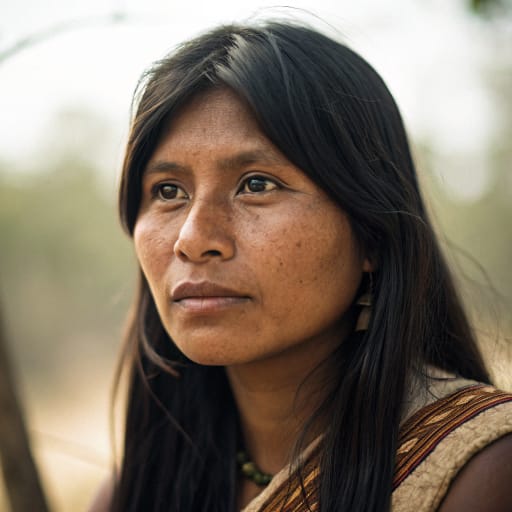
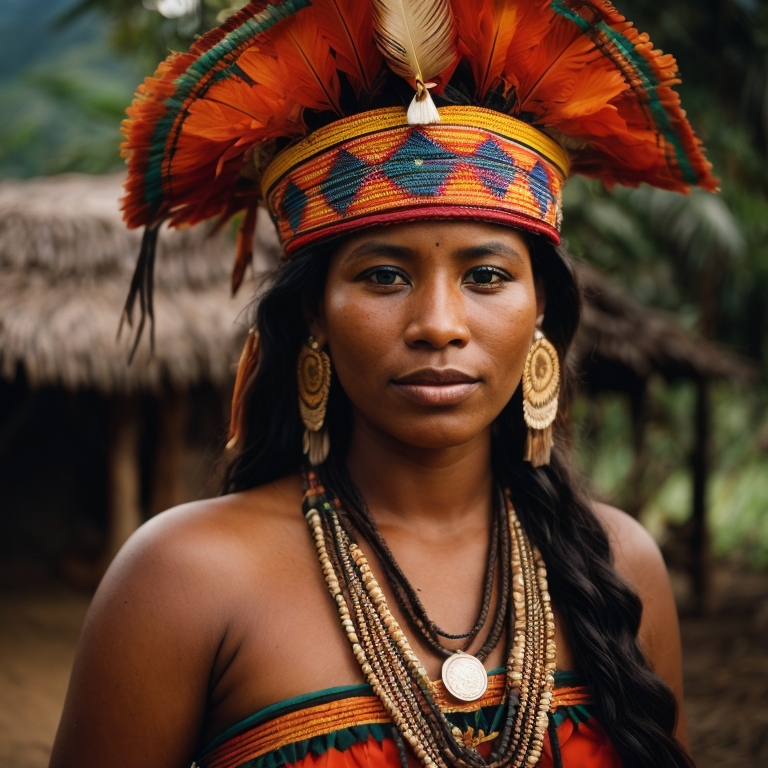
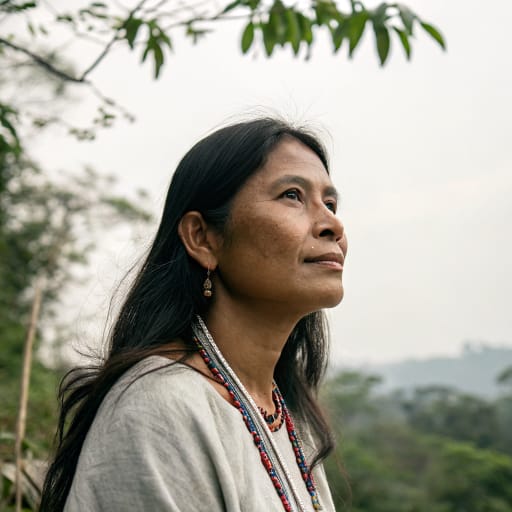
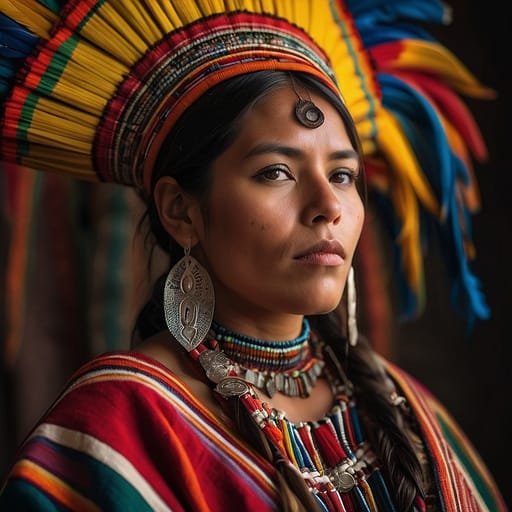
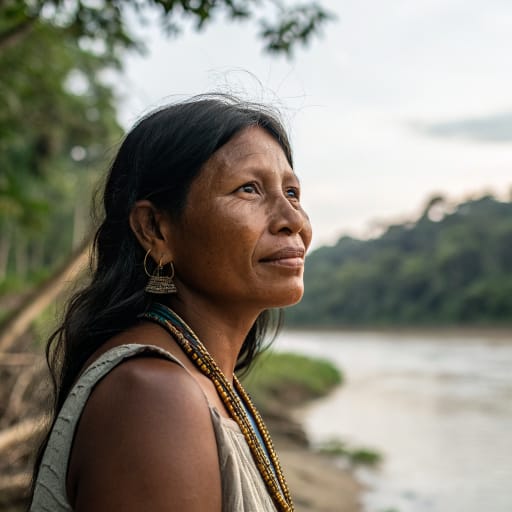
Typical Yanesha Phenotypes
Reference for AI generation: hair, eyes, skin, facial structure, build
Yanesha Body & Anatomy Reference
South American Indigenous / European-Mestizo / Afro-Latino mix phenotype: anatomy reference for AI nude generation
Yanesha Boobs & Breasts
Bust reference for Yanesha women: medium-to-large cup, full, high projection, which is typical of South American Indigenous / European-Mestizo / Afro-Latino mix ancestry. Areolas measure about 32-46mm across, with medium-brown to dark-brown pigmentation. Body type (endomorph-to-mesomorph with high gluteal-femoral deposition) shapes the bust as well, so Yanesha tits are usually the classic Brazilian / Latina curvy bust profile in lowland populations; smaller and shorter-set in Andean Indigenous populations. In AI imagery, keep the forward-set shape rather than drifting toward the smaller bust profile of Andean Indigenous sub-populations.
Yanesha Ass & Hips
The Yanesha ass is typically full, high projection, the famous Brazilian / Latina bunda profile, which sets it apart from the slim narrow-hip East Asian profile. Underneath, the pelvis shows wide iliac crests, very full gluteal-femoral fat deposition (the hallmark Brazilian / Latina hip-to-waist ratio), part of the South American Indigenous / European-Mestizo / Afro-Latino mix skeletal pattern. For Yanesha butt pics and AI renders, match that silhouette and the overall build (endomorph-to-mesomorph with high gluteal-femoral deposition).
Yanesha Vagina & Pussy
Yanesha pussy and vulvar anatomy presents medium-brown to dark-brown labial pigmentation, fuller labia minora, consistent with the South American Indigenous / European-Mestizo / Afro-Latino mix phenotype's pigmentation pattern. Yanesha pubic hair is typically wavy-to-curly coarse dark texture, dense distribution, in the inverted-triangle pattern. For anatomically accurate Yanesha pussy renders the labial coloration should match the surrounding tan to deep-brown skin tone with a continuous gradient, and the hair should keep its wavy-to-curly coarse dark texture.
Yanesha Dicks & Penis
Yanesha dicks follow the South American Indigenous / European-Mestizo / Afro-Latino mix reference data: regional mean ~13cm erect; moderate-to-above-average girth; medium-brown shaft pigmentation. Shaft color should track the tan to deep-brown skin tone with a smooth change toward the glans, and Yanesha pubic hair keeps its wavy-to-curly coarse dark texture.
Yanesha Body, Curves & Build
Yanesha body type and overall build presents as endomorph-to-mesomorph with high gluteal-femoral deposition, with mean adult female BMI 25-28: the characteristic South American Indigenous / European-Mestizo / Afro-Latino mix habitus. Yanesha curves and proportions should keep the regional skeletal frame (height, shoulder-to-hip ratio, limb proportions) rather than a generic mesomorph default.
Yanesha Skin Tone & Hair Texture
Yanesha skin sits in the tan to deep-brown (Fitzpatrick III-VI) band. Hair is typically straight-to-curly 1A-3C, varies widely by ancestral composition, in keeping with the South American Indigenous / European-Mestizo / Afro-Latino mix phenotype. In nude renders the skin should stay one even tone from face to body, and body, pubic and head hair should match.
Explore phenotype categories
Structured taxonomy with peer-reviewed scales · 22 anatomical categories
Erotic Poses & Sex Positions
From the pose catalog: 219 named positions with reference skeletons
Frequently asked questions about Yanesha people
Where is the Yanesha homeland?
The Yanesha homeland is Cloud forest and river valleys of the central Peruvian Amazon, in the Pasco, Junín and Huánuco regions of Peru in South America.
What language do Yanesha people speak?
Yanesha people primarily speak Yanesha', also called Amuesha (Arawakan), with an old stratum of Quechua loanwords; Spanish is now dominant.
What religion do Yanesha people practice?
The predominant religion among Yanesha people is Traditional solar and lunar cosmology centered on Yompor Ror and Yachor Arrorr, now largely overlaid by Catholicism and by Adventist and evangelical Protestantism.






Make your own Yanesha images
Five a day, free, no credits to buy. The studio starts from this group's phenotype data, so you can set body type, pose and style and keep the traits accurate.
Start with Yanesha