No portrait yet
Vepsians Erotic
Northwestern Russia, between Lake Onega and Lake Ladoga: the Republic of Karelia and the Leningrad and Vologda oblasts
Russian Orthodox Christianity, with surviving pre-Christian beliefs in forest, water and household spirits
Northern (Onega) Veps, Central (Oyat) Veps, Southern Veps; part of the Baltic Finnic peoples alongside Karelians, Ludians, Finns and Estonians
About Vepsians People
The Vepsians are the people the medieval Rus' chronicles called the Ves', named among the tribes that, as the story goes, invited the Varangian prince Rurik to rule in 862, and they are still where the chroniclers put them: in the forests between Lake Onega and Lake Ladoga in northwestern Russia. Their territory was once far larger. The Ves' sat on the fur route south to Volga Bulgaria, and Arab geographers wrote of the Wisu, a northern people who sent pelts down to the Bulgars on the Volga. Russian settlement and Orthodox parishes absorbed most of them over the following centuries. What survived did so in the least accessible places, and today only a few thousand people still call themselves Veps, most of them older and rural.
Their language belongs to the Finnic branch of the Uralic family, alongside Karelian, Finnish and Estonian, and it is the odd member of that group. It has no consonant gradation, the alternation that shapes nearly every Finnish and Karelian noun, and vowel harmony has mostly worn away. It also carries a thick layer of Russian loans. A written standard in Latin script was built in the early 1930s, shut down in the purges of 1937, and rebuilt after 1989. The newspaper Kodima has published in Veps from Petrozavodsk since 1993, and the language is taught at the university there, but UNESCO lists it as severely endangered.
There are three branches. The Northern Veps live on the southwestern shore of Lake Onega in the Republic of Karelia, around the village of Sheltozero, and are the group outsiders most often meet. The Central Veps live along the Oyat River in Leningrad and Vologda oblasts. The Southern Veps, the smallest branch, live around Boksitogorsk. The Northern Veps are stone people: the crimson Shoksha quartzite their masons quarried went into the sarcophagus of Napoleon in Paris and into Lenin's Mausoleum on Red Square.
Vepsians have been Orthodox for centuries, and the church calendar structures village life. Underneath it, the forest still has a master, the mecižand, who is asked politely for the return of lost cattle, and the bathhouse has its own rules and its own spirit. Funerals are accompanied by laments improvised by women, and the dead are fed at the grave on memorial days. The revival since the late 1980s has modest landmarks: an ethnographic museum in Sheltozero, a Veps National Volost in Karelia that lasted a decade from 1994, the summer festival Elon pu, the Tree of Life, in the Central Veps village of Vinnitsy, and in 2006 a place on Russia's list of indigenous small-numbered peoples of the North, which carries legal protections.
Related ethnic groups
Groups that share Vepsians's homeland, region, language, or religious tradition. These are likely candidates for comparative phenotype reference.
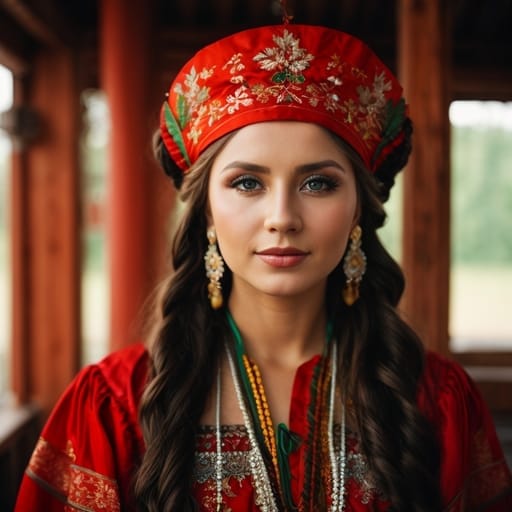
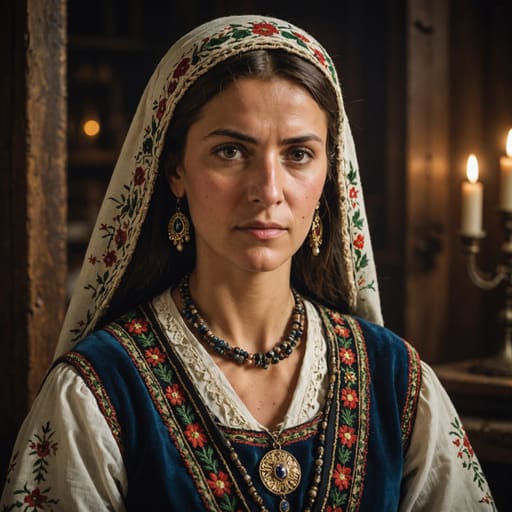
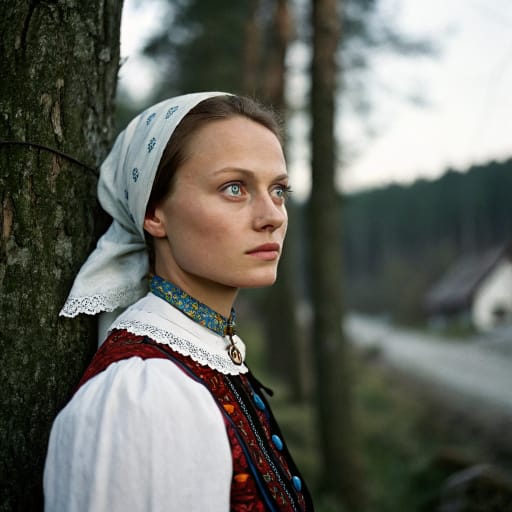
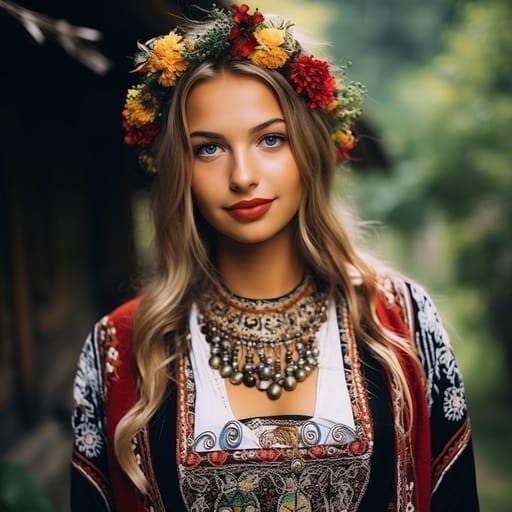
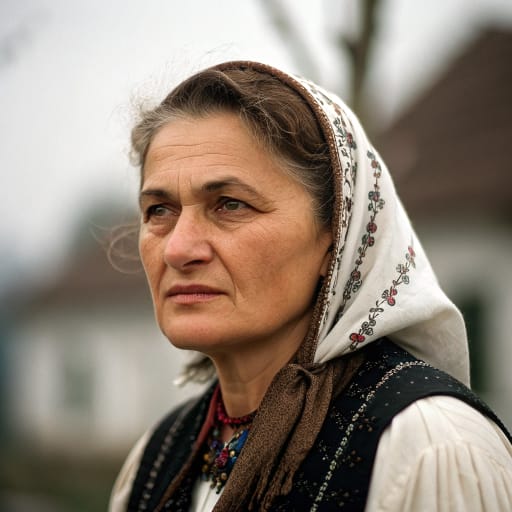
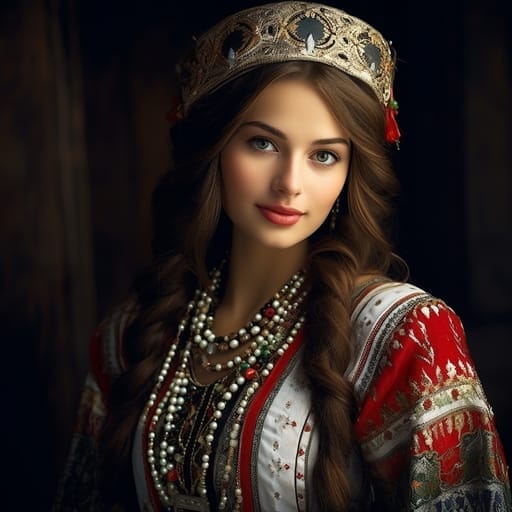
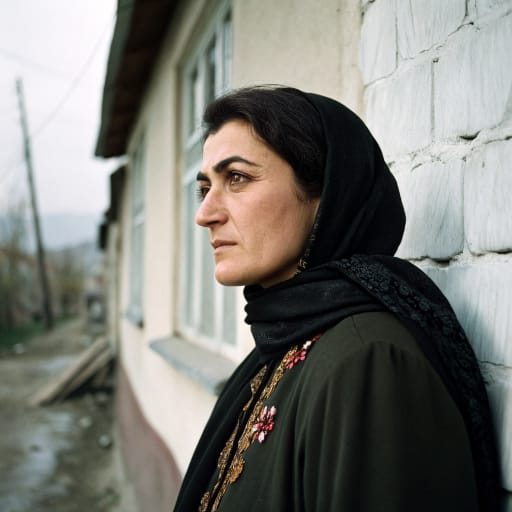
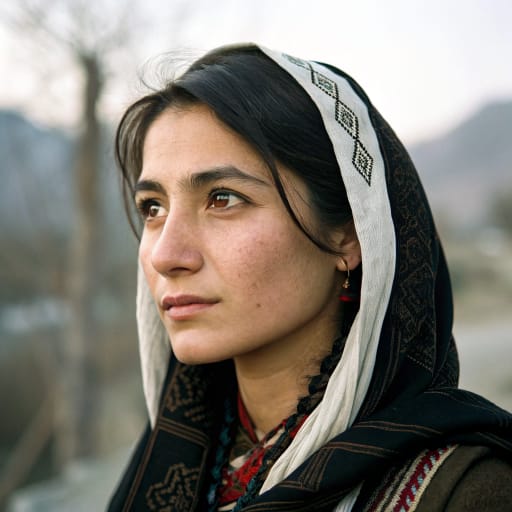
Typical Vepsians Phenotypes
Reference for AI generation: hair, eyes, skin, facial structure, build
Vepsians Body & Anatomy Reference
Anatomy by feature, Eastern European / Slavic phenotype
Vepsians Boobs & Breasts
Bust reference for Vepsians women: medium-to-large cup, full, moderate-to-high projection, which is typical of Eastern European / Slavic ancestry. Areolas measure about 30-44mm across, with light-pink to medium-brown pigmentation. Body type (mesomorph, full hip-and-bust deposition) shapes the bust as well, so Vepsians tits are usually full and projecting, classic Eastern European curvy bust. In AI imagery, keep the forward-set shape rather than drifting toward the smaller East Asian bust.
Vepsians Ass & Hips
The Vepsians ass is typically medium-to-full, moderate-to-high projection, which sets it apart from the slim narrow-hip East Asian profile. Underneath, the pelvis shows medium iliac crests, full gluteal-femoral fat deposition, part of the Eastern European / Slavic skeletal pattern. For Vepsians butt pics and AI renders, match that silhouette and the overall build (mesomorph, full hip-and-bust deposition).
Vepsians Vagina & Pussy
Vepsians pussy and vulvar anatomy presents light-pink to medium-brown labial pigmentation, varied labia minora, consistent with the Eastern European / Slavic phenotype's pigmentation pattern. Vepsians pubic hair is typically wavy medium texture, blond to dark-brown, in the inverted-triangle pattern. For anatomically accurate Vepsians pussy renders the labial coloration should match the surrounding fair to light skin tone with a continuous gradient, and the hair should keep its wavy medium texture.
Vepsians Dicks & Penis
Vepsians dicks follow the Eastern European / Slavic reference data: regional mean ~13-14cm erect; moderate girth; light-pink to medium-brown shaft pigmentation. Shaft color should track the fair to light skin tone with a smooth change toward the glans, and Vepsians pubic hair keeps its wavy medium texture.
Vepsians Body, Curves & Build
Vepsians body type and overall build presents as mesomorph, full hip-and-bust deposition, with mean adult female BMI 23-26: the characteristic Eastern European / Slavic habitus. Vepsians curves and proportions should keep the regional skeletal frame (height, shoulder-to-hip ratio, limb proportions) rather than a generic mesomorph default.
Vepsians Skin Tone & Hair Texture
Vepsians skin sits in the fair to light (Fitzpatrick II-III) band. Hair is typically straight-to-wavy 1A-2B, light-blond to dark-brown, in keeping with the Eastern European / Slavic phenotype. In nude renders the skin should stay one even tone from face to body, and body, pubic and head hair should match.
Explore phenotype categories
Structured taxonomy with peer-reviewed scales · 22 anatomical categories
Erotic Poses & Sex Positions
From the pose catalog: 219 named positions with reference skeletons
Frequently asked questions about Vepsians people
Where is the Vepsians homeland?
The Vepsians homeland is Northwestern Russia, between Lake Onega and Lake Ladoga: the Republic of Karelia and the Leningrad and Vologda oblasts in Eastern Europe.
What language do Vepsians people speak?
Vepsians people primarily speak Veps (Uralic, Finnic branch); Russian.
What religion do Vepsians people practice?
The predominant religion among Vepsians people is Russian Orthodox Christianity, with surviving pre-Christian beliefs in forest, water and household spirits.






Make your own Vepsians images
Five a day, free, no credits to buy. The studio starts from this group's phenotype data, so you can set body type, pose and style and keep the traits accurate.
Start with Vepsians