Help us get this right
Does this portrait look right for Greater Poles?
Nobody has judged this one yet. You would be the first.
Greater Poles Erotic
Greater Poland (Wielkopolska), the historic region of west-central Poland around Poznań, Gniezno, Kalisz, Konin and Leszno, mostly within today's Greater Poland Voivodeship
Polish, including the Greater Poland dialect group and Poznań city speech (Indo-European, West Slavic, Lechitic)
Mostly Roman Catholic; historically also Lutheran, Czech Brethren and Jewish communities
A regional branch of the Poles (West Slavs); local ethnographic groups include the Biskupianie around Krobia, the Bambrzy of Poznań and the Pałuczanie of Pałuki
About Greater Poles People
Greater Poles, Wielkopolanie in Polish, are the Poles of the western heartland around Poznań, Gniezno and Kalisz, and inside Poland they carry a clear reputation: thrifty, orderly, hardworking and good at organizing. Other Poles joke about it. Greater Poles mostly wear it as a badge. Their flat, lake-dotted farm country along the Warta is where the Polish state began. The Polans held it in the tenth century, Mieszko I accepted Christianity in 966, and Gniezno became the country's first archbishopric in 1000, which is why its archbishop still bears the title Primate of Poland. The region remains solidly Roman Catholic, though Leszno once sheltered Czech Brethren exiles and Lutheran and Jewish communities were part of town life for centuries. After the partitions the region spent more than a century under Prussian rule, and Germanization pressed hard: a state commission bought land for German settlers, and schools pushed German into religion lessons. Poles answered with what they called organic work, building cooperative banks, farmers' circles and associations to hold on to land and language. The schoolchildren of Września went on strike in 1901 rather than recite their catechism in German, and the peasant Michał Drzymała lived in a circus wagon after officials denied him a permit to build a house. In December 1918 Poznań rose in the Greater Poland Uprising, one of the few Polish insurrections that actually won. Nazi Germany later annexed the region as the Reichsgau Wartheland and deported hundreds of thousands of Poles, and in June 1956 Poznań's workers mounted the first of the mass protests that would shake communist Poland.
That Prussian century left marks on speech and the table. The Greater Poland dialect is one of Polish's main dialect groups, and Poznań's city speech mixes German loans such as fyrtel, a neighborhood, with local words like bimba for a tram and pyra for a potato. Pyry is also the rest of Poland's nickname for Poznań people, and pyry z gzikiem, potatoes with curd cheese and onion, is the regional staple. On St. Martin's Day, November 11, the city eats rogale świętomarcińskie, dense crescent pastries filled with white poppy seed, by the ton. Folk tradition holds on in pockets. The Biskupianie around Krobia, on lands once owned by the bishops of Poznań, still wear their costumes for church holidays and festivals. Around Zbąszyń, musicians play the kozioł, a big bagpipe carved with a goat's head that was long a fixture at weddings. And the Bambrzy on Poznań's edges descend from Catholic farmers who came from around Bamberg in the eighteenth century and became thoroughly Polish.
Related ethnic groups
Groups that share Greater Poles's homeland, region, language, or religious tradition. These are likely candidates for comparative phenotype reference.
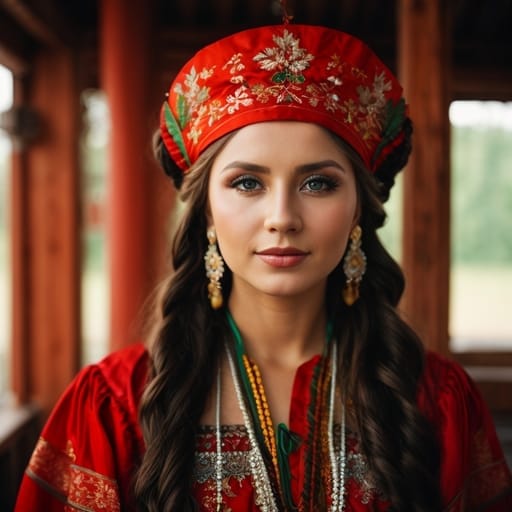
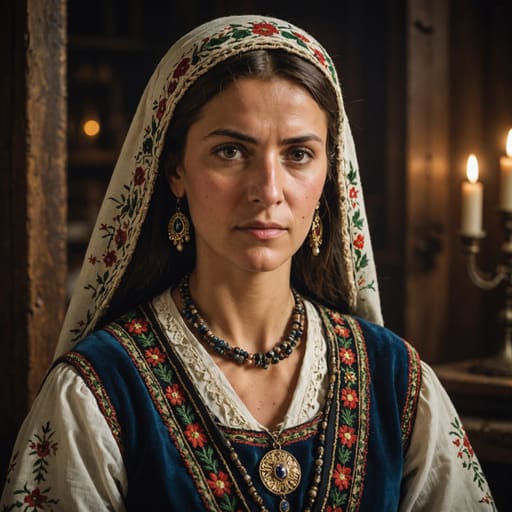
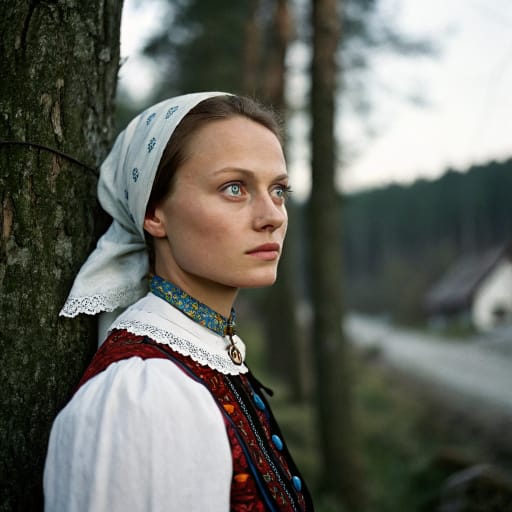
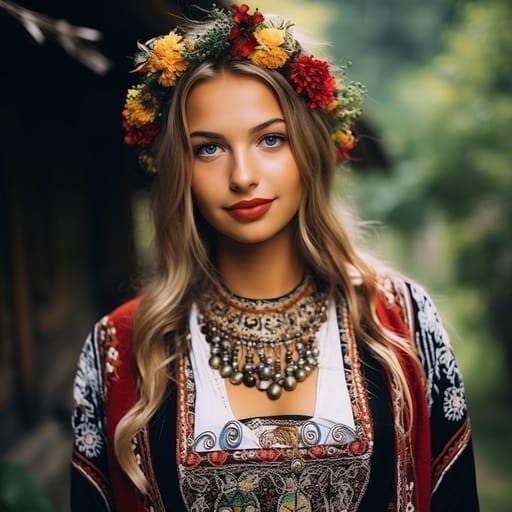
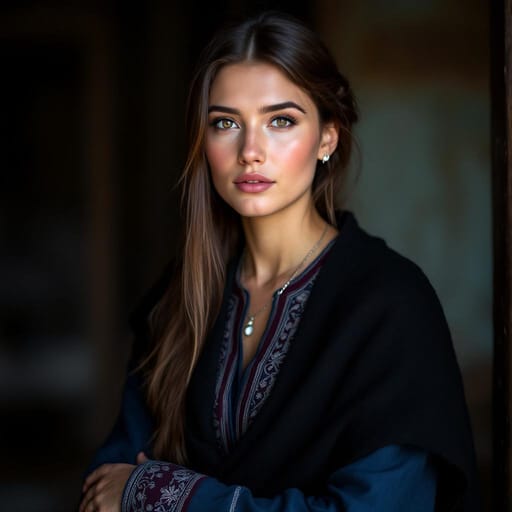
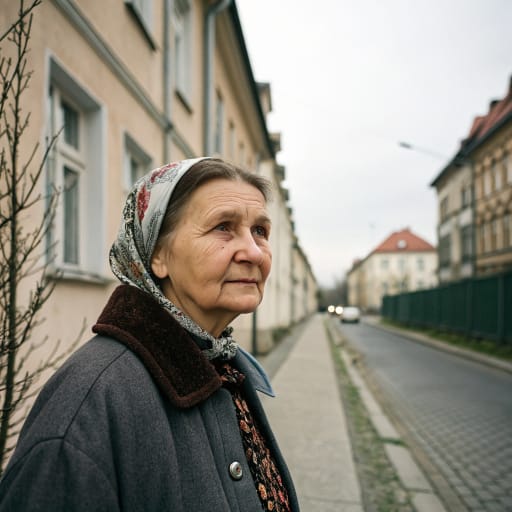
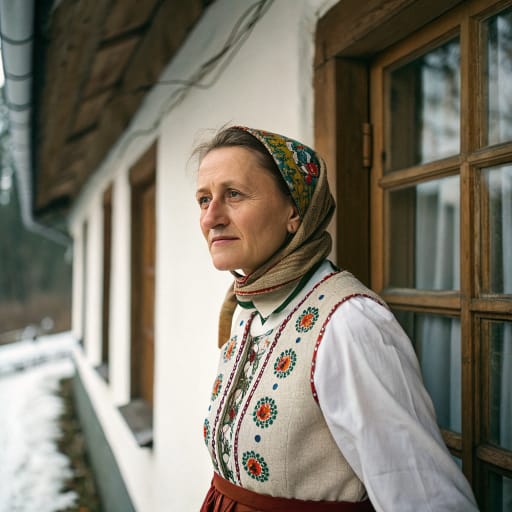
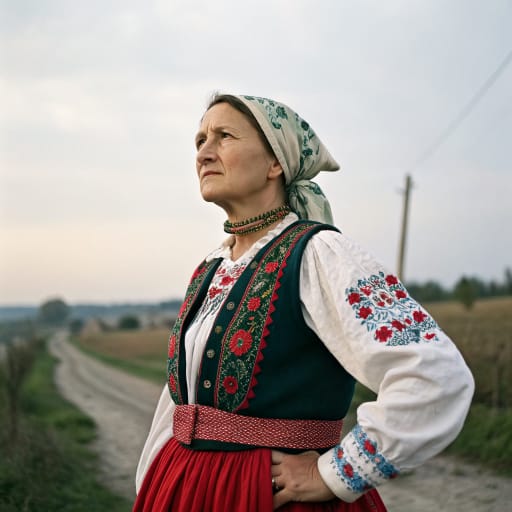
Typical Greater Poles Phenotypes
Reference for AI generation: hair, eyes, skin, facial structure, build
Greater Poles Body & Anatomy Reference
Eastern European / Slavic phenotype: anatomy reference for AI nude generation
Greater Poles Boobs & Breasts
The typical Greater Poles bust is medium-to-large cup, full, moderate-to-high projection, in line with the wider Eastern European / Slavic pattern. Areolas usually fall in the 30-44mm range, with light-pink to medium-brown areolar pigmentation against the fair-to-light-brown skin tone. Compared with the smaller East Asian bust, Greater Poles breasts sit forward and are generally full and projecting, classic Eastern European curvy bust. A faithful AI render of Greater Poles tits keeps that shape and areola size.
Greater Poles Ass & Hips
Butt shape among Greater Poles women: medium-to-full, moderate-to-high projection, over medium iliac crests, full gluteal-femoral fat deposition. This follows Eastern European / Slavic ancestry and looks quite unlike the slim narrow-hip East Asian profile. An accurate Greater Poles ass in adult AI imagery keeps both the silhouette and the overall build (mesomorph, full hip-and-bust deposition) instead of a generic average.
Greater Poles Vagina & Pussy
Vulvar anatomy among Greater Poles women: light-pink to medium-brown labial pigmentation, varied labia minora. Pubic hair tends to be wavy medium texture, blond to dark-brown, in the usual inverted-triangle pattern. Both follow Eastern European / Slavic pigmentation, which is why Greater Poles pussy renders should not fall back on a pale, sparse Western template.
Greater Poles Dicks & Penis
The Greater Poles cock profile, from Eastern European / Slavic anthropometric data: regional mean ~13-14cm erect; moderate girth; light-pink to medium-brown shaft pigmentation. Pubic hair has a wavy medium texture and forms the usual inverted-V pattern. Whether Greater Poles men are circumcised follows religious and cultural practice rather than phenotype.
Greater Poles Body, Curves & Build
Build and curves among Greater Poles women follow the Eastern European / Slavic pattern: mesomorph, full hip-and-bust deposition, mean adult female BMI 23-26. Proportions matter as much as skin tone, so Greater Poles figures should keep their regional height and limb ratios.
Greater Poles Skin Tone & Hair Texture
The Greater Poles skin range is fair to light (Fitzpatrick II-III), and hair tends to be straight-to-wavy 1A-2B, light-blond to dark-brown. That combination marks the Eastern European / Slavic phenotype, and skin tone is the trait AI generators most often get wrong for Greater Poles women.
Explore phenotype categories
Structured taxonomy with peer-reviewed scales · 22 anatomical categories
Erotic Poses & Sex Positions
From the pose catalog: 219 named positions with reference skeletons
Frequently asked questions about Greater Poles people
Where is the Greater Poles homeland?
The Greater Poles homeland is Greater Poland (Wielkopolska), the historic region of west-central Poland around Poznań, Gniezno, Kalisz, Konin and Leszno, mostly within today's Greater Poland Voivodeship in Eastern Europe.
What language do Greater Poles people speak?
Greater Poles people primarily speak Polish, including the Greater Poland dialect group and Poznań city speech (Indo-European, West Slavic, Lechitic).
What religion do Greater Poles people practice?
The predominant religion among Greater Poles people is Mostly Roman Catholic; historically also Lutheran, Czech Brethren and Jewish communities.






Make your own Greater Poles images
Five a day, free, no credits to buy. The studio starts from this group's phenotype data, so you can set body type, pose and style and keep the traits accurate.
Start with Greater Poles