No portrait yet
Boykos Erotic
The Beskid ranges and mid-Carpathian valleys of western Ukraine, mainly Lviv and Ivano-Frankivsk oblasts and northern Zakarpattia, with a historic western extension into the Bieszczady of southeastern Poland.
Boyko dialect of Ukrainian (Indo-European, Slavic, East Slavic), part of the southwestern Ukrainian dialect group and sometimes classified with Rusyn.
Predominantly Ukrainian Greek Catholic, Byzantine rite in communion with Rome, with an Orthodox minority.
One of the three Ukrainian Carpathian highlander groups, with the Lemkos and Hutsuls; counted by some scholars as a Rusyn subgroup.
About Boykos People
The Boykos are the middle people of the Ukrainian Carpathians. Line the three highlander groups up from west to east and you get Lemkos, Boykos, Hutsuls, and the Boykos have spent centuries being defined by that middle position: less photographed than the Hutsuls, less politically noisy than the Lemkos, and spread over the largest territory of the three. Boykivshchyna follows the Beskid ranges and the mid-Carpathian valleys of what are now the Lviv and Ivano-Frankivsk oblasts, reaches into northern Zakarpattia, and once ran west into the Bieszczady of present-day Poland. Even the name came from outside. Neighbors picked out a dialect particle the highlanders used constantly and turned it into a label. Among themselves they said verkhovyntsi, people of the heights, or simply named their village. Their speech is a southwestern Ukrainian dialect stiff with Carpathian vocabulary and older forms that wore away elsewhere, close enough to Lemko and Rusyn that where you draw the line has always been an argument with politics inside it.
Where Hutsul life ran on horses, sheep and high summer pasture, Boyko life ran on plowland: oats, flax and potatoes pulled out of thin mountain soil, oxen instead of horses, timber floated down the Dniester and the San, and seasonal work in the lowlands when the harvest came up short. That practicality made for an unshowy material culture with one spectacular exception. The Boyko church is one of the great vernacular building forms in Europe: three log chambers in a row, narthex, nave and sanctuary, each crowned by a tiered pyramid roof that steps up and inward like a stack of shrinking rooftops, the whole raised without nails and shingled in spruce. Several stand on the UNESCO list of Carpathian wooden tserkvas. Most Boykos are Greek Catholic, Byzantine in rite and in communion with Rome, which put the parish at the center of village authority and made the Soviet liquidation of that church in 1946 an attack on the culture as much as on the faith. The same century took the western half of Boykivshchyna apart: postwar border changes and the Polish deportation operation of 1947 emptied Boyko and Lemko villages out of the Bieszczady and scattered those families across northern Poland, and the Solina reservoir later flooded part of what was left. The emptiness that hikers now admire in those mountains has a cause. East of the border the villages held: the dialect is still spoken at home, the museums at Sambir and Dolyna keep the record, and the summer festivals go on doing the work of keeping alive a name the Boykos never chose for themselves.
Related ethnic groups
Groups that share Boykos's homeland, region, language, or religious tradition. These are likely candidates for comparative phenotype reference.
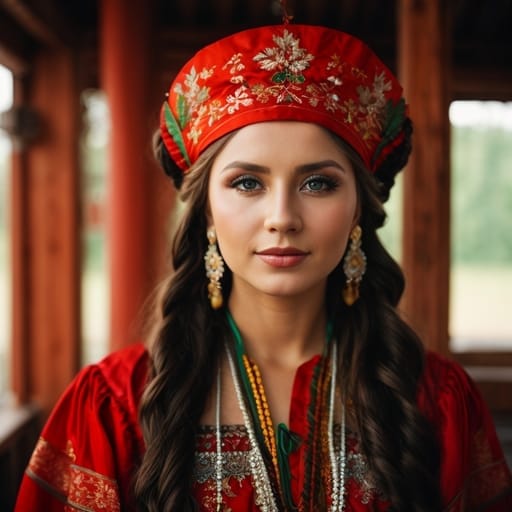
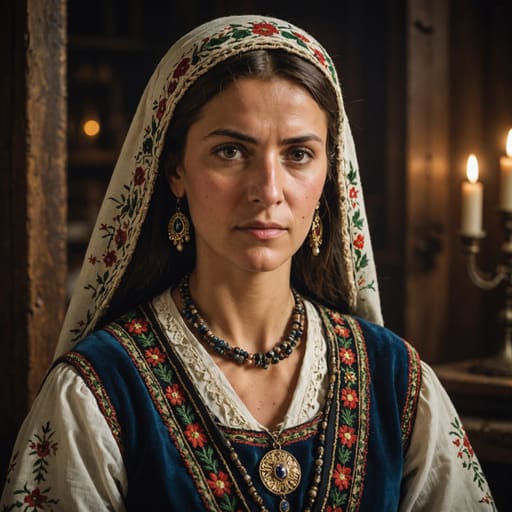
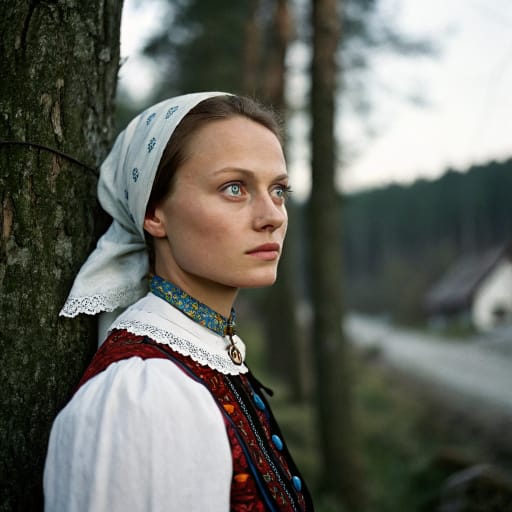
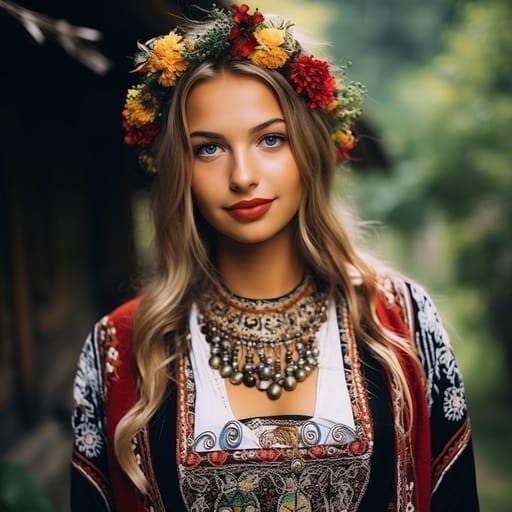
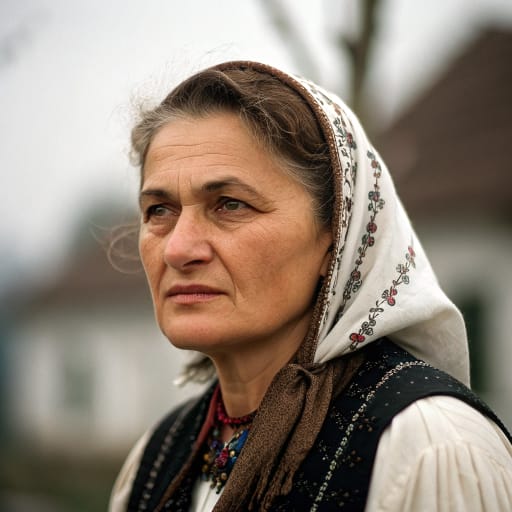
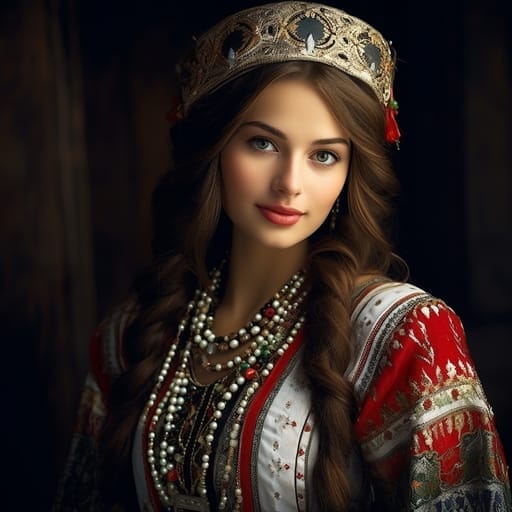
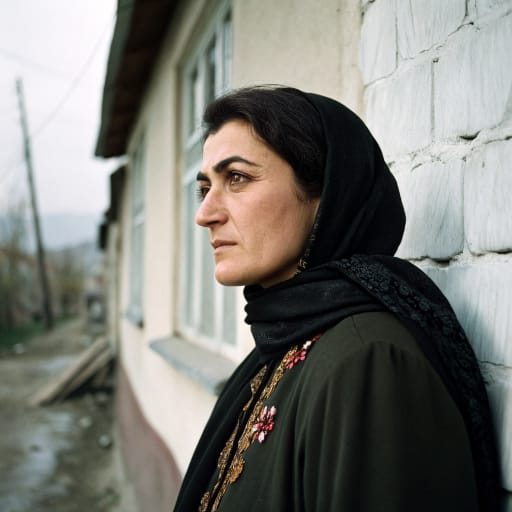
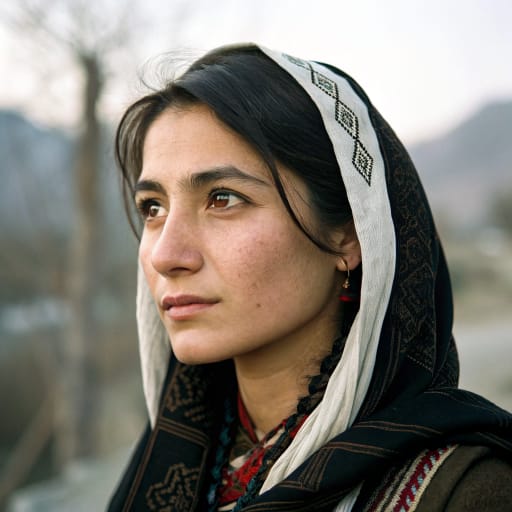
Typical Boykos Phenotypes
Reference for AI generation: hair, eyes, skin, facial structure, build
Boykos Body & Anatomy Reference
Per-feature anatomical profile for AI nude generation: Eastern European / Slavic phenotype
Boykos Boobs & Breasts
Bust reference for Boykos women: medium-to-large cup, full, moderate-to-high projection, which is typical of Eastern European / Slavic ancestry. Areolas measure about 30-44mm across, with light-pink to medium-brown pigmentation. Body type (mesomorph, full hip-and-bust deposition) shapes the bust as well, so Boykos tits are usually full and projecting, classic Eastern European curvy bust. In AI imagery, keep the forward-set shape rather than drifting toward the smaller East Asian bust.
Boykos Ass & Hips
The Boykos ass is typically medium-to-full, moderate-to-high projection, which sets it apart from the slim narrow-hip East Asian profile. Underneath, the pelvis shows medium iliac crests, full gluteal-femoral fat deposition, part of the Eastern European / Slavic skeletal pattern. For Boykos butt pics and AI renders, match that silhouette and the overall build (mesomorph, full hip-and-bust deposition).
Boykos Vagina & Pussy
Boykos pussy and vulvar anatomy presents light-pink to medium-brown labial pigmentation, varied labia minora, consistent with the Eastern European / Slavic phenotype's pigmentation pattern. Boykos pubic hair is typically wavy medium texture, blond to dark-brown, in the inverted-triangle pattern. For anatomically accurate Boykos pussy renders the labial coloration should match the surrounding fair to light skin tone with a continuous gradient, and the hair should keep its wavy medium texture.
Boykos Dicks & Penis
Boykos dicks follow the Eastern European / Slavic reference data: regional mean ~13-14cm erect; moderate girth; light-pink to medium-brown shaft pigmentation. Shaft color should track the fair to light skin tone with a smooth change toward the glans, and Boykos pubic hair keeps its wavy medium texture.
Boykos Body, Curves & Build
Boykos body type and overall build presents as mesomorph, full hip-and-bust deposition, with mean adult female BMI 23-26: the characteristic Eastern European / Slavic habitus. Boykos curves and proportions should keep the regional skeletal frame (height, shoulder-to-hip ratio, limb proportions) rather than a generic mesomorph default.
Boykos Skin Tone & Hair Texture
Boykos skin sits in the fair to light (Fitzpatrick II-III) band. Hair is typically straight-to-wavy 1A-2B, light-blond to dark-brown, in keeping with the Eastern European / Slavic phenotype. In nude renders the skin should stay one even tone from face to body, and body, pubic and head hair should match.
Explore phenotype categories
Structured taxonomy with peer-reviewed scales · 22 anatomical categories
Erotic Poses & Sex Positions
From the pose catalog: 219 named positions with reference skeletons
Frequently asked questions about Boykos people
Where is the Boykos homeland?
The Boykos homeland is The Beskid ranges and mid-Carpathian valleys of western Ukraine, mainly Lviv and Ivano-Frankivsk oblasts and northern Zakarpattia, with a historic western extension into the Bieszczady of southeastern Poland. in Eastern Europe.
What language do Boykos people speak?
Boykos people primarily speak Boyko dialect of Ukrainian (Indo-European, Slavic, East Slavic), part of the southwestern Ukrainian dialect group and sometimes classified with Rusyn..
What religion do Boykos people practice?
The predominant religion among Boykos people is Predominantly Ukrainian Greek Catholic, Byzantine rite in communion with Rome, with an Orthodox minority..






Make your own Boykos images
Five a day, free, no credits to buy. The studio starts from this group's phenotype data, so you can set body type, pose and style and keep the traits accurate.
Start with Boykos