No portrait yet
Lechites Erotic
The plain between the Elbe and the Vistula, in present-day Poland and northeastern Germany
Lechitic languages: Polish, Kashubian, Silesian (counted variously as a language or a Polish dialect), and the extinct Polabian and Slovincian (West Slavic, Indo-European)
Slavic polytheism until conversion, Latin Christianity from 966 in the Piast lands and by the twelfth century among the Polabians and Pomeranians; descendants are predominantly Roman Catholic
A branch of the West Slavs, comprising the Polans, Vistulans, Masovians, Silesians, Pomeranians, and the Polabian tribes (Obotrites, Lutici, Rani)
About Lechites People
The Lechites were the West Slavic tribes who settled the plain between the Elbe and the Vistula from roughly the sixth century onward, and who by the tenth had consolidated, east of the Oder, into the polity that became Poland. Poles, Kashubians, and Silesians descend from them. Their westernmost branches, the Polabian Slavs of what is now northeastern Germany, were conquered, converted, and absorbed, and their language died out in the Lüneburg Wendland during the eighteenth century, most of what survives of it written down by a village headman named Johann Parum Schultze, who understood that he was among the last who could.
The name is a chronicler's, not a self-description. Wincenty Kadlubek and the Greater Poland Chronicle traced the Poles back to a founding ancestor called Lech, brother of Czech and Rus, and Lechitae stuck as the learned Latin word for them. It stuck well beyond Latin, too: the Turkish for the Polish language is still Lehce, Persian calls Poland Lahestan, a Pole in Lithuanian is lenkas, and the East Slavs said lyakh. Modern usage is mostly linguistic. Lechitic is the branch of West Slavic holding Polish, Kashubian, the extinct Polabian and Slovincian, and by most counts Silesian, set apart from Czech and Slovak by a shared vowel shift and by the nasal vowels that Polish alone among the major Slavic languages still writes.
They lived as tribes rather than a nation: Polans around Gniezno, Vistulans around Krakow, Masovians on the middle Vistula, Silesians on the upper Oder, Pomeranians on the coast, and west of the Oder the Obotrites, the Lutici, and the Rani of Rugen. Each was built around gords, ring forts of packed earth and timber, which is why so many Polish place names still end in -grod. Their religion was polytheist and, in the west, unusually well organized, with temple precincts and a working priesthood: at Szczecin a black horse was led over spears laid on the ground to read the will of Triglav, and on Rugen a white horse did the same work for Svetovit. Mieszko I's baptism in 966 pulled the Piast lands into Latin Christendom inside a single generation. The Polabians held out two centuries longer and were broken for it, by the Wendish Crusade of 1147, the Danish sack of the Arkona temple in 1168, and the German settlement that followed. The Kashubians of the Baltic coast, still speaking a Lechitic language, are the nearest living continuation of the tribal Pomeranians.
Related ethnic groups
Groups that share Lechites's homeland, region, language, or religious tradition. These are likely candidates for comparative phenotype reference.
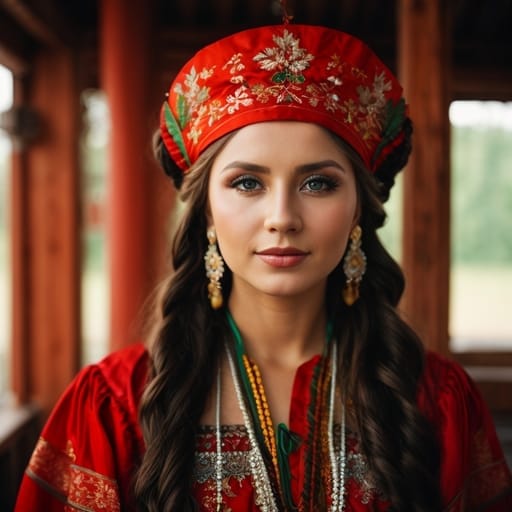
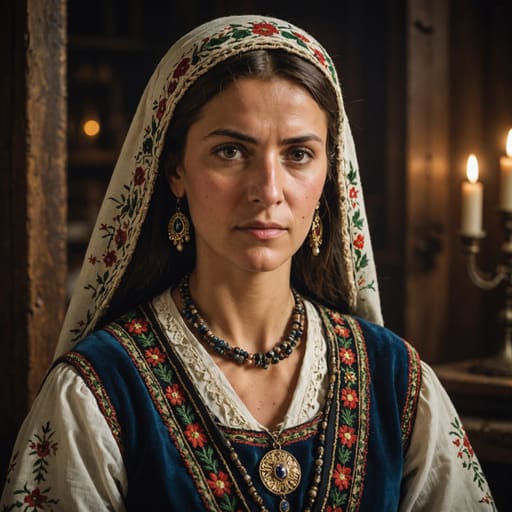
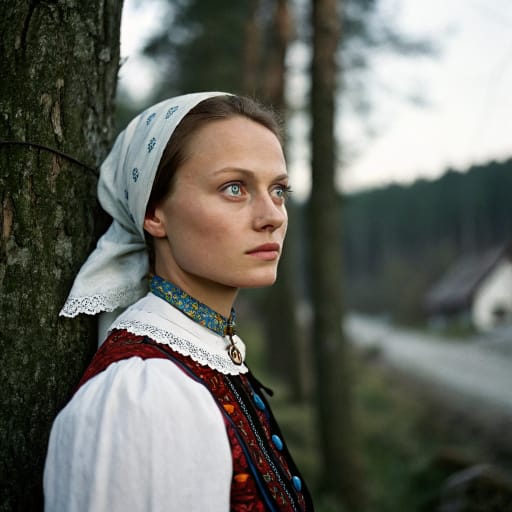
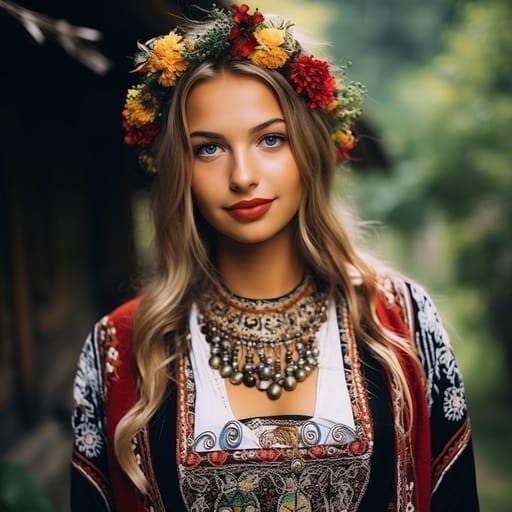
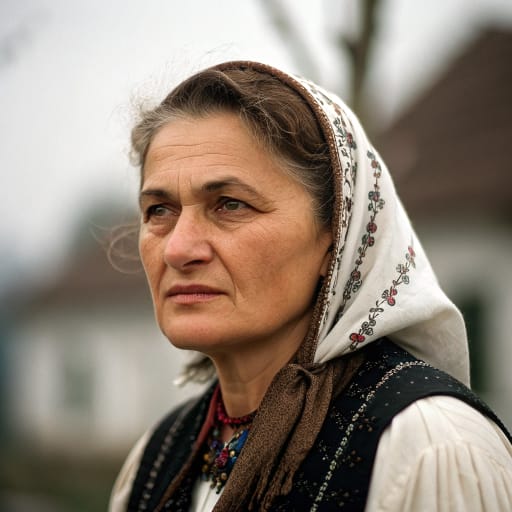
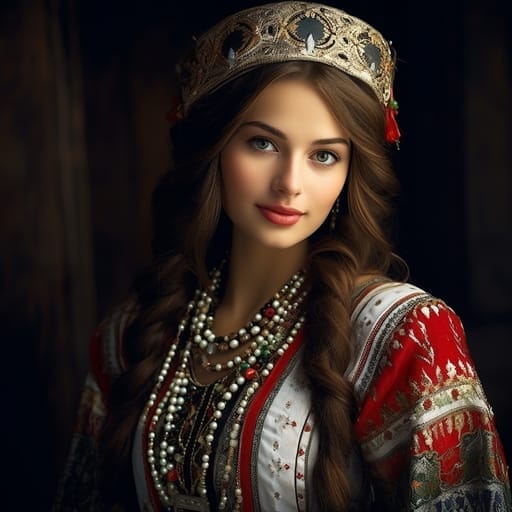
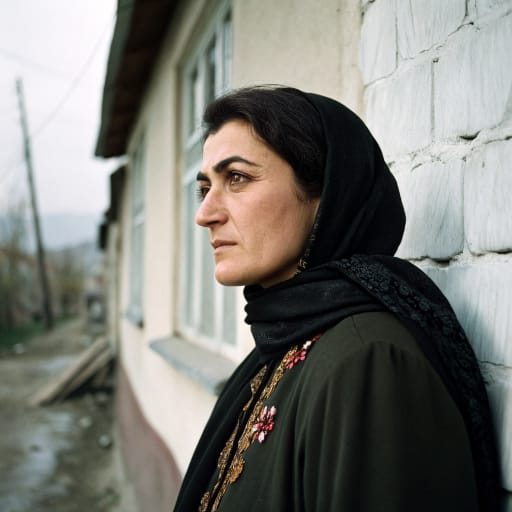
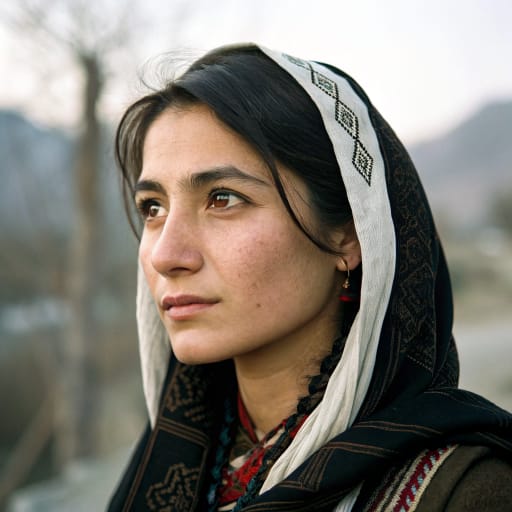
Typical Lechites Phenotypes
Reference for AI generation: hair, eyes, skin, facial structure, build
Lechites Body & Anatomy Reference
Per-feature anatomical profile for AI nude generation: Eastern European / Slavic phenotype
Lechites Boobs & Breasts
Bust reference for Lechites women: medium-to-large cup, full, moderate-to-high projection, which is typical of Eastern European / Slavic ancestry. Areolas measure about 30-44mm across, with light-pink to medium-brown pigmentation. Body type (mesomorph, full hip-and-bust deposition) shapes the bust as well, so Lechites tits are usually full and projecting, classic Eastern European curvy bust. In AI imagery, keep the forward-set shape rather than drifting toward the smaller East Asian bust.
Lechites Ass & Hips
The Lechites ass is typically medium-to-full, moderate-to-high projection, which sets it apart from the slim narrow-hip East Asian profile. Underneath, the pelvis shows medium iliac crests, full gluteal-femoral fat deposition, part of the Eastern European / Slavic skeletal pattern. For Lechites butt pics and AI renders, match that silhouette and the overall build (mesomorph, full hip-and-bust deposition).
Lechites Vagina & Pussy
Lechites pussy and vulvar anatomy presents light-pink to medium-brown labial pigmentation, varied labia minora, consistent with the Eastern European / Slavic phenotype's pigmentation pattern. Lechites pubic hair is typically wavy medium texture, blond to dark-brown, in the inverted-triangle pattern. For anatomically accurate Lechites pussy renders the labial coloration should match the surrounding fair to light skin tone with a continuous gradient, and the hair should keep its wavy medium texture.
Lechites Dicks & Penis
Lechites dicks follow the Eastern European / Slavic reference data: regional mean ~13-14cm erect; moderate girth; light-pink to medium-brown shaft pigmentation. Shaft color should track the fair to light skin tone with a smooth change toward the glans, and Lechites pubic hair keeps its wavy medium texture.
Lechites Body, Curves & Build
Lechites body type and overall build presents as mesomorph, full hip-and-bust deposition, with mean adult female BMI 23-26: the characteristic Eastern European / Slavic habitus. Lechites curves and proportions should keep the regional skeletal frame (height, shoulder-to-hip ratio, limb proportions) rather than a generic mesomorph default.
Lechites Skin Tone & Hair Texture
Lechites skin sits in the fair to light (Fitzpatrick II-III) band. Hair is typically straight-to-wavy 1A-2B, light-blond to dark-brown, in keeping with the Eastern European / Slavic phenotype. In nude renders the skin should stay one even tone from face to body, and body, pubic and head hair should match.
Explore phenotype categories
Structured taxonomy with peer-reviewed scales · 22 anatomical categories
Erotic Poses & Sex Positions
From the pose catalog: 219 named positions with reference skeletons
Frequently asked questions about Lechites people
Where is the Lechites homeland?
The Lechites homeland is The plain between the Elbe and the Vistula, in present-day Poland and northeastern Germany in Eastern Europe.
What language do Lechites people speak?
Lechites people primarily speak Lechitic languages: Polish, Kashubian, Silesian (counted variously as a language or a Polish dialect), and the extinct Polabian and Slovincian (West Slavic, Indo-European).
What religion do Lechites people practice?
The predominant religion among Lechites people is Slavic polytheism until conversion, Latin Christianity from 966 in the Piast lands and by the twelfth century among the Polabians and Pomeranians; descendants are predominantly Roman Catholic.






Make your own Lechites images
Five a day, free, no credits to buy. The studio starts from this group's phenotype data, so you can set body type, pose and style and keep the traits accurate.
Start with Lechites