No portrait yet
Ruska Roma Erotic
Russia, from the western provinces to Siberia, with communities in Belarus, Ukraine and other former Soviet states
North Russian Romani, also called Xaladytka (Indo-Aryan, Northern Romani group); nearly all also speak Russian (Slavic)
Russian Orthodox Christianity, with a growing Pentecostal and evangelical minority
Northern branch of the Romani people, closely related to the Polska Roma; regional communities across Russia, Belarus, Ukraine and Siberia
About Ruska Roma People
The Ruska Roma are Roma who became Russian without ceasing to be Roma. Their ancestors came east out of the Polish-Lithuanian Commonwealth in the 18th century. They share Northern Romani roots with the Polska Roma, and over the next three centuries they spread from Russia's western provinces all the way to Siberia. Several Roma groups live in Russia today, including Kalderash, Lovari and Crimean Roma, who came by other routes. The Ruska Roma are the largest of them and the most at home in ordinary Russian life: Orthodox by baptism, fluent in Russian, and Romani in family, speech and custom. Their own language is a Northern Romani dialect, often called Xaladytka or North Russian Romani. Like every form of Romani it is Indo-Aryan at its root, with a thick layer of Polish and Russian words picked up along the road. In the 1920s and 1930s the Soviet state chose this dialect as the basis for a written Romani. It printed primers and a literary magazine in Cyrillic and set up Roma collective farms and craft cooperatives. That experiment was shut down before the war. Orthodoxy is still the default faith and shows most at baptisms and funerals, though Pentecostal and other evangelical churches have gained a real following in recent decades.
To most Russians, though, the Ruska Roma first meant music. From the late 18th century aristocrats kept Roma choirs, and by the 1800s the Moscow choirs had become part of the national culture. They played seven-string guitars and sang in a style Russians still call tsyganskiy romans. Pushkin and Tolstoy both spent long nights listening to them, and more than one nobleman married a singer from a choir. Teatr Romen in Moscow, founded in 1931, carries that line forward as one of the very few permanent Roma theaters in the world. Away from the stage, most families lived by horse trading and seasonal travel, spending winters in rented village houses and going back on the road in spring. The 20th century broke that rhythm twice. Nazi occupation brought the mass murder of Roma across western Russia, Belarus and Ukraine, and a 1956 Soviet decree banned nomadic life, forcing the last traveling families into fixed homes and state jobs. Most Ruska Roma now live settled lives, many of them in cities. What holds the community together today is less the road than the extended family and a strong shared sense of how a Rom should behave.
Related ethnic groups
Groups that share Ruska Roma's homeland, region, language, or religious tradition. These are likely candidates for comparative phenotype reference.
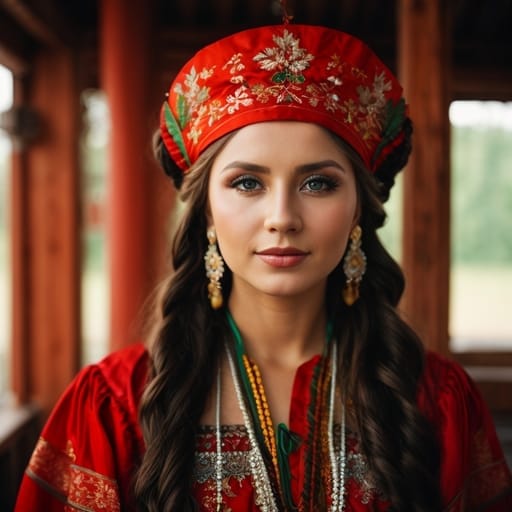
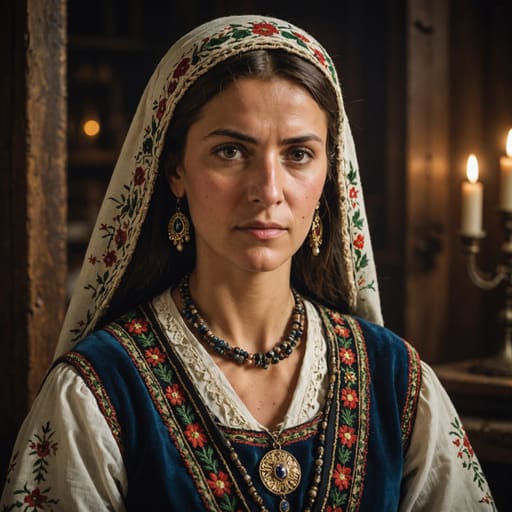
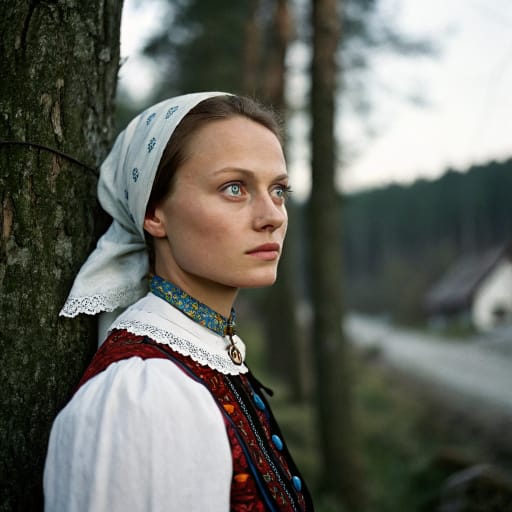
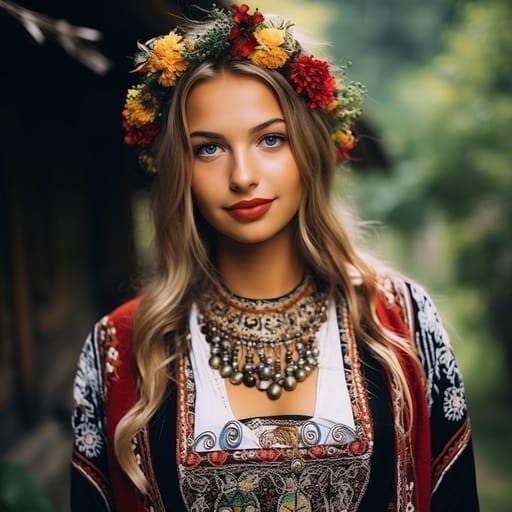
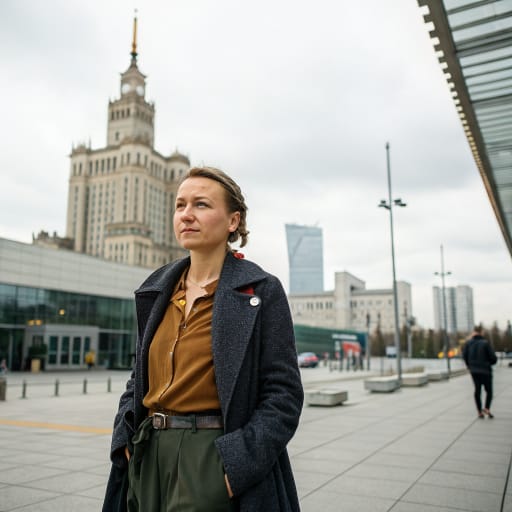
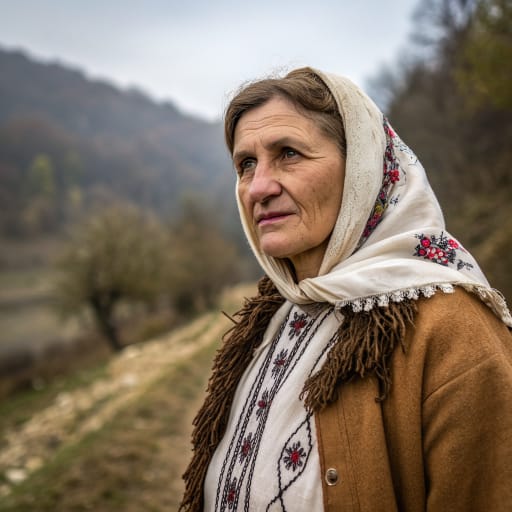
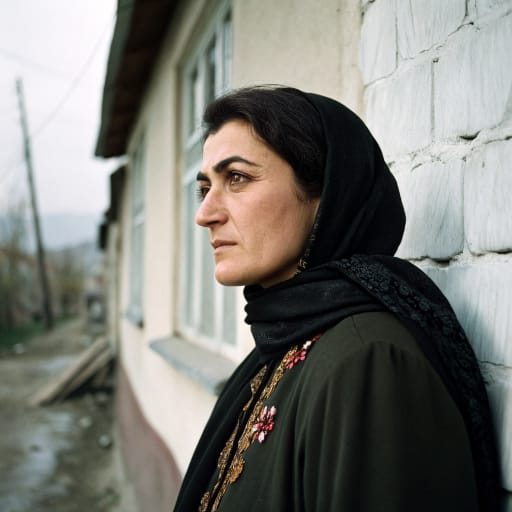
Typical Ruska Roma Phenotypes
Reference for AI generation: hair, eyes, skin, facial structure, build
Ruska Roma Body & Anatomy Reference
Eastern European / Slavic phenotype: anatomy reference for AI nude generation
Ruska Roma Boobs & Breasts
The typical Ruska Roma bust is medium-to-large cup, full, moderate-to-high projection, in line with the wider Eastern European / Slavic pattern. Areolas usually fall in the 30-44mm range, with light-pink to medium-brown areolar pigmentation against the fair-to-light-brown skin tone. Compared with the smaller East Asian bust, Ruska Roma breasts sit forward and are generally full and projecting, classic Eastern European curvy bust. A faithful AI render of Ruska Roma tits keeps that shape and areola size.
Ruska Roma Ass & Hips
Butt shape among Ruska Roma women: medium-to-full, moderate-to-high projection, over medium iliac crests, full gluteal-femoral fat deposition. This follows Eastern European / Slavic ancestry and looks quite unlike the slim narrow-hip East Asian profile. An accurate Ruska Roma ass in adult AI imagery keeps both the silhouette and the overall build (mesomorph, full hip-and-bust deposition) instead of a generic average.
Ruska Roma Vagina & Pussy
Vulvar anatomy among Ruska Roma women: light-pink to medium-brown labial pigmentation, varied labia minora. Pubic hair tends to be wavy medium texture, blond to dark-brown, in the usual inverted-triangle pattern. Both follow Eastern European / Slavic pigmentation, which is why Ruska Roma pussy renders should not fall back on a pale, sparse Western template.
Ruska Roma Dicks & Penis
The Ruska Roma cock profile, from Eastern European / Slavic anthropometric data: regional mean ~13-14cm erect; moderate girth; light-pink to medium-brown shaft pigmentation. Pubic hair has a wavy medium texture and forms the usual inverted-V pattern. Whether Ruska Roma men are circumcised follows religious and cultural practice rather than phenotype.
Ruska Roma Body, Curves & Build
Build and curves among Ruska Roma women follow the Eastern European / Slavic pattern: mesomorph, full hip-and-bust deposition, mean adult female BMI 23-26. Proportions matter as much as skin tone, so Ruska Roma figures should keep their regional height and limb ratios.
Ruska Roma Skin Tone & Hair Texture
The Ruska Roma skin range is fair to light (Fitzpatrick II-III), and hair tends to be straight-to-wavy 1A-2B, light-blond to dark-brown. That combination marks the Eastern European / Slavic phenotype, and skin tone is the trait AI generators most often get wrong for Ruska Roma women.
Explore phenotype categories
Structured taxonomy with peer-reviewed scales · 22 anatomical categories
Erotic Poses & Sex Positions
From the pose catalog: 219 named positions with reference skeletons
Frequently asked questions about Ruska Roma people
Where is the Ruska Roma homeland?
The Ruska Roma homeland is Russia, from the western provinces to Siberia, with communities in Belarus, Ukraine and other former Soviet states in Eastern Europe.
What language do Ruska Roma people speak?
Ruska Roma people primarily speak North Russian Romani, also called Xaladytka (Indo-Aryan, Northern Romani group); nearly all also speak Russian (Slavic).
What religion do Ruska Roma people practice?
The predominant religion among Ruska Roma people is Russian Orthodox Christianity, with a growing Pentecostal and evangelical minority.






Make your own Ruska Roma images
Five a day, free, no credits to buy. The studio starts from this group's phenotype data, so you can set body type, pose and style and keep the traits accurate.
Start with Ruska Roma