No portrait yet
Muromians Erotic
Middle Oka River valley around the city of Murom, in present-day Vladimir Oblast and adjacent Nizhny Novgorod Oblast, Russia
Muromian (Uralic, Finnic; unattested, presumed close to Mordvinic and Meryan)
Pre-Christian Finnic animism; Orthodox Christianity arrived with Rus' rule in the eleventh and twelfth centuries
Volga Finns; kin to the Meryans, Meshchera, and the Mordvins (Erzya and Moksha)
About Muromians People
The Muromians were a Finnic people of the middle Oka, in what is now Vladimir Oblast and the neighboring edge of Nizhny Novgorod Oblast in Russia. They appear in the archaeological record around the sixth or seventh century and are gone as a distinct people by the twelfth, absorbed into the East Slavic settlers who became the Russians of the Murom district. The city of Murom still carries their name, and through the city so does the epic hero Ilya Muromets. That is roughly the whole of their afterlife in popular memory. Everything else comes out of the ground.
What made them a group was a stretch of river. They held the Oka valley below the Meshchera and above the Mordvins, with the Meryans to their north, farming the floodplain, keeping cattle and horses, fishing, and trapping fur. The fur plugged them into a wider world. Their graves hold Islamic silver dirhams, glass and carnelian beads, and ornaments traded in from far outside the valley, evidence that the Volga route ran through their land and that they took a cut. The Primary Chronicle counts them among the tribute-paying peoples who had "their own language" and places Murom among the earliest towns of Rus'. That is nearly the only written word about them. The language itself is unattested, known from a scatter of place names and from the reasonable assumption that it sat between Mordvinic and the equally lost Meryan.
The cemeteries are what scholars actually know. The largest, at Podbolotye outside Murom, was dug in 1910 and reopened a century later. It shows a people who buried their dead fully dressed and equipped, sometimes cremated and sometimes not, and who laid horses in the ground beside their men. Women went into the earth in a costume found nowhere else: a frontal band of bronze spirals woven onto leather, temple rings, chest ornaments layered with clattering bronze pendants, and small horse-shaped charms. Men were buried with axes, spears, and belt fittings. The horse runs through all of it, in the pendants, the harness, and the burials, and it marks a people who prized their herds on the Oka meadows.
Their religion was the animism of the Volga forest, and it held out. Murom was among the last towns of Rus' to accept Christianity; church tradition credits the twelfth-century prince Konstantin with converting it and remembers the townspeople resisting him. By then the chronicles had stopped naming the Muromians at all. Slavs moved into the valley, intermarried, and took over the burial grounds, and the bronze headbands stop appearing within a few generations. No one wiped the Muromians out. They became Russians, and their name became a town.
Related ethnic groups
Groups that share Muromians's homeland, region, language, or religious tradition. These are likely candidates for comparative phenotype reference.
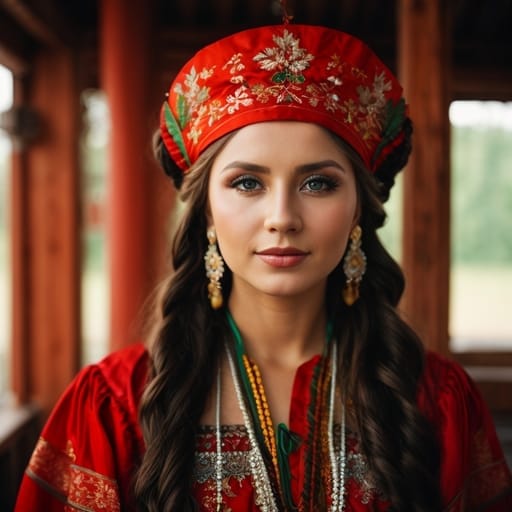
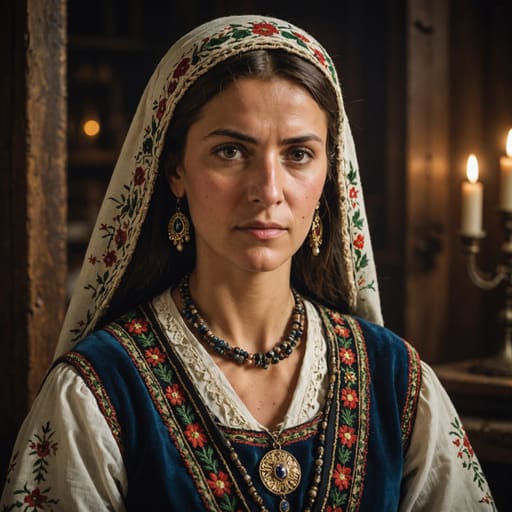
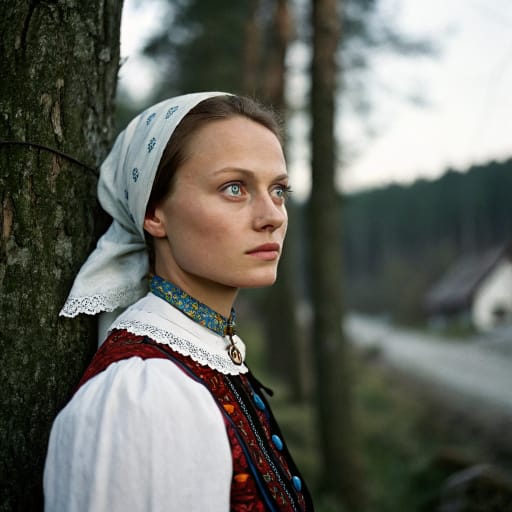
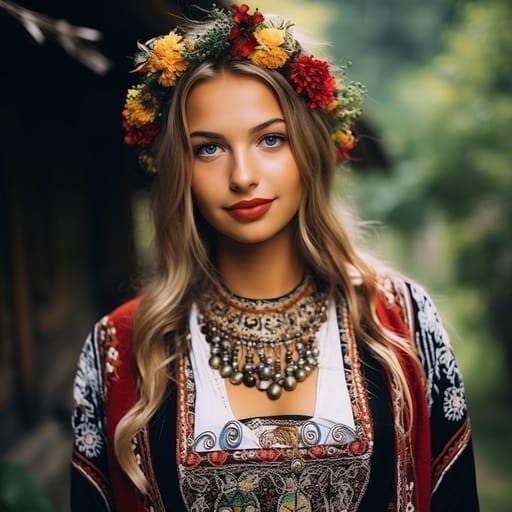
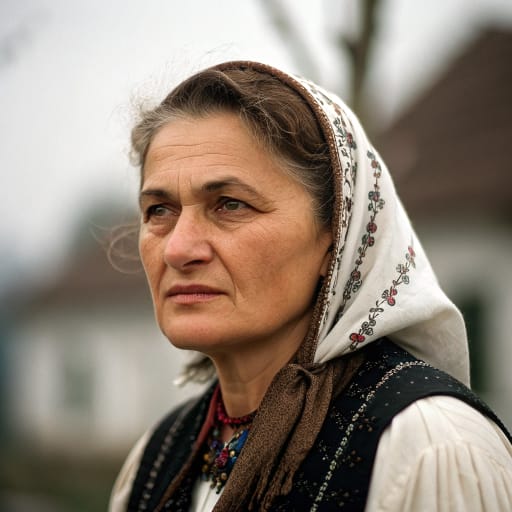
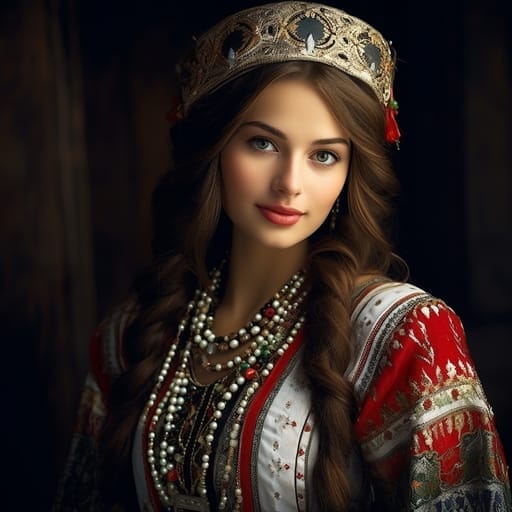
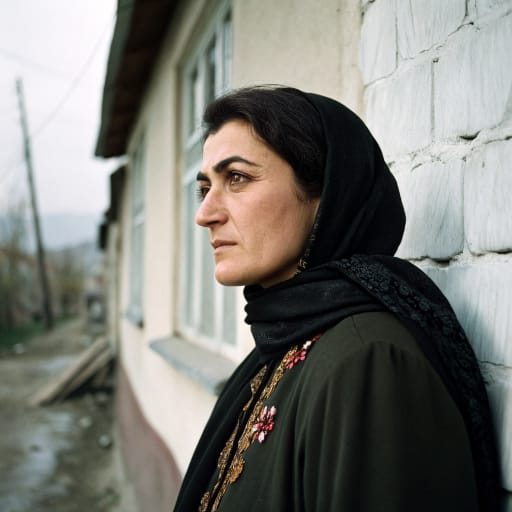
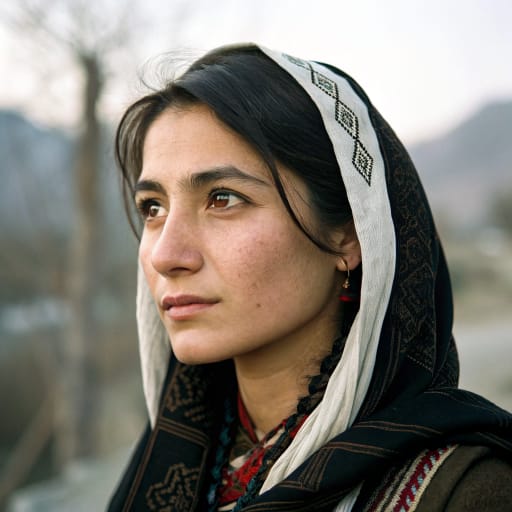
Typical Muromians Phenotypes
Reference for AI generation: hair, eyes, skin, facial structure, build
Muromians Body & Anatomy Reference
Per-feature anatomical profile for AI nude generation: Eastern European / Slavic phenotype
Muromians Boobs & Breasts
The typical Muromians bust is medium-to-large cup, full, moderate-to-high projection, in line with the wider Eastern European / Slavic pattern. Areolas usually fall in the 30-44mm range, with light-pink to medium-brown areolar pigmentation against the fair-to-light-brown skin tone. Compared with the smaller East Asian bust, Muromians breasts sit forward and are generally full and projecting, classic Eastern European curvy bust. A faithful AI render of Muromians tits keeps that shape and areola size.
Muromians Ass & Hips
Butt shape among Muromians women: medium-to-full, moderate-to-high projection, over medium iliac crests, full gluteal-femoral fat deposition. This follows Eastern European / Slavic ancestry and looks quite unlike the slim narrow-hip East Asian profile. An accurate Muromians ass in adult AI imagery keeps both the silhouette and the overall build (mesomorph, full hip-and-bust deposition) instead of a generic average.
Muromians Vagina & Pussy
Vulvar anatomy among Muromians women: light-pink to medium-brown labial pigmentation, varied labia minora. Pubic hair tends to be wavy medium texture, blond to dark-brown, in the usual inverted-triangle pattern. Both follow Eastern European / Slavic pigmentation, which is why Muromians pussy renders should not fall back on a pale, sparse Western template.
Muromians Dicks & Penis
The Muromians cock profile, from Eastern European / Slavic anthropometric data: regional mean ~13-14cm erect; moderate girth; light-pink to medium-brown shaft pigmentation. Pubic hair has a wavy medium texture and forms the usual inverted-V pattern. Whether Muromians men are circumcised follows religious and cultural practice rather than phenotype.
Muromians Body, Curves & Build
Build and curves among Muromians women follow the Eastern European / Slavic pattern: mesomorph, full hip-and-bust deposition, mean adult female BMI 23-26. Proportions matter as much as skin tone, so Muromians figures should keep their regional height and limb ratios.
Muromians Skin Tone & Hair Texture
The Muromians skin range is fair to light (Fitzpatrick II-III), and hair tends to be straight-to-wavy 1A-2B, light-blond to dark-brown. That combination marks the Eastern European / Slavic phenotype, and skin tone is the trait AI generators most often get wrong for Muromians women.
Explore phenotype categories
Structured taxonomy with peer-reviewed scales · 22 anatomical categories
Erotic Poses & Sex Positions
From the pose catalog: 219 named positions with reference skeletons
Frequently asked questions about Muromians people
Where is the Muromians homeland?
The Muromians homeland is Middle Oka River valley around the city of Murom, in present-day Vladimir Oblast and adjacent Nizhny Novgorod Oblast, Russia in Eastern Europe.
What language do Muromians people speak?
Muromians people primarily speak Muromian (Uralic, Finnic; unattested, presumed close to Mordvinic and Meryan).
What religion do Muromians people practice?
The predominant religion among Muromians people is Pre-Christian Finnic animism; Orthodox Christianity arrived with Rus' rule in the eleventh and twelfth centuries.






Make your own Muromians images
Five a day, free, no credits to buy. The studio starts from this group's phenotype data, so you can set body type, pose and style and keep the traits accurate.
Start with Muromians