No portrait yet
Neapolitani Erotic
Neapolis and its territory on the southern shore of the Gulf of Oristano, western Sardinia, Italy; the site is Santa Maria de Nabui near Guspini.
Punic (Semitic, Afroasiatic) and later Latin (Italic, Indo-European), over an older Paleo-Sardinian substrate (unclassified).
Punic and then Roman polytheism, with a local healing cult attested by votive figurines; Christianity in late antiquity.
One of the civic peoples of Sardinia listed by Pliny and Ptolemy; neighbors included the Scapitani, Siculensi, Valentini, Solcitani and Noritani. A mixed native Sardinian and Punic community.
About Neapolitani People
The Neapolitani were an ancient people of western Sardinia, the citizens of the port of Neapolis and its hinterland on the southern shore of the Gulf of Oristano, who lived from the Carthaginian era to the end of Roman rule and were gradually absorbed into the island population that became today's Sardinians. Nobody destroyed them or drove them off. Their descendants, as far as anyone can tell, are the people of the towns around Guspini and Terralba.
What defined them was a city rather than a bloodline. Neapolis is Greek for new city, and it is usually read as a translation of a Punic name with the same sense, the name Carthage itself carried. Carthaginians probably founded the town around the late sixth century BC on a lagoon shore that was already in use, and the community that grew there mixed native islanders with Punic settlers. Its position explains its purpose: the grain land of the Campidano plain on one side, the lead and silver hills of the southwest on the other, sheltered water in front. Under Rome the west coast road ran from Othoca through Neapolis on its way to the mining district of Metalla.
The written sources are thin. Pliny the Elder names the Neapolitani among the notable towns of Sardinia, and Ptolemy, in the second century AD, places them south of the Scapitani and Siculensi and north of the Solcitani and Noritani. Ptolemy and the Roman road itineraries also record Aquae Neapolitanae, the hot springs at modern Sardara, well inland, which suggests how far their territory reached. People still take the waters there.
The most direct trace of them is stranger and more personal. A votive deposit at Neapolis produced hundreds of small hand-modeled clay figures in the Punic tradition, each one a person pressing hands to the part of the body that hurt: the head, the eyes, the belly. They were left for a healing god whose name has not survived. We do not know what these people called themselves in their own language, but the figurines show what they worried about.
Punic speech probably lingered here well into Roman times, as it did elsewhere in southern Sardinia, before Latin replaced it; the Campidanese Sardinian spoken in the area today descends from that Latin. The city shrank after the Roman period and was eventually abandoned, and part of its Roman baths was reused as a small church. The name held on. The site is still called Santa Maria de Nabui, and Nabui is Neapolis worn down by two thousand years of Sardinian mouths.
Related ethnic groups
Groups that share Neapolitani's homeland, region, language, or religious tradition. These are likely candidates for comparative phenotype reference.
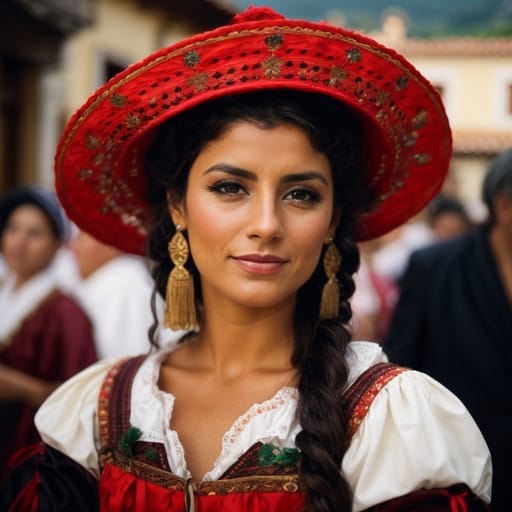
Basques
same region (Southern Europe)
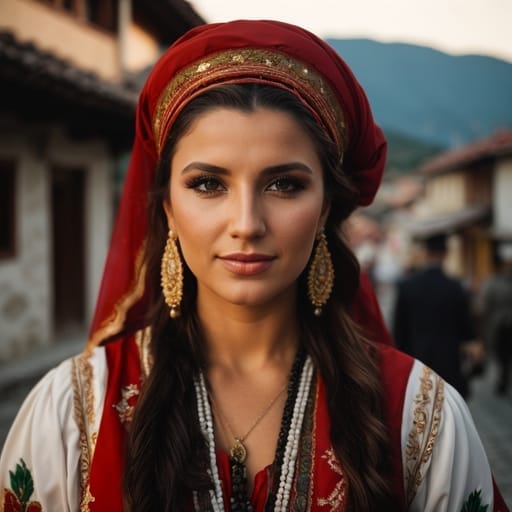
Bosniaks
same region (Southern Europe)
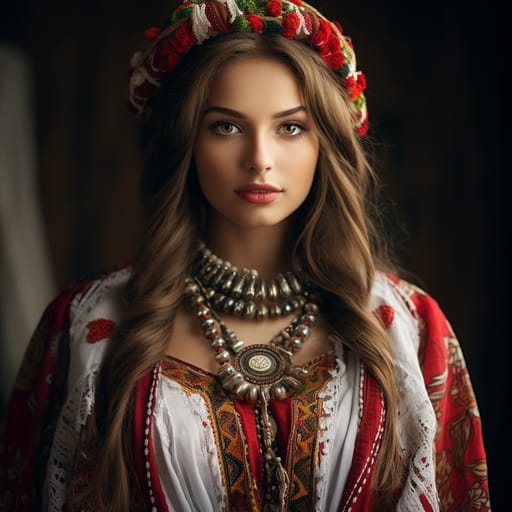
Moldovans
same region (Southern Europe)
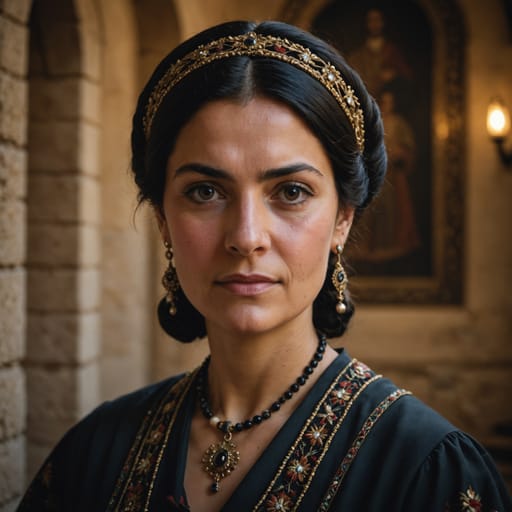
Maltese
same region (Southern Europe)
Neofiti
same region (Southern Europe)
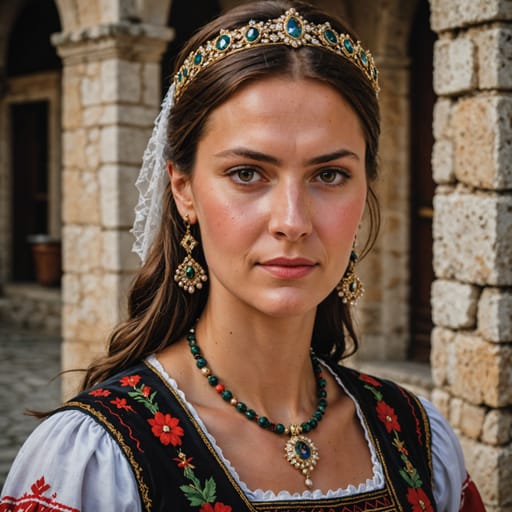
Croatia Other
same region (Southern Europe)
Narentines
same region (Southern Europe)
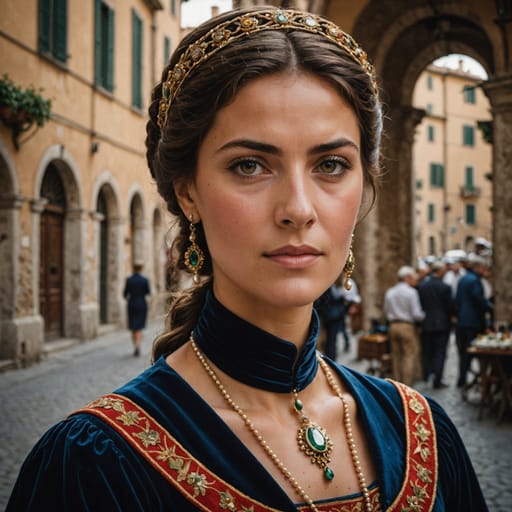
Italy Other
same region (Southern Europe)
Typical Neapolitani Phenotypes
Reference for AI generation: hair, eyes, skin, facial structure, build
Neapolitani Body & Anatomy Reference
Anatomy by feature, Southern European / Mediterranean phenotype
Neapolitani Boobs & Breasts
Neapolitani tits and boobs run medium-to-large cup, full, moderate-to-high projection, the classic Southern European / Mediterranean bust profile. Neapolitani nipples and areolas show medium-brown to dark-brown areolar pigmentation against the olive-to-light-brown skin tone, with areolar diameter typically in the 32-46mm range and forward-set positioning rather than the lighter pigmentation of the Northern European bust. Neapolitani breasts trend full and projecting, generally the classic Mediterranean curvy bust profile, a function of the mesomorph with full hip-and-bust deposition body habitus and the mean adult female BMI 24-28. For anatomically accurate AI-generated Neapolitani nudes the render preserves the medium-to-large cup, full, moderate-to-high projection shape, 32-46mm areolas with medium-brown to dark-brown pigmentation, and the torso proportions of the Southern European / Mediterranean phenotype.
Neapolitani Ass & Hips
Neapolitani hips and butt usually read as medium-to-full, moderate-to-high projection, broader hip profile. The skeletal base is medium-to-wide iliac crests, full gluteal-femoral fat distribution, the Southern European / Mediterranean pattern. Set against the slim Northern European narrow-hip pattern, the difference is easy to see, and the hip-to-waist ratio is often what identifies Neapolitani women in photos.
Neapolitani Vagina & Pussy
Expect medium-brown to dark-brown labial pigmentation, fuller labia minora on Neapolitani women, in keeping with Southern European / Mediterranean ancestry. The pubic hair is wavy-to-curly medium-coarse dark texture, dense distribution. Coloring should run evenly from the olive to medium skin of the thighs to the labia, and Neapolitani nude imagery should keep the hair's wavy-to-curly medium-coarse dark texture.
Neapolitani Dicks & Penis
Neapolitani dick and penile anatomy in adult AI generation should anchor on the regional reference data: regional mean ~13-14cm erect, moderate girth, and medium-brown shaft pigmentation. The Neapolitani cock profile reflects the Southern European / Mediterranean population's anthropometric measurements. The shaft pigmentation should track the surrounding olive to medium skin tone, and the pubic hair should keep its wavy-to-curly medium-coarse dark texture in the typical inverted-V escutcheon.
Neapolitani Body, Curves & Build
Neapolitani body type: mesomorph with full hip-and-bust deposition, with mean adult female BMI 24-28. This is the typical Southern European / Mediterranean build. Height range, shoulder-to-hip ratio and fat distribution all follow from it, which is what an accurate Neapolitani nude body should show.
Neapolitani Skin Tone & Hair Texture
Neapolitani skin tone falls in the olive to medium (Fitzpatrick III-IV) band, the surface signal most often miscalibrated by generic AI nude generators. Neapolitani hair texture is typically wavy-to-curly 2B-3B, dark-brown to black, characteristic of the Southern European / Mediterranean phenotype. In Neapolitani nude renders the skin should hold that band consistently across the body.
Explore phenotype categories
Structured taxonomy with peer-reviewed scales · 22 anatomical categories
Erotic Poses & Sex Positions
From the pose catalog: 219 named positions with reference skeletons
Frequently asked questions about Neapolitani people
Where is the Neapolitani homeland?
The Neapolitani homeland is Neapolis and its territory on the southern shore of the Gulf of Oristano, western Sardinia, Italy; the site is Santa Maria de Nabui near Guspini. in Southern Europe.
What language do Neapolitani people speak?
Neapolitani people primarily speak Punic (Semitic, Afroasiatic) and later Latin (Italic, Indo-European), over an older Paleo-Sardinian substrate (unclassified)..
What religion do Neapolitani people practice?
The predominant religion among Neapolitani people is Punic and then Roman polytheism, with a local healing cult attested by votive figurines; Christianity in late antiquity..






Make your own Neapolitani images
Five a day, free, no credits to buy. The studio starts from this group's phenotype data, so you can set body type, pose and style and keep the traits accurate.
Start with Neapolitani