Help us get this right
Does this portrait look right for Mokaná?
Nobody has judged this one yet. You would be the first.
Mokaná Erotic
Atlántico Department on the Caribbean coast of northern Colombia, chiefly around Tubará, Galapa, Baranoa, Malambo, Usiacurí, Piojó and Puerto Colombia
Spanish (Indo-European); the ancestral Mokaná language is extinct and unclassified, variously linked to Arawakan or to the Malibu languages
Roman Catholic, centered on town patron festivals, with syncretic local practice
Organized today as municipal cabildos (Tubará, Galapa, Baranoa, Malambo, Usiacurí, Piojó, Puerto Colombia); counted among the indigenous peoples of the Colombian Caribbean lowlands
About Mokaná People
The Mokaná are a Caribbean coastal people of northern Colombia who were officially written out of existence and then wrote themselves back in. Their towns sit in Atlántico, the country's smallest department: Tubará, Galapa, Baranoa, Usiacurí, Piojó, Malambo, Puerto Colombia, all of them within an hour of Barranquilla, on dry hills that drop toward mangrove and sea. Spanish forces reached this coast in the 1530s, and what followed was the standard colonial sequence: encomienda labor, resettlement into mission towns, epidemics, and then, in the nineteenth century, republican land laws that broke up the colonial resguardos and converted communal ground into private plots. By the twentieth century the state's paperwork recorded no Indians in Atlántico at all, only campesinos with unusual surnames. That was an administrative claim rather than a fact on the ground. In 1998 the Ministry of the Interior recognized the Mokaná as an indigenous people, and the communities reorganized as cabildos under elected caciques to press land claims, run their own councils, and take part in national indigenous politics.
The ancestral language is gone, and it went early enough that linguists cannot say with confidence what it was: proposals tie it to Arawakan or to the Malibu languages of the lower Magdalena, and the evidence is thin either way. What survives is Spanish carrying a sediment of Mokaná place names, plus family names that function locally as proof of descent. Religion is Catholic and has been for centuries, organized around town patron festivals that double as the calendar for everything else, with older practice folded in rather than kept separate. Identity here is not costume. It is held in landholding disputes, in who appears on the cabildo census, in growing yuca and maize on hillsides, in fishing, and in craft work that outlasted the language: the iraca palm weaving of Usiacurí, the pottery of the Malambo area, whose name Colombian archaeologists gave to one of the oldest ceramic traditions on the continent. Being Mokaná today means arguing for it, in council meetings and in courtrooms, inside a metropolitan region that had been told for a century there was nobody left to argue.
Related ethnic groups
Groups that share Mokaná's homeland, region, language, or religious tradition. These are likely candidates for comparative phenotype reference.
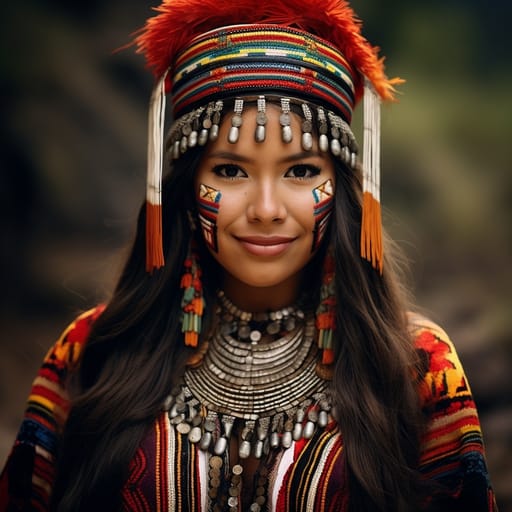
Quechua
same region (South America)
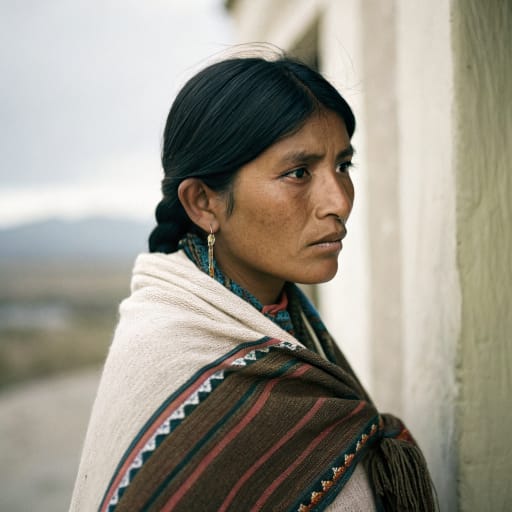
Aymara
same region (South America)
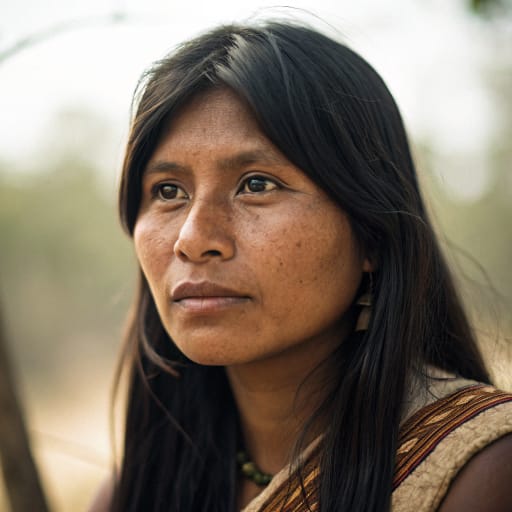
Guaraní
same region (South America)
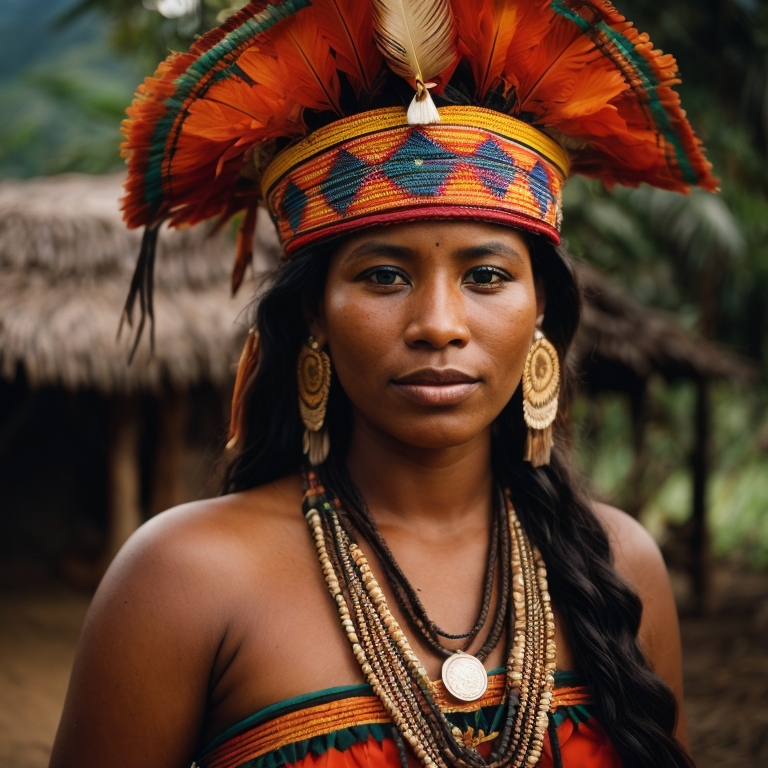
Emberá
same region (South America)
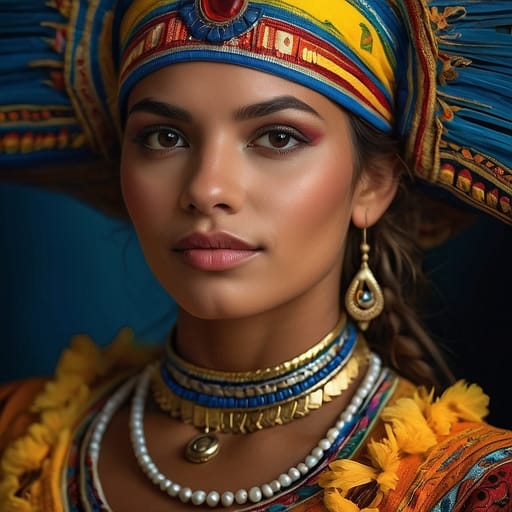
Pardo Brazilian
same region (South America)
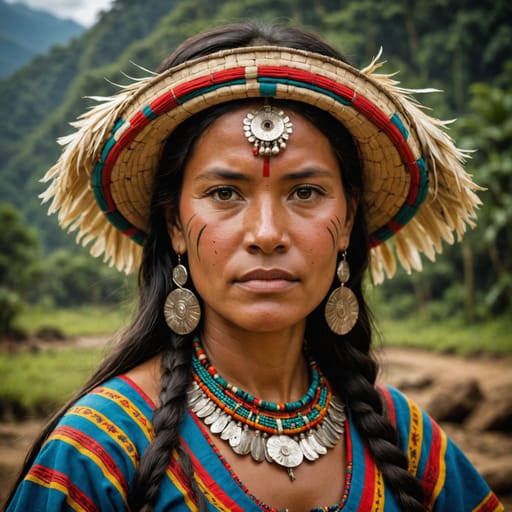
Amazonian Indigenous Peruvian
same region (South America)
U'wa
same region (South America)
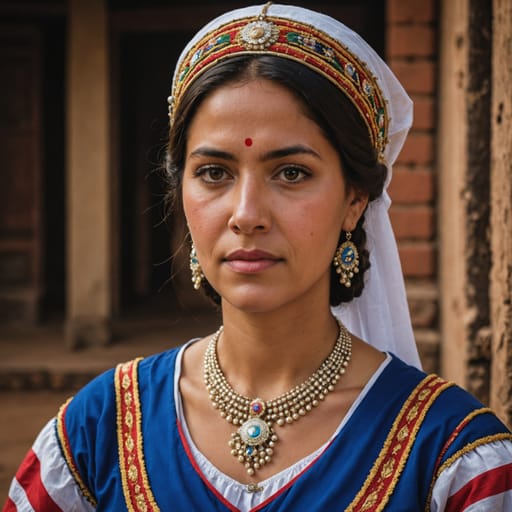
Other Paraguayan
same region (South America)
Typical Mokaná Phenotypes
Reference for AI generation: hair, eyes, skin, facial structure, build
Mokaná Body & Anatomy Reference
Anatomy by feature, South American Indigenous / European-Mestizo / Afro-Latino mix phenotype
Mokaná Boobs & Breasts
Bust reference for Mokaná women: medium-to-large cup, full, high projection, which is typical of South American Indigenous / European-Mestizo / Afro-Latino mix ancestry. Areolas measure about 32-46mm across, with medium-brown to dark-brown pigmentation. Body type (endomorph-to-mesomorph with high gluteal-femoral deposition) shapes the bust as well, so Mokaná tits are usually the classic Brazilian / Latina curvy bust profile in lowland populations; smaller and shorter-set in Andean Indigenous populations. In AI imagery, keep the forward-set shape rather than drifting toward the smaller bust profile of Andean Indigenous sub-populations.
Mokaná Ass & Hips
The Mokaná ass is typically full, high projection, the famous Brazilian / Latina bunda profile, which sets it apart from the slim narrow-hip East Asian profile. Underneath, the pelvis shows wide iliac crests, very full gluteal-femoral fat deposition (the hallmark Brazilian / Latina hip-to-waist ratio), part of the South American Indigenous / European-Mestizo / Afro-Latino mix skeletal pattern. For Mokaná butt pics and AI renders, match that silhouette and the overall build (endomorph-to-mesomorph with high gluteal-femoral deposition).
Mokaná Vagina & Pussy
Mokaná pussy and vulvar anatomy presents medium-brown to dark-brown labial pigmentation, fuller labia minora, consistent with the South American Indigenous / European-Mestizo / Afro-Latino mix phenotype's pigmentation pattern. Mokaná pubic hair is typically wavy-to-curly coarse dark texture, dense distribution, in the inverted-triangle pattern. For anatomically accurate Mokaná pussy renders the labial coloration should match the surrounding tan to deep-brown skin tone with a continuous gradient, and the hair should keep its wavy-to-curly coarse dark texture.
Mokaná Dicks & Penis
Mokaná dicks follow the South American Indigenous / European-Mestizo / Afro-Latino mix reference data: regional mean ~13cm erect; moderate-to-above-average girth; medium-brown shaft pigmentation. Shaft color should track the tan to deep-brown skin tone with a smooth change toward the glans, and Mokaná pubic hair keeps its wavy-to-curly coarse dark texture.
Mokaná Body, Curves & Build
Mokaná body type and overall build presents as endomorph-to-mesomorph with high gluteal-femoral deposition, with mean adult female BMI 25-28: the characteristic South American Indigenous / European-Mestizo / Afro-Latino mix habitus. Mokaná curves and proportions should keep the regional skeletal frame (height, shoulder-to-hip ratio, limb proportions) rather than a generic mesomorph default.
Mokaná Skin Tone & Hair Texture
Mokaná skin sits in the tan to deep-brown (Fitzpatrick III-VI) band. Hair is typically straight-to-curly 1A-3C, varies widely by ancestral composition, in keeping with the South American Indigenous / European-Mestizo / Afro-Latino mix phenotype. In nude renders the skin should stay one even tone from face to body, and body, pubic and head hair should match.
Explore phenotype categories
Structured taxonomy with peer-reviewed scales · 22 anatomical categories
Erotic Poses & Sex Positions
From the pose catalog: 219 named positions with reference skeletons
Frequently asked questions about Mokaná people
Where is the Mokaná homeland?
The Mokaná homeland is Atlántico Department on the Caribbean coast of northern Colombia, chiefly around Tubará, Galapa, Baranoa, Malambo, Usiacurí, Piojó and Puerto Colombia in South America.
What language do Mokaná people speak?
Mokaná people primarily speak Spanish (Indo-European); the ancestral Mokaná language is extinct and unclassified, variously linked to Arawakan or to the Malibu languages.
What religion do Mokaná people practice?
The predominant religion among Mokaná people is Roman Catholic, centered on town patron festivals, with syncretic local practice.






Make your own Mokaná images
Five a day, free, no credits to buy. The studio starts from this group's phenotype data, so you can set body type, pose and style and keep the traits accurate.
Start with Mokaná