Help us get this right
Does this portrait look right for Masurians?
Nobody has judged this one yet. You would be the first.
Masurians Erotic
Masuria, the lake district of northeastern Poland (Warmian-Masurian Voivodeship), formerly southern East Prussia; most descendants now live in Germany
Masurian, a dialect of Polish (West Slavic, Indo-European); German (West Germanic, Indo-European), now dominant among descendants
Lutheran Protestant, historically with a strong lay revival tradition
Descended mainly from Masovian settlers; the Polish-speaking Protestant population of East Prussia, related to but distinct from the Catholic Warmians
About Masurians People
Masurians are a people whose identity mixed things that nationalists on both sides of the border found hard to square. They spoke a Polish dialect, worshipped as Lutherans, and for centuries were loyal to the Prussian crown. Their homeland is Masuria, the lake and forest country of northeastern Poland that was once the southern edge of East Prussia. Towns such as Ełk, Giżycko and Mrągowo sit among more than two thousand glacial lakes.
Most Masurians descend from settlers who moved north from Masovia, the region around Warsaw. They began arriving in the fourteenth century to farm a thinly settled wilderness, left that way after the Teutonic Knights conquered the Baltic Prussians. The turning point came in 1525. Albrecht, the Order's last grand master in Prussia, became a Lutheran and turned the territory into a secular duchy under the Polish king. His Polish-speaking peasants followed him into the Reformation, and that faith set them apart from the Catholic Polish speakers of neighboring Warmia. Religion reached deep into daily life. Villages sang from Polish-language hymnals, and in the nineteenth century a lay revival called the gromadki brought farmers together to pray and preach in private homes.
Masurian speech took in a lot of German, and most speakers saw no conflict in using it while calling themselves Prussians. In the 1920 plebiscite on whether the area should join Poland, more than 97 percent voted to stay with East Prussia. From the late nineteenth century, many families left for the coal mines of the Ruhr, where they mostly kept apart from Catholic Polish miners. In 1938 the Nazi government replaced a large share of the region's Slavic and Baltic place names with German ones, as part of a wider campaign against its Slavic past.
The Second World War ended Masurian life as it had been. The region passed to Poland in 1945, and most people either fled the Soviet advance or were expelled afterward. Polish authorities treated those who stayed as autochthons, or native inhabitants, who could become Polish citizens. Even so, suspicion, lost property and life as Lutherans in a Catholic country drove steady emigration to West Germany over the following decades. Only a small community in Poland still uses the name. The older world lives on in Siegfried Lenz's affectionate stories about the invented village of Suleyken. It also survives in the name of Mrągowo, which was renamed after Krzysztof Mrongovius, a Lutheran pastor and scholar from the region who championed the Polish language.
Related ethnic groups
Groups that share Masurians's homeland, region, language, or religious tradition. These are likely candidates for comparative phenotype reference.
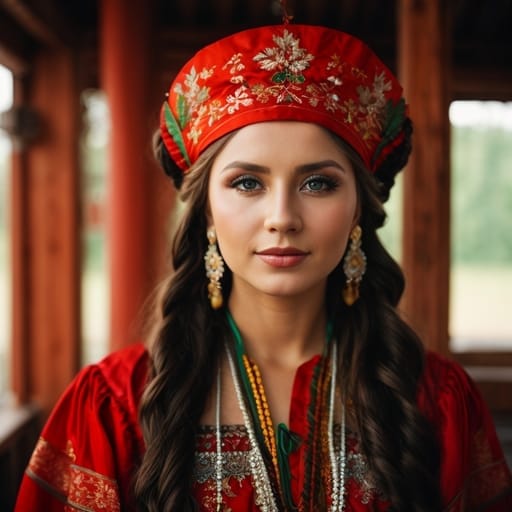
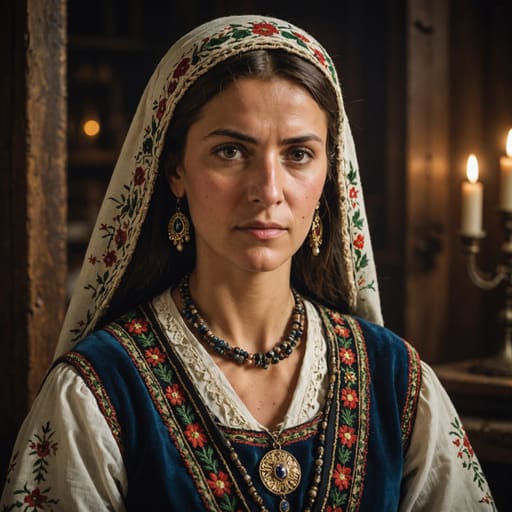
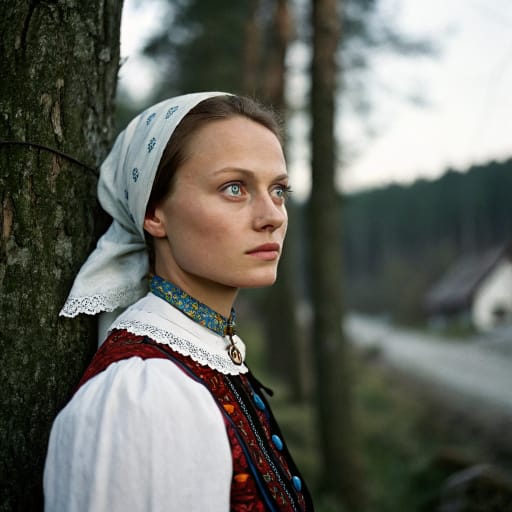
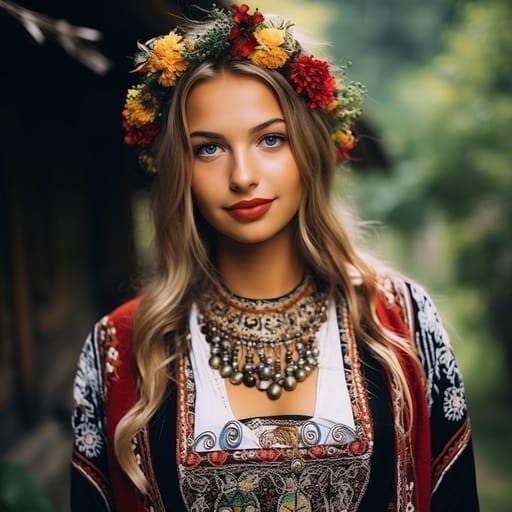
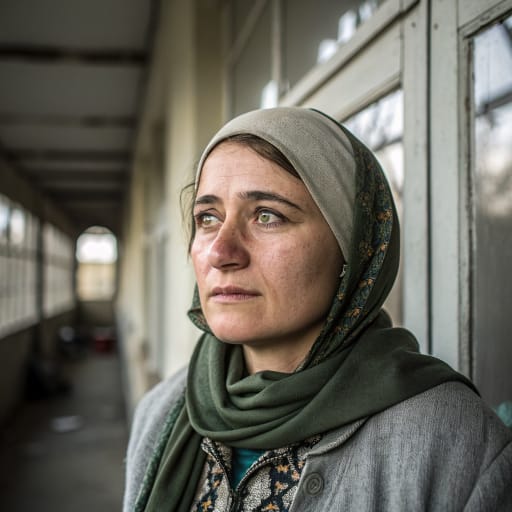
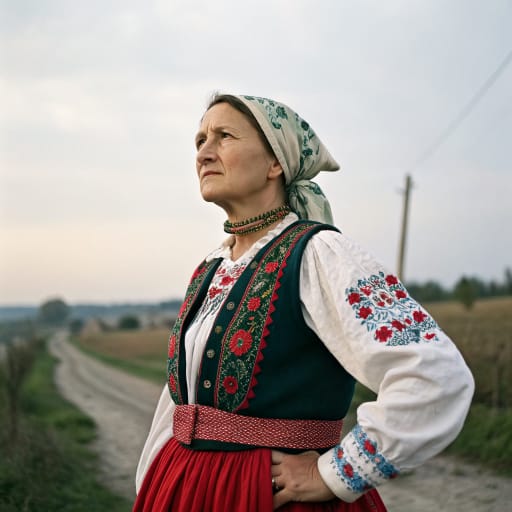
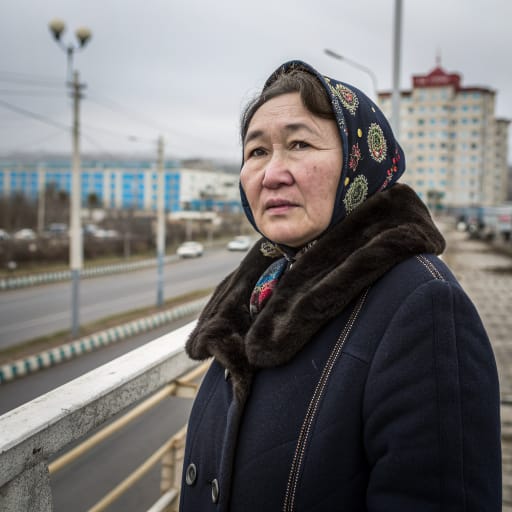
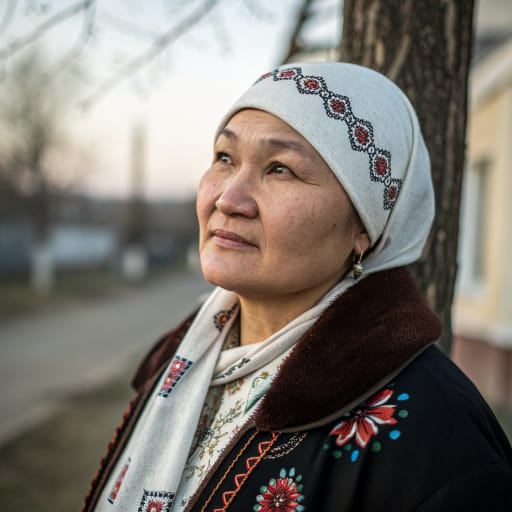
Typical Masurians Phenotypes
Reference for AI generation: hair, eyes, skin, facial structure, build
Masurians Body & Anatomy Reference
Anatomy by feature, Eastern European / Slavic phenotype
Masurians Boobs & Breasts
The typical Masurians bust is medium-to-large cup, full, moderate-to-high projection, in line with the wider Eastern European / Slavic pattern. Areolas usually fall in the 30-44mm range, with light-pink to medium-brown areolar pigmentation against the fair-to-light-brown skin tone. Compared with the smaller East Asian bust, Masurians breasts sit forward and are generally full and projecting, classic Eastern European curvy bust. A faithful AI render of Masurians tits keeps that shape and areola size.
Masurians Ass & Hips
Butt shape among Masurians women: medium-to-full, moderate-to-high projection, over medium iliac crests, full gluteal-femoral fat deposition. This follows Eastern European / Slavic ancestry and looks quite unlike the slim narrow-hip East Asian profile. An accurate Masurians ass in adult AI imagery keeps both the silhouette and the overall build (mesomorph, full hip-and-bust deposition) instead of a generic average.
Masurians Vagina & Pussy
Vulvar anatomy among Masurians women: light-pink to medium-brown labial pigmentation, varied labia minora. Pubic hair tends to be wavy medium texture, blond to dark-brown, in the usual inverted-triangle pattern. Both follow Eastern European / Slavic pigmentation, which is why Masurians pussy renders should not fall back on a pale, sparse Western template.
Masurians Dicks & Penis
The Masurians cock profile, from Eastern European / Slavic anthropometric data: regional mean ~13-14cm erect; moderate girth; light-pink to medium-brown shaft pigmentation. Pubic hair has a wavy medium texture and forms the usual inverted-V pattern. Whether Masurians men are circumcised follows religious and cultural practice rather than phenotype.
Masurians Body, Curves & Build
Build and curves among Masurians women follow the Eastern European / Slavic pattern: mesomorph, full hip-and-bust deposition, mean adult female BMI 23-26. Proportions matter as much as skin tone, so Masurians figures should keep their regional height and limb ratios.
Masurians Skin Tone & Hair Texture
The Masurians skin range is fair to light (Fitzpatrick II-III), and hair tends to be straight-to-wavy 1A-2B, light-blond to dark-brown. That combination marks the Eastern European / Slavic phenotype, and skin tone is the trait AI generators most often get wrong for Masurians women.
Explore phenotype categories
Structured taxonomy with peer-reviewed scales · 22 anatomical categories
Erotic Poses & Sex Positions
From the pose catalog: 219 named positions with reference skeletons
Frequently asked questions about Masurians people
Where is the Masurians homeland?
The Masurians homeland is Masuria, the lake district of northeastern Poland (Warmian-Masurian Voivodeship), formerly southern East Prussia; most descendants now live in Germany in Eastern Europe.
What language do Masurians people speak?
Masurians people primarily speak Masurian, a dialect of Polish (West Slavic, Indo-European); German (West Germanic, Indo-European), now dominant among descendants.
What religion do Masurians people practice?
The predominant religion among Masurians people is Lutheran Protestant, historically with a strong lay revival tradition.






Make your own Masurians images
Five a day, free, no credits to buy. The studio starts from this group's phenotype data, so you can set body type, pose and style and keep the traits accurate.
Start with Masurians