Help us get this right
Does this portrait look right for Liburnians?
Nobody has judged this one yet. You would be the first.
Liburnians Erotic
Liburnia, the northeastern Adriatic coast and Kvarner islands between the Raša and Krka rivers, in present-day Croatia
Liburnian (unclassified, probably Indo-European; known only from personal, place and divine names)
Local polytheism with deities such as Anzotica, later merged into Roman religion
No known branches; organized as separate town communities such as Iader, Aenona and Asseria; ancient writers sometimes counted them among the Illyrians
About Liburnians People
The Liburnians were an Iron Age people of the northeastern Adriatic who held the coast and islands of present-day Croatia for most of the first millennium BC. Rome eventually absorbed them, and their descendants blended into the Latin-speaking population of Roman Dalmatia. Above all, they were a people of the sea. Their territory ran from the Raša river on the eastern edge of Istria down to the Krka. It took in the Kvarner islands and the sheltered harbors around Zadar. They had no single capital. Their power lay in a string of fortified hilltop settlements and ports: Iader (Zadar), Aenona (Nin), Asseria near Benkovac and Curicum on the island of Krk.
At one time they reached further. Strabo wrote that they held Corcyra, modern Corfu, until Corinthian settlers pushed them out in the late 8th century BC. Roman writers also remembered Liburnian footholds on the Italian shore across the water. Greek and Roman authors often called them pirates, a label that also shows who was competing for the same sea lanes. Their most lasting legacy is a ship. Rome copied the liburna, a light and fast galley. Octavian's fleet used such ships against Mark Antony at Actium in 31 BC, and liburna became a general Roman word for a light warship.
Nobody knows where the Liburnians came from or exactly what language they spoke. Their language survives only in names of people, places and gods carved into Roman-era stones. Those names are closer to the Venetic and Histrian names of the northern Adriatic than to the names of peoples to their south and east. That suggests a coastal identity of their own rather than a simple branch of the Illyrians. Their religion survives the same limited way. At Aenona a local goddess, Anzotica, was worshiped as a form of Venus, a sign that local worship was absorbed into Roman religion rather than wiped out. One Greek geographical text even claimed the Liburnians were ruled by women, a report historians treat with caution.
Rome took control in stages, not in a single conquest. Iader became a Roman colony, other towns became self-governing municipalities, and local families took on Latin names while keeping some habits of their own. The clearest example is the Liburnian cippus, a cylindrical gravestone topped with a cone, a local type found mostly around Zadar. In the early Middle Ages their Romanized descendants mixed with the Croats who settled the coast. The name outlived them: the stretch of coast around Opatija is still called Liburnia.
Related ethnic groups
Groups that share Liburnians's homeland, region, language, or religious tradition. These are likely candidates for comparative phenotype reference.
Basques
same region (Southern Europe)
Bosniaks
same region (Southern Europe)
Moldovans
same region (Southern Europe)
Maltese
same region (Southern Europe)
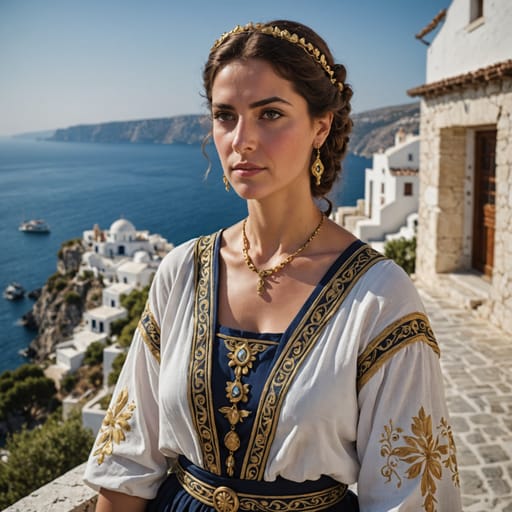
Greece Other
same region (Southern Europe)
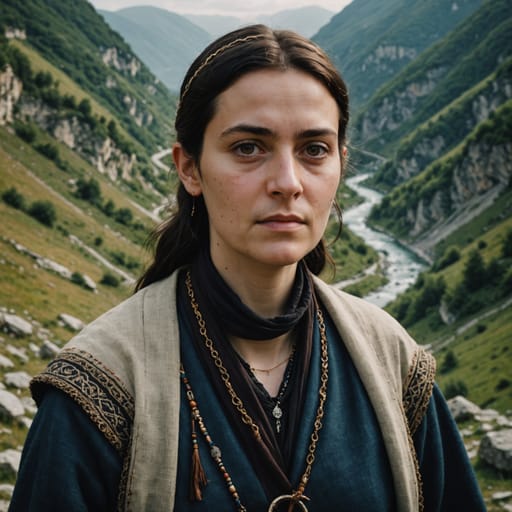
Shkreli
same region (Southern Europe)
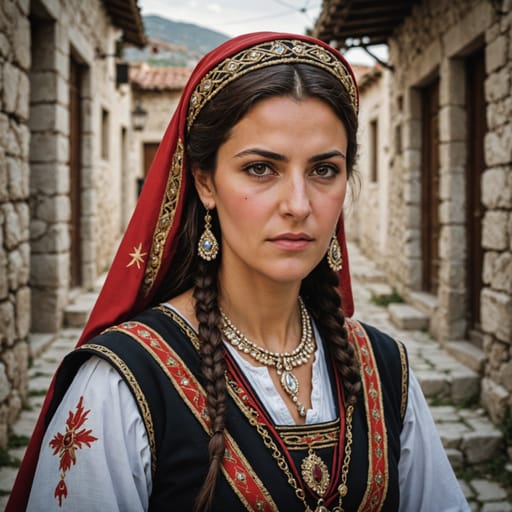
Greek Albanian
same region (Southern Europe)
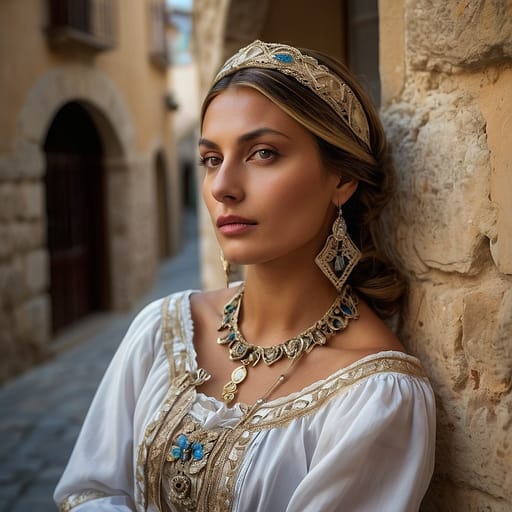
San Marino Italian
same region (Southern Europe)
Typical Liburnians Phenotypes
Reference for AI generation: hair, eyes, skin, facial structure, build
Liburnians Body & Anatomy Reference
Southern European / Mediterranean phenotype: anatomy reference for AI nude generation
Liburnians Boobs & Breasts
The typical Liburnians bust is medium-to-large cup, full, moderate-to-high projection, in line with the wider Southern European / Mediterranean pattern. Areolas usually fall in the 32-46mm range, with medium-brown to dark-brown areolar pigmentation against the olive-to-light-brown skin tone. Compared with the lighter pigmentation of the Northern European bust, Liburnians breasts sit forward and are generally full and projecting, generally the classic Mediterranean curvy bust profile. A faithful AI render of Liburnians tits keeps that shape and areola size.
Liburnians Ass & Hips
Butt shape among Liburnians women: medium-to-full, moderate-to-high projection, broader hip profile, over medium-to-wide iliac crests, full gluteal-femoral fat distribution. This follows Southern European / Mediterranean ancestry and looks quite unlike the slim Northern European narrow-hip pattern. An accurate Liburnians ass in adult AI imagery keeps both the silhouette and the overall build (mesomorph with full hip-and-bust deposition) instead of a generic average.
Liburnians Vagina & Pussy
Vulvar anatomy among Liburnians women: medium-brown to dark-brown labial pigmentation, fuller labia minora. Pubic hair tends to be wavy-to-curly medium-coarse dark texture, dense distribution, in the usual inverted-triangle pattern. Both follow Southern European / Mediterranean pigmentation, which is why Liburnians pussy renders should not fall back on a pale, sparse Western template.
Liburnians Dicks & Penis
The Liburnians cock profile, from Southern European / Mediterranean anthropometric data: regional mean ~13-14cm erect; moderate girth; medium-brown shaft pigmentation. Pubic hair has a wavy-to-curly medium-coarse dark texture and forms the usual inverted-V pattern. Whether Liburnians men are circumcised follows religious and cultural practice rather than phenotype.
Liburnians Body, Curves & Build
Build and curves among Liburnians women follow the Southern European / Mediterranean pattern: mesomorph with full hip-and-bust deposition, mean adult female BMI 24-28. Proportions matter as much as skin tone, so Liburnians figures should keep their regional height and limb ratios.
Liburnians Skin Tone & Hair Texture
The Liburnians skin range is olive to medium (Fitzpatrick III-IV), and hair tends to be wavy-to-curly 2B-3B, dark-brown to black. That combination marks the Southern European / Mediterranean phenotype, and skin tone is the trait AI generators most often get wrong for Liburnians women.
Explore phenotype categories
Structured taxonomy with peer-reviewed scales · 22 anatomical categories
Erotic Poses & Sex Positions
From the pose catalog: 219 named positions with reference skeletons
Frequently asked questions about Liburnians people
Where is the Liburnians homeland?
The Liburnians homeland is Liburnia, the northeastern Adriatic coast and Kvarner islands between the Raša and Krka rivers, in present-day Croatia in Southern Europe.
What language do Liburnians people speak?
Liburnians people primarily speak Liburnian (unclassified, probably Indo-European; known only from personal, place and divine names).
What religion do Liburnians people practice?
The predominant religion among Liburnians people is Local polytheism with deities such as Anzotica, later merged into Roman religion.






Make your own Liburnians images
Five a day, free, no credits to buy. The studio starts from this group's phenotype data, so you can set body type, pose and style and keep the traits accurate.
Start with Liburnians