No portrait yet
Lemkos Erotic
Lemko Region of the Low Beskids and Sącz Beskids in southeastern Poland, with related Rusyn communities in northeastern Slovakia and Ukrainian Transcarpathia. Since the 1947 deportations most Lemkos live in western Poland, western Ukraine, and North Ameri
Lemko, a Rusyn variety also classed as a western Ukrainian dialect (East Slavic, Indo-European), with Polish, Slovak, or Ukrainian as everyday second languages
Eastern Christian, divided between Greek Catholic (Byzantine rite) and Eastern Orthodox
Westernmost branch of the Carpathian Rusyns, alongside Boykos and Hutsuls. Closely related to the Prešov Rusyns of Slovakia. Internally divided between Rusyn and Ukrainian national orientations.
About Lemkos People
Lemkos are the westernmost of the Carpathian Rusyns, an East Slavic highland people from the Low Beskids and Sącz Beskids between the Poprad and Osława rivers in southeastern Poland. Related communities live across the ridge in Slovakia's Prešov region and in a corner of Ukrainian Transcarpathia, though there the usual self-name is Rusnak or Rusyn. The Lemko name began as a nickname. Neighbors noticed the word lem, 'only', a Slovak loan missing from other Rusyn speech, and used it to mark them out. By the early twentieth century the group had adopted it.
That borrowed word says a lot about the language. Lemko keeps East Slavic grammar and Cyrillic but has fixed penultimate stress, like Polish and eastern Slovak, and a heavy West Slavic vocabulary. Whether it is a Ukrainian dialect or a language within Rusyn is a political question as much as a linguistic one, and Lemkos are split on it. A short-lived Lemko Republic at Florynka in 1918 asked to join Russia or Czechoslovakia rather than Poland or Ukraine. Poland now recognizes Lemkos as an ethnic minority with a language of their own. Religion is Eastern Christian under two roofs. Lemko parishes were Greek Catholic from the late seventeenth century, Byzantine liturgy under Rome, but conversions to Orthodoxy that began at Tylawa in 1926 divided villages, and both churches remain. The visible legacy is the wooden tserkva: shingled, three-towered churches at Kwiatoń, Owczary, Brunary, and Powroźnik now carry UNESCO status.
The defining event is dispersal. Between 1944 and 1946 the majority of Polish Lemkos were transferred to Soviet Ukraine. In 1947 Operation Vistula deported nearly everyone left to Poland's newly acquired western and northern territories, scattering families across Lower Silesia and Pomerania and forbidding return. Some drifted back after 1956, but the Beskid valleys are still full of empty village sites, orchards gone wild, and roadside crosses with no farm behind them. Most Lemkos today live in Legnica, Wrocław, and other western Polish cities, in western Ukraine, or in North America, and being Lemko is something maintained rather than inherited by default. The annual Vatra festival at Zdynia is the largest gathering, and the men's chuha, a long brown wool coat with a wide fringed collar hanging down the back, still comes out for it. Before 1947 Lemkos were known as much for travel as for farming: itinerant tar sellers from Łosie, stonecutters from Bartne, and spoon carvers from Nowica worked circuits far beyond the mountains. The naive painter Nikifor of Krynica is the best known Lemko name in Poland, and Andy Warhol's parents came from a Rusyn village on the Slovak side.
Related ethnic groups
Groups that share Lemkos's homeland, region, language, or religious tradition. These are likely candidates for comparative phenotype reference.
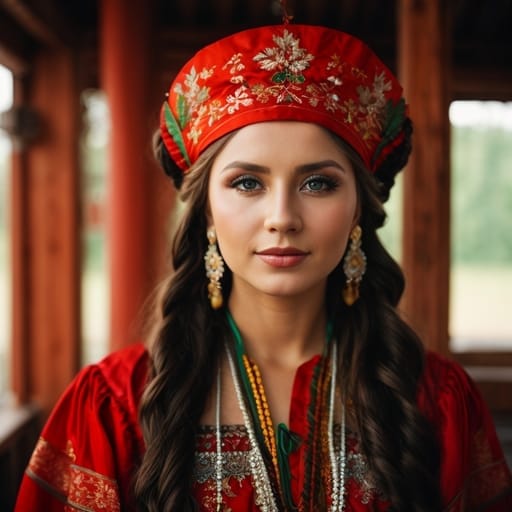
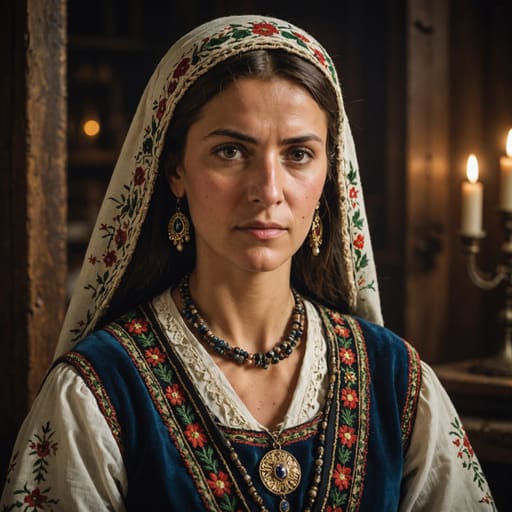
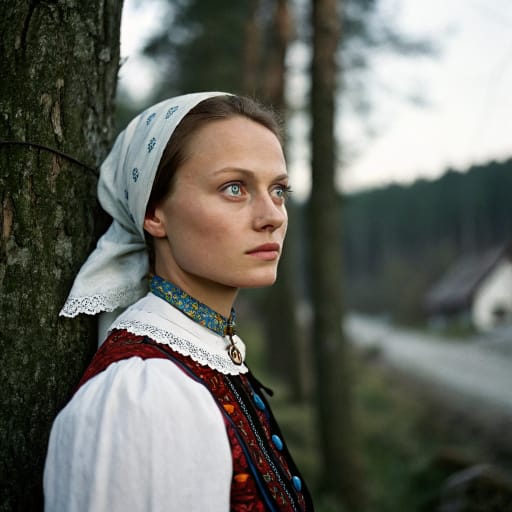
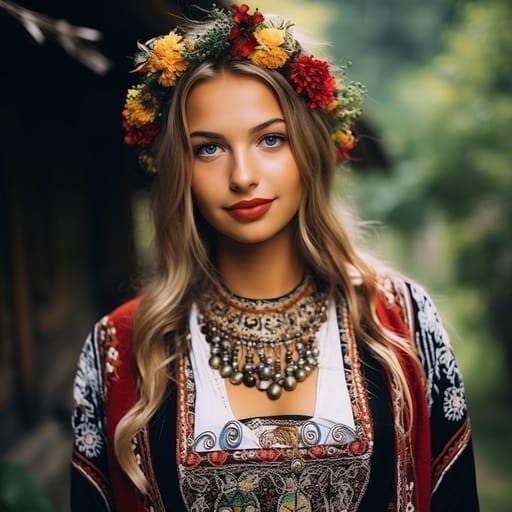
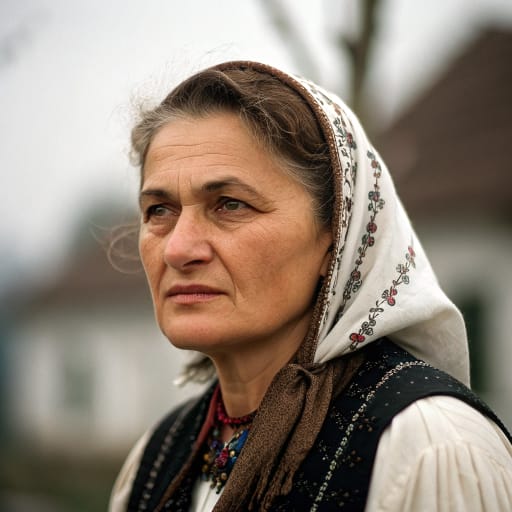
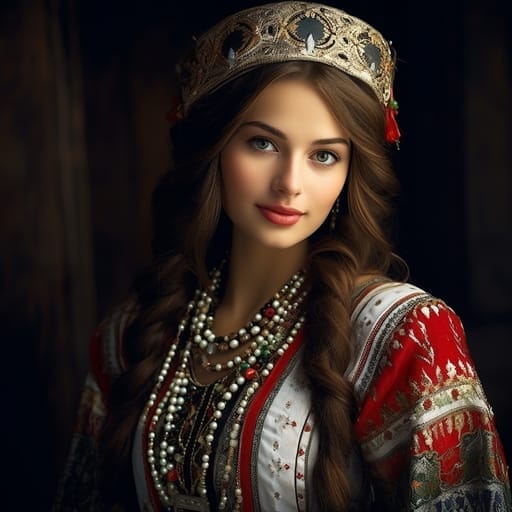
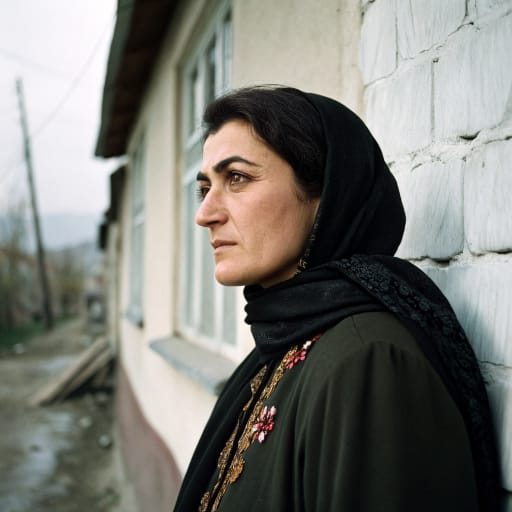
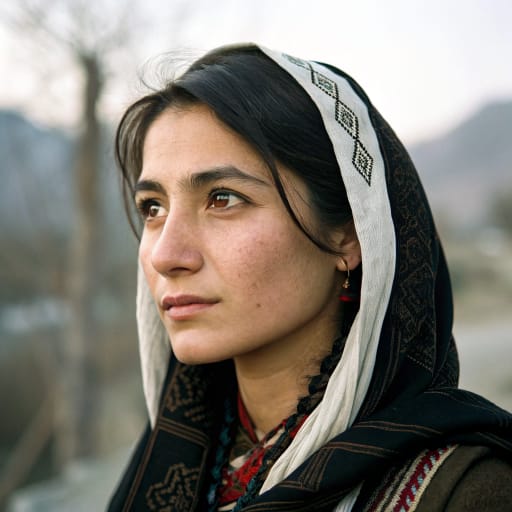
Typical Lemkos Phenotypes
Reference for AI generation: hair, eyes, skin, facial structure, build
Lemkos Body & Anatomy Reference
Per-feature anatomical profile for AI nude generation: Eastern European / Slavic phenotype
Lemkos Boobs & Breasts
Bust reference for Lemkos women: medium-to-large cup, full, moderate-to-high projection, which is typical of Eastern European / Slavic ancestry. Areolas measure about 30-44mm across, with light-pink to medium-brown pigmentation. Body type (mesomorph, full hip-and-bust deposition) shapes the bust as well, so Lemkos tits are usually full and projecting, classic Eastern European curvy bust. In AI imagery, keep the forward-set shape rather than drifting toward the smaller East Asian bust.
Lemkos Ass & Hips
The Lemkos ass is typically medium-to-full, moderate-to-high projection, which sets it apart from the slim narrow-hip East Asian profile. Underneath, the pelvis shows medium iliac crests, full gluteal-femoral fat deposition, part of the Eastern European / Slavic skeletal pattern. For Lemkos butt pics and AI renders, match that silhouette and the overall build (mesomorph, full hip-and-bust deposition).
Lemkos Vagina & Pussy
Lemkos pussy and vulvar anatomy presents light-pink to medium-brown labial pigmentation, varied labia minora, consistent with the Eastern European / Slavic phenotype's pigmentation pattern. Lemkos pubic hair is typically wavy medium texture, blond to dark-brown, in the inverted-triangle pattern. For anatomically accurate Lemkos pussy renders the labial coloration should match the surrounding fair to light skin tone with a continuous gradient, and the hair should keep its wavy medium texture.
Lemkos Dicks & Penis
Lemkos dicks follow the Eastern European / Slavic reference data: regional mean ~13-14cm erect; moderate girth; light-pink to medium-brown shaft pigmentation. Shaft color should track the fair to light skin tone with a smooth change toward the glans, and Lemkos pubic hair keeps its wavy medium texture.
Lemkos Body, Curves & Build
Lemkos body type and overall build presents as mesomorph, full hip-and-bust deposition, with mean adult female BMI 23-26: the characteristic Eastern European / Slavic habitus. Lemkos curves and proportions should keep the regional skeletal frame (height, shoulder-to-hip ratio, limb proportions) rather than a generic mesomorph default.
Lemkos Skin Tone & Hair Texture
Lemkos skin sits in the fair to light (Fitzpatrick II-III) band. Hair is typically straight-to-wavy 1A-2B, light-blond to dark-brown, in keeping with the Eastern European / Slavic phenotype. In nude renders the skin should stay one even tone from face to body, and body, pubic and head hair should match.
Explore phenotype categories
Structured taxonomy with peer-reviewed scales · 22 anatomical categories
Erotic Poses & Sex Positions
From the pose catalog: 219 named positions with reference skeletons
Frequently asked questions about Lemkos people
Where is the Lemkos homeland?
The Lemkos homeland is Lemko Region of the Low Beskids and Sącz Beskids in southeastern Poland, with related Rusyn communities in northeastern Slovakia and Ukrainian Transcarpathia. Since the 1947 deportations most Lemkos live in western Poland, western Ukraine, and North Ameri in Eastern Europe.
What language do Lemkos people speak?
Lemkos people primarily speak Lemko, a Rusyn variety also classed as a western Ukrainian dialect (East Slavic, Indo-European), with Polish, Slovak, or Ukrainian as everyday second languages.
What religion do Lemkos people practice?
The predominant religion among Lemkos people is Eastern Christian, divided between Greek Catholic (Byzantine rite) and Eastern Orthodox.






Make your own Lemkos images
Five a day, free, no credits to buy. The studio starts from this group's phenotype data, so you can set body type, pose and style and keep the traits accurate.
Start with Lemkos