Help us get this right
Does this portrait look right for Khwarshi?
Nobody has judged this one yet. You would be the first.
Khwarshi Erotic
The Tsumadinsky district of western Dagestan, Russia, in the high valleys of the Andi Koysu basin near the Georgian border, with lowland communities around Khasavyurt and Kizilyurt.
Khwarshi, including the divergent Inkhokvari varieties (Northeast Caucasian, Tsezic branch); Avar as the school and written language, Russian as the state language
Sunni Islam, Shafi'i school, with Naqshbandi Sufi influence
One of the Tsezic (Didoic) peoples of western Dagestan alongside the Tsez, Hinukh, Bezhta and Hunzib; internally divided between Khwarshi proper and the Inkhokvari group; officially counted as Avars
About Khwarshi People
The Khwarshi are one of a cluster of very small nations wedged into the western corner of Dagestan, in the Tsumadinsky district, where the gorges draining into the Andi Koysu are steep enough that villages a few hours apart speak languages they cannot use with one another. The first thing worth knowing is that Khwarshi is not a dialect of Avar. It belongs to the Tsezic branch of Northeast Caucasian, next to Tsez, Hinukh, Bezhta and Hunzib, and it carries what those languages are known for: a crowded consonant inventory of ejectives and pharyngeals, a noun class system, and cases that specify not only where a thing is but whether it is on, in, under or behind. Nobody writes it. Children speak Khwarshi at home, take their lessons in Avar, and use Russian past the republic line. Because the census has long offered Avar as the box to tick, the official count of self-declared Khwarshi barely reaches the hundreds, while the language itself holds some thousands of speakers, in Khwarshi village and in the Inkhokvari settlements, whose speech differs enough that specialists argue over whether to call it a separate language.
Islam came up these valleys from the lowlands over centuries and settled in hard: Sunni, Shafi'i in law, with the Naqshbandi Sufi lineages that shaped religious life across Dagestan. It runs alongside adat, the customary law of the village community, which handles pasture, water and grievance, and alongside the patrilineal kin group that tells a person who owes them help. The Khwarshi lived through the nineteenth century inside Shamil's Imamate and the long war that ended it, then collectivization, then the resettlements: in 1944, when the Chechens were deported, highland Dagestani communities were moved down into the emptied villages, and after 1957 they were moved back up, two uprootings in thirteen years. Families kept going down anyway, to Khasavyurt and Kizilyurt, where the land is flat and the work is. The high villages are still there, stone houses stacked so that one family's flat roof is the yard of the family above, terraces cut into grades that look impossible until you see them worked, sheep taken to winter pasture and brought back in spring, passes shut by snow for months. The first full grammar of the language appeared in 2009, written by a linguist from the community itself, which is a fair summary of where the Khwarshi stand: a people the paperwork keeps filing under someone else's name, putting their own on the record.
Related ethnic groups
Groups that share Khwarshi's homeland, region, language, or religious tradition. These are likely candidates for comparative phenotype reference.
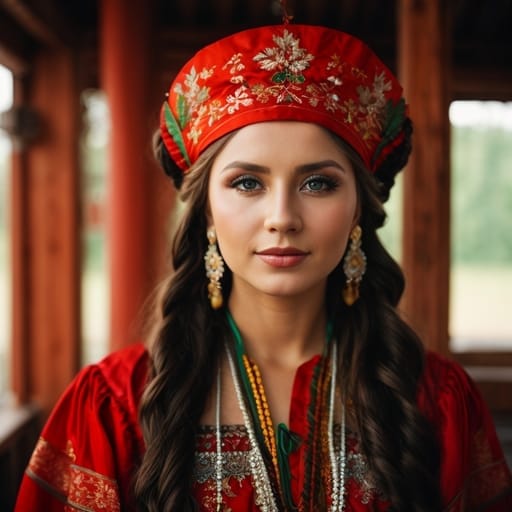
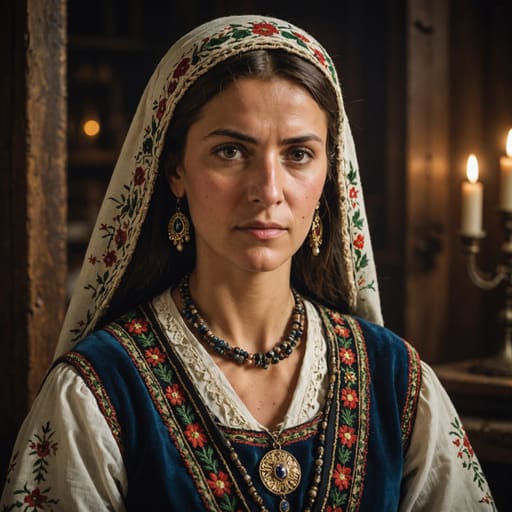
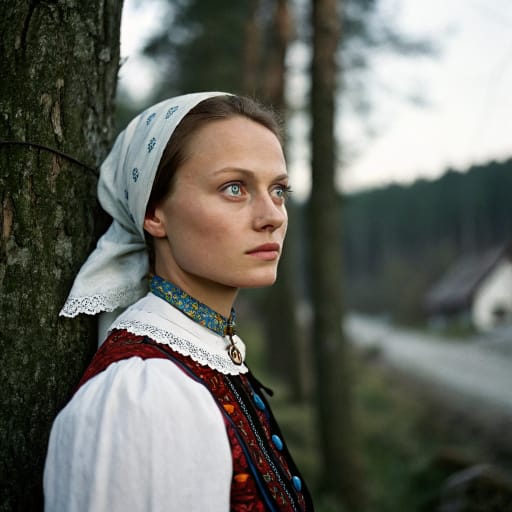
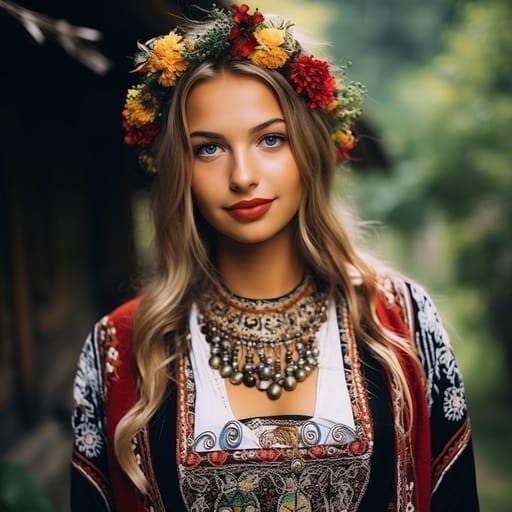
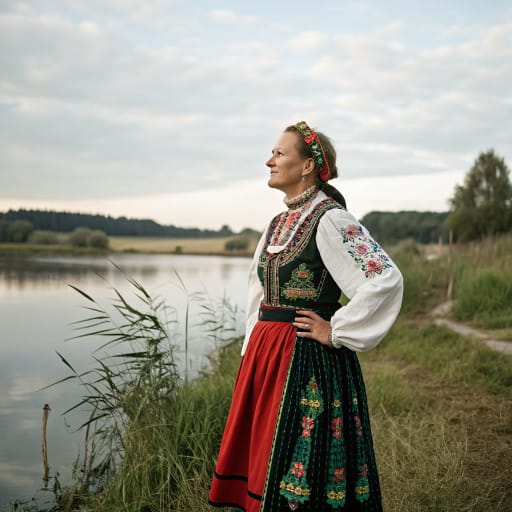
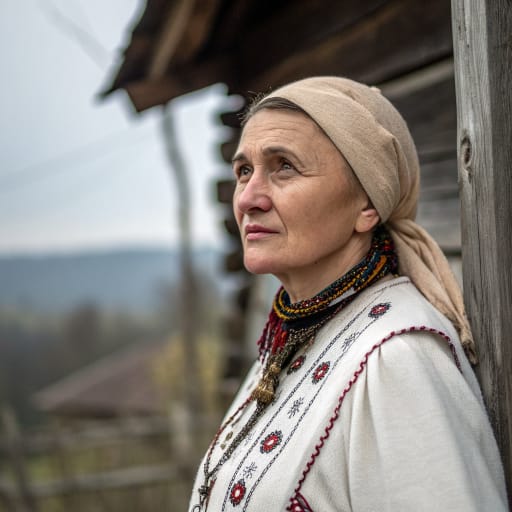
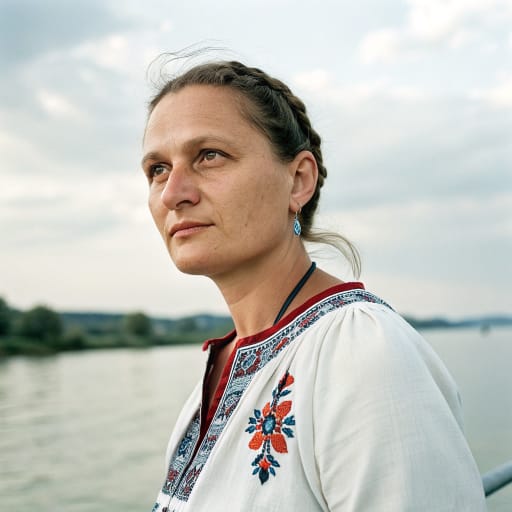
Typical Khwarshi Phenotypes
Reference for AI generation: hair, eyes, skin, facial structure, build
Khwarshi Body & Anatomy Reference
Eastern European / Slavic phenotype: anatomy reference for AI nude generation
Khwarshi Boobs & Breasts
The typical Khwarshi bust is medium-to-large cup, full, moderate-to-high projection, in line with the wider Eastern European / Slavic pattern. Areolas usually fall in the 30-44mm range, with light-pink to medium-brown areolar pigmentation against the fair-to-light-brown skin tone. Compared with the smaller East Asian bust, Khwarshi breasts sit forward and are generally full and projecting, classic Eastern European curvy bust. A faithful AI render of Khwarshi tits keeps that shape and areola size.
Khwarshi Ass & Hips
Butt shape among Khwarshi women: medium-to-full, moderate-to-high projection, over medium iliac crests, full gluteal-femoral fat deposition. This follows Eastern European / Slavic ancestry and looks quite unlike the slim narrow-hip East Asian profile. An accurate Khwarshi ass in adult AI imagery keeps both the silhouette and the overall build (mesomorph, full hip-and-bust deposition) instead of a generic average.
Khwarshi Vagina & Pussy
Vulvar anatomy among Khwarshi women: light-pink to medium-brown labial pigmentation, varied labia minora. Pubic hair tends to be wavy medium texture, blond to dark-brown, in the usual inverted-triangle pattern. Both follow Eastern European / Slavic pigmentation, which is why Khwarshi pussy renders should not fall back on a pale, sparse Western template.
Khwarshi Dicks & Penis
The Khwarshi cock profile, from Eastern European / Slavic anthropometric data: regional mean ~13-14cm erect; moderate girth; light-pink to medium-brown shaft pigmentation. Pubic hair has a wavy medium texture and forms the usual inverted-V pattern. Whether Khwarshi men are circumcised follows religious and cultural practice rather than phenotype.
Khwarshi Body, Curves & Build
Build and curves among Khwarshi women follow the Eastern European / Slavic pattern: mesomorph, full hip-and-bust deposition, mean adult female BMI 23-26. Proportions matter as much as skin tone, so Khwarshi figures should keep their regional height and limb ratios.
Khwarshi Skin Tone & Hair Texture
The Khwarshi skin range is fair to light (Fitzpatrick II-III), and hair tends to be straight-to-wavy 1A-2B, light-blond to dark-brown. That combination marks the Eastern European / Slavic phenotype, and skin tone is the trait AI generators most often get wrong for Khwarshi women.
Explore phenotype categories
Structured taxonomy with peer-reviewed scales · 22 anatomical categories
Erotic Poses & Sex Positions
From the pose catalog: 219 named positions with reference skeletons
Frequently asked questions about Khwarshi people
Where is the Khwarshi homeland?
The Khwarshi homeland is The Tsumadinsky district of western Dagestan, Russia, in the high valleys of the Andi Koysu basin near the Georgian border, with lowland communities around Khasavyurt and Kizilyurt. in Eastern Europe.
What language do Khwarshi people speak?
Khwarshi people primarily speak Khwarshi, including the divergent Inkhokvari varieties (Northeast Caucasian, Tsezic branch); Avar as the school and written language, Russian as the state language.
What religion do Khwarshi people practice?
The predominant religion among Khwarshi people is Sunni Islam, Shafi'i school, with Naqshbandi Sufi influence.






Make your own Khwarshi images
Five a day, free, no credits to buy. The studio starts from this group's phenotype data, so you can set body type, pose and style and keep the traits accurate.
Start with Khwarshi