Help us get this right
Does this portrait look right for Karipuna do Amapá?
One tap. It takes a second and it is recorded.
1 says it looks right, 0 say it looks off.
Karipuna do Amapá Erotic
Villages on the Curipi River in the Uaçá basin, Oiapoque municipality, Amapá state, northern Brazil, near the French Guiana border
Kheuól, also called Karipuna Creole (French-based creole); Portuguese (Romance, Indo-European)
Mainly Catholic, alongside shamanic practice centered on the pajé, the karuãna spirits and the Turé ritual
One of the four Indigenous peoples of the Oiapoque region, with the Galibi-Marworno, Palikur and Galibi Kali'na; distinct from the Karipuna of Rondônia
About Karipuna do Amapá People
The Karipuna of Amapá are a people shaped by history more than by a single line of descent. Their villages sit along the Curipi River in Brazil's far north, in the Uaçá basin near the town of Oiapoque, a short distance from the French Guiana border. Three things hold them together: a shared place, a shared creole language, and a long habit of acting as one community even though their ancestors came from different places. They should not be confused with the Karipuna of Rondônia, a separate Tupi-speaking people far to the southwest who share only the name.
The community formed on the Curipi from families of mixed background, among them Amazonian migrants who spoke the Tupi-based língua geral. Over generations they took up Kheuól, the French-based creole of the region, which they share in a somewhat different form with their Galibi-Marworno neighbors. The language is a record of the border's past. For most of the nineteenth century France and Brazil both claimed the land between the Oiapoque and Araguari rivers, and life in the region looked toward French Guiana as much as toward Brazil. International arbitration gave the territory to Brazil in 1900. The Brazilian state later brought Portuguese-language schooling and an open goal of making the frontier Brazilian. Portuguese has since gained ground, especially among the young.
Village life runs on manioc. Families clear gardens, grate and press the roots, and roast farinha, the coarse flour that feeds households and brings in cash at market in Oiapoque. Fishing and hunting in the seasonally flooded savannas and forests of the basin round out the diet. Manga and Santa Isabel are among the larger villages. Karipuna land lies within the Uaçá Indigenous Territory, which they share with the Galibi-Marworno and the Palikur.
Religion here is layered, not a battleground. The Karipuna are largely Catholic, and saints' feasts are major events in the village year. Alongside the church stands the pajé, the shaman who deals with the karuãna, unseen beings who can heal or cause sickness. The Turé is a ceremony of dancing, turé flutes and caxiri, a manioc drink, offered in thanks to those beings. The Oiapoque peoples all hold it, and it remains the clearest public sign of that older knowledge. The Karipuna are also active in the region's joint Indigenous councils, where the four Oiapoque peoples deal with the state together on land, health care and schooling.
Related ethnic groups
Groups that share Karipuna do Amapá's homeland, region, language, or religious tradition. These are likely candidates for comparative phenotype reference.
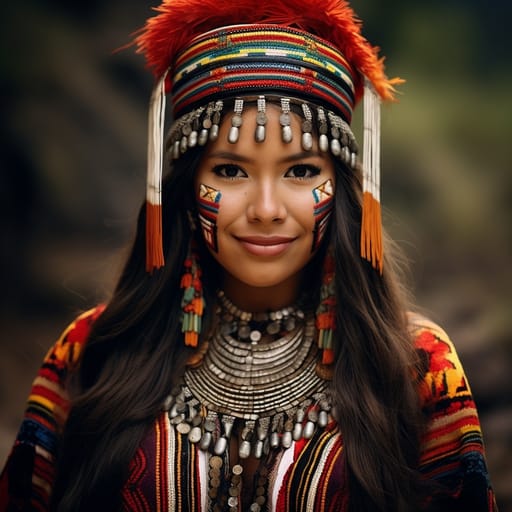
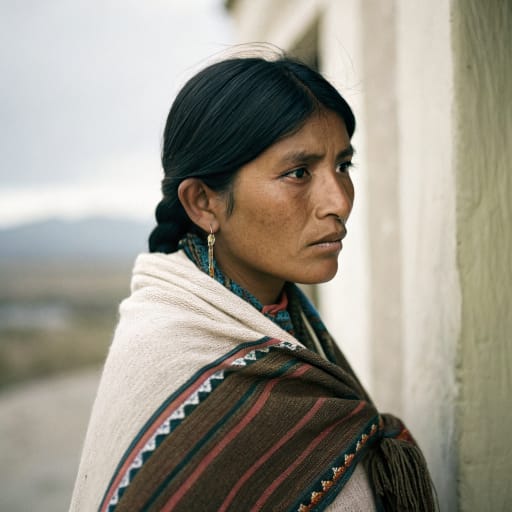
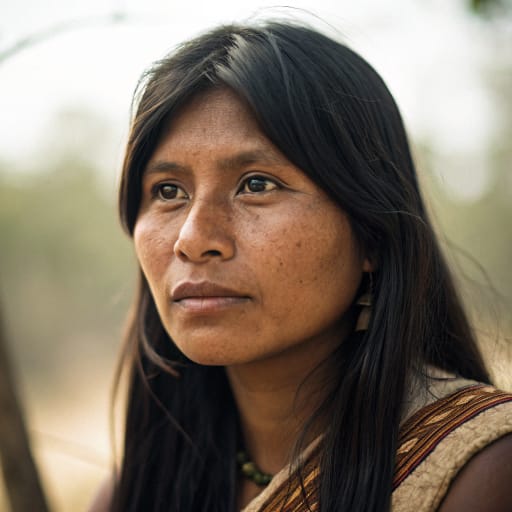
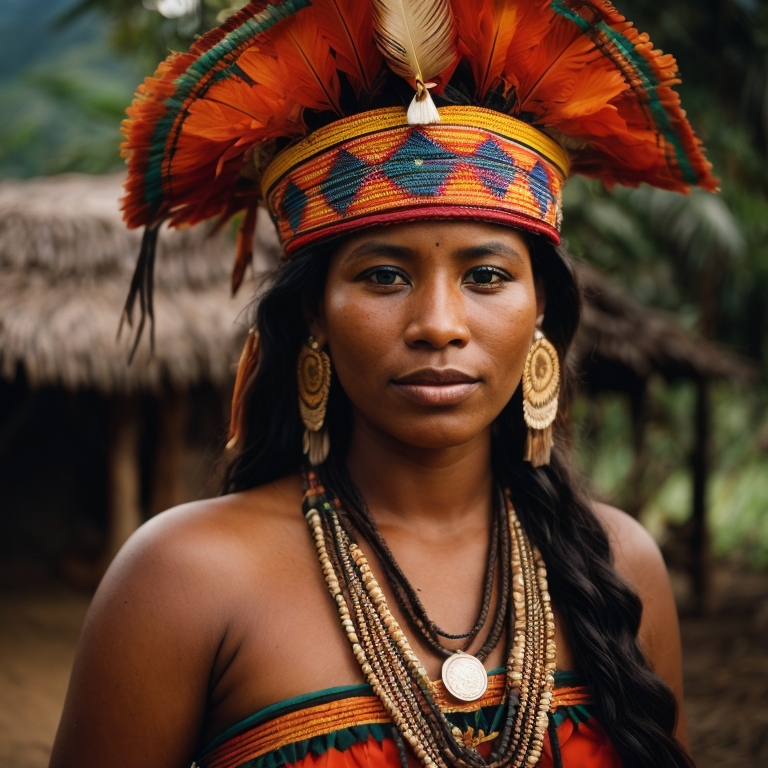
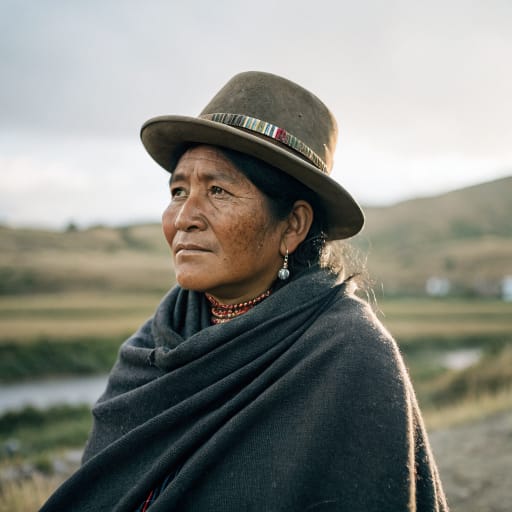
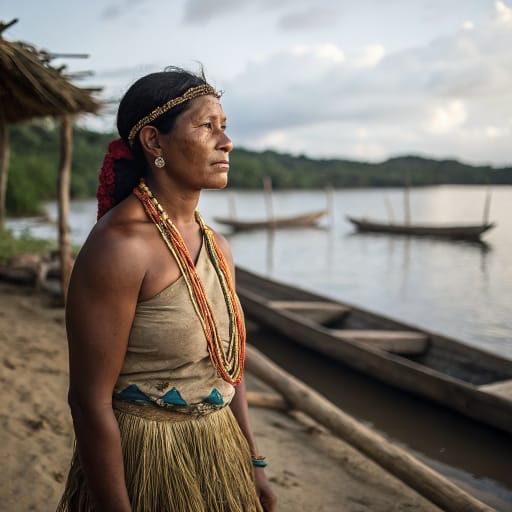
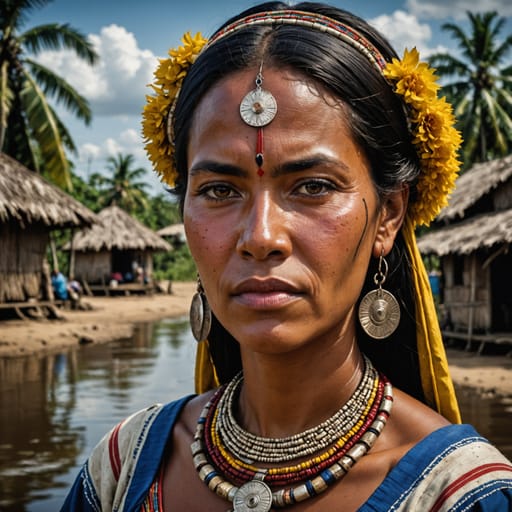
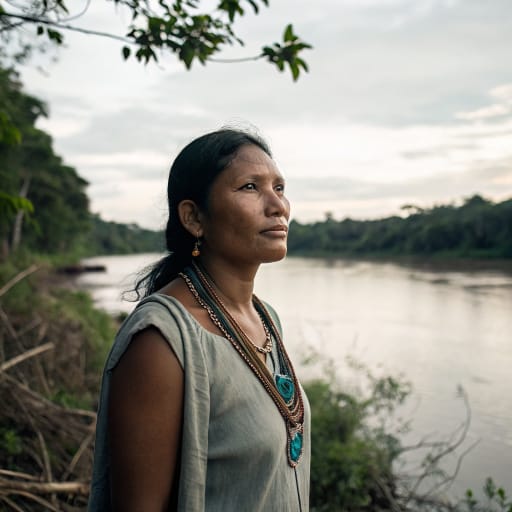
Typical Karipuna do Amapá Phenotypes
Reference for AI generation: hair, eyes, skin, facial structure, build
Karipuna do Amapá Body & Anatomy Reference
Per-feature anatomical profile for AI nude generation: South American Indigenous / European-Mestizo / Afro-Latino mix phenotype
Karipuna do Amapá Boobs & Breasts
Karipuna do Amapá boobs follow the South American Indigenous / European-Mestizo / Afro-Latino mix profile: medium-to-large cup, full, high projection. Areolar diameter is usually 32-46mm, and the coloring is medium-brown to dark-brown areolar pigmentation against the tan-to-deep-brown skin tone. Breast shape tracks body composition (endomorph-to-mesomorph with high gluteal-femoral deposition, mean adult female BMI 25-28), so Karipuna do Amapá breasts tend to be the classic Brazilian / Latina curvy bust profile in lowland populations; smaller and shorter-set in Andean Indigenous populations. Expect a forward-set shape, not the smaller bust profile of Andean Indigenous sub-populations.
Karipuna do Amapá Ass & Hips
Karipuna do Amapá ass and hip morphology presents as full, high projection, the famous Brazilian / Latina bunda profile, distinctly different from the slim narrow-hip East Asian profile. The Karipuna do Amapá pelvic profile shows wide iliac crests, very full gluteal-femoral fat deposition (the hallmark Brazilian / Latina hip-to-waist ratio), anchored in the South American Indigenous / European-Mestizo / Afro-Latino mix skeletal pattern. Karipuna do Amapá butt shots in adult AI imagery should render the full, high projection, the famous Brazilian / Latina bunda profile silhouette with the overall build (endomorph-to-mesomorph with high gluteal-femoral deposition) and the fat distribution typical of the South American Indigenous / European-Mestizo / Afro-Latino mix phenotype.
Karipuna do Amapá Vagina & Pussy
Karipuna do Amapá pussy anatomy typically shows medium-brown to dark-brown labial pigmentation, fuller labia minora. Pubic hair is usually wavy-to-curly coarse dark texture, dense distribution. In AI-generated Karipuna do Amapá nudes, labial color should blend into the tan to deep-brown skin with a gradual transition, and the hair should keep its wavy-to-curly coarse dark texture.
Karipuna do Amapá Dicks & Penis
Penis reference for Karipuna do Amapá men: regional mean ~13cm erect, moderate-to-above-average girth. Coloring: medium-brown shaft pigmentation. An accurate Karipuna do Amapá cock in AI imagery matches the surrounding tan to deep-brown skin rather than a generic porn default. Circumcision depends on religion and custom, not ancestry.
Karipuna do Amapá Body, Curves & Build
The Karipuna do Amapá figure is generally endomorph-to-mesomorph with high gluteal-femoral deposition, with mean adult female BMI 25-28, characteristic of South American Indigenous / European-Mestizo / Afro-Latino mix ancestry. AI image tools tend to flatten regional body types into a few stock shapes; here the Karipuna do Amapá build is kept as its own reference.
Karipuna do Amapá Skin Tone & Hair Texture
Skin: tan to deep-brown (Fitzpatrick III-VI). Hair: straight-to-curly 1A-3C, varies widely by ancestral composition. Both are typical of South American Indigenous / European-Mestizo / Afro-Latino mix ancestry. The most common mistake in AI nudes of Karipuna do Amapá women is a body rendered lighter than the face.
Explore phenotype categories
Structured taxonomy with peer-reviewed scales · 22 anatomical categories
Erotic Poses & Sex Positions
From the pose catalog: 219 named positions with reference skeletons
Frequently asked questions about Karipuna do Amapá people
Where is the Karipuna do Amapá homeland?
The Karipuna do Amapá homeland is Villages on the Curipi River in the Uaçá basin, Oiapoque municipality, Amapá state, northern Brazil, near the French Guiana border in South America.
What language do Karipuna do Amapá people speak?
Karipuna do Amapá people primarily speak Kheuól, also called Karipuna Creole (French-based creole); Portuguese (Romance, Indo-European).
What religion do Karipuna do Amapá people practice?
The predominant religion among Karipuna do Amapá people is Mainly Catholic, alongside shamanic practice centered on the pajé, the karuãna spirits and the Turé ritual.






Make your own Karipuna do Amapá images
Five a day, free, no credits to buy. The studio starts from this group's phenotype data, so you can set body type, pose and style and keep the traits accurate.
Start with Karipuna do Amapá