No portrait yet
Csángós Erotic
Moldavia region of eastern Romania, chiefly Bacău County along the Siret and Trotuș valleys, with smaller communities in the Ghimeș pass and around Săcele near Brașov, Romania
Csángó dialect of Hungarian (Uralic, Finno-Ugric), heavily archaic with many Romanian loanwords; Romanian now dominant for most
Roman Catholic; the Brașov-area Csángós are mostly Lutheran
Ethnographic group of the Hungarians; Moldavian Csángós divided into Northern, Southern, and Szekler Csángós; also Ghimeș Csángós and the Hétfalu (Săcele) Csángós
About Csángós People
Ask a Csángó villager in Moldavia what they are and the answer is often not "Hungarian" or "Romanian" but "Catholic." That word carries most of the story. The Csángós are Hungarian-speaking Roman Catholics living among Orthodox Romanians on the eastern side of the Carpathians, outside the old Hungarian frontier, and their identity rests on that double difference: the wrong faith for the neighbors, the wrong side of the mountains for the kin. The name likely comes from a Hungarian verb for straying off, which is roughly how the rest of the Hungarian world has long regarded them.
The core population lives along the Siret and Trotuș valleys around Bacău and Roman in Romanian Moldavia, with smaller communities in the Ghimeș pass on the Carpathian crest and near Brașov, where the villages are, unusually, Lutheran. Scholars split the Moldavian group in three: Northern Csángós near Roman, whose speech preserves medieval features lost everywhere else; Southern Csángós around Bacău; and the more numerous Szekler Csángós, descended from Székelys who fled Habsburg conscription after 1764. Their dialect is Hungarian, a Uralic language, but it missed the nineteenth-century language reform that modernized the standard, so it borrows words for anything recent from Romanian. Speakers now number in the tens of thousands, out of roughly a quarter million Moldavian Catholics of Csángó descent, most of whom have shifted to Romanian.
Religion is lived daily, not just declared. Catholicism reached them through Italian Franciscan missionaries from the seventeenth century, and since 1884 through the Diocese of Iași, which serves them in Romanian and has mostly refused requests for Hungarian-language Mass. Each Pentecost, groups cross the mountains to the pilgrimage at Csíksomlyó, or Șumuleu Ciuc, where their dress stands out: women in white embroidered shirts and a wrap-around woolen skirt bound with a woven belt, men in white trousers and sheepskin vests. Song collectors from Bartók's 1907 trip to Ghimeș onward have treated the villages as a living archive of laments, medieval ballads, koboz lute tunes, and the violin-and-gardon dance music of the mountain pass. Winter spinning bees, where courtship happened over the wool, lasted into living memory. Hungarian was shut out of state schools in 1959 and returned only as after-school classes in the early 2000s, so the language survives more in kitchens and hymn singing than in classrooms.
Related ethnic groups
Groups that share Csángós's homeland, region, language, or religious tradition. These are likely candidates for comparative phenotype reference.
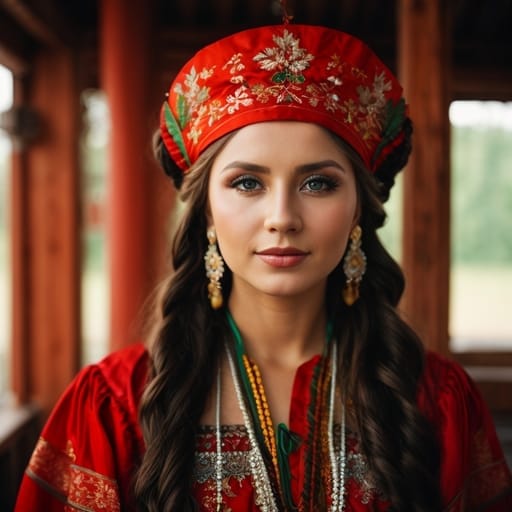
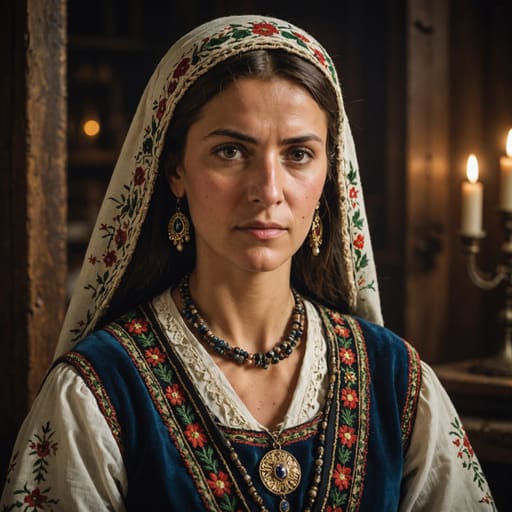
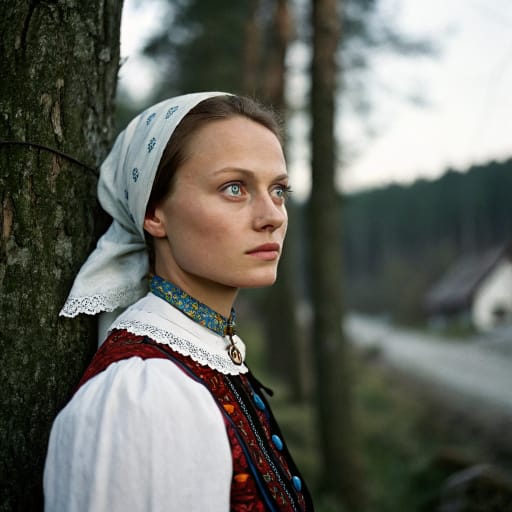
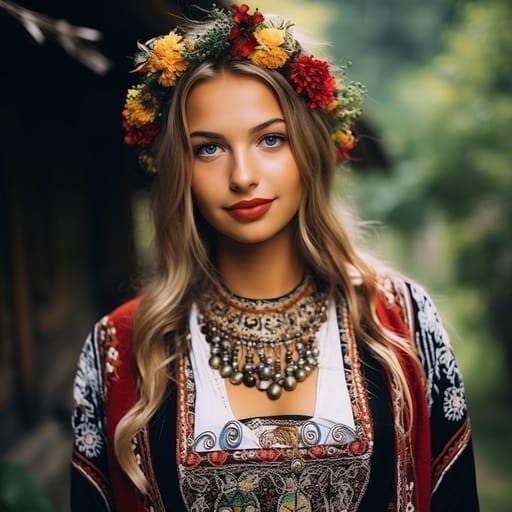
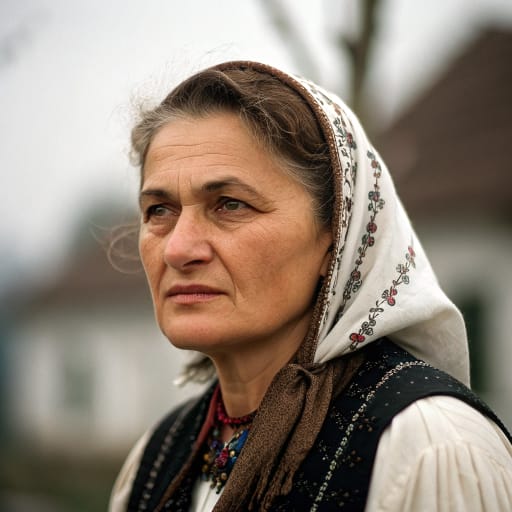
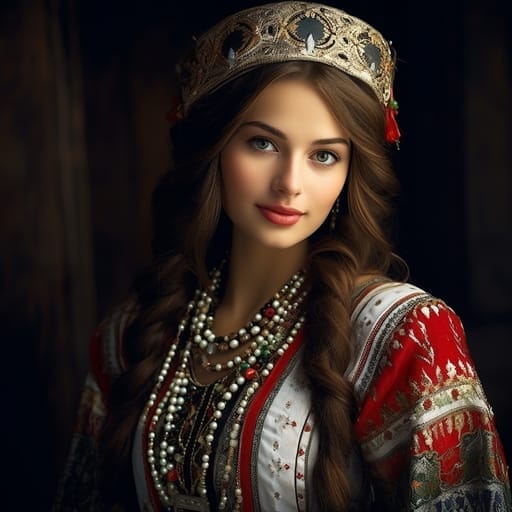
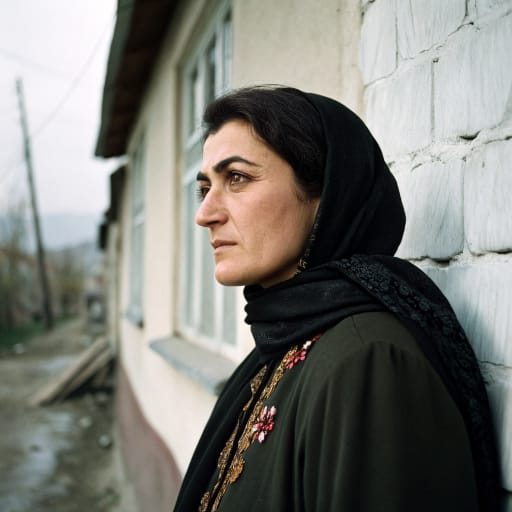
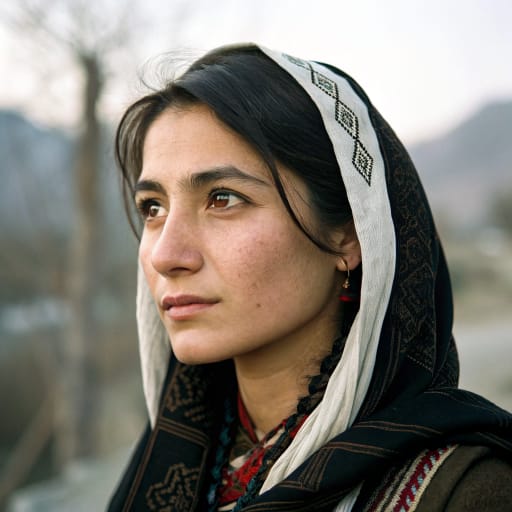
Typical Csángós Phenotypes
Reference for AI generation: hair, eyes, skin, facial structure, build
Csángós Body & Anatomy Reference
Per-feature anatomical profile for AI nude generation: Eastern European / Slavic phenotype
Csángós Boobs & Breasts
Csángós tits and boobs run medium-to-large cup, full, moderate-to-high projection, the classic Eastern European / Slavic bust profile. Csángós nipples and areolas show light-pink to medium-brown areolar pigmentation against the fair-to-light-brown skin tone, with areolar diameter typically in the 30-44mm range and forward-set positioning rather than the smaller East Asian bust. Csángós breasts trend full and projecting, classic Eastern European curvy bust, a function of the mesomorph, full hip-and-bust deposition body habitus and the mean adult female BMI 23-26. For anatomically accurate AI-generated Csángós nudes the render preserves the medium-to-large cup, full, moderate-to-high projection shape, 30-44mm areolas with light-pink to medium-brown pigmentation, and the torso proportions of the Eastern European / Slavic phenotype.
Csángós Ass & Hips
Csángós hips and butt usually read as medium-to-full, moderate-to-high projection. The skeletal base is medium iliac crests, full gluteal-femoral fat deposition, the Eastern European / Slavic pattern. Set against the slim narrow-hip East Asian profile, the difference is easy to see, and the hip-to-waist ratio is often what identifies Csángós women in photos.
Csángós Vagina & Pussy
Expect light-pink to medium-brown labial pigmentation, varied labia minora on Csángós women, in keeping with Eastern European / Slavic ancestry. The pubic hair is wavy medium texture, blond to dark-brown. Coloring should run evenly from the fair to light skin of the thighs to the labia, and Csángós nude imagery should keep the hair's wavy medium texture.
Csángós Dicks & Penis
Csángós dick and penile anatomy in adult AI generation should anchor on the regional reference data: regional mean ~13-14cm erect, moderate girth, and light-pink to medium-brown shaft pigmentation. The Csángós cock profile reflects the Eastern European / Slavic population's anthropometric measurements. The shaft pigmentation should track the surrounding fair to light skin tone, and the pubic hair should keep its wavy medium texture in the typical inverted-V escutcheon.
Csángós Body, Curves & Build
Csángós body type: mesomorph, full hip-and-bust deposition, with mean adult female BMI 23-26. This is the typical Eastern European / Slavic build. Height range, shoulder-to-hip ratio and fat distribution all follow from it, which is what an accurate Csángós nude body should show.
Csángós Skin Tone & Hair Texture
Csángós skin tone falls in the fair to light (Fitzpatrick II-III) band, the surface signal most often miscalibrated by generic AI nude generators. Csángós hair texture is typically straight-to-wavy 1A-2B, light-blond to dark-brown, characteristic of the Eastern European / Slavic phenotype. In Csángós nude renders the skin should hold that band consistently across the body.
Explore phenotype categories
Structured taxonomy with peer-reviewed scales · 22 anatomical categories
Erotic Poses & Sex Positions
From the pose catalog: 219 named positions with reference skeletons
Frequently asked questions about Csángós people
Where is the Csángós homeland?
The Csángós homeland is Moldavia region of eastern Romania, chiefly Bacău County along the Siret and Trotuș valleys, with smaller communities in the Ghimeș pass and around Săcele near Brașov, Romania in Eastern Europe.
What language do Csángós people speak?
Csángós people primarily speak Csángó dialect of Hungarian (Uralic, Finno-Ugric), heavily archaic with many Romanian loanwords; Romanian now dominant for most.
What religion do Csángós people practice?
The predominant religion among Csángós people is Roman Catholic; the Brașov-area Csángós are mostly Lutheran.






Make your own Csángós images
Five a day, free, no credits to buy. The studio starts from this group's phenotype data, so you can set body type, pose and style and keep the traits accurate.
Start with Csángós