Help us get this right
Does this portrait look right for Burmazi?
Nobody has judged this one yet. You would be the first.
Burmazi Erotic
Hum (medieval Herzegovina), centered on the country around Stolac in what is now southern Bosnia and Herzegovina
Originally Albanian (Indo-European); shifted to the local South Slavic speech of Hum (Indo-European, Slavic) by the late Middle Ages
Christian in the medieval period, specific church affiliation poorly documented; descendants absorbed into the Orthodox, Catholic and Muslim communities of Herzegovina
One of the Vlach katuns (herding clans) of medieval Herzegovina, of Albanian origin; counted alongside neighbors such as the Banjani, Drobnjaci and Zupci
About Burmazi People
The Burmazi were a medieval herding clan of Albanian origin who lived in the Hum region, today's Herzegovina, around Stolac, and who appear in the written record from the 14th century before dissolving into the South Slavic population around them by early Ottoman times. They exist today as a village name, a surname, and a footnote that complicates tidy national histories of the Balkans. Their name is usually explained through Albanian: burrë, man, and madh, big. Whether that began as an ancestor's nickname or a clan's opinion of itself, nobody recorded.
Almost everything known about them comes from the archives of Ragusa, modern Dubrovnik, whose notaries recorded the hinterland in the language of contracts and complaints. In those records the Burmazi are classed as Vlachs. In medieval Hum that word described a way of life more than a bloodline: mobile stock keepers organized in a katun, a cluster of related households under a headman, moving sheep between summer highlands and winter lowlands, and answering to their lords on different terms than settled farmers. Vlachs of this kind also ran the pack-horse caravans that carried salt, cloth and metals between the coast and the Bosnian interior, and the Burmazi sat close to those routes. Their neighbors in the same category included the Banjani, Drobnjaci and Zupci, clans whose names also outlived the social order that produced them.
What makes the Burmazi interesting is how thoroughly they assimilated. A group with an Albanian name, living well northwest of any Albanian-speaking territory, carries largely Slavic personal names in the later documents. In the 15th century their lords were the Kosača, the magnate family whose title of herceg gave Herzegovina its name, and after them came the Ottomans, who finished taking the region in the 1480s. From then on the katun system faded as herders settled, converted or did not, and sorted into the Orthodox, Catholic and Muslim communities of later centuries. The Burmazi did not survive as a group through that sorting. Their descendants presumably sit on all sides of it.
The legacy is modest but concrete. The village of Burmazi still stands in Stolac municipality, in a district dense with stećci, the carved medieval tombstones that scholars often connect to Vlach herding communities. The surname Burmaz and its derivatives carry on in Bosnia and Herzegovina and neighboring countries. For historians, the clan is a small, well-anchored piece of evidence that Albanian-speaking pastoralists once ranged much farther northwest than the modern map suggests, and that medieval Balkan identities were built on occupation and kinship long before they hardened into nations.
Related ethnic groups
Groups that share Burmazi's homeland, region, language, or religious tradition. These are likely candidates for comparative phenotype reference.
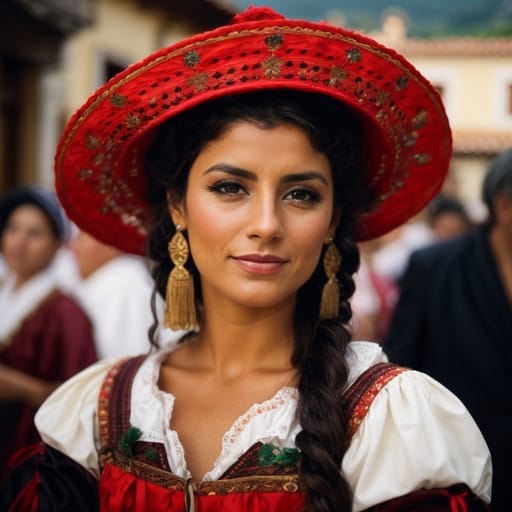
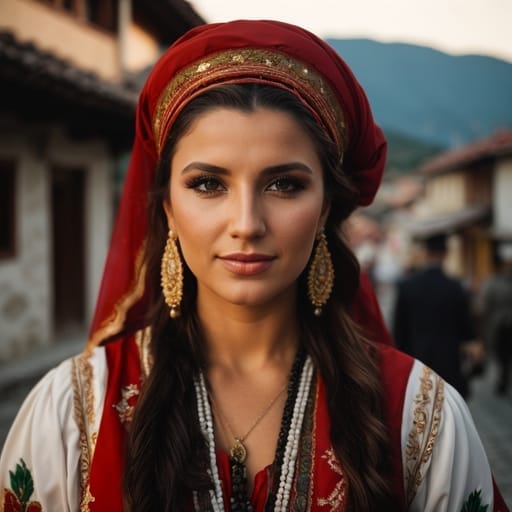
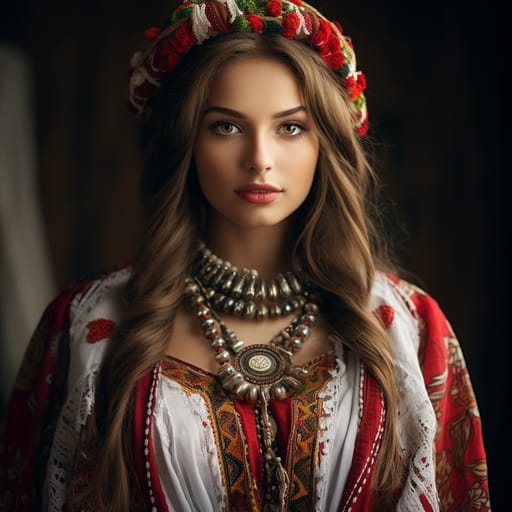
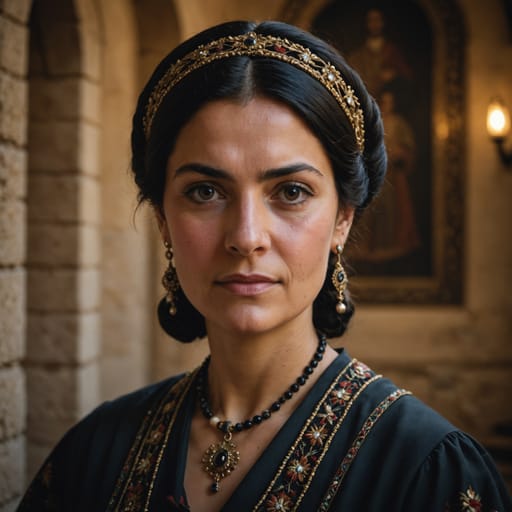
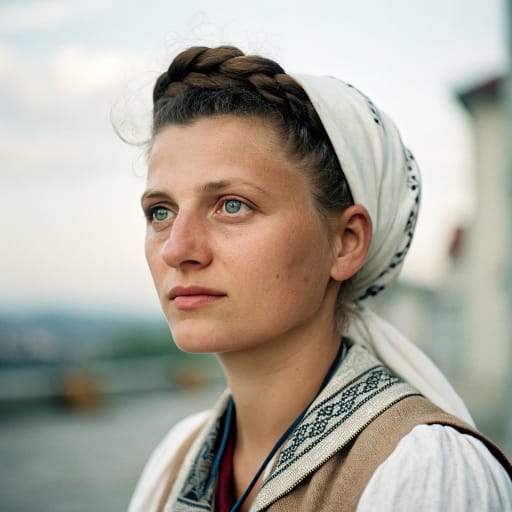
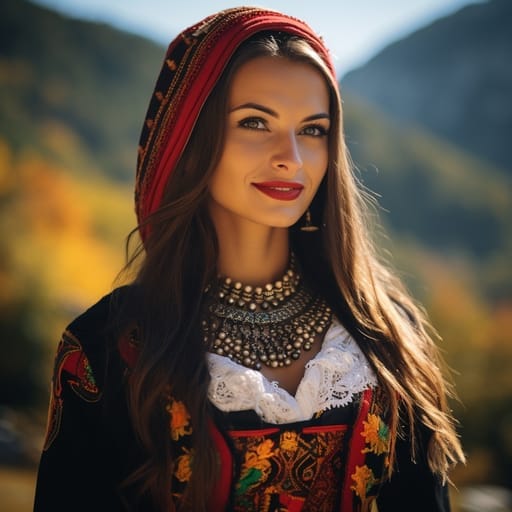
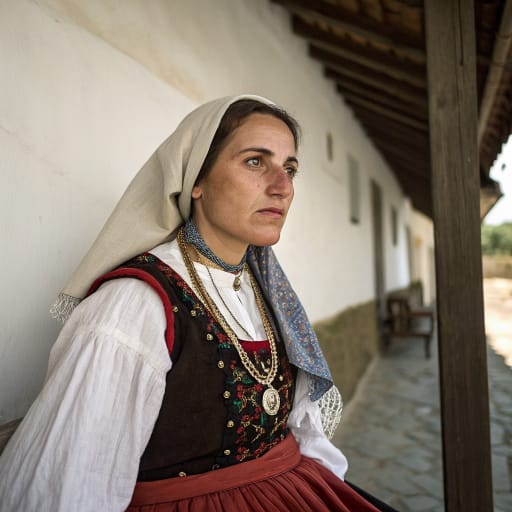
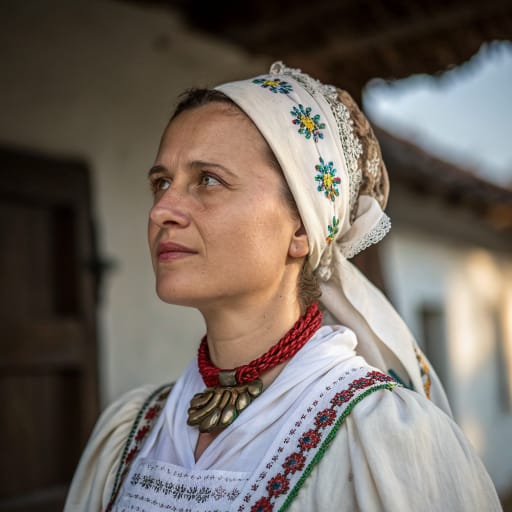
Typical Burmazi Phenotypes
Reference for AI generation: hair, eyes, skin, facial structure, build
Burmazi Body & Anatomy Reference
Southern European / Mediterranean phenotype: anatomy reference for AI nude generation
Burmazi Boobs & Breasts
Burmazi boobs follow the Southern European / Mediterranean profile: medium-to-large cup, full, moderate-to-high projection. Areolar diameter is usually 32-46mm, and the coloring is medium-brown to dark-brown areolar pigmentation against the olive-to-light-brown skin tone. Breast shape tracks body composition (mesomorph with full hip-and-bust deposition, mean adult female BMI 24-28), so Burmazi breasts tend to be full and projecting, generally the classic Mediterranean curvy bust profile. Expect a forward-set shape, not the lighter pigmentation of the Northern European bust.
Burmazi Ass & Hips
Burmazi ass and hip morphology presents as medium-to-full, moderate-to-high projection, broader hip profile, distinctly different from the slim Northern European narrow-hip pattern. The Burmazi pelvic profile shows medium-to-wide iliac crests, full gluteal-femoral fat distribution, anchored in the Southern European / Mediterranean skeletal pattern. Burmazi butt shots in adult AI imagery should render the medium-to-full, moderate-to-high projection, broader hip profile silhouette with the overall build (mesomorph with full hip-and-bust deposition) and the fat distribution typical of the Southern European / Mediterranean phenotype.
Burmazi Vagina & Pussy
Burmazi pussy anatomy typically shows medium-brown to dark-brown labial pigmentation, fuller labia minora. Pubic hair is usually wavy-to-curly medium-coarse dark texture, dense distribution. In AI-generated Burmazi nudes, labial color should blend into the olive to medium skin with a gradual transition, and the hair should keep its wavy-to-curly medium-coarse dark texture.
Burmazi Dicks & Penis
Penis reference for Burmazi men: regional mean ~13-14cm erect, moderate girth. Coloring: medium-brown shaft pigmentation. An accurate Burmazi cock in AI imagery matches the surrounding olive to medium skin rather than a generic porn default. Circumcision depends on religion and custom, not ancestry.
Burmazi Body, Curves & Build
The Burmazi figure is generally mesomorph with full hip-and-bust deposition, with mean adult female BMI 24-28, characteristic of Southern European / Mediterranean ancestry. AI image tools tend to flatten regional body types into a few stock shapes; here the Burmazi build is kept as its own reference.
Burmazi Skin Tone & Hair Texture
Skin: olive to medium (Fitzpatrick III-IV). Hair: wavy-to-curly 2B-3B, dark-brown to black. Both are typical of Southern European / Mediterranean ancestry. The most common mistake in AI nudes of Burmazi women is a body rendered lighter than the face.
Explore phenotype categories
Structured taxonomy with peer-reviewed scales · 22 anatomical categories
Erotic Poses & Sex Positions
From the pose catalog: 219 named positions with reference skeletons
Frequently asked questions about Burmazi people
Where is the Burmazi homeland?
The Burmazi homeland is Hum (medieval Herzegovina), centered on the country around Stolac in what is now southern Bosnia and Herzegovina in Southern Europe.
What language do Burmazi people speak?
Burmazi people primarily speak Originally Albanian (Indo-European); shifted to the local South Slavic speech of Hum (Indo-European, Slavic) by the late Middle Ages.
What religion do Burmazi people practice?
The predominant religion among Burmazi people is Christian in the medieval period, specific church affiliation poorly documented; descendants absorbed into the Orthodox, Catholic and Muslim communities of Herzegovina.






Make your own Burmazi images
Five a day, free, no credits to buy. The studio starts from this group's phenotype data, so you can set body type, pose and style and keep the traits accurate.
Start with Burmazi