Help us get this right
Does this portrait look right for Banguingui?
Nobody has judged this one yet. You would be the first.
Banguingui Erotic
Sulu Archipelago, Basilan and the Zamboanga Peninsula in the southern Philippines; originally Balangingi Island in the Samales group of Sulu
Balangingi Sama, also called Northern Sama (Austronesian, Sama-Bajaw); Tausug, Chavacano and Filipino widely used as second languages
Sunni Islam
A branch of the Sama-Bajau peoples; counted among the Moro peoples of the southern Philippines; historically closely allied with the Iranun
About Banguingui People
The Banguingui carry a name that was once a warning along coastlines from Luzon to the Moluccas. They are a Sama-speaking Muslim people of the southern Philippines. Their name comes from Balangingi, a small island in the Samales group of the Sulu Archipelago, between Jolo and Basilan. Language and faith are not what set them apart from other Sama communities. History is. For generations they were the most feared sea raiders around the Sulu Sultanate, and that work did as much to make them a distinct people as any shared ancestry.
In the late eighteenth and early nineteenth centuries, Banguingui fleets went on long voyages, often alongside Iranun seafarers. They took captives and sold them in the markets of Jolo. The sultanate needed that labor, because its trade in sea cucumber, pearl shell and bird's nests with Chinese and European merchants was booming. The raiding communities took in outsiders all the time. Captives, runaways and allies married in and learned the language, and many went to sea as raiders themselves. The historian James Francis Warren argues that Balangingi identity was largely built this way: a people put together by the raiding economy rather than descended from a single line.
That world ended in 1848. A Spanish expedition under Governor-General Narciso Clavería used steam gunboats to storm the fortified settlements on Balangingi. Steamships took away the raiders' old edge of speed and wind. Many defenders died, and survivors were deported far north to Luzon. Others escaped and scattered, which is part of why the Banguingui live spread out today rather than in one compact homeland.
Their descendants live mainly in Sulu, Basilan and around Zamboanga. They speak Balangingi Sama, sometimes called Northern Sama, one of the many Sama-Bajaw languages spoken around the Sulu Sea. Depending on where they live, many also speak Tausug, Chavacano or Filipino. Sunni Islam shapes the year, the household and the big moments of life, from Ramadan to the rites of marriage and death, much as it does along the rest of the Moro coast. Fishing and small trade keep many families tied to the water. In Sulu, the municipality once called Tongkil now officially carries the Banguingui name. It is a quiet reclaiming of a word that Spanish records used mostly to mean piracy.
Related ethnic groups
Groups that share Banguingui's homeland, region, language, or religious tradition. These are likely candidates for comparative phenotype reference.
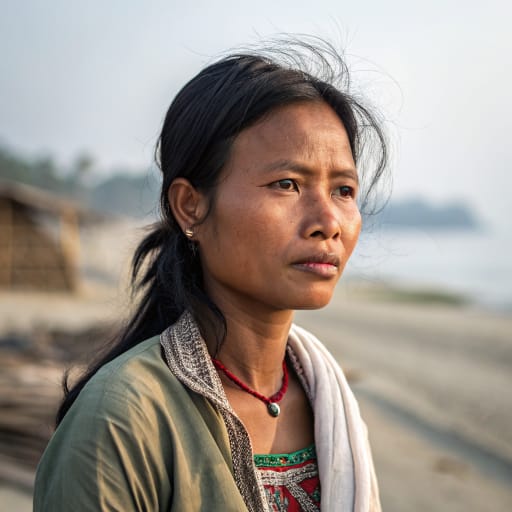
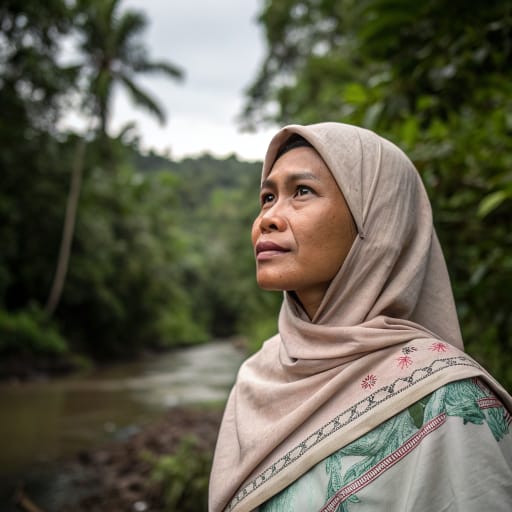
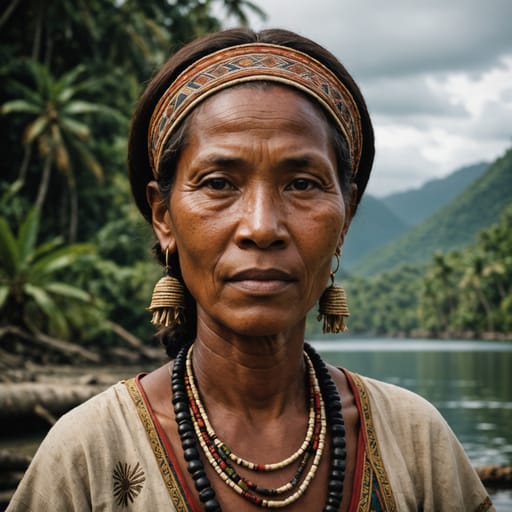
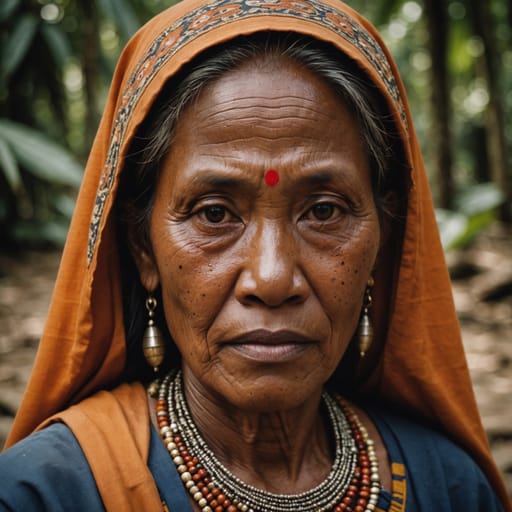
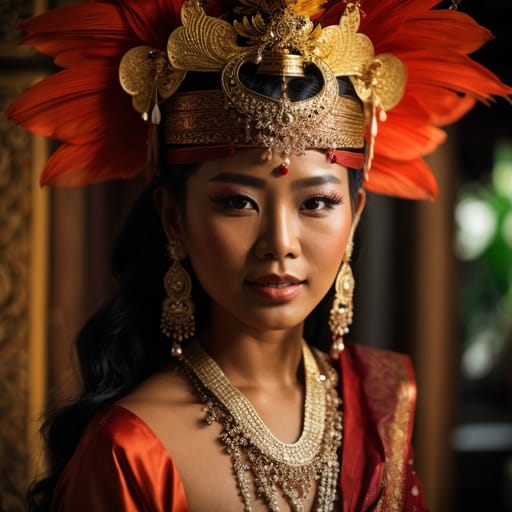
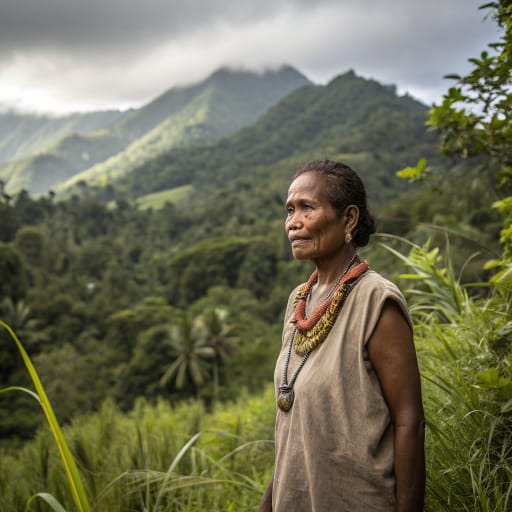
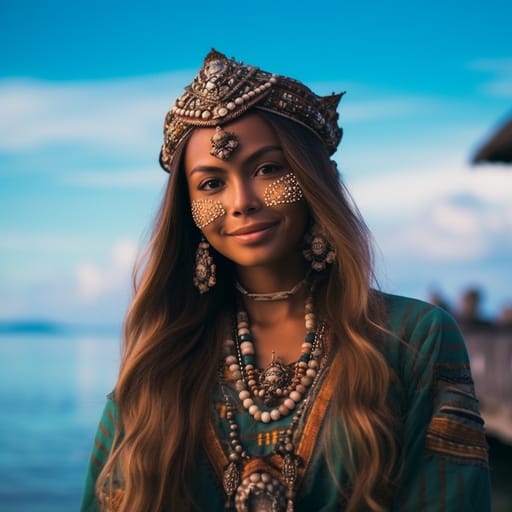
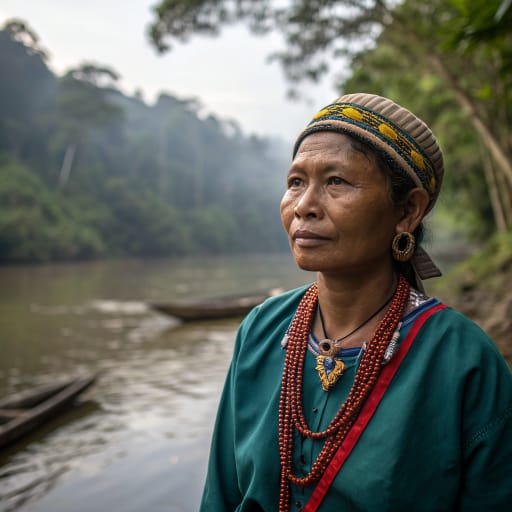
Typical Banguingui Phenotypes
Reference for AI generation: hair, eyes, skin, facial structure, build
Banguingui Body & Anatomy Reference
Southeast Asian Austronesian / Austroasiatic phenotype: anatomy reference for AI nude generation
Banguingui Boobs & Breasts
Bust reference for Banguingui women: small-to-medium cup, modest projection, which is typical of Southeast Asian Austronesian / Austroasiatic ancestry. Areolas measure about 26-38mm across, with medium-brown to dark-brown pigmentation. Body type (ectomorph, petite frame) shapes the bust as well, so Banguingui tits are usually firm, modest projection. In AI imagery, keep the forward-set shape rather than drifting toward the fuller South Asian or Polynesian bust.
Banguingui Ass & Hips
The Banguingui ass is typically small-to-medium, modest projection, narrower hip profile, which sets it apart from the fuller glutes of the Pacific Islander phenotype. Underneath, the pelvis shows narrow-to-medium iliac crests, part of the Southeast Asian Austronesian / Austroasiatic skeletal pattern. For Banguingui butt pics and AI renders, match that silhouette and the overall build (ectomorph, petite frame).
Banguingui Vagina & Pussy
Banguingui pussy and vulvar anatomy presents medium-brown to dark-brown labial pigmentation, consistent with the Southeast Asian Austronesian / Austroasiatic phenotype's pigmentation pattern. Banguingui pubic hair is typically straight-to-wavy fine-to-medium texture, in the inverted-triangle pattern. For anatomically accurate Banguingui pussy renders the labial coloration should match the surrounding tan to medium-brown skin tone with a continuous gradient, and the hair should keep its straight-to-wavy fine-to-medium texture.
Banguingui Dicks & Penis
Banguingui dicks follow the Southeast Asian Austronesian / Austroasiatic reference data: regional mean ~11cm erect; moderate girth; medium-brown shaft pigmentation. Shaft color should track the tan to medium-brown skin tone with a smooth change toward the glans, and Banguingui pubic hair keeps its straight-to-wavy fine-to-medium texture.
Banguingui Body, Curves & Build
Banguingui body type and overall build presents as ectomorph, petite frame, with mean adult female BMI 20-23: the characteristic Southeast Asian Austronesian / Austroasiatic habitus. Banguingui curves and proportions should keep the regional skeletal frame (height, shoulder-to-hip ratio, limb proportions) rather than a generic mesomorph default.
Banguingui Skin Tone & Hair Texture
Banguingui skin sits in the tan to medium-brown (Fitzpatrick III-V) band. Hair is typically straight-to-wavy 1A-2A, dark-brown to black, in keeping with the Southeast Asian Austronesian / Austroasiatic phenotype. In nude renders the skin should stay one even tone from face to body, and body, pubic and head hair should match.
Explore phenotype categories
Structured taxonomy with peer-reviewed scales · 22 anatomical categories
Erotic Poses & Sex Positions
From the pose catalog: 219 named positions with reference skeletons
Frequently asked questions about Banguingui people
Where is the Banguingui homeland?
The Banguingui homeland is Sulu Archipelago, Basilan and the Zamboanga Peninsula in the southern Philippines; originally Balangingi Island in the Samales group of Sulu in Southeast Asia.
What language do Banguingui people speak?
Banguingui people primarily speak Balangingi Sama, also called Northern Sama (Austronesian, Sama-Bajaw); Tausug, Chavacano and Filipino widely used as second languages.
What religion do Banguingui people practice?
The predominant religion among Banguingui people is Sunni Islam.






Make your own Banguingui images
Five a day, free, no credits to buy. The studio starts from this group's phenotype data, so you can set body type, pose and style and keep the traits accurate.
Start with Banguingui