No portrait yet
Vidivarii Erotic
Vistula delta and the Elbląg Upland on the southern Baltic coast, in present-day northern Poland.
Unrecorded; probably a mix of East Germanic dialects (Indo-European, Germanic) and West Baltic dialects (Indo-European, Baltic). The name itself is Germanic in form.
Pre-Christian polytheism, presumably blending Germanic and Baltic cults; nothing recorded directly. Cremation and horse burial point to West Baltic rite.
A composite people formed from remnant Gepids and Goths, West Balts (Aesti) and probably Scandinavian incomers; often identified with the archaeological Elbląg group; later absorbed into the Old Prussians.
About Vidivarii People
The Vidivarii were a mixed people of the sixth century who lived at the mouth of the Vistula on the Baltic coast of what is now northern Poland, a community assembled from the remnants of several migrating nations and later absorbed into the West Baltic tribes that became the Old Prussians. Everything written about them comes from one author. Jordanes, compiling his history of the Goths in Constantinople around 551, places them on the shore of the Ocean where the Vistula empties through three mouths, and says they had been gathered out of various peoples into a single refuge and so made a nation. He adds that they held Gepedoios, the delta island the Gepids had left behind when they moved south toward better land. Beyond them along the coast lived the Aesti.
That short notice is unusually candid. Ancient writers liked their peoples to have founders and pedigrees. Jordanes gives the Vidivarii neither, and describes instead what probably happened on many frontiers of the Migration Period: people who stayed behind, people who drifted back, and their neighbors, combining under a new name. The name itself is Germanic in form. The ending -varii, meaning dwellers or inhabitants, also turns up in the Baiuvarii, the early Bavarians. The first element is disputed, and some scholars connect it with Witland, the district east of the Vistula mouth named by the traveler Wulfstan in the late ninth century. Manuscripts also spell the name Vividarii.
Archaeology gives the notice some ground to stand on. The Wielbark culture, linked with Goths and Gepids, thinned out on the lower Vistula as its people moved toward the Black Sea and the Danube. In the late fifth and sixth centuries a new grouping appears around the Elbląg Upland, usually called the Elbląg group, and many archaeologists read it as the Vidivarii. Its cemeteries follow West Baltic custom, with cremations and horse burials, while the brooches and belt fittings show Germanic and Scandinavian taste. Finds of late Roman gold solidi from the same decades suggest that some of the newcomers were returning north after the Hun empire broke up in the 450s. Amber was the coast's old currency: in the 520s the neighboring Aesti sent a gift of it to Theodoric in Italy.
No one claims descent from the Vidivarii today. Their people folded into the Old Prussians, who were themselves conquered by the Teutonic Order in the thirteenth century. What lasts is the pattern Jordanes caught: the same shore later held the trading port of Truso, and it stayed a meeting ground of Balts, Scandinavians, Slavs and Germans for centuries.
Related ethnic groups
Groups that share Vidivarii's homeland, region, language, or religious tradition. These are likely candidates for comparative phenotype reference.
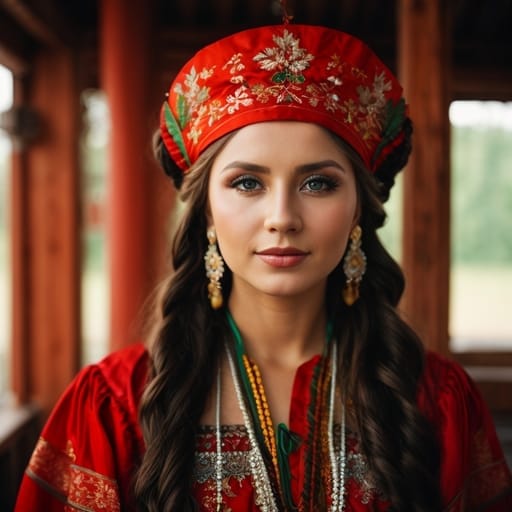
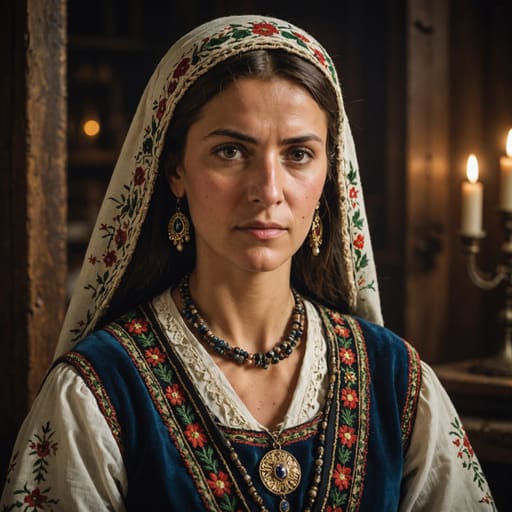
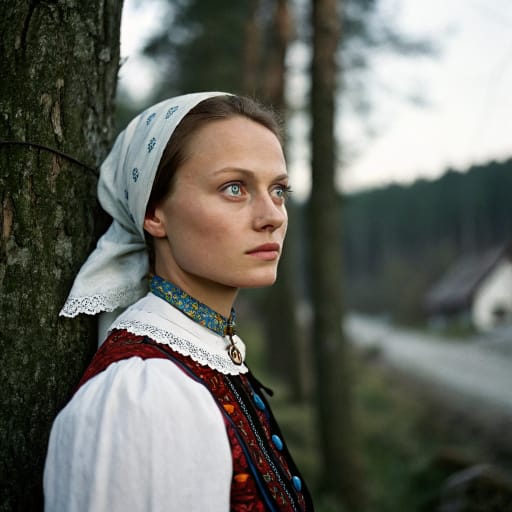
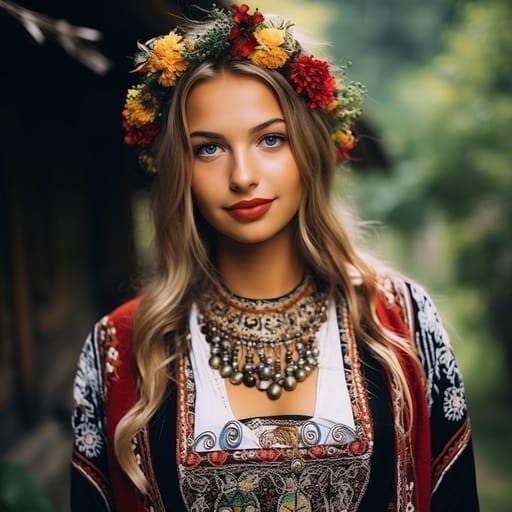
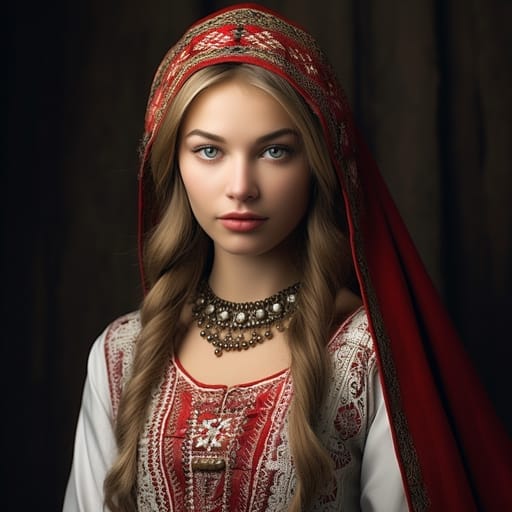
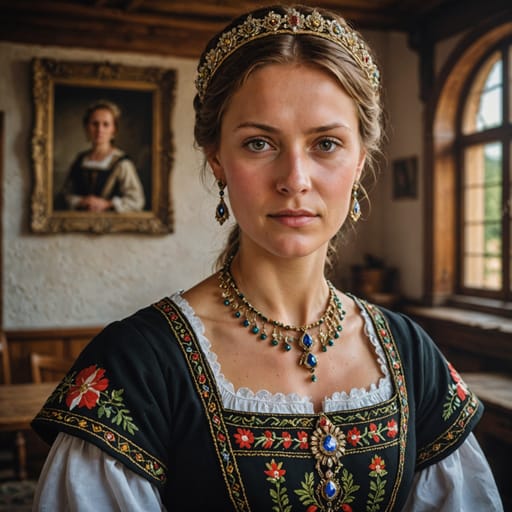
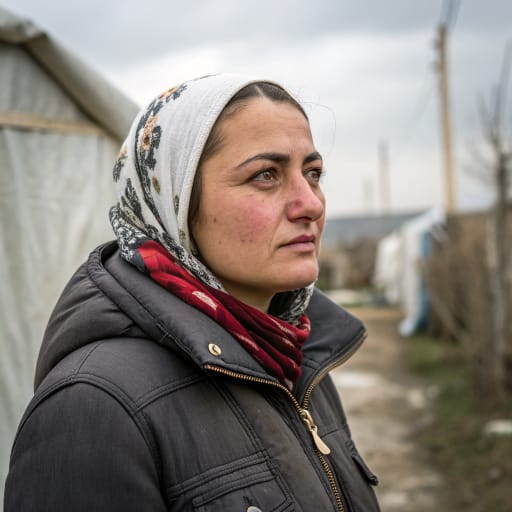
Typical Vidivarii Phenotypes
Reference for AI generation: hair, eyes, skin, facial structure, build
Vidivarii Body & Anatomy Reference
Anatomy by feature, Eastern European / Slavic phenotype
Vidivarii Boobs & Breasts
The typical Vidivarii bust is medium-to-large cup, full, moderate-to-high projection, in line with the wider Eastern European / Slavic pattern. Areolas usually fall in the 30-44mm range, with light-pink to medium-brown areolar pigmentation against the fair-to-light-brown skin tone. Compared with the smaller East Asian bust, Vidivarii breasts sit forward and are generally full and projecting, classic Eastern European curvy bust. A faithful AI render of Vidivarii tits keeps that shape and areola size.
Vidivarii Ass & Hips
Butt shape among Vidivarii women: medium-to-full, moderate-to-high projection, over medium iliac crests, full gluteal-femoral fat deposition. This follows Eastern European / Slavic ancestry and looks quite unlike the slim narrow-hip East Asian profile. An accurate Vidivarii ass in adult AI imagery keeps both the silhouette and the overall build (mesomorph, full hip-and-bust deposition) instead of a generic average.
Vidivarii Vagina & Pussy
Vulvar anatomy among Vidivarii women: light-pink to medium-brown labial pigmentation, varied labia minora. Pubic hair tends to be wavy medium texture, blond to dark-brown, in the usual inverted-triangle pattern. Both follow Eastern European / Slavic pigmentation, which is why Vidivarii pussy renders should not fall back on a pale, sparse Western template.
Vidivarii Dicks & Penis
The Vidivarii cock profile, from Eastern European / Slavic anthropometric data: regional mean ~13-14cm erect; moderate girth; light-pink to medium-brown shaft pigmentation. Pubic hair has a wavy medium texture and forms the usual inverted-V pattern. Whether Vidivarii men are circumcised follows religious and cultural practice rather than phenotype.
Vidivarii Body, Curves & Build
Build and curves among Vidivarii women follow the Eastern European / Slavic pattern: mesomorph, full hip-and-bust deposition, mean adult female BMI 23-26. Proportions matter as much as skin tone, so Vidivarii figures should keep their regional height and limb ratios.
Vidivarii Skin Tone & Hair Texture
The Vidivarii skin range is fair to light (Fitzpatrick II-III), and hair tends to be straight-to-wavy 1A-2B, light-blond to dark-brown. That combination marks the Eastern European / Slavic phenotype, and skin tone is the trait AI generators most often get wrong for Vidivarii women.
Explore phenotype categories
Structured taxonomy with peer-reviewed scales · 22 anatomical categories
Erotic Poses & Sex Positions
From the pose catalog: 219 named positions with reference skeletons
Frequently asked questions about Vidivarii people
Where is the Vidivarii homeland?
The Vidivarii homeland is Vistula delta and the Elbląg Upland on the southern Baltic coast, in present-day northern Poland. in Eastern Europe.
What language do Vidivarii people speak?
Vidivarii people primarily speak Unrecorded; probably a mix of East Germanic dialects (Indo-European, Germanic) and West Baltic dialects (Indo-European, Baltic). The name itself is Germanic in form..
What religion do Vidivarii people practice?
The predominant religion among Vidivarii people is Pre-Christian polytheism, presumably blending Germanic and Baltic cults; nothing recorded directly. Cremation and horse burial point to West Baltic rite..






Make your own Vidivarii images
Five a day, free, no credits to buy. The studio starts from this group's phenotype data, so you can set body type, pose and style and keep the traits accurate.
Start with Vidivarii