No portrait yet
Rutulians Erotic
Upper Samur River valley in southern Dagestan, Russia (Rutulsky and Akhtynsky districts), with a few villages near Shaki in northern Azerbaijan
Rutul (Northeast Caucasian, Lezgic branch); Azeri and Russian widely spoken as second languages
Sunni Islam, Shafi'i school, with veneration of local pir shrines
Lezgic peoples of the Samur basin, closest to the Tsakhur; village and dialect groups: Mukhad (Rutul), Ikhrek, Shinaz, Mukhrek, Borch-Khnov
About Rutulians People
Ask a Rutul where they are from and the answer is a village before it is a people. The name outsiders use comes from Rutul, the largest settlement in the upper Samur valley, whose residents call themselves Mykhabyr, the people of Mykh. Ikhrek, Shinaz, Luchek, Borch and Khnov each had their own name for themselves and their own way of speaking, and the sense of one nationality that spans them is largely a twentieth-century construction. What ties the villages together is the valley itself: a high, steep stretch of southern Dagestan on the northern face of the Greater Caucasus, with a handful of daughter villages across the ridge in northern Azerbaijan around Shaki. The 2021 Russian census counted just over 34,000 Rutuls, a figure that has held roughly steady while many have moved down to Makhachkala, Derbent and the lowland resettlement villages.
Rutul belongs to the Lezgic branch of the Northeast Caucasian family, closest to Tsakhur, spoken one valley over. It keeps four grammatical noun classes that the bigger neighboring language, Lezgian, gave up long ago, and its five dialects diverge enough that Borch-Khnov speakers and Rutul-village speakers sometimes reach for a third language. That third language has usually been Azeri, the old lingua franca of southern Dagestan, with Russian layered on top since the Soviet era. Rutul had no alphabet until 1990, when a Cyrillic script was adopted and a newspaper followed. For generations before that, its poets and ashug singers composed in Azeri as readily as in their own tongue. Rutuls are Sunni Muslims of the Shafi'i school, and Islam took hold early here, with Arabic inscriptions in Rutul village dating to the twelfth century, among the oldest in the mountains. Alongside the mosque sits the pir, the shrine of a local holy figure, visited for healing and vows, and a spring festival with bonfires that is older than the mosque. Village life was governed for centuries by adat, customary law hammered out by elders at the godekan, the men's gathering place on the square, and the villages formed a free union that fought Russian columns at the end of the 1830s before being folded into the Samur district. The economy remains what it was: sheep and cattle driven between high summer pasture and the lowlands in autumn, terraced fields, orchards where the valley allows them. Women knit the patterned wool socks and weave the flat carpets that every southern Dagestani house still keeps, and Rutul stonemasons left carved stones with inscriptions and animal figures set into walls and grave markers that scholars are still cataloging.
Related ethnic groups
Groups that share Rutulians's homeland, region, language, or religious tradition. These are likely candidates for comparative phenotype reference.
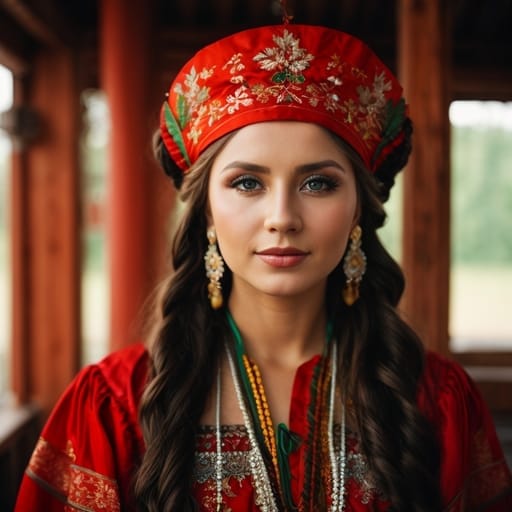
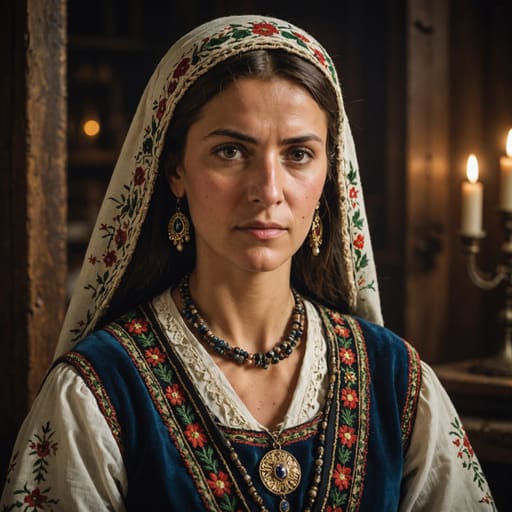
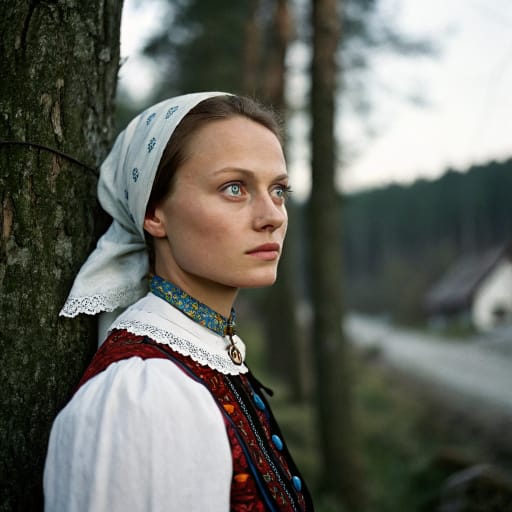
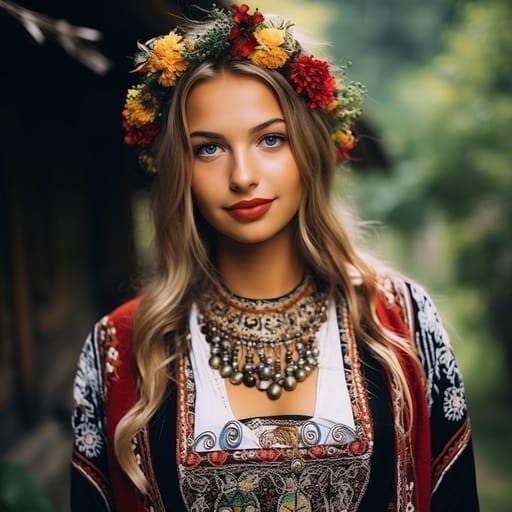
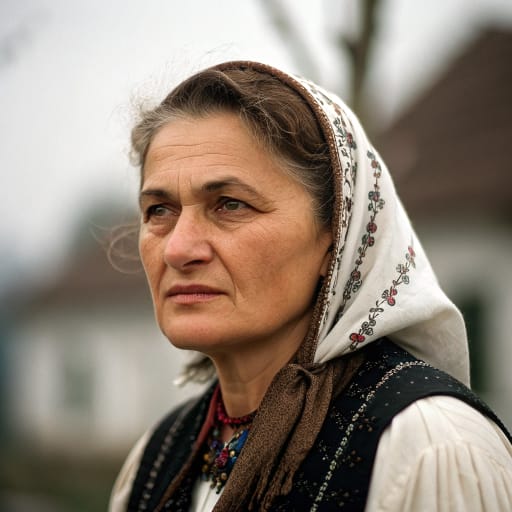
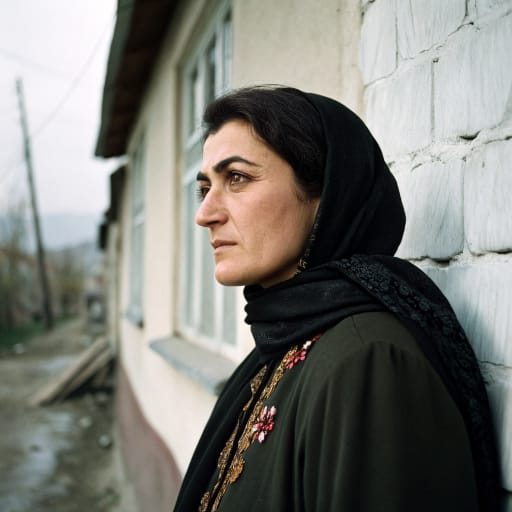
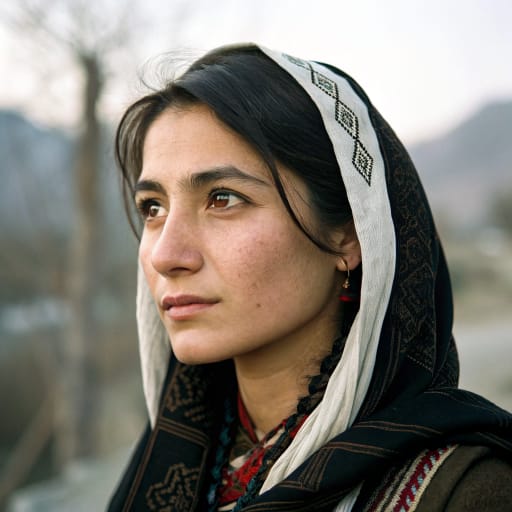
Typical Rutulians Phenotypes
Reference for AI generation: hair, eyes, skin, facial structure, build
Rutulians Body & Anatomy Reference
Anatomy by feature, Eastern European / Slavic phenotype
Rutulians Boobs & Breasts
Bust reference for Rutulians women: medium-to-large cup, full, moderate-to-high projection, which is typical of Eastern European / Slavic ancestry. Areolas measure about 30-44mm across, with light-pink to medium-brown pigmentation. Body type (mesomorph, full hip-and-bust deposition) shapes the bust as well, so Rutulians tits are usually full and projecting, classic Eastern European curvy bust. In AI imagery, keep the forward-set shape rather than drifting toward the smaller East Asian bust.
Rutulians Ass & Hips
The Rutulians ass is typically medium-to-full, moderate-to-high projection, which sets it apart from the slim narrow-hip East Asian profile. Underneath, the pelvis shows medium iliac crests, full gluteal-femoral fat deposition, part of the Eastern European / Slavic skeletal pattern. For Rutulians butt pics and AI renders, match that silhouette and the overall build (mesomorph, full hip-and-bust deposition).
Rutulians Vagina & Pussy
Rutulians pussy and vulvar anatomy presents light-pink to medium-brown labial pigmentation, varied labia minora, consistent with the Eastern European / Slavic phenotype's pigmentation pattern. Rutulians pubic hair is typically wavy medium texture, blond to dark-brown, in the inverted-triangle pattern. For anatomically accurate Rutulians pussy renders the labial coloration should match the surrounding fair to light skin tone with a continuous gradient, and the hair should keep its wavy medium texture.
Rutulians Dicks & Penis
Rutulians dicks follow the Eastern European / Slavic reference data: regional mean ~13-14cm erect; moderate girth; light-pink to medium-brown shaft pigmentation. Shaft color should track the fair to light skin tone with a smooth change toward the glans, and Rutulians pubic hair keeps its wavy medium texture.
Rutulians Body, Curves & Build
Rutulians body type and overall build presents as mesomorph, full hip-and-bust deposition, with mean adult female BMI 23-26: the characteristic Eastern European / Slavic habitus. Rutulians curves and proportions should keep the regional skeletal frame (height, shoulder-to-hip ratio, limb proportions) rather than a generic mesomorph default.
Rutulians Skin Tone & Hair Texture
Rutulians skin sits in the fair to light (Fitzpatrick II-III) band. Hair is typically straight-to-wavy 1A-2B, light-blond to dark-brown, in keeping with the Eastern European / Slavic phenotype. In nude renders the skin should stay one even tone from face to body, and body, pubic and head hair should match.
Explore phenotype categories
Structured taxonomy with peer-reviewed scales · 22 anatomical categories
Erotic Poses & Sex Positions
From the pose catalog: 219 named positions with reference skeletons
Frequently asked questions about Rutulians people
Where is the Rutulians homeland?
The Rutulians homeland is Upper Samur River valley in southern Dagestan, Russia (Rutulsky and Akhtynsky districts), with a few villages near Shaki in northern Azerbaijan in Eastern Europe.
What language do Rutulians people speak?
Rutulians people primarily speak Rutul (Northeast Caucasian, Lezgic branch); Azeri and Russian widely spoken as second languages.
What religion do Rutulians people practice?
The predominant religion among Rutulians people is Sunni Islam, Shafi'i school, with veneration of local pir shrines.






Make your own Rutulians images
Five a day, free, no credits to buy. The studio starts from this group's phenotype data, so you can set body type, pose and style and keep the traits accurate.
Start with Rutulians