No portrait yet
Olonets Karelians Erotic
The Olonets Isthmus between Lakes Ladoga and Onega in the southwest of the Republic of Karelia, Russia, chiefly the Olonets and Pryazha districts; historically also Salmi, with evacuee descendants in Finland
Livvi, or Olonets Karelian (Finnic, Uralic), treated either as a Karelian dialect or a separate language; Russian is now dominant
Russian Orthodox Christianity, with older Finnic folk beliefs in household and nature spirits
One of the main Karelian branches, alongside Karelians proper and Ludic Karelians; part of the wider Finnic family with Finns and Veps
About Olonets Karelians People
Ask an Olonets Karelian what they are and the usual answer is simply Karelian. The difference shows up in how they speak. The Livvi speech of the Olonets Isthmus, the flat, wet country of fields and forest between Lake Ladoga and Lake Onega, is far enough from the Karelian spoken farther north that linguists still argue over whether it is a dialect or a separate language. Its speakers sit in the middle of a chain of Finnic peoples. Karelians proper live to the north, Ludic Karelians to the east toward Onega and the Veps to the southeast, and Russian villages have stood among all of them for centuries. Livvi shows that position. It shares features with Veps, it has taken in a large stock of Russian loanwords, and it remains close kin to Finnish.
This is Orthodox country, and has been since the region answered to Novgorod. Faith here has always worked at the scale of the village: small wooden chapels rather than grand churches, each tied to a saint whose feast day brought relatives home for services, food and visiting. Older habits run underneath the church calendar, including respect for the spirits of house, forest and water, and a strong tradition of sung laments at funerals and weddings, where a bride formally mourned leaving her family. The rye pasties Russians call kalitki come from the same household world and have traveled far beyond it.
The twentieth century pulled the region between two states. In 1919 a Finnish volunteer force marched into Olonets hoping to join it to Finland and was pushed back within months. Finnish troops returned in 1941 and held the area until 1944. Across the old border, the Orthodox parish of Salmi on Ladoga's northeast shore spoke a form of Livvi. When that land passed to the Soviet Union, its people were evacuated into Finland, where their descendants live today. In Soviet Karelia, schooling swung between Finnish, a short-lived Karelian alphabet and Russian, and the home language gradually lost ground.
Since the end of the Soviet period, Livvi has been written in a Latin alphabet with háček letters, and the newspaper Oma Mua has carried news in it. The Olonets district is still where Karelians make up the largest share of the population. Even so, Karelian has no official status in the republic that bears its name, and most young Olonets Karelians grow up speaking Russian first. What keeps the identity going is the tie to family villages on the isthmus.
Related ethnic groups
Groups that share Olonets Karelians's homeland, region, language, or religious tradition. These are likely candidates for comparative phenotype reference.
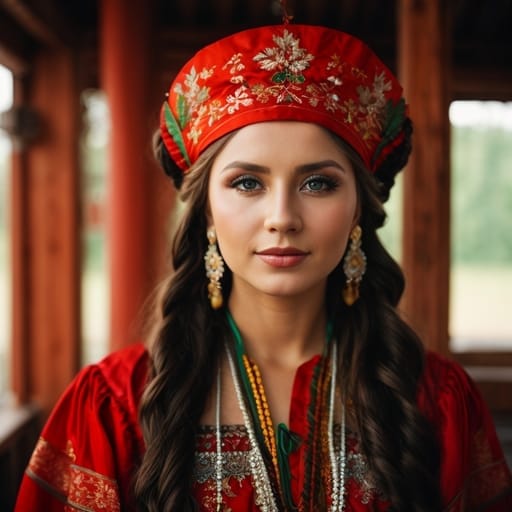
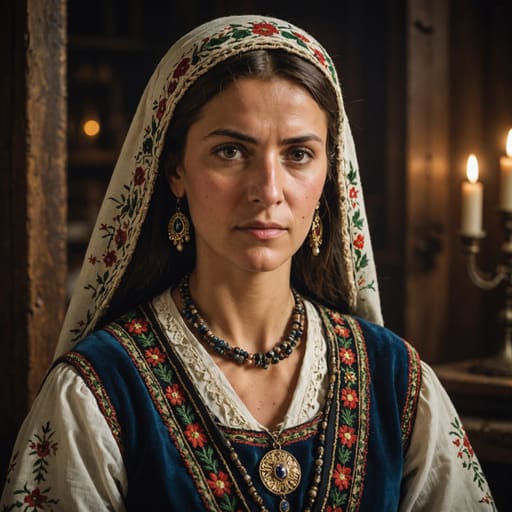
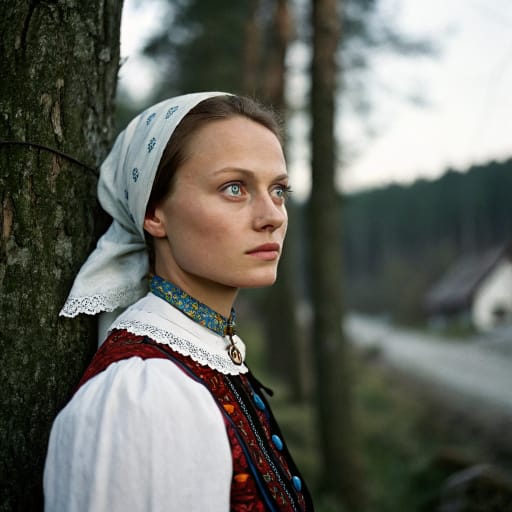
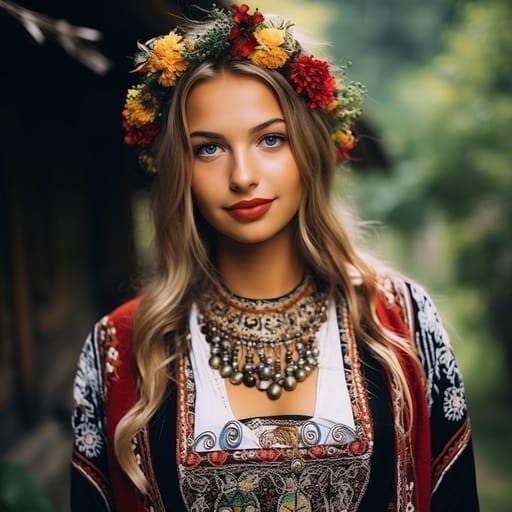
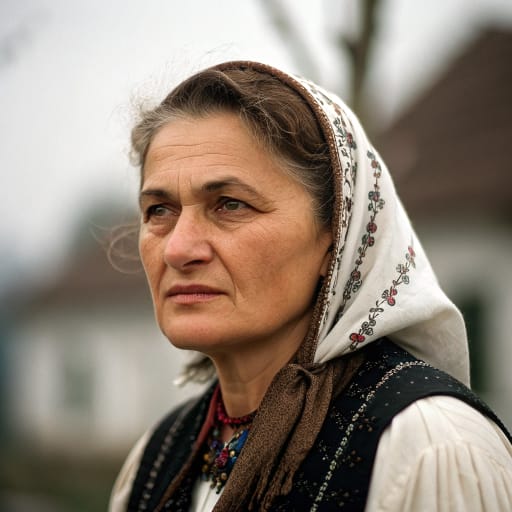
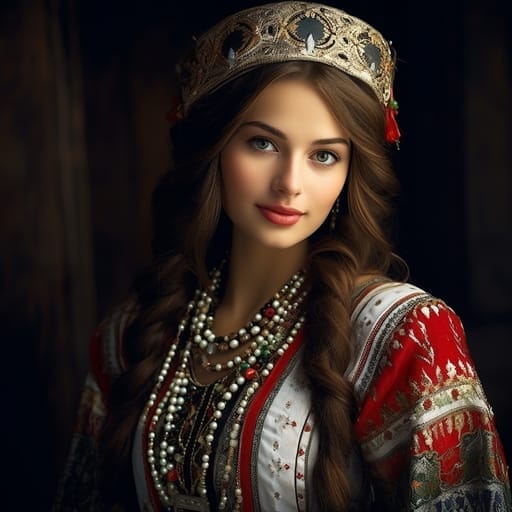
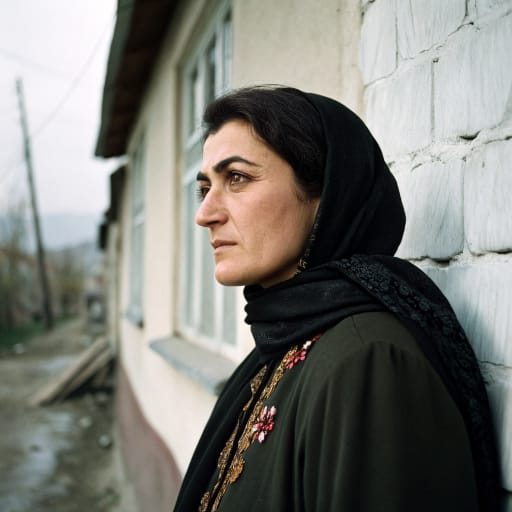
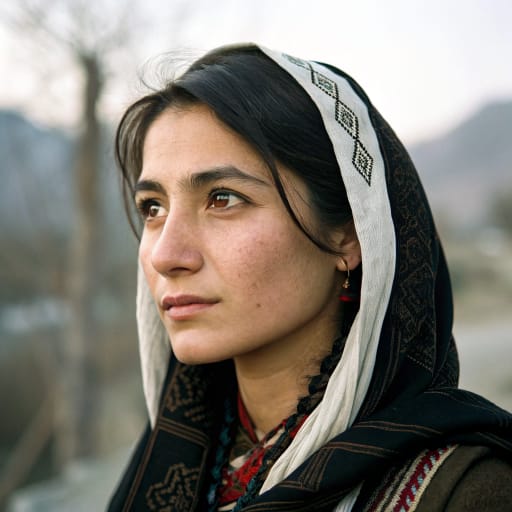
Typical Olonets Karelians Phenotypes
Reference for AI generation: hair, eyes, skin, facial structure, build
Olonets Karelians Body & Anatomy Reference
Per-feature anatomical profile for AI nude generation: Eastern European / Slavic phenotype
Olonets Karelians Boobs & Breasts
Olonets Karelians boobs follow the Eastern European / Slavic profile: medium-to-large cup, full, moderate-to-high projection. Areolar diameter is usually 30-44mm, and the coloring is light-pink to medium-brown areolar pigmentation against the fair-to-light-brown skin tone. Breast shape tracks body composition (mesomorph, full hip-and-bust deposition, mean adult female BMI 23-26), so Olonets Karelians breasts tend to be full and projecting, classic Eastern European curvy bust. Expect a forward-set shape, not the smaller East Asian bust.
Olonets Karelians Ass & Hips
Olonets Karelians ass and hip morphology presents as medium-to-full, moderate-to-high projection, distinctly different from the slim narrow-hip East Asian profile. The Olonets Karelians pelvic profile shows medium iliac crests, full gluteal-femoral fat deposition, anchored in the Eastern European / Slavic skeletal pattern. Olonets Karelians butt shots in adult AI imagery should render the medium-to-full, moderate-to-high projection silhouette with the overall build (mesomorph, full hip-and-bust deposition) and the fat distribution typical of the Eastern European / Slavic phenotype.
Olonets Karelians Vagina & Pussy
Olonets Karelians pussy anatomy typically shows light-pink to medium-brown labial pigmentation, varied labia minora. Pubic hair is usually wavy medium texture, blond to dark-brown. In AI-generated Olonets Karelians nudes, labial color should blend into the fair to light skin with a gradual transition, and the hair should keep its wavy medium texture.
Olonets Karelians Dicks & Penis
Penis reference for Olonets Karelians men: regional mean ~13-14cm erect, moderate girth. Coloring: light-pink to medium-brown shaft pigmentation. An accurate Olonets Karelians cock in AI imagery matches the surrounding fair to light skin rather than a generic porn default. Circumcision depends on religion and custom, not ancestry.
Olonets Karelians Body, Curves & Build
The Olonets Karelians figure is generally mesomorph, full hip-and-bust deposition, with mean adult female BMI 23-26, characteristic of Eastern European / Slavic ancestry. AI image tools tend to flatten regional body types into a few stock shapes; here the Olonets Karelians build is kept as its own reference.
Olonets Karelians Skin Tone & Hair Texture
Skin: fair to light (Fitzpatrick II-III). Hair: straight-to-wavy 1A-2B, light-blond to dark-brown. Both are typical of Eastern European / Slavic ancestry. The most common mistake in AI nudes of Olonets Karelians women is a body rendered lighter than the face.
Explore phenotype categories
Structured taxonomy with peer-reviewed scales · 22 anatomical categories
Erotic Poses & Sex Positions
From the pose catalog: 219 named positions with reference skeletons
Frequently asked questions about Olonets Karelians people
Where is the Olonets Karelians homeland?
The Olonets Karelians homeland is The Olonets Isthmus between Lakes Ladoga and Onega in the southwest of the Republic of Karelia, Russia, chiefly the Olonets and Pryazha districts; historically also Salmi, with evacuee descendants in Finland in Eastern Europe.
What language do Olonets Karelians people speak?
Olonets Karelians people primarily speak Livvi, or Olonets Karelian (Finnic, Uralic), treated either as a Karelian dialect or a separate language; Russian is now dominant.
What religion do Olonets Karelians people practice?
The predominant religion among Olonets Karelians people is Russian Orthodox Christianity, with older Finnic folk beliefs in household and nature spirits.






Make your own Olonets Karelians images
Five a day, free, no credits to buy. The studio starts from this group's phenotype data, so you can set body type, pose and style and keep the traits accurate.
Start with Olonets Karelians