No portrait yet
Mawali Erotic
Northern Syria: historically the steppe east of the Orontes between Hama and Aleppo, now largely settled in the Hama and Idlib countryside
Arabic, rural northern Syrian dialect with Bedouin features (Semitic, Afroasiatic)
Sunni Islam
Bedouin Arab tribal confederation of Syria; historically led by the Abu Rish ruling house
About Mawali People
The Mawali are a Bedouin Arab tribe of northern Syria. What sets them apart is a history of authority, not size. In the early Ottoman centuries their ruling house, the Abu Rish, held the post of amir al-arab, the officially recognized chief of the desert tribes. The title gave the Mawali a formal place in the imperial order. They were expected to keep the steppe quiet and the routes open, and in return their emirs received recognition and revenue from the state. Few Syrian tribes can claim that kind of standing, and it is still how the Mawali are mostly remembered.
Their name can confuse readers. Mawali is the Arabic plural for clients or affiliates. It is the same word historians use for the converts who were not Arabs and who attached themselves to Arab tribes in the first Islamic centuries. The tribe is something else: a Bedouin confederation with its own lineages and its own story. It should not be confused with that early social class.
Their country was the band where farmland thins out into open steppe, east of the Orontes valley and between Hama and Aleppo. For generations, life there meant herding, moving with the seasons between pasture and the edge of cultivation, and trading with the market towns along the desert fringe. That balance broke in the seventeenth and eighteenth centuries, when the large Anaza confederations pushed north out of Arabia and took the best grazing. The Mawali lost their dominance. Over the next two centuries most of their families settled in villages, growing grain and keeping flocks close to home.
Today the Mawali speak the Arabic of rural northern Syria, with Bedouin features that set it apart from the speech of the old cities. They are Sunni Muslims, and faith runs through daily life the way it does in most Syrian villages. Tribal custom still carries real weight alongside it. Kinship shapes marriage, how disputes between families get settled, and who speaks for whom. Settling down did not end tribal identity. The farming country between Hama and Idlib, where many Mawali live, was hit hard in the war that began in 2011, and displacement scattered families far beyond the old tribal range.
Related ethnic groups
Groups that share Mawali's homeland, region, language, or religious tradition. These are likely candidates for comparative phenotype reference.
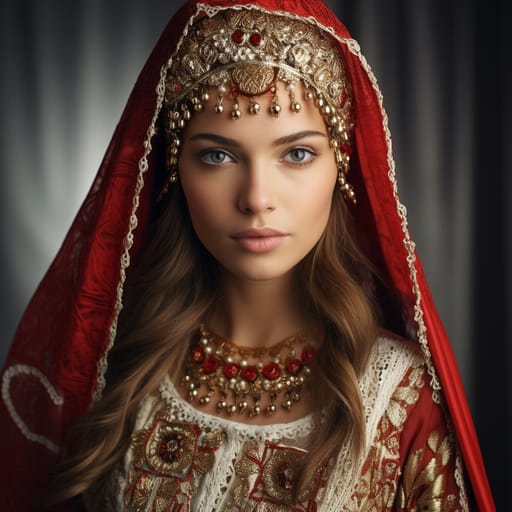
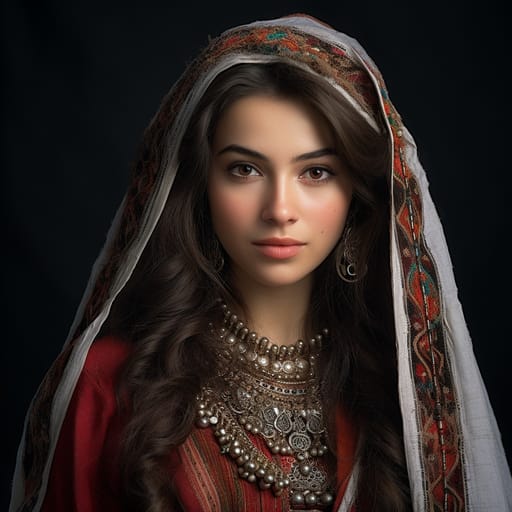
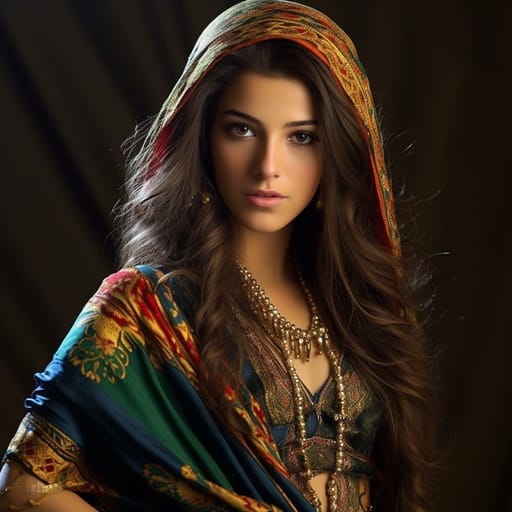
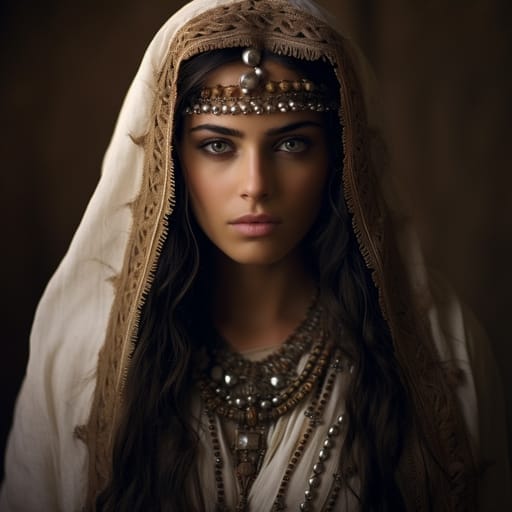
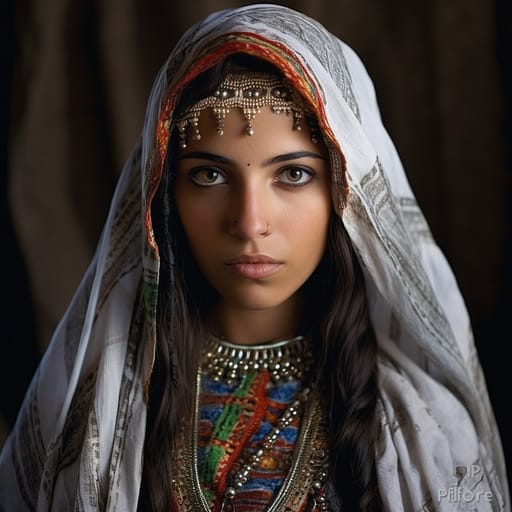
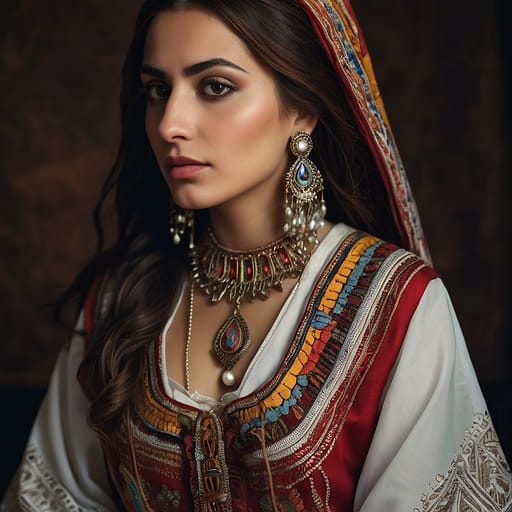
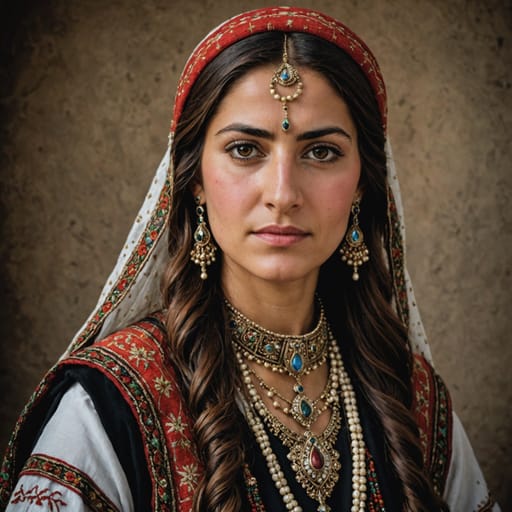
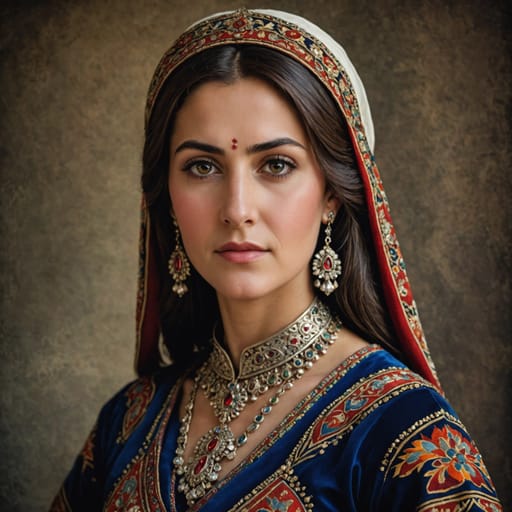
Typical Mawali Phenotypes
Reference for AI generation: hair, eyes, skin, facial structure, build
Mawali Body & Anatomy Reference
Per-feature anatomical profile for AI nude generation: Levantine / Mediterranean Middle Eastern phenotype
Mawali Boobs & Breasts
Bust reference for Mawali women: medium-to-large cup, full, moderate-to-high projection, which is typical of Levantine / Mediterranean Middle Eastern ancestry. Areolas measure about 32-46mm across, with medium-brown to dark-brown pigmentation. Body type (mesomorph with fuller hip-and-bust deposition) shapes the bust as well, so Mawali tits are usually full and soft, fuller projection than the North-African Berber norm. In AI imagery, keep the forward-set shape rather than drifting toward the smaller East Asian bust profile.
Mawali Ass & Hips
The Mawali ass is typically medium-to-full, moderate projection, broader hip profile, which sets it apart from the slim East Asian narrow-hip profile. Underneath, the pelvis shows medium-to-wide iliac crests, fuller gluteal-femoral deposition, part of the Levantine / Mediterranean Middle Eastern skeletal pattern. For Mawali butt pics and AI renders, match that silhouette and the overall build (mesomorph with fuller hip-and-bust deposition).
Mawali Vagina & Pussy
Mawali pussy and vulvar anatomy presents medium-brown to dark-brown labial pigmentation, fuller labia minora, consistent with the Levantine / Mediterranean Middle Eastern phenotype's pigmentation pattern. Mawali pubic hair is typically wavy-to-coiled medium-coarse dark texture, dense distribution, in the inverted-triangle pattern. For anatomically accurate Mawali pussy renders the labial coloration should match the surrounding olive to medium-brown skin tone with a continuous gradient, and the hair should keep its wavy-to-coiled medium-coarse dark texture.
Mawali Dicks & Penis
Mawali dicks follow the Levantine / Mediterranean Middle Eastern reference data: regional mean ~14cm erect; moderate-to-above-average girth; medium-brown shaft pigmentation. Shaft color should track the olive to medium-brown skin tone with a smooth change toward the glans, and Mawali pubic hair keeps its wavy-to-coiled medium-coarse dark texture.
Mawali Body, Curves & Build
Mawali body type and overall build presents as mesomorph with fuller hip-and-bust deposition, with mean adult female BMI 25-28: the characteristic Levantine / Mediterranean Middle Eastern habitus. Mawali curves and proportions should keep the regional skeletal frame (height, shoulder-to-hip ratio, limb proportions) rather than a generic mesomorph default.
Mawali Skin Tone & Hair Texture
Mawali skin sits in the olive to medium-brown (Fitzpatrick III-V) band. Hair is typically wavy-to-curly 2B-3B, predominantly dark-brown to black, in keeping with the Levantine / Mediterranean Middle Eastern phenotype. In nude renders the skin should stay one even tone from face to body, and body, pubic and head hair should match.
Explore phenotype categories
Structured taxonomy with peer-reviewed scales · 22 anatomical categories
Erotic Poses & Sex Positions
From the pose catalog: 219 named positions with reference skeletons
Frequently asked questions about Mawali people
Where is the Mawali homeland?
The Mawali homeland is Northern Syria: historically the steppe east of the Orontes between Hama and Aleppo, now largely settled in the Hama and Idlib countryside in Western Asia.
What language do Mawali people speak?
Mawali people primarily speak Arabic, rural northern Syrian dialect with Bedouin features (Semitic, Afroasiatic).
What religion do Mawali people practice?
The predominant religion among Mawali people is Sunni Islam.






Make your own Mawali images
Five a day, free, no credits to buy. The studio starts from this group's phenotype data, so you can set body type, pose and style and keep the traits accurate.
Start with Mawali