No portrait yet
Lutici Erotic
Between the Elbe and Oder rivers, in present-day Mecklenburg-Vorpommern and northern Brandenburg, Germany
Polabian (West Slavic, Lechitic branch of Indo-European); extinct
Slavic paganism, centered on the temple of Svarozhits at Rethra; resisted Christianity until the twelfth century
Confederation of the Kessini, Circipani, Tollensians and Redarians; successors of the Veleti (Wilzi); part of the Polabian Slavs (Wends)
About Lutici People
The Lutici were a federation of pagan West Slavic tribes who held the land between the Elbe and the Oder, in what is now northeastern Germany, from the late tenth century until the twelfth, when Saxon, Danish and Pomeranian conquest and German settlement swallowed them. No people bears the name today. Whatever descends from them is folded, unmarked, into the population of Mecklenburg and Vorpommern. What set them apart from their Slavic neighbors was not language or gods but politics. The Obotrites to the west and the Poles to the east had princes. The Lutici refused one. Four tribes, the Kessini, Circipani, Tollensians and Redarians, ran the federation through assemblies where decisions had to be unanimous, and Thietmar of Merseburg reported that a man who spoke against a settled verdict was beaten with rods, and one who resisted it afterward had his property burned or paid a fine scaled to his rank. Earlier writers call the same people Veleti or Wilzi, the confederation Charlemagne marched against in 789. The new name, probably from the Slavic word for fierce, appears with the uprising of 983, when they burned the mission bishoprics at Havelberg and Brandenburg and pushed the German frontier back to the Elbe for a century and a half.
Their center was Rethra, in Redarian country: a wooden temple inside a stronghold on a lake, its walls carved with gods, its chief idol Svarozhits, whom Adam of Bremen calls Radegast, and its priests casting lots and leading a sacred horse across crossed spears before any campaign. They were pagans who picked sides among Christians. From 1003 they marched with the German king Henry II against Christian Poland, their goddess carried on a standard, and when a Saxon threw a stone at her the king paid compensation. In 1056 they destroyed a Saxon army on the Elbe at Pritzlawa. A year later they turned on each other, Kessini and Circipani against Tollensians and Redarians, and the federation never acted as one again. Around 1068 a bishop of Halberstadt sacked Rethra and rode home on the temple horse. The site has never been found, and the bronze Prillwitz idols passed off as its relics in the eighteenth century were forgeries. The Wendish Crusade of 1147 and the campaigns of Henry the Lion and the Pomeranian dukes finished the job, and the tribal names drop out of the record. What remains is on the map: the Tollense river and lake, Kessin outside Rostock, the Peene country Latin writers called Circipania, and hundreds of village names ending in -ow and -in across a landscape that stayed Slavic-speaking for generations after it stopped being Lutician.
Related ethnic groups
Groups that share Lutici's homeland, region, language, or religious tradition. These are likely candidates for comparative phenotype reference.
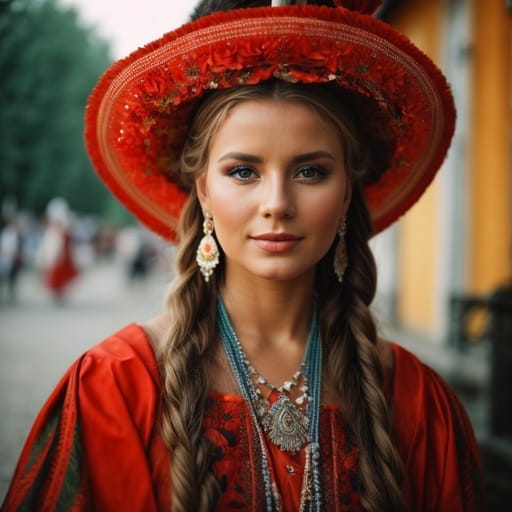
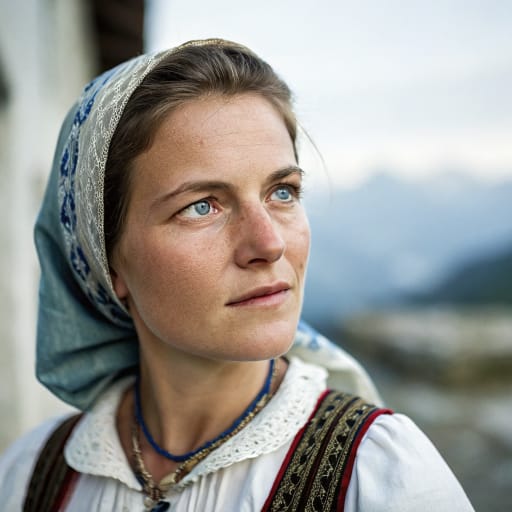
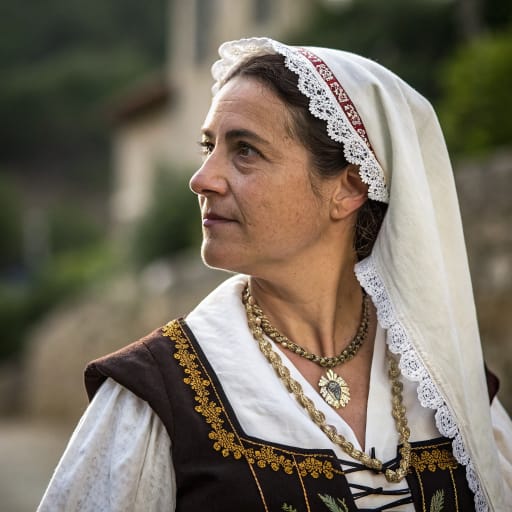
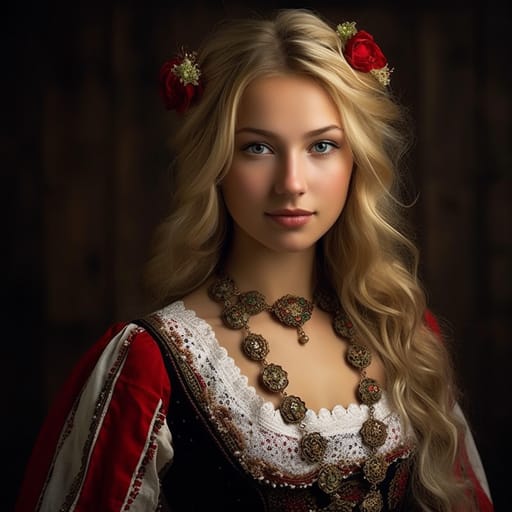
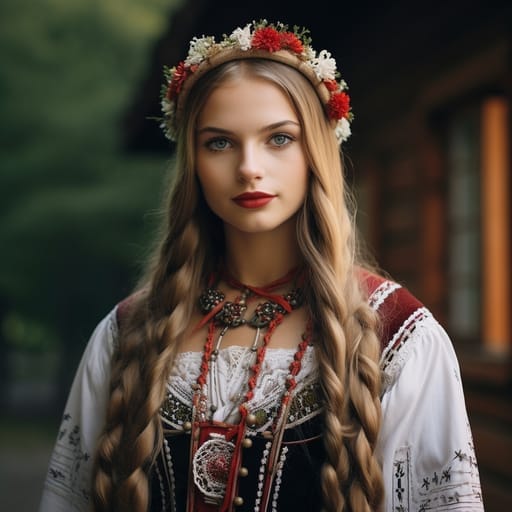
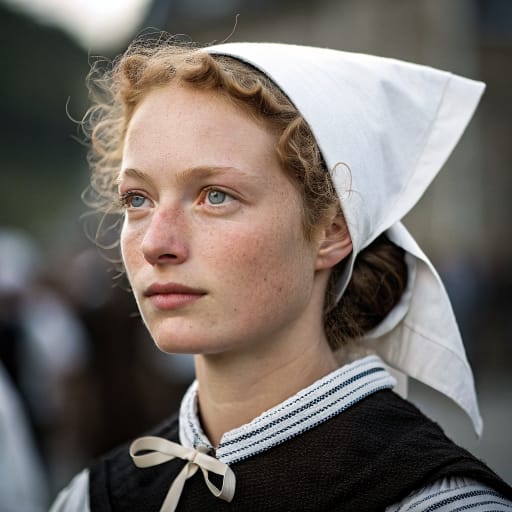
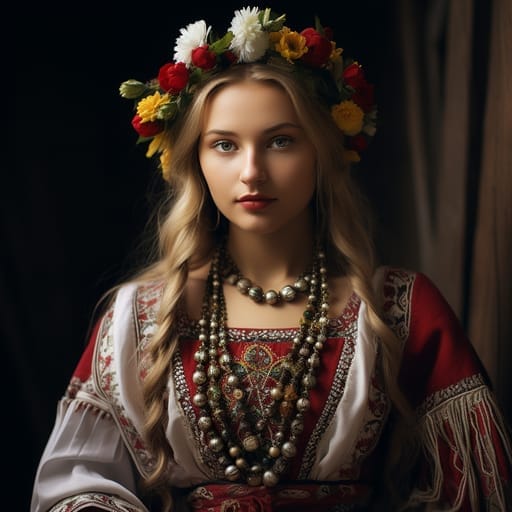
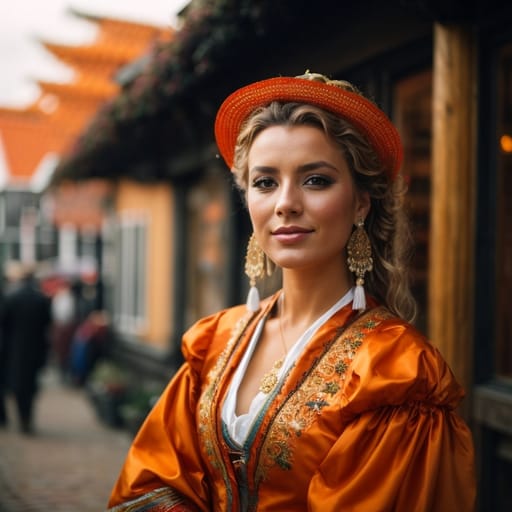
Typical Lutici Phenotypes
Reference for AI generation: hair, eyes, skin, facial structure, build
Lutici Body & Anatomy Reference
Anatomy by feature, Western European / Celtic-Germanic phenotype
Lutici Boobs & Breasts
Lutici boobs follow the Western European / Celtic-Germanic profile: medium-to-large cup, full, moderate-to-high projection. Areolar diameter is usually 30-46mm, and the coloring is light-pink to medium-pink areolar pigmentation against the fair-to-light skin tone. Breast shape tracks body composition (ectomorph-to-mesomorph, mean adult female BMI 24-27), so Lutici breasts tend to be full and projecting. Expect a forward-set shape, not the smaller East Asian bust.
Lutici Ass & Hips
Lutici ass and hip morphology presents as medium, moderate projection, distinctly different from the broader hip profile of Mediterranean phenotypes. The Lutici pelvic profile shows medium iliac crests, anchored in the Western European / Celtic-Germanic skeletal pattern. Lutici butt shots in adult AI imagery should render the medium, moderate projection silhouette with the overall build (ectomorph-to-mesomorph) and the fat distribution typical of the Western European / Celtic-Germanic phenotype.
Lutici Vagina & Pussy
Lutici pussy anatomy typically shows light-pink labial pigmentation, varied labia minora. Pubic hair is usually wavy fine-to-medium texture, blond to dark-brown. In AI-generated Lutici nudes, labial color should blend into the fair to light skin with a gradual transition, and the hair should keep its wavy fine-to-medium texture.
Lutici Dicks & Penis
Penis reference for Lutici men: regional mean ~13-14cm erect, moderate girth. Coloring: light-pink to light-brown shaft pigmentation. An accurate Lutici cock in AI imagery matches the surrounding fair to light skin rather than a generic porn default. Circumcision depends on religion and custom, not ancestry.
Lutici Body, Curves & Build
The Lutici figure is generally ectomorph-to-mesomorph, with mean adult female BMI 24-27, characteristic of Western European / Celtic-Germanic ancestry. AI image tools tend to flatten regional body types into a few stock shapes; here the Lutici build is kept as its own reference.
Lutici Skin Tone & Hair Texture
Skin: fair to light (Fitzpatrick I-III). Hair: straight-to-wavy 1A-2B, blond to dark-brown. Both are typical of Western European / Celtic-Germanic ancestry. The most common mistake in AI nudes of Lutici women is a body rendered lighter than the face.
Explore phenotype categories
Structured taxonomy with peer-reviewed scales · 22 anatomical categories
Erotic Poses & Sex Positions
From the pose catalog: 219 named positions with reference skeletons
Frequently asked questions about Lutici people
Where is the Lutici homeland?
The Lutici homeland is Between the Elbe and Oder rivers, in present-day Mecklenburg-Vorpommern and northern Brandenburg, Germany in Western Europe.
What language do Lutici people speak?
Lutici people primarily speak Polabian (West Slavic, Lechitic branch of Indo-European); extinct.
What religion do Lutici people practice?
The predominant religion among Lutici people is Slavic paganism, centered on the temple of Svarozhits at Rethra; resisted Christianity until the twelfth century.






Make your own Lutici images
Five a day, free, no credits to buy. The studio starts from this group's phenotype data, so you can set body type, pose and style and keep the traits accurate.
Start with Lutici