Help us get this right
Does this portrait look right for Fulni-ô?
Nobody has judged this one yet. You would be the first.
Fulni-ô Erotic
Águas Belas, in the semi-arid interior of Pernambuco, northeastern Brazil, on the Ipanema River; a small community also lives in Brasília.
Yatê, also written Yathê or Iatê (usually placed in Macro-Jê, sometimes treated as an isolate); Portuguese (Indo-European, Romance)
The closed annual Ouricuri ritual retreat, practiced alongside Roman Catholicism
Indigenous peoples of Northeast Brazil; known in colonial records as Carnijós; internally organized in clans. A Fulni-ô Tapuya community lives in Brasília.
About Fulni-ô People
The Fulni-ô are the one Indigenous people of Brazil's Northeast, outside Maranhão, who never stopped speaking their own language. Four centuries of missions, cattle ranching and forced assimilation erased native speech almost everywhere else between Bahia and Ceará. In Águas Belas, a town in the dry interior of Pernambuco, several thousand Fulni-ô still talk to each other in Yatê, and they treat that fact as the core of who they are.
Yatê is usually filed under the Macro-Jê stock, though the link is loose enough that some linguists call it an isolate. Either way it has no close relatives nearby, and every neighbor speaks Portuguese. Fulni-ô children grow up bilingual and the language is taught in the village school, but its real guarantee is the Ouricuri. Every year, for roughly three months from about September to November, the community leaves the main village and moves to a second settlement a few kilometers away, named for the ouricuri palm. What happens there is closed to outsiders, and members do not discuss it. The public knows only the outline: Yatê is the language of the retreat, alcohol is forbidden, strict rules of conduct apply, and the clans that organize Fulni-ô society come into play. Taking part is what makes a person Fulni-ô. Ancestry alone does not settle it.
None of this conflicts, in Fulni-ô eyes, with Catholicism. Most are baptized, and the feast of Our Lady of the Conception, patron of Águas Belas, belongs to them as much as to the town. The town itself is the awkward part of the story. It grew up inside the old mission land on the Ipanema River, where colonial records knew the people as Carnijós. In the 1870s the provincial government cut that land into family lots, and many were later leased to non-Indigenous farmers and townspeople. Today the urban center sits like an island inside the Indigenous territory, and rent and land disputes are a fixture of local politics.
In the 1920s the Fulni-ô became the first people in the Northeast to receive a post of the federal Indian Protection Service, a precedent other peoples of the region followed over the next decades, with the toré dance serving as public proof of Indigenous identity. Many families now earn a living weaving ouricuri straw into mats, bags and brooms, and traveling groups perform cafurnas, songs in Yatê, in cities across Brazil. A small Fulni-ô community also holds ground in Brasília, at the Santuário dos Pajés.
Related ethnic groups
Groups that share Fulni-ô's homeland, region, language, or religious tradition. These are likely candidates for comparative phenotype reference.
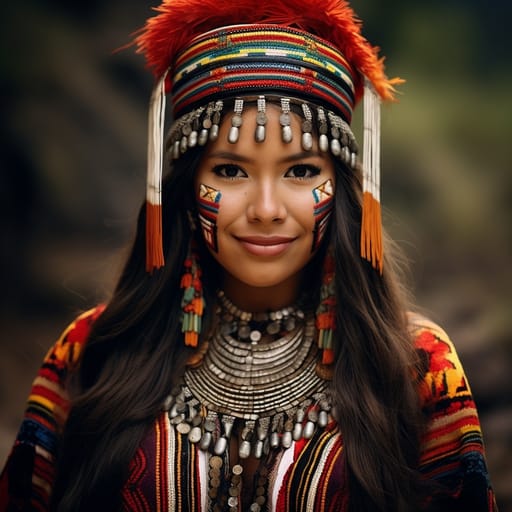
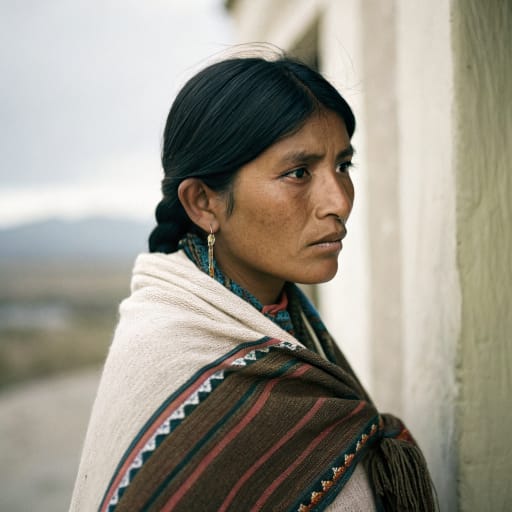
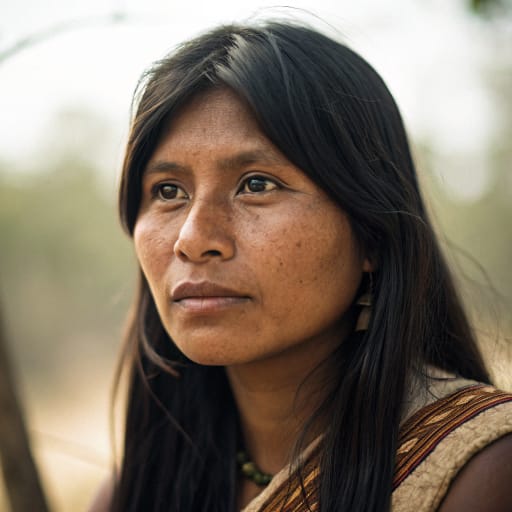
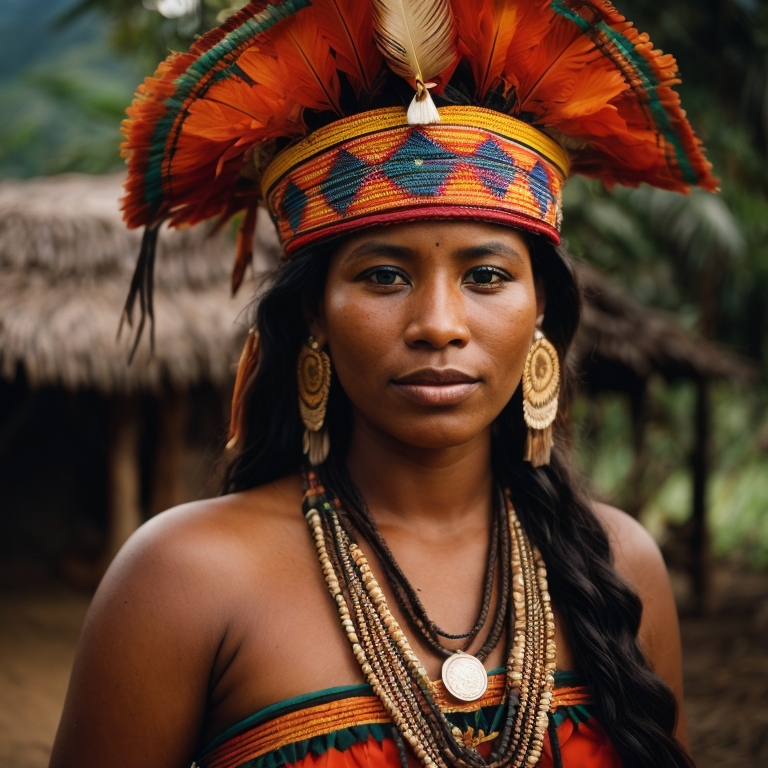
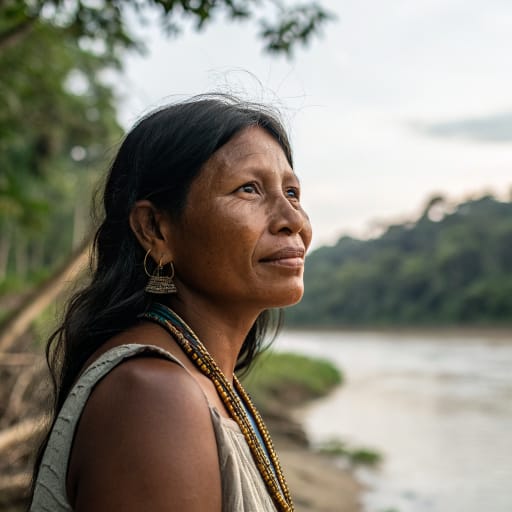
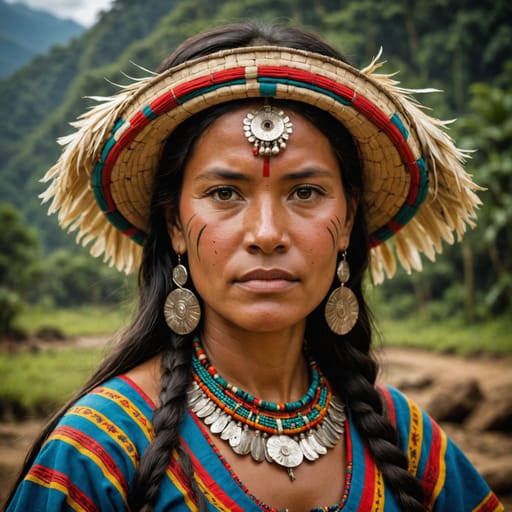
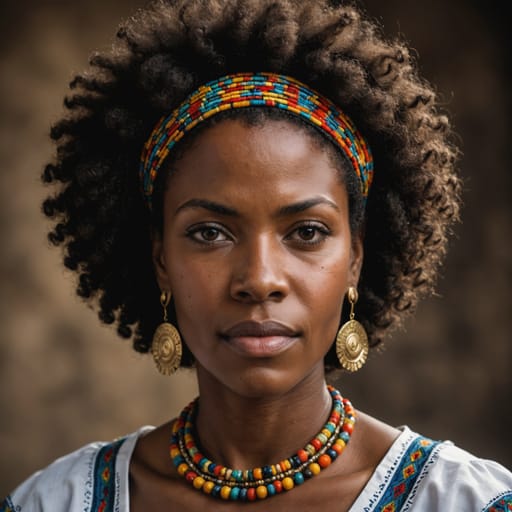
Typical Fulni-ô Phenotypes
Reference for AI generation: hair, eyes, skin, facial structure, build
Fulni-ô Body & Anatomy Reference
Per-feature anatomical profile for AI nude generation: South American Indigenous / European-Mestizo / Afro-Latino mix phenotype
Fulni-ô Boobs & Breasts
Bust reference for Fulni-ô women: medium-to-large cup, full, high projection, which is typical of South American Indigenous / European-Mestizo / Afro-Latino mix ancestry. Areolas measure about 32-46mm across, with medium-brown to dark-brown pigmentation. Body type (endomorph-to-mesomorph with high gluteal-femoral deposition) shapes the bust as well, so Fulni-ô tits are usually the classic Brazilian / Latina curvy bust profile in lowland populations; smaller and shorter-set in Andean Indigenous populations. In AI imagery, keep the forward-set shape rather than drifting toward the smaller bust profile of Andean Indigenous sub-populations.
Fulni-ô Ass & Hips
The Fulni-ô ass is typically full, high projection, the famous Brazilian / Latina bunda profile, which sets it apart from the slim narrow-hip East Asian profile. Underneath, the pelvis shows wide iliac crests, very full gluteal-femoral fat deposition (the hallmark Brazilian / Latina hip-to-waist ratio), part of the South American Indigenous / European-Mestizo / Afro-Latino mix skeletal pattern. For Fulni-ô butt pics and AI renders, match that silhouette and the overall build (endomorph-to-mesomorph with high gluteal-femoral deposition).
Fulni-ô Vagina & Pussy
Fulni-ô pussy and vulvar anatomy presents medium-brown to dark-brown labial pigmentation, fuller labia minora, consistent with the South American Indigenous / European-Mestizo / Afro-Latino mix phenotype's pigmentation pattern. Fulni-ô pubic hair is typically wavy-to-curly coarse dark texture, dense distribution, in the inverted-triangle pattern. For anatomically accurate Fulni-ô pussy renders the labial coloration should match the surrounding tan to deep-brown skin tone with a continuous gradient, and the hair should keep its wavy-to-curly coarse dark texture.
Fulni-ô Dicks & Penis
Fulni-ô dicks follow the South American Indigenous / European-Mestizo / Afro-Latino mix reference data: regional mean ~13cm erect; moderate-to-above-average girth; medium-brown shaft pigmentation. Shaft color should track the tan to deep-brown skin tone with a smooth change toward the glans, and Fulni-ô pubic hair keeps its wavy-to-curly coarse dark texture.
Fulni-ô Body, Curves & Build
Fulni-ô body type and overall build presents as endomorph-to-mesomorph with high gluteal-femoral deposition, with mean adult female BMI 25-28: the characteristic South American Indigenous / European-Mestizo / Afro-Latino mix habitus. Fulni-ô curves and proportions should keep the regional skeletal frame (height, shoulder-to-hip ratio, limb proportions) rather than a generic mesomorph default.
Fulni-ô Skin Tone & Hair Texture
Fulni-ô skin sits in the tan to deep-brown (Fitzpatrick III-VI) band. Hair is typically straight-to-curly 1A-3C, varies widely by ancestral composition, in keeping with the South American Indigenous / European-Mestizo / Afro-Latino mix phenotype. In nude renders the skin should stay one even tone from face to body, and body, pubic and head hair should match.
Explore phenotype categories
Structured taxonomy with peer-reviewed scales · 22 anatomical categories
Erotic Poses & Sex Positions
From the pose catalog: 219 named positions with reference skeletons
Frequently asked questions about Fulni-ô people
Where is the Fulni-ô homeland?
The Fulni-ô homeland is Águas Belas, in the semi-arid interior of Pernambuco, northeastern Brazil, on the Ipanema River; a small community also lives in Brasília. in South America.
What language do Fulni-ô people speak?
Fulni-ô people primarily speak Yatê, also written Yathê or Iatê (usually placed in Macro-Jê, sometimes treated as an isolate); Portuguese (Indo-European, Romance).
What religion do Fulni-ô people practice?
The predominant religion among Fulni-ô people is The closed annual Ouricuri ritual retreat, practiced alongside Roman Catholicism.






Make your own Fulni-ô images
Five a day, free, no credits to buy. The studio starts from this group's phenotype data, so you can set body type, pose and style and keep the traits accurate.
Start with Fulni-ô