Help us get this right
Does this portrait look right for Coracenses?
Nobody has judged this one yet. You would be the first.
Coracenses Erotic
Northern Sardinia (Italy), probably the interior south of Gallura, between the Tibulati and Corsi to the north and the Carenses and Cunusitani to the south. Exact territory unknown.
Presumably Paleo-Sardinian, also called Nuragic (unclassified, pre-Latin); replaced under Roman rule by Latin, which developed into Sardinian (Romance, Indo-European).
Not recorded for the group itself. Pre-Roman Sardinian cults centered on sacred wells, springs and ancestor tombs, later overlaid by Roman religion and then Christianity.
One of the tribes of Roman Sardinia named by Ptolemy, alongside the Tibulati, Corsi, Carenses and Cunusitani; part of the island's wider Nuragic-descended population.
About Coracenses People
The Coracenses were one of the peoples of ancient Sardinia, recorded in the second century AD by the Alexandrian geographer Ptolemy, who placed them in the north of the island. No known inscription names them and no later history follows them: like the island's other tribes, they were absorbed into the Latin-speaking population of Roman Sardinia, and whatever remains of them is carried by modern Sardinians.
Nearly everything known about them comes from a single line. In his Geography, Ptolemy runs through the island's peoples from north to south, and the Coracenses sit in the second tier: below the Tibulati and the Corsi, who held the coast facing Corsica, and above the Carenses and the Cunusitani. That puts them somewhere in the northern interior, south of Gallura, though nobody can draw their borders. Ptolemy also names a harbor on the west coast, Korakodes Limen, and the resemblance is tempting, but a shared sound is all that connects the two.
The world they belonged to is better documented. By Ptolemy's day Rome had held Sardinia for almost four hundred years, having seized it from Carthage in 238 BC, and valued it as a granary, a mine and a place to send exiles. The Romans drew a hard line between the settled, taxable lowlands and the highland interior they called Barbaria, whose herders raided the plains and were never entirely subdued. The tribal names Ptolemy preserves are probably the administrative afterlife of much older communities, descendants of the Bronze Age builders who left some seven thousand stone towers, the nuraghi, across the island, along with sacred wells, collective tombs and small bronze figures of warriors, archers and chiefs.
Their original speech would have been a form of Paleo-Sardinian, a language that survives only in place names and a handful of words and has no proven relatives. Latin replaced it thoroughly: Sardinian, the Romance language that grew from that Latin, is usually counted the most conservative of the family. Religion moved more slowly. The old cults of water and ancestors gave way to Roman gods and then to Christianity, yet in the 590s Pope Gregory the Great was still complaining that the island's highlanders worshiped wood and stone.
The Coracenses matter less for anything they are known to have done than for what their name shows: under Roman rule Sardinia was still a patchwork of local peoples, each with its own ground. Ancient DNA work points to substantial continuity between the island's Bronze Age inhabitants and the people of its interior today, so the line Ptolemy wrote down has living heirs.
Related ethnic groups
Groups that share Coracenses's homeland, region, language, or religious tradition. These are likely candidates for comparative phenotype reference.
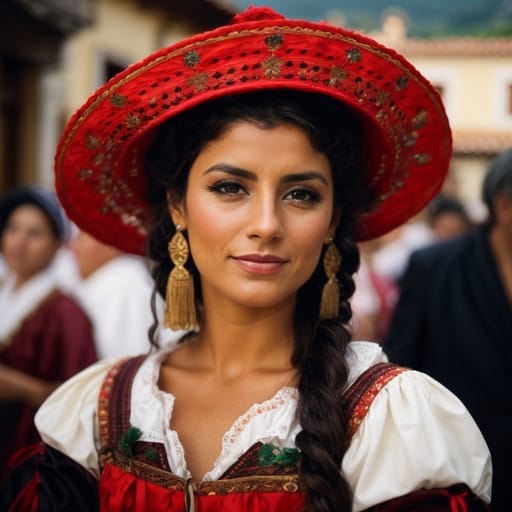
Basques
same region (Southern Europe)
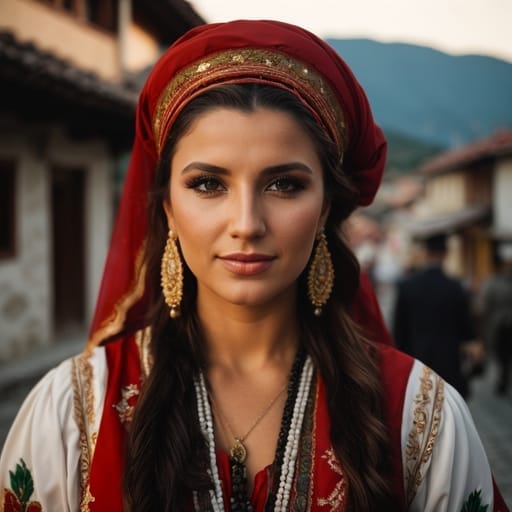
Bosniaks
same region (Southern Europe)
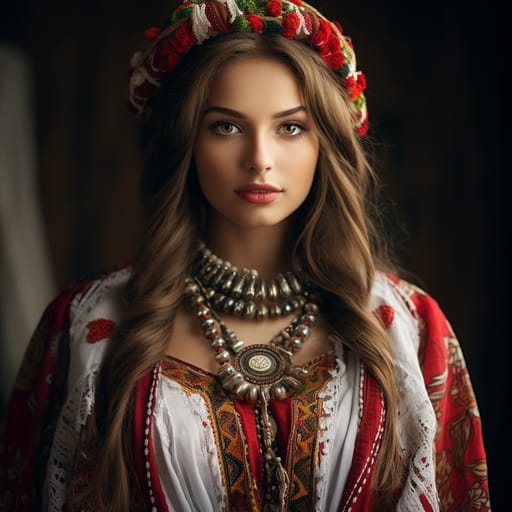
Moldovans
same region (Southern Europe)
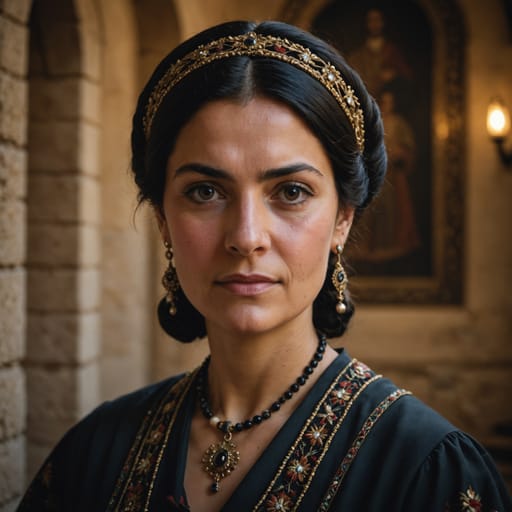
Maltese
same region (Southern Europe)
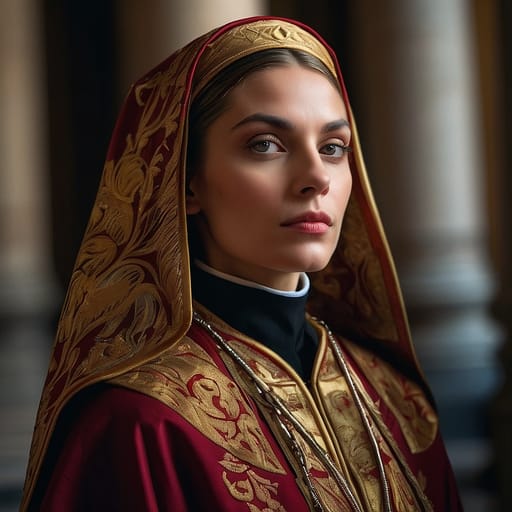
Vatican Clergy
same region (Southern Europe)
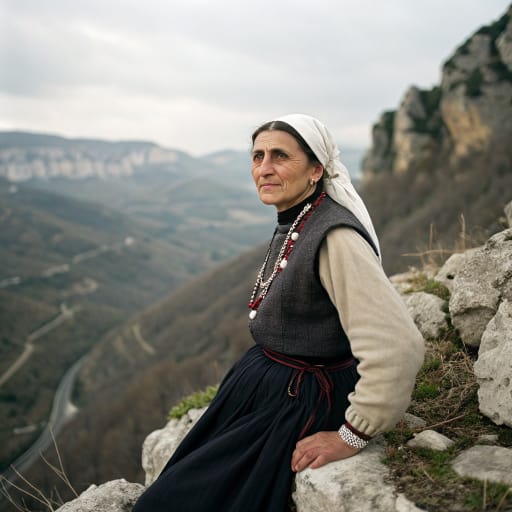
Hirpini
same region (Southern Europe)
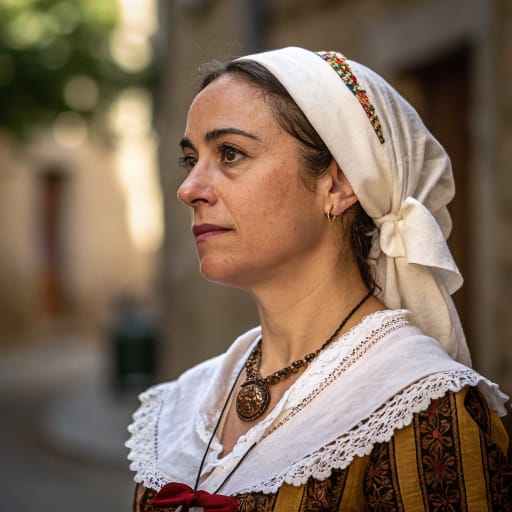
Catalans
same region (Southern Europe)
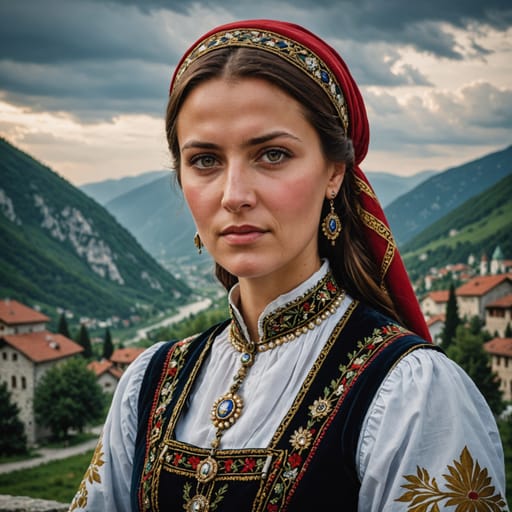
Bosnia Other
same region (Southern Europe)
Typical Coracenses Phenotypes
Reference for AI generation: hair, eyes, skin, facial structure, build
Coracenses Body & Anatomy Reference
Anatomy by feature, Southern European / Mediterranean phenotype
Coracenses Boobs & Breasts
Coracenses boobs follow the Southern European / Mediterranean profile: medium-to-large cup, full, moderate-to-high projection. Areolar diameter is usually 32-46mm, and the coloring is medium-brown to dark-brown areolar pigmentation against the olive-to-light-brown skin tone. Breast shape tracks body composition (mesomorph with full hip-and-bust deposition, mean adult female BMI 24-28), so Coracenses breasts tend to be full and projecting, generally the classic Mediterranean curvy bust profile. Expect a forward-set shape, not the lighter pigmentation of the Northern European bust.
Coracenses Ass & Hips
Coracenses ass and hip morphology presents as medium-to-full, moderate-to-high projection, broader hip profile, distinctly different from the slim Northern European narrow-hip pattern. The Coracenses pelvic profile shows medium-to-wide iliac crests, full gluteal-femoral fat distribution, anchored in the Southern European / Mediterranean skeletal pattern. Coracenses butt shots in adult AI imagery should render the medium-to-full, moderate-to-high projection, broader hip profile silhouette with the overall build (mesomorph with full hip-and-bust deposition) and the fat distribution typical of the Southern European / Mediterranean phenotype.
Coracenses Vagina & Pussy
Coracenses pussy anatomy typically shows medium-brown to dark-brown labial pigmentation, fuller labia minora. Pubic hair is usually wavy-to-curly medium-coarse dark texture, dense distribution. In AI-generated Coracenses nudes, labial color should blend into the olive to medium skin with a gradual transition, and the hair should keep its wavy-to-curly medium-coarse dark texture.
Coracenses Dicks & Penis
Penis reference for Coracenses men: regional mean ~13-14cm erect, moderate girth. Coloring: medium-brown shaft pigmentation. An accurate Coracenses cock in AI imagery matches the surrounding olive to medium skin rather than a generic porn default. Circumcision depends on religion and custom, not ancestry.
Coracenses Body, Curves & Build
The Coracenses figure is generally mesomorph with full hip-and-bust deposition, with mean adult female BMI 24-28, characteristic of Southern European / Mediterranean ancestry. AI image tools tend to flatten regional body types into a few stock shapes; here the Coracenses build is kept as its own reference.
Coracenses Skin Tone & Hair Texture
Skin: olive to medium (Fitzpatrick III-IV). Hair: wavy-to-curly 2B-3B, dark-brown to black. Both are typical of Southern European / Mediterranean ancestry. The most common mistake in AI nudes of Coracenses women is a body rendered lighter than the face.
Explore phenotype categories
Structured taxonomy with peer-reviewed scales · 22 anatomical categories
Erotic Poses & Sex Positions
From the pose catalog: 219 named positions with reference skeletons
Frequently asked questions about Coracenses people
Where is the Coracenses homeland?
The Coracenses homeland is Northern Sardinia (Italy), probably the interior south of Gallura, between the Tibulati and Corsi to the north and the Carenses and Cunusitani to the south. Exact territory unknown. in Southern Europe.
What language do Coracenses people speak?
Coracenses people primarily speak Presumably Paleo-Sardinian, also called Nuragic (unclassified, pre-Latin); replaced under Roman rule by Latin, which developed into Sardinian (Romance, Indo-European)..
What religion do Coracenses people practice?
The predominant religion among Coracenses people is Not recorded for the group itself. Pre-Roman Sardinian cults centered on sacred wells, springs and ancestor tombs, later overlaid by Roman religion and then Christianity..






Make your own Coracenses images
Five a day, free, no credits to buy. The studio starts from this group's phenotype data, so you can set body type, pose and style and keep the traits accurate.
Start with Coracenses