Help us get this right
Does this portrait look right for Atsahuaca?
Nobody has judged this one yet. You would be the first.
Atsahuaca Erotic
Andean foothill rainforest of southeastern Peru (Madre de Dios and northern Puno): the Carama, a tributary of the Tambopata, and the Chaspa, a tributary of the Inambari.
Atsahuaca, extinct, a dialect pair with Yamiaca (Panoan, Madre de Dios branch); known mainly from word lists collected in 1904.
Indigenous beliefs of the Amazonian foothills; almost nothing specific was recorded.
Southeastern (Madre de Dios) Panoans, alongside the closely related Yamiaca and the Arazaire; part of the wider Panoan family of Peru, Brazil and Bolivia.
About Atsahuaca People
The Atsahuaca were a small Panoan-speaking people of the forested Andean foothills of southeastern Peru, recorded around the turn of the twentieth century on tributaries of the Tambopata and Inambari rivers, who ceased to exist as a distinct group within a few decades of the rubber boom. Their language is extinct and no community uses the name today; whatever survivors there were presumably merged into neighboring peoples or the riverside population of Madre de Dios. What made them distinctive was partly position. The main block of Panoan speakers lies far to the north, along the Ucayali and the Juruá. The Atsahuaca, together with their close kin the Yamiaca and the related Arazaire, formed a southern outpost of that family, surrounded by people who spoke nothing like them: Harakmbut groups to the northwest, the Tacanan-speaking Ese Ejja downstream on the Tambopata, and Quechua highlanders on the slopes above. Linguists now generally treat Atsahuaca and Yamiaca as two dialects of a single language within a small Madre de Dios branch of Panoan.
Nearly everything known about them comes from one visit. The Swedish ethnographer Erland Nordenskiöld reached them in 1904, during an expedition along the Peruvian and Bolivian border, and found only about twenty people. He described a community that farmed forest clearings, hunted with bow and arrow, and fished the fast rivers that drop out of the Carabaya range, and he took down word lists that remain the main evidence the language existed at all. Every later classification rests on that thin material. The name itself appears to be a place name: atsa is the widespread Panoan word for manioc, the ending matches a Panoan word for river, and older sources give Atsahuaca as another name for the Carama, the Tambopata tributary where they lived. Of their beliefs and ceremonies almost nothing was written down.
The timing of that visit explains the silence afterward. By 1904 rubber traders had already pushed up both rivers, and across Madre de Dios the boom brought epidemics, forced labor and armed raids that destroyed much of the native population within a generation. A group of twenty had no margin for that. The Atsahuaca drop out of the record in the decades that follow. Their legacy is a small, uncomfortable one: a people with their own speech, their own river and their own quarrels with neighbors, known to the outside world through a single traveler's notebook. The country they lived in is now split between protected forest on the upper Tambopata and the gold mining frontier along the Inambari.
Related ethnic groups
Groups that share Atsahuaca's homeland, region, language, or religious tradition. These are likely candidates for comparative phenotype reference.
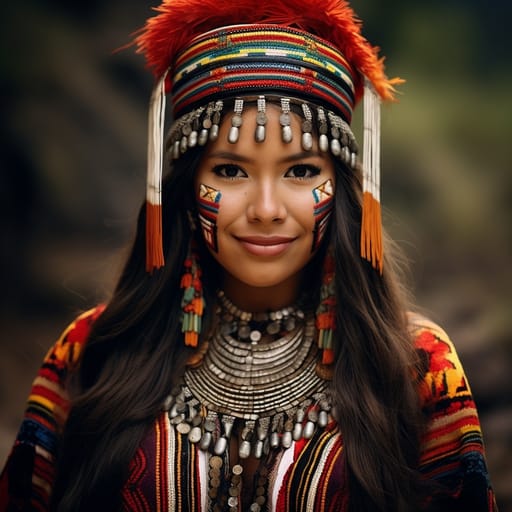
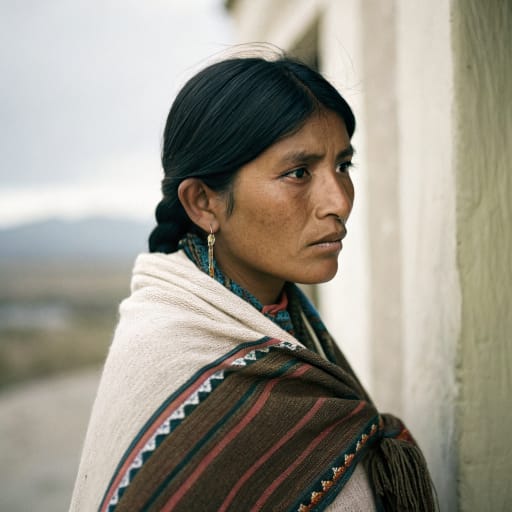
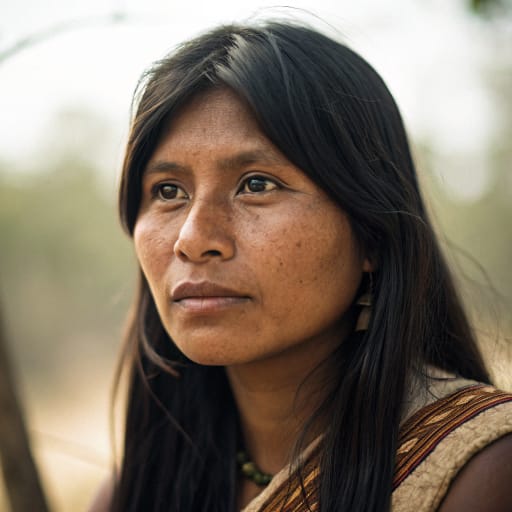
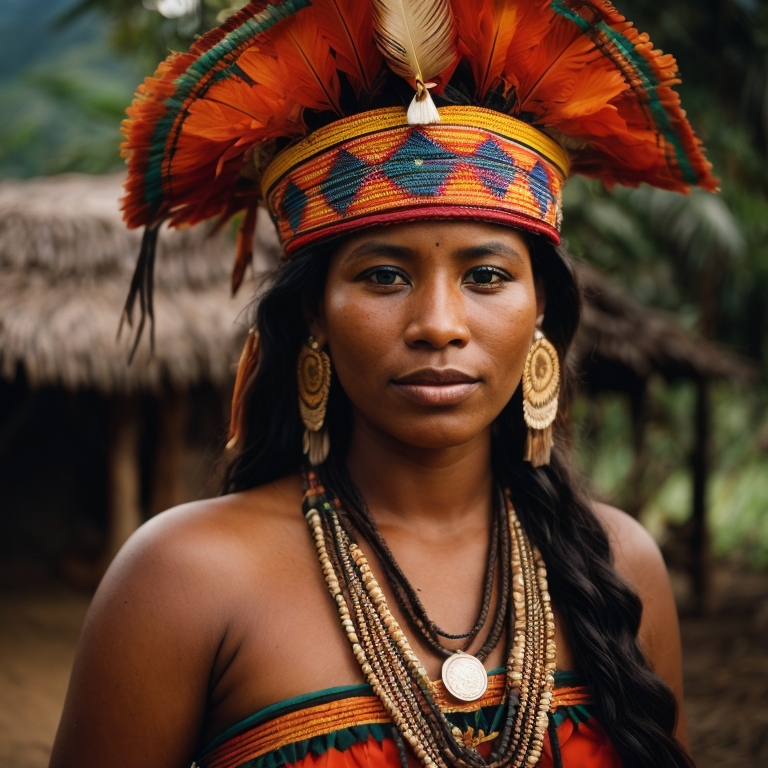
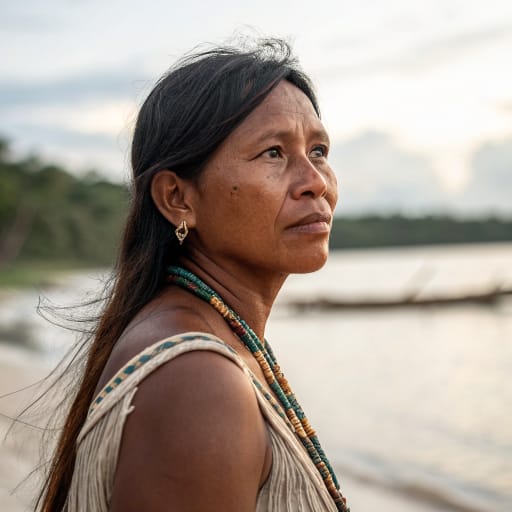
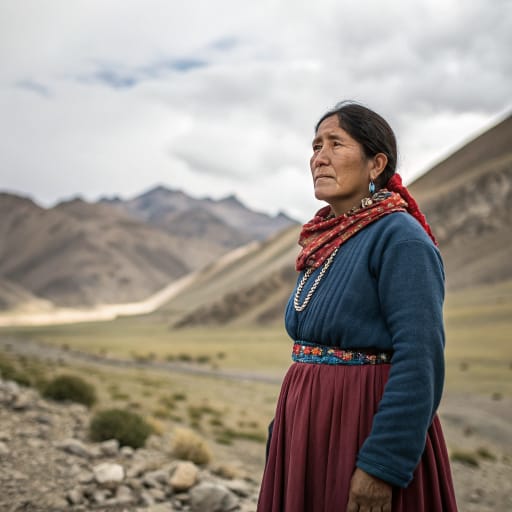
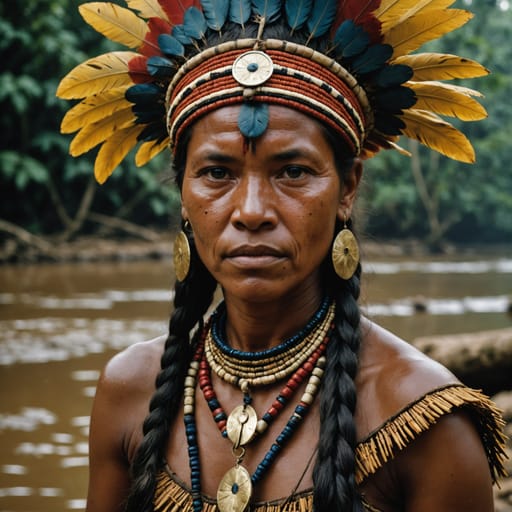
Typical Atsahuaca Phenotypes
Reference for AI generation: hair, eyes, skin, facial structure, build
Atsahuaca Body & Anatomy Reference
Per-feature anatomical profile for AI nude generation: South American Indigenous / European-Mestizo / Afro-Latino mix phenotype
Atsahuaca Boobs & Breasts
The typical Atsahuaca bust is medium-to-large cup, full, high projection, in line with the wider South American Indigenous / European-Mestizo / Afro-Latino mix pattern. Areolas usually fall in the 32-46mm range, with medium-brown to dark-brown areolar pigmentation against the tan-to-deep-brown skin tone. Compared with the smaller bust profile of Andean Indigenous sub-populations, Atsahuaca breasts sit forward and are generally the classic Brazilian / Latina curvy bust profile in lowland populations; smaller and shorter-set in Andean Indigenous populations. A faithful AI render of Atsahuaca tits keeps that shape and areola size.
Atsahuaca Ass & Hips
Butt shape among Atsahuaca women: full, high projection, the famous Brazilian / Latina bunda profile, over wide iliac crests, very full gluteal-femoral fat deposition (the hallmark Brazilian / Latina hip-to-waist ratio). This follows South American Indigenous / European-Mestizo / Afro-Latino mix ancestry and looks quite unlike the slim narrow-hip East Asian profile. An accurate Atsahuaca ass in adult AI imagery keeps both the silhouette and the overall build (endomorph-to-mesomorph with high gluteal-femoral deposition) instead of a generic average.
Atsahuaca Vagina & Pussy
Vulvar anatomy among Atsahuaca women: medium-brown to dark-brown labial pigmentation, fuller labia minora. Pubic hair tends to be wavy-to-curly coarse dark texture, dense distribution, in the usual inverted-triangle pattern. Both follow South American Indigenous / European-Mestizo / Afro-Latino mix pigmentation, which is why Atsahuaca pussy renders should not fall back on a pale, sparse Western template.
Atsahuaca Dicks & Penis
The Atsahuaca cock profile, from South American Indigenous / European-Mestizo / Afro-Latino mix anthropometric data: regional mean ~13cm erect; moderate-to-above-average girth; medium-brown shaft pigmentation. Pubic hair has a wavy-to-curly coarse dark texture and forms the usual inverted-V pattern. Whether Atsahuaca men are circumcised follows religious and cultural practice rather than phenotype.
Atsahuaca Body, Curves & Build
Build and curves among Atsahuaca women follow the South American Indigenous / European-Mestizo / Afro-Latino mix pattern: endomorph-to-mesomorph with high gluteal-femoral deposition, mean adult female BMI 25-28. Proportions matter as much as skin tone, so Atsahuaca figures should keep their regional height and limb ratios.
Atsahuaca Skin Tone & Hair Texture
The Atsahuaca skin range is tan to deep-brown (Fitzpatrick III-VI), and hair tends to be straight-to-curly 1A-3C, varies widely by ancestral composition. That combination marks the South American Indigenous / European-Mestizo / Afro-Latino mix phenotype, and skin tone is the trait AI generators most often get wrong for Atsahuaca women.
Explore phenotype categories
Structured taxonomy with peer-reviewed scales · 22 anatomical categories
Erotic Poses & Sex Positions
From the pose catalog: 219 named positions with reference skeletons
Frequently asked questions about Atsahuaca people
Where is the Atsahuaca homeland?
The Atsahuaca homeland is Andean foothill rainforest of southeastern Peru (Madre de Dios and northern Puno): the Carama, a tributary of the Tambopata, and the Chaspa, a tributary of the Inambari. in South America.
What language do Atsahuaca people speak?
Atsahuaca people primarily speak Atsahuaca, extinct, a dialect pair with Yamiaca (Panoan, Madre de Dios branch); known mainly from word lists collected in 1904..
What religion do Atsahuaca people practice?
The predominant religion among Atsahuaca people is Indigenous beliefs of the Amazonian foothills; almost nothing specific was recorded..






Make your own Atsahuaca images
Five a day, free, no credits to buy. The studio starts from this group's phenotype data, so you can set body type, pose and style and keep the traits accurate.
Start with Atsahuaca