Adult height across world populations: what 100 years of measured data tells us
May 10, 2026
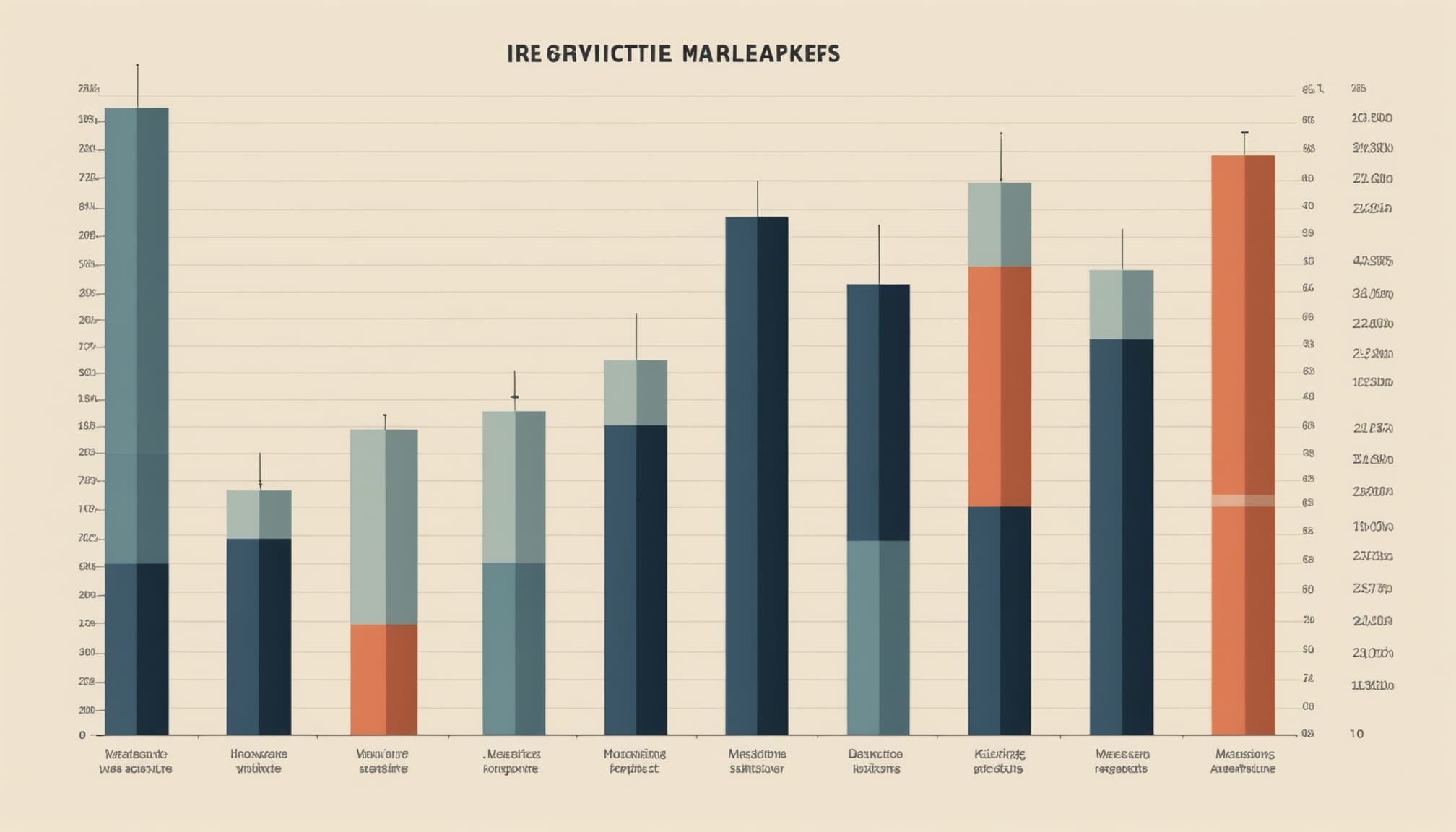
The question "are X people tall?" is asked about almost every ethnic group. The honest answer requires distinguishing measured mean stature (from anthropometric studies) from stereotype (which is unreliable). This article describes the largest height datasets available, how they're collected, what they reveal about variation across populations, and the major caveats.
The NCD-RisC dataset — the gold standard
The NCD Risk Factor Collaboration (NCD-RisC) maintains the most comprehensive measured-height dataset available. Their 2016 paper in eLife (Bentham et al., A century of trends in adult human height, eLife 5:e13410) pooled measured-height data from 1,472 population-based studies across 200 countries from 1896-2014, covering ~18.6 million participants. NCD-RisC is published openly; per-country mean stature time-series are available at ncdrisc.org.
The headline 2014 estimates for adult mean stature (men, then women, in cm):
| Country | Mean ♂ | Mean ♀ |
|---|---|---|
| Netherlands | 182.5 | 168.7 |
| Montenegro | 183.3 | 170.3 |
| Estonia | 181.0 | 167.8 |
| Bosnia | 182.6 | 167.1 |
| Iceland | 181.4 | 167.2 |
| Czech Republic | 180.1 | 167.3 |
| United States | 177.1 | 163.5 |
| Japan | 170.8 | 158.3 |
| China | 171.8 | 159.7 |
| Mexico | 169.0 | 156.9 |
| India | 164.9 | 152.6 |
| Indonesia | 163.0 | 152.8 |
| Yemen | 159.9 | 152.0 |
| Guatemala | 163.4 | 149.4 |
| Timor-Leste | 159.8 | 152.7 |
(All values from NCD-RisC 2016 ages 18-19 cohort, which proxies adult final stature.)
A few patterns are visible in this data:
- The Netherlands plus the former-Yugoslav cluster (Montenegro, Bosnia, Croatia, Serbia) and the Baltic states (Estonia, Latvia, Lithuania) sit at the global top for measured male stature
- Sub-Saharan African populations vary widely — Nilotic populations like the Dinka document means around 175-180cm in pre-conflict samples, while Pygmy populations like the Mbuti and Aka document means around 150-155cm
- The Andean and Mesoamerican Indigenous populations document among the lowest measured means globally — Guatemala mean female stature 149.4cm
- East Asian populations have shown the largest 20th-century increases, with Japanese and Korean men gaining ~14cm and ~15cm respectively from 1900 to 2014
What "tall populations" share — and what they don't
A common assumption is that tall populations are "genetically tall." The actual data tells a more complicated story. Three observations:
1. Heritability of stature is high (~80%) within populations, but population-mean differences are mostly nutritional in origin.
Yamamoto and Watanabe (2018, American Journal of Physical Anthropology 167:213-228) reviewed within-vs-between-population variance partitions: within-population variation in adult stature is ~80% genetic, ~20% environmental. But between-population variation in mean stature is dominated by environmental factors (childhood nutrition, infectious disease load, maternal nutrition during pregnancy). Korean and Japanese populations are the cleanest demonstration — same overall ancestry profile, but North Koreans (chronic undernutrition) average ~5cm shorter than South Koreans (NCD-RisC 2016).
2. The 20th-century secular trend has been massive.
Almost every population studied gained 5-15cm in mean adult stature from 1900 to 2000. This is not genetic — gene pools don't change in 100 years that fast. The drivers are: improved childhood nutrition, lower infectious disease load (especially diarrheal disease in early childhood), better maternal nutrition, and reduced manual labor in childhood. The secular trend has stalled or reversed in some high-income countries (Netherlands, Sweden, Japan, US) since approximately 1985-2000, suggesting these populations have approached their "nutritionally optimal" mean stature.
3. The Maasai are tall, but probably not the way the stereotype suggests.
Maasai men in well-nourished cohorts measure mean ~178cm — taller than the global average and notably tall for East Africa. But this is gracile stature: tall and slim, not large-framed. The Maasai height advantage in pre-modern conditions was partly nutritional (cattle-dependent diet rich in milk protein) and partly genetic (Nilotic source population). By contrast, the Dutch advantage (men ~183cm) is partly genetic (Northern European source) and substantially nutritional (Dutch dairy consumption, agricultural surplus, healthcare).
The phenotype atlas notes both genetic (source-population) and nutritional context in the Body Shape section for each ethnic group page.
Specific population averages with peer-reviewed sources
Where the NCD-RisC global dataset is supplemented by deeper ethnographic studies, more specific group-level data is available:
Dutch men (highest documented mean stature globally): 184.8cm (Statistics Netherlands 2017 measured cohort, ages 21-30). Stature peaked in the 2000-2010 cohort and has marginally declined since 2010.
Dinka men (Sudan, pre-conflict samples): 176-180cm in the limited published anthropometric studies (Hiernaux 1968, La Diversité humaine en Afrique subsaharienne; later sampling has been disrupted by long-running South Sudanese conflict, complicating data collection).
Mbuti and Aka Pygmy men: 150-155cm in sustained ethnographic sampling (Hewlett 1991, Intimate Fathers; Cavalli-Sforza et al. 1986). Pygmy short stature is partly genetic (selection on growth-hormone receptor variants per Perry et al. 2014, PNAS 111:E3596) and partly nutritional.
Maasai men (well-nourished cohorts): ~178cm in the limited published anthropometric data; gracile build.
Japanese men (modern): 171.5cm per the 2020 National Health and Nutrition Survey. Japanese men gained ~14cm from 1900 (mean ~157cm) to 2000 (mean ~171cm) — one of the largest secular trends documented globally.
Korean men (South Korea, modern): 174.9cm per Korea Centers for Disease Control 2017 measured data. South Korean secular trend was even steeper than Japan: ~15cm from 1900 to 2000.
Mexican men (modern): ~169cm per ENSANUT 2018 (Mexican National Health and Nutrition Survey). Mestizo populations sit at the lower end of Latin American means; Argentine and Uruguayan men (predominantly European-descended) average ~175cm.
Serbian men: 182.0cm per Banovic et al. 2017 measured cohort, American Journal of Human Biology 29:e22996. The Western Balkan cluster (Serbia, Montenegro, Bosnia, Croatia) is one of the tallest documented globally — possibly the tallest cohort outside of the Netherlands.
Self-reported vs measured
A critical caveat: most online "average height by country" lists circulate self-reported data from passport / military / driver's license records. Self-reported height systematically over-estimates by 1-3cm in adults (Spencer et al. 2002, Public Health Nutrition 5:561). NCD-RisC and other peer-reviewed sources use measured height — researchers physically measuring participants with a stadiometer.
When this article cites a population mean, it's measured unless explicitly noted. Be skeptical of any list claiming Dutch men average 187cm or American men average 180cm — those are self-report inflations.
The data limitations
Three caveats worth knowing:
1. Sampling bias — most measured-height datasets oversample urban, middle-class, military-age populations. Rural populations, very poor populations, and very wealthy populations are typically under-sampled. NCD-RisC weights by sub-population where possible, but the underlying study designs vary in quality.
2. Ethnic vs national — NCD-RisC reports by country, not ethnicity. Multi-ethnic countries hide substantial within-country variation. Mexican mean stature (169cm) doesn't tell you that Yucatec Maya men average closer to 158cm while Mexican-Spaniard-descended populations average closer to 175cm.
3. Conflict-period data is unreliable — populations experiencing chronic warfare or famine show suppressed adult stature reflecting childhood malnutrition. North Korean stature data (men ~165cm) reflects 1990s-2000s famine; pre-1990 cohorts averaged closer to 168-170cm and South Korean cohorts ~174cm. The genetic substrate is the same; the divergence is environmental.
How the phenotype atlas applies stature data
The atlas's Body Shape category includes mean stature where peer-reviewed measured data exists, with a confidence-range and citation per ethnic-group page. Where only self-report or unreliable data exists, the page documents this and gives a range rather than a point estimate.
Stature is one of the most variable phenotype dimensions both within and between populations. Use the atlas data as descriptive of population means, not as a deterministic claim about any specific individual.
References
- NCD Risk Factor Collaboration. A century of trends in adult human height. eLife 5:e13410, 2016.
- NCD Risk Factor Collaboration. Heterogeneous contributions of change in population distribution of body mass index to change in obesity and underweight. eLife 9:e58674, 2020.
- Yamamoto S, Watanabe T. Genetic and environmental contributions to height variation across populations: A meta-analytic review. American Journal of Physical Anthropology 167:213-228, 2018.
- Spencer EA, Appleby PN, Davey GK, Key TJ. Validity of self-reported height and weight in 4808 EPIC-Oxford participants. Public Health Nutrition 5(4):561-565, 2002.
- Perry GH, Foll M, Grenier JC, Patin E, Nédélec Y, et al. Adaptive, convergent origins of the pygmy phenotype in African rainforest hunter-gatherers. PNAS 111(35):E3596-E3603, 2014.
- Banovic V, Krpina I, Crnoja A, et al. Stature of an indigenous Serbian population: A pilot study. American Journal of Human Biology 29:e22996, 2017.
- Cavalli-Sforza LL, Hewlett B, et al. African Pygmies. Academic Press, 1986.
- Hiernaux J. La Diversité humaine en Afrique subsaharienne. Editions de l'Université de Bruxelles, 1968.
Topics
More articles
Penile dimensions across world populations: what the clinical literature actually documents
May 10, 2026
Foot length and shoe size: anthropometry and the international sizing tangle
May 10, 2026

Breast morphology: what clinical anthropometry actually documents
May 10, 2026

Butt shape by ethnicity: what an MRI study found and what our database records
Sep 20, 2026