No portrait yet
Volga Bulgarians Erotic
Middle Volga and lower Kama basin, centered on present-day Tatarstan and neighboring regions of Russia
Volga Bulgar (Turkic, Oghur branch), written in Arabic script; Arabic in religious use
Sunni Islam, official from 922; earlier Tengri worship and other steppe beliefs
Northern branch of the Bulgars of the Pontic steppe, related to the Danube Bulgars; tribes included the Bulgars proper, Suvars, Barsils and Esegels. Partly ancestral to the Kazan Tatars and Chuvash.
About Volga Bulgarians People
The Volga Bulgarians were a medieval Turkic people who lived where the Kama River meets the Volga, in what is now Tatarstan and neighboring regions of Russia. They lived there from roughly the 8th century until they blended into the peoples later known as the Kazan Tatars and the Chuvash. They started out as a splinter of the Bulgar tribes of the Pontic steppe. When that confederation broke apart in the 7th century, one band moved west to the Danube and founded what became Slavic-speaking Bulgaria. Others worked north up the Volga into forest-steppe country that Finno-Ugric peoples already lived in. The two groups shared a name and nothing else.
The river made them rich. For a time they paid tribute to the Khazars, but their markets were where the furs, honey, wax and captives of the northern forests met silver from Central Asia, and Scandinavian Rus traders came downriver to deal in both. In 922 their ruler Almish received an embassy from the Abbasid caliph and formally committed his realm to Islam, hoping for backing against the Khazars. Ahmad ibn Fadlan, a member of that mission, wrote a travel account that is still a basic source on the early medieval Volga. The Russian Primary Chronicle later tells of Bulgar Muslims urging their faith on Prince Vladimir of Kyiv, who supposedly turned it down because the Rus could not give up drinking.
Walled towns such as Bolghar, Bilär and Suvar prospered. Dealings with the Rus went back and forth between raids and trade: during a famine in 1024, the chronicle says, people from the Suzdal land went down the Volga to buy Bulgar grain. In 1223 Bulgar forces are reported to have ambushed a Mongol army on its way home from the Kalka River. The Mongols struck back in 1236, burning Bilär and folding the country into what became the Golden Horde. Bolghar recovered under Horde rule, and most of the white stone ruins standing there date from that period. Plague and raids in the 14th century wore the region down, and power moved to Kazan, whose khanate fell to Moscow in 1552.
Their language belonged to the Oghur branch of Turkic, a different branch from the Kipchak languages that later spread along the Volga. Tombstones from the 13th and 14th centuries, carved in Arabic script, preserve numbers and words strikingly close to modern Chuvash, the last living Oghur language. The Kazan Tatars speak a Kipchak language but claim the Bulgar past as their own, and people still argue over whether they are Bulgars under another name. Every year Tatar Muslims gather at the ruins of Bolghar, a UNESCO World Heritage site since 2014, to mark the conversion of 922.
Related ethnic groups
Groups that share Volga Bulgarians's homeland, region, language, or religious tradition. These are likely candidates for comparative phenotype reference.
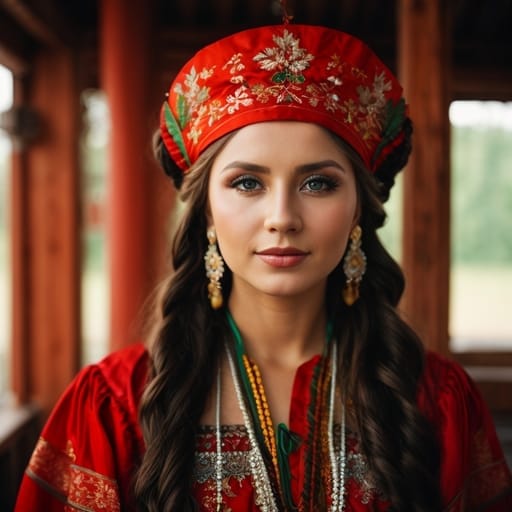
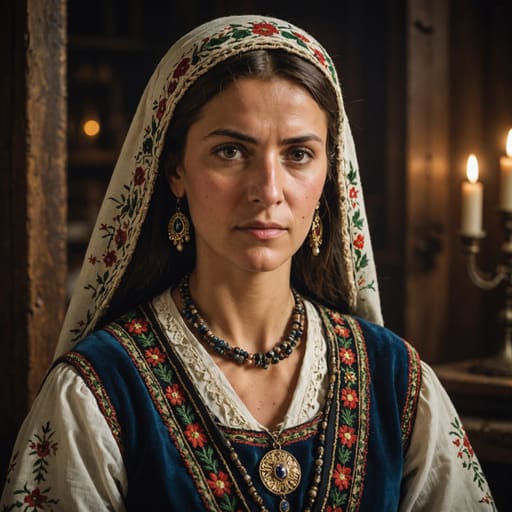
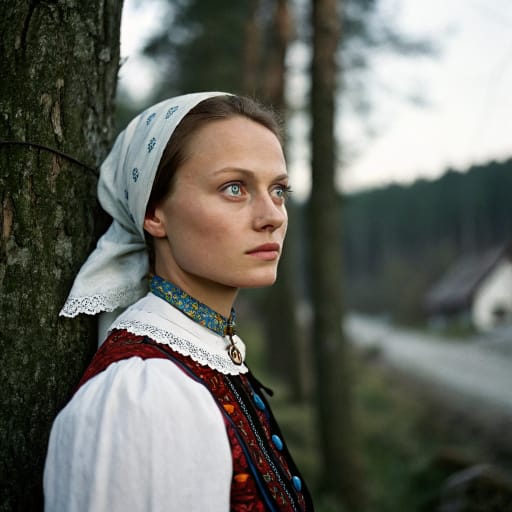
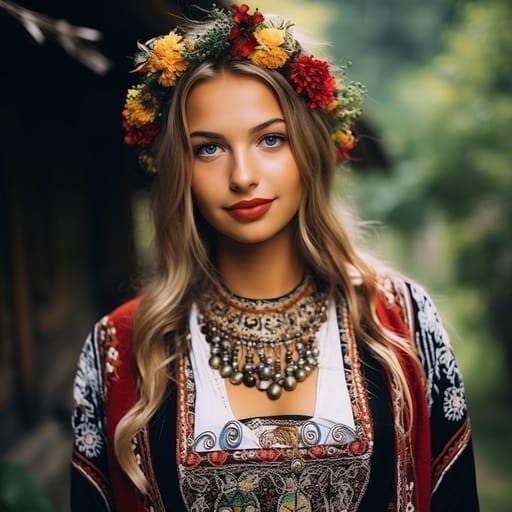
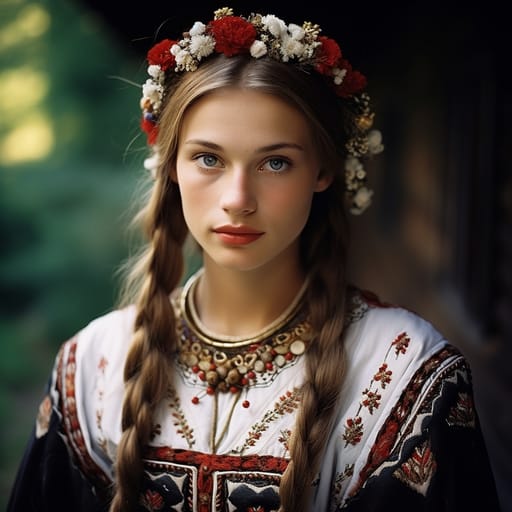
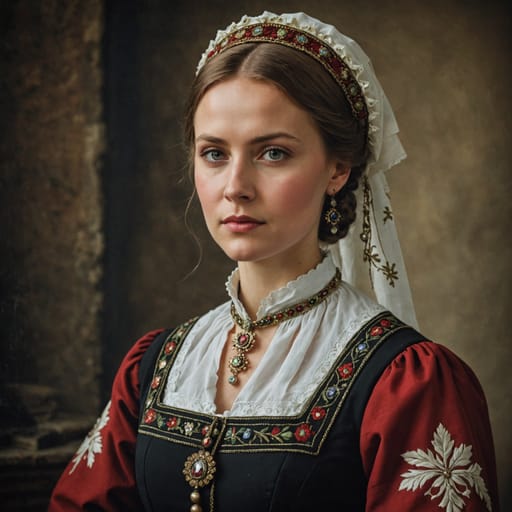
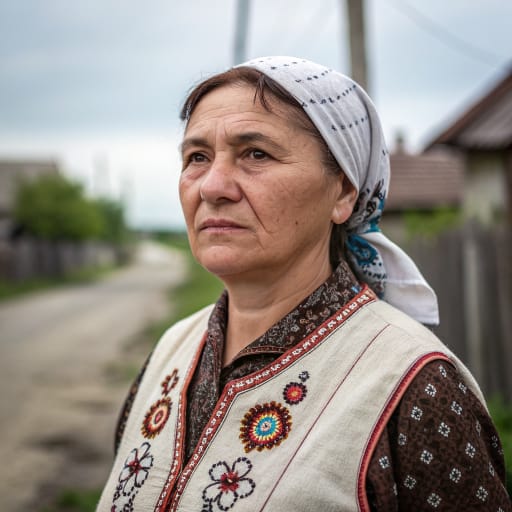
Typical Volga Bulgarians Phenotypes
Reference for AI generation: hair, eyes, skin, facial structure, build
Volga Bulgarians Body & Anatomy Reference
Anatomy by feature, Eastern European / Slavic phenotype
Volga Bulgarians Boobs & Breasts
Bust reference for Volga Bulgarians women: medium-to-large cup, full, moderate-to-high projection, which is typical of Eastern European / Slavic ancestry. Areolas measure about 30-44mm across, with light-pink to medium-brown pigmentation. Body type (mesomorph, full hip-and-bust deposition) shapes the bust as well, so Volga Bulgarians tits are usually full and projecting, classic Eastern European curvy bust. In AI imagery, keep the forward-set shape rather than drifting toward the smaller East Asian bust.
Volga Bulgarians Ass & Hips
The Volga Bulgarians ass is typically medium-to-full, moderate-to-high projection, which sets it apart from the slim narrow-hip East Asian profile. Underneath, the pelvis shows medium iliac crests, full gluteal-femoral fat deposition, part of the Eastern European / Slavic skeletal pattern. For Volga Bulgarians butt pics and AI renders, match that silhouette and the overall build (mesomorph, full hip-and-bust deposition).
Volga Bulgarians Vagina & Pussy
Volga Bulgarians pussy and vulvar anatomy presents light-pink to medium-brown labial pigmentation, varied labia minora, consistent with the Eastern European / Slavic phenotype's pigmentation pattern. Volga Bulgarians pubic hair is typically wavy medium texture, blond to dark-brown, in the inverted-triangle pattern. For anatomically accurate Volga Bulgarians pussy renders the labial coloration should match the surrounding fair to light skin tone with a continuous gradient, and the hair should keep its wavy medium texture.
Volga Bulgarians Dicks & Penis
Volga Bulgarians dicks follow the Eastern European / Slavic reference data: regional mean ~13-14cm erect; moderate girth; light-pink to medium-brown shaft pigmentation. Shaft color should track the fair to light skin tone with a smooth change toward the glans, and Volga Bulgarians pubic hair keeps its wavy medium texture.
Volga Bulgarians Body, Curves & Build
Volga Bulgarians body type and overall build presents as mesomorph, full hip-and-bust deposition, with mean adult female BMI 23-26: the characteristic Eastern European / Slavic habitus. Volga Bulgarians curves and proportions should keep the regional skeletal frame (height, shoulder-to-hip ratio, limb proportions) rather than a generic mesomorph default.
Volga Bulgarians Skin Tone & Hair Texture
Volga Bulgarians skin sits in the fair to light (Fitzpatrick II-III) band. Hair is typically straight-to-wavy 1A-2B, light-blond to dark-brown, in keeping with the Eastern European / Slavic phenotype. In nude renders the skin should stay one even tone from face to body, and body, pubic and head hair should match.
Explore phenotype categories
Structured taxonomy with peer-reviewed scales · 22 anatomical categories
Erotic Poses & Sex Positions
From the pose catalog: 219 named positions with reference skeletons
Frequently asked questions about Volga Bulgarians people
Where is the Volga Bulgarians homeland?
The Volga Bulgarians homeland is Middle Volga and lower Kama basin, centered on present-day Tatarstan and neighboring regions of Russia in Eastern Europe.
What language do Volga Bulgarians people speak?
Volga Bulgarians people primarily speak Volga Bulgar (Turkic, Oghur branch), written in Arabic script; Arabic in religious use.
What religion do Volga Bulgarians people practice?
The predominant religion among Volga Bulgarians people is Sunni Islam, official from 922; earlier Tengri worship and other steppe beliefs.






Make your own Volga Bulgarians images
Five a day, free, no credits to buy. The studio starts from this group's phenotype data, so you can set body type, pose and style and keep the traits accurate.
Start with Volga Bulgarians