No portrait yet
Natukhai Erotic
Historically the northwest Caucasus between the lower Kuban and the Black Sea coast around Anapa and Novorossiysk, Russia; today mainly diaspora in Turkey, Syria and Jordan.
Adyghe, Natukhai dialect of West Circassian (Northwest Caucasian); Turkish or Arabic widely used in the diaspora.
Sunni Islam, which gradually replaced earlier Christian and native Circassian beliefs; the Adyghe Xabze code still shapes everyday conduct.
One of the twelve historic Circassian (Adyghe) tribes; closest to the Shapsugs, and grouped with them and the Abzakhs as the 'democratic' tribes that curbed princely rule.
About Natukhai People
The Natukhai are one of the old named tribes of the Circassians, the Adyghe peoples of the northwest Caucasus. Their country was the far western corner of Circassia, where the Caucasus foothills run down to the Black Sea: the hills behind Anapa and the land around the bay where Novorossiysk now stands, reaching north toward the marshy lower Kuban. To be Natukhai meant belonging to that stretch of coast and hill country, to a known set of families and assemblies, and to a recognizable way of speaking Adyghe.
That speech is the Natukhai dialect of Adyghe. It is part of the western branch of Circassian and belongs to the small Northwest Caucasian family, whose closest relative is Kabardian to the east and whose more distant relatives are Abkhaz and Abaza. The dialect is especially close to that of the Shapsugs, the Natukhai's southern neighbors, and the two tribes shared much of their history. Like the Shapsugs and Abzakhs, the Natukhai were one of the so-called democratic tribes. In the late 18th century they curbed the power of their princes and nobles and increasingly ran their affairs through assemblies of elders and free households. That set them sharply apart from princely neighbors such as the Bzhedugs and Kabardians.
Geography made them a frontier people. Anapa was an Ottoman fortress, and when the Ottomans ceded the coast to Russia in the Treaty of Adrianople in 1829, the Circassians who actually lived there refused to accept that anyone could sign their land away. The Natukhai spent the following decades in the long Russo-Circassian War, watching Russian forts go up on their shoreline. Islam, which spread among the western Circassians under Ottoman and Crimean influence, gradually replaced older Christian and native beliefs. Daily conduct, though, still answered to Adyghe Xabze, the unwritten code covering hospitality, deference to elders and how men and women carry themselves in public. Circassian households kept a separate guest house for visitors, and noble families often sent their sons to be raised by foster families.
The war ended in catastrophe. In the early 1860s Russian forces cleared the western Circassian lands. The Natukhai were driven to the coast and shipped to the Ottoman Empire along with the Shapsugs, Abzakhs and others, and huge numbers died along the way. Cossack stanitsas and settlers took over the valleys. Descendants now live mainly in Turkey, with others in Syria, Jordan and beyond. The tribal name survives in family histories and some communities, but it has largely merged into a wider Circassian identity. For most, Natukhai is now a mark of lineage rather than an address, carried by people whose homeland has belonged to someone else for more than 150 years.
Related ethnic groups
Groups that share Natukhai's homeland, region, language, or religious tradition. These are likely candidates for comparative phenotype reference.
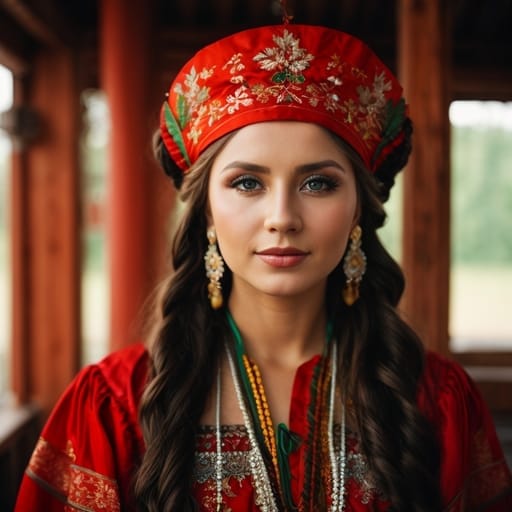
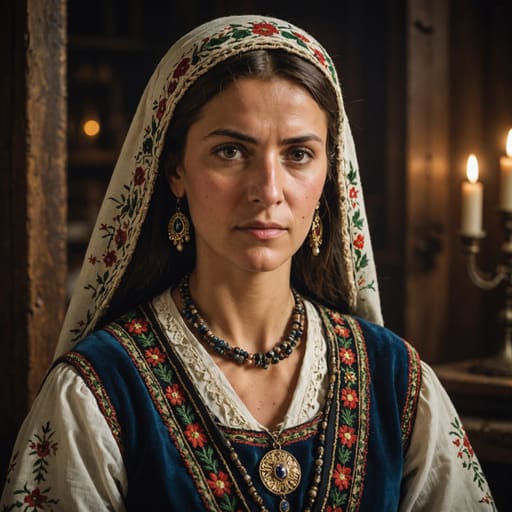
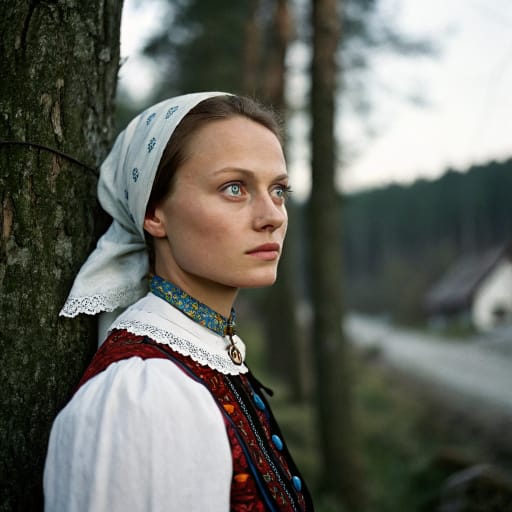
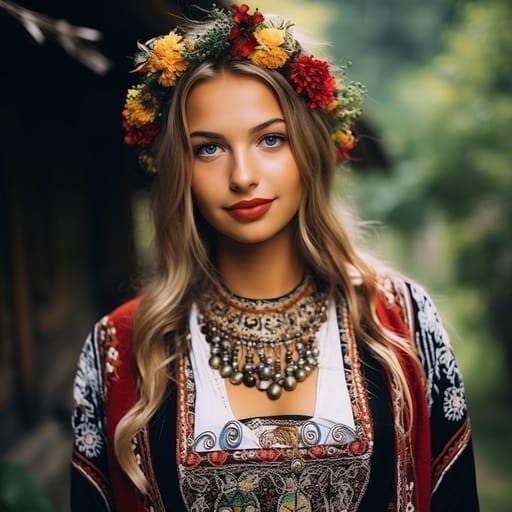
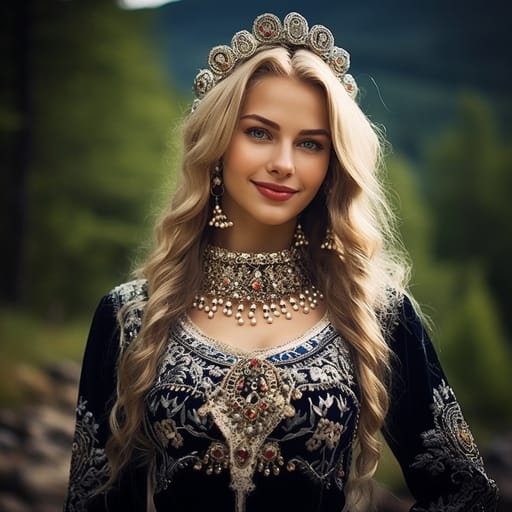
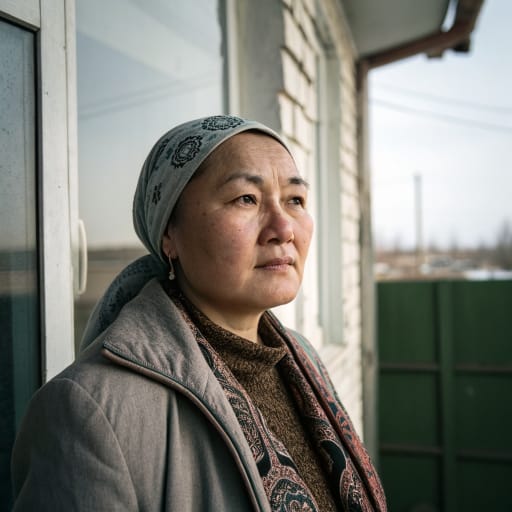
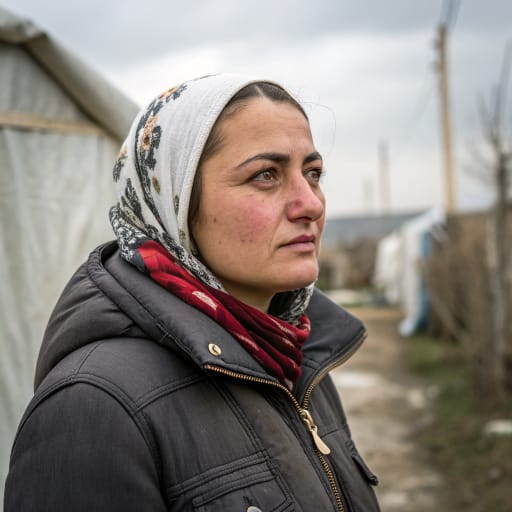
Typical Natukhai Phenotypes
Reference for AI generation: hair, eyes, skin, facial structure, build
Natukhai Body & Anatomy Reference
Eastern European / Slavic phenotype: anatomy reference for AI nude generation
Natukhai Boobs & Breasts
The typical Natukhai bust is medium-to-large cup, full, moderate-to-high projection, in line with the wider Eastern European / Slavic pattern. Areolas usually fall in the 30-44mm range, with light-pink to medium-brown areolar pigmentation against the fair-to-light-brown skin tone. Compared with the smaller East Asian bust, Natukhai breasts sit forward and are generally full and projecting, classic Eastern European curvy bust. A faithful AI render of Natukhai tits keeps that shape and areola size.
Natukhai Ass & Hips
Butt shape among Natukhai women: medium-to-full, moderate-to-high projection, over medium iliac crests, full gluteal-femoral fat deposition. This follows Eastern European / Slavic ancestry and looks quite unlike the slim narrow-hip East Asian profile. An accurate Natukhai ass in adult AI imagery keeps both the silhouette and the overall build (mesomorph, full hip-and-bust deposition) instead of a generic average.
Natukhai Vagina & Pussy
Vulvar anatomy among Natukhai women: light-pink to medium-brown labial pigmentation, varied labia minora. Pubic hair tends to be wavy medium texture, blond to dark-brown, in the usual inverted-triangle pattern. Both follow Eastern European / Slavic pigmentation, which is why Natukhai pussy renders should not fall back on a pale, sparse Western template.
Natukhai Dicks & Penis
The Natukhai cock profile, from Eastern European / Slavic anthropometric data: regional mean ~13-14cm erect; moderate girth; light-pink to medium-brown shaft pigmentation. Pubic hair has a wavy medium texture and forms the usual inverted-V pattern. Whether Natukhai men are circumcised follows religious and cultural practice rather than phenotype.
Natukhai Body, Curves & Build
Build and curves among Natukhai women follow the Eastern European / Slavic pattern: mesomorph, full hip-and-bust deposition, mean adult female BMI 23-26. Proportions matter as much as skin tone, so Natukhai figures should keep their regional height and limb ratios.
Natukhai Skin Tone & Hair Texture
The Natukhai skin range is fair to light (Fitzpatrick II-III), and hair tends to be straight-to-wavy 1A-2B, light-blond to dark-brown. That combination marks the Eastern European / Slavic phenotype, and skin tone is the trait AI generators most often get wrong for Natukhai women.
Explore phenotype categories
Structured taxonomy with peer-reviewed scales · 22 anatomical categories
Erotic Poses & Sex Positions
From the pose catalog: 219 named positions with reference skeletons
Frequently asked questions about Natukhai people
Where is the Natukhai homeland?
The Natukhai homeland is Historically the northwest Caucasus between the lower Kuban and the Black Sea coast around Anapa and Novorossiysk, Russia; today mainly diaspora in Turkey, Syria and Jordan. in Eastern Europe.
What language do Natukhai people speak?
Natukhai people primarily speak Adyghe, Natukhai dialect of West Circassian (Northwest Caucasian); Turkish or Arabic widely used in the diaspora..
What religion do Natukhai people practice?
The predominant religion among Natukhai people is Sunni Islam, which gradually replaced earlier Christian and native Circassian beliefs; the Adyghe Xabze code still shapes everyday conduct..






Make your own Natukhai images
Five a day, free, no credits to buy. The studio starts from this group's phenotype data, so you can set body type, pose and style and keep the traits accurate.
Start with Natukhai