Help us get this right
Does this portrait look right for Lovari?
Nobody has judged this one yet. You would be the first.
Lovari Erotic
Hungary and the surrounding Carpathian Basin, with long-settled communities in Slovakia, Poland, Ukraine, Romania, Austria and Germany, and later ones in Sweden and Norway.
Lovari, a Vlax dialect of Romani (Indo-Aryan, Indo-European), heavily loaned from Hungarian and Romanian; nearly all speakers also use the majority language of their country.
Predominantly Roman Catholic, with Greek Catholic and Orthodox families further east, and a growing Pentecostal presence since the mid twentieth century.
A Vlax Romani group alongside the Kalderash, Churari and Machvaya; in Hungary counted among the Vlach (Oláh) Roma, as distinct from the Romungro and the Beás.
About Lovari People
The Lovari carry their trade in their name. Ló is Hungarian for horse, and for the better part of two centuries a Lovari family made its living off horses: buying, doctoring, trading up and moving on, working the fairs and market towns of Hungary, Transylvania, Slovakia, Poland and Austria. They belong to the Vlax Roma, the branch that formed during the long centuries of Romani enslavement in Wallachia and Moldavia and scattered outward after abolition in the 1850s. The Lovari took shape in the Hungarian lands, close enough to the Kalderash coppersmiths and the Churari sieve makers to share a grammar and a code of conduct, distinct enough to keep their own name and their own reputation. The horse dealing is largely gone, killed off by tractors and trucks, but the commercial instinct behind it is not: the same families moved into cars, scrap, carpets and market stalls. What holds this group together was never a territory. It is kinship, an occupation and a language.
That language is the most durable thing they have. Lovari is a Vlax dialect of Romani, Indo-Aryan at the root, with a thick layer of Hungarian and Romanian borrowing on top, and in Hungary it is the variety that got institutionalized: taught, published in, and sittable as an accredited state language exam, which is rare for any Romani dialect anywhere. Hungary counts three Romani communities, and the Lovari sit with the Vlach or Oláh Roma, separate from the Hungarian-speaking Romungro and from the Beás, who speak an archaic Romanian. Most are Roman Catholic, Greek Catholic or Orthodox depending on where the family settled, with Pentecostal congregations drawing steadily since the middle of the last century. But the rules that order daily life are internal ones: romanipe, the obligations of being Roma; the purity code that marks what and who is marime, polluted, and therefore kept at arm's length; the kris, an assembly of respected elders convened to settle disputes that outsiders' courts would only worsen; and the pomana, the memorial feast held for the dead at set intervals. Two things broke the older pattern. The Nazi genocide tore through Lovari families in Hungary, Austria and Slovakia, an atrocity the Austrian survivor Ceija Stojka forced onto the public record in the 1980s, in memoirs and hundreds of paintings, when almost nobody else would. Then the socialist states banned traveling outright and settled the wagons in place. What survives is a people now mostly urban, mostly sedentary, and still conspicuously unwilling to dissolve into the majority around them.
Related ethnic groups
Groups that share Lovari's homeland, region, language, or religious tradition. These are likely candidates for comparative phenotype reference.
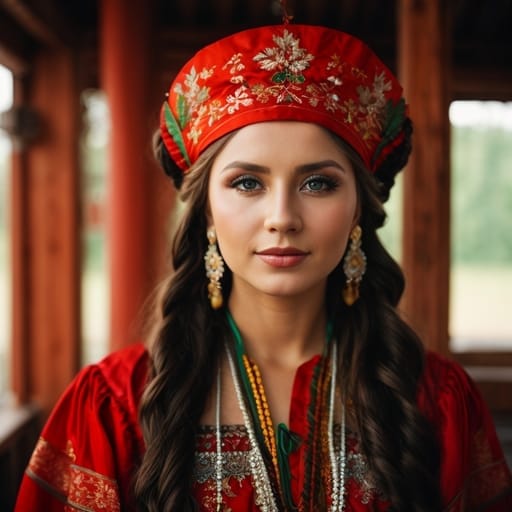
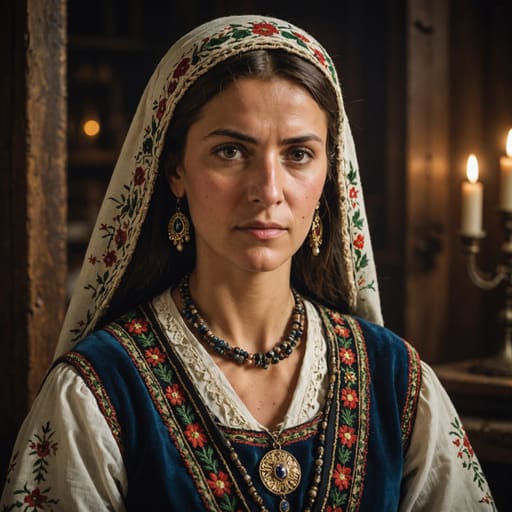
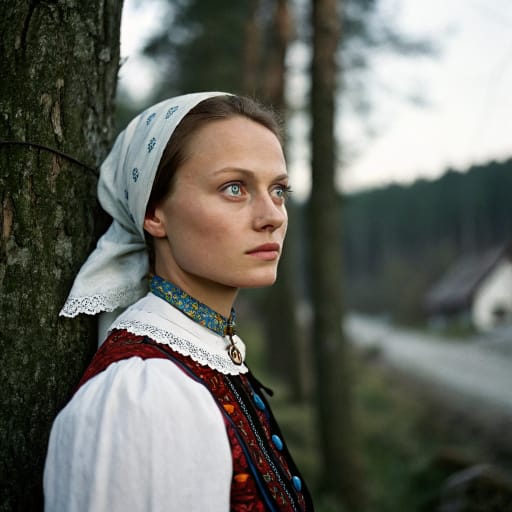
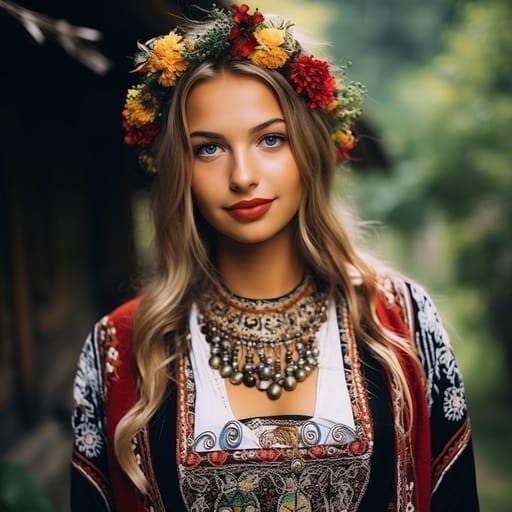
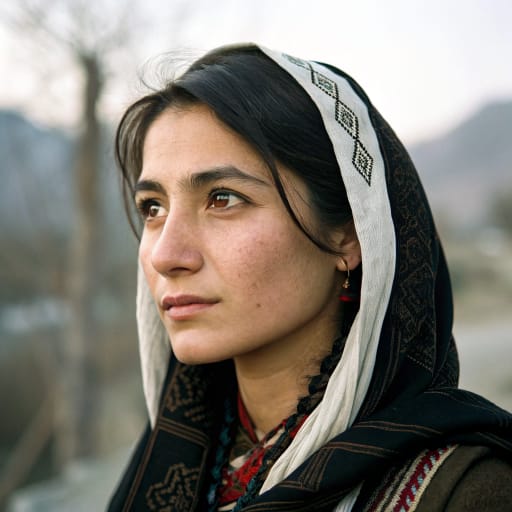
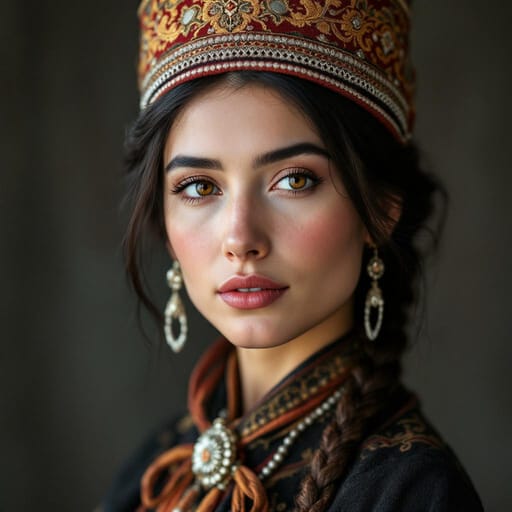
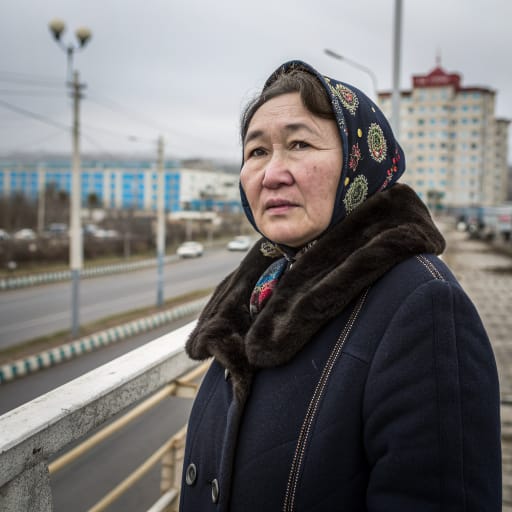
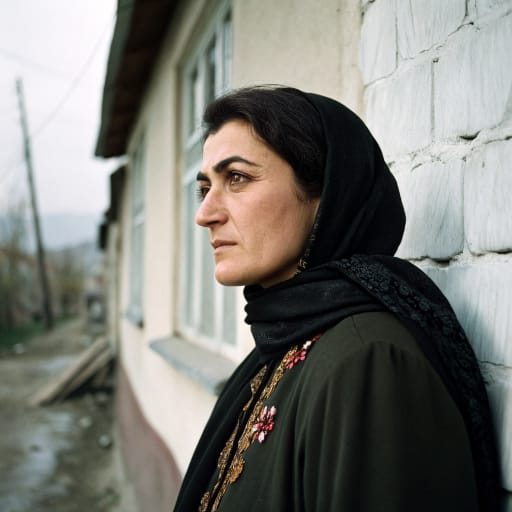
Typical Lovari Phenotypes
Reference for AI generation: hair, eyes, skin, facial structure, build
Lovari Body & Anatomy Reference
Anatomy by feature, Eastern European / Slavic phenotype
Lovari Boobs & Breasts
Bust reference for Lovari women: medium-to-large cup, full, moderate-to-high projection, which is typical of Eastern European / Slavic ancestry. Areolas measure about 30-44mm across, with light-pink to medium-brown pigmentation. Body type (mesomorph, full hip-and-bust deposition) shapes the bust as well, so Lovari tits are usually full and projecting, classic Eastern European curvy bust. In AI imagery, keep the forward-set shape rather than drifting toward the smaller East Asian bust.
Lovari Ass & Hips
The Lovari ass is typically medium-to-full, moderate-to-high projection, which sets it apart from the slim narrow-hip East Asian profile. Underneath, the pelvis shows medium iliac crests, full gluteal-femoral fat deposition, part of the Eastern European / Slavic skeletal pattern. For Lovari butt pics and AI renders, match that silhouette and the overall build (mesomorph, full hip-and-bust deposition).
Lovari Vagina & Pussy
Lovari pussy and vulvar anatomy presents light-pink to medium-brown labial pigmentation, varied labia minora, consistent with the Eastern European / Slavic phenotype's pigmentation pattern. Lovari pubic hair is typically wavy medium texture, blond to dark-brown, in the inverted-triangle pattern. For anatomically accurate Lovari pussy renders the labial coloration should match the surrounding fair to light skin tone with a continuous gradient, and the hair should keep its wavy medium texture.
Lovari Dicks & Penis
Lovari dicks follow the Eastern European / Slavic reference data: regional mean ~13-14cm erect; moderate girth; light-pink to medium-brown shaft pigmentation. Shaft color should track the fair to light skin tone with a smooth change toward the glans, and Lovari pubic hair keeps its wavy medium texture.
Lovari Body, Curves & Build
Lovari body type and overall build presents as mesomorph, full hip-and-bust deposition, with mean adult female BMI 23-26: the characteristic Eastern European / Slavic habitus. Lovari curves and proportions should keep the regional skeletal frame (height, shoulder-to-hip ratio, limb proportions) rather than a generic mesomorph default.
Lovari Skin Tone & Hair Texture
Lovari skin sits in the fair to light (Fitzpatrick II-III) band. Hair is typically straight-to-wavy 1A-2B, light-blond to dark-brown, in keeping with the Eastern European / Slavic phenotype. In nude renders the skin should stay one even tone from face to body, and body, pubic and head hair should match.
Explore phenotype categories
Structured taxonomy with peer-reviewed scales · 22 anatomical categories
Erotic Poses & Sex Positions
From the pose catalog: 219 named positions with reference skeletons
Frequently asked questions about Lovari people
Where is the Lovari homeland?
The Lovari homeland is Hungary and the surrounding Carpathian Basin, with long-settled communities in Slovakia, Poland, Ukraine, Romania, Austria and Germany, and later ones in Sweden and Norway. in Eastern Europe.
What language do Lovari people speak?
Lovari people primarily speak Lovari, a Vlax dialect of Romani (Indo-Aryan, Indo-European), heavily loaned from Hungarian and Romanian; nearly all speakers also use the majority language of their country..
What religion do Lovari people practice?
The predominant religion among Lovari people is Predominantly Roman Catholic, with Greek Catholic and Orthodox families further east, and a growing Pentecostal presence since the mid twentieth century..






Make your own Lovari images
Five a day, free, no credits to buy. The studio starts from this group's phenotype data, so you can set body type, pose and style and keep the traits accurate.
Start with Lovari